

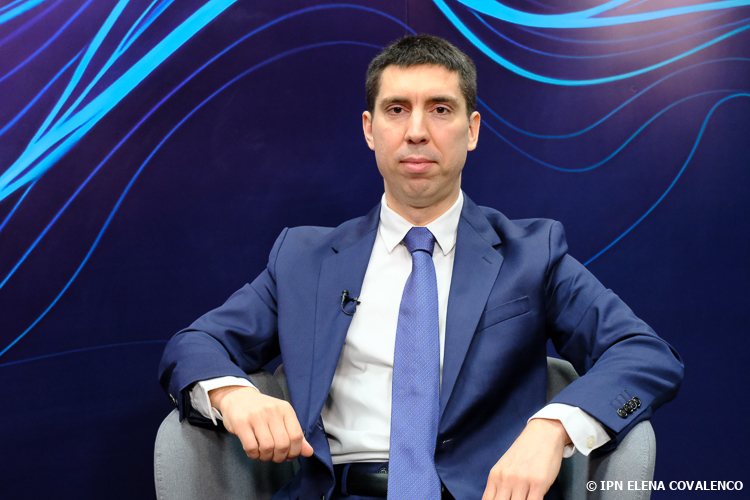
Moldova is increasingly perceived as a future member of the EU. IPN interview with Mihai Popsoi

The Republic of Moldova enters a stage in the process of accession to the European Union where not only the adoption and adaptation of the acquis communautaire will matter, but also the way decisions are made. In an interview for IPN, the Deputy Prime Minister and interim Minister of Foreign Affairs, Mihai Popsoi, stated that this chapter offers the Republic of Moldova new opportunities for integration into European security mechanisms and participation in common EU missions.

Mr. Minister, with the opening of negotiation cluster 6, the Republic of Moldova enters a stage where it is no longer just evaluated for its ability to adopt European legislation, but also for its capacity to act as a future member state in the foreign and security policy of the Union. What does this specifically mean for Moldovan diplomacy?

Our country’s diplomacy will make sustained efforts to ensure that we are aligned not only in values, but also in practice with everything that means European foreign and security policy. The European Union has made sustained efforts to help us in recent years, and the European peace program, European Peace Facility, has helped us incredibly to strengthen our defense capabilities. The European Union helps us strengthen our economic capabilities through the Growth Program.

At the same time, our diplomacy will work to ensure that we are not just waiting for support from the European Union, but proactively contributing and aligning with the citizens of the European Union and the institutions of the European Union when it comes to clear deliverables, so that we can participate in the missions of the European Union, international missions, and ensure that we are aligned in such a way as to become, if you will, members before we are members.

Because this is our desire, to be prepared as soon as possible. And cluster 6, chapters 30 and 31, offer us this opportunity, to advance and finalize the negotiations within these chapters as quickly as possible. Because a few legislative projects that need to be adjusted to the community acquis are a relatively minor effort compared to other much more complicated chapters that require a much greater effort.

Therefore, our diplomacy will certainly deliver within the established terms these alignment deadlines to the acquis communautaire, so that we can say we have met the expectations we set for ourselves and this chapter to be an example in the context of negotiation and the other chapters and clusters that, behold, we have begun.

Chapter 31 implies an almost complete alignment with the positions and foreign policy statements of the European Union. The Republic of Moldova has already reached a level of over 90% alignment. What remains to be done until the closure of the chapter and what are the most difficult commitments?

There are legislative projects, as I was saying, for harmonizing our legislation with a series of European policies in the field of foreign and security policy. There is a significant area, the alignment with the European Union’s sanctions policy and yes, we are aligned at 91%, last year we were over 80%, a few years ago we were at 60%. We have been constantly growing and we have the ambition that in the foreseeable future we will have a hundred percent alignment with what the foreign and security policy of the European Union means. It will require a technical, logistical effort on our part and diplomatic, but we firmly believe that the diplomacy of the Republic of Moldova and the Government of the Republic of Moldova have the capacity to deliver according to the expectations of our citizens.

One of the important components of this chapter is strengthening resilience against hybrid threats. To what extent will the opening of negotiations on this chapter provide Moldova with access to new European cooperation mechanisms in the field of combating disinformation, cybersecurity, and protection of critical infrastructure?

Our diplomats are in a constant race or competition to find new opportunities for our country, and these areas are one of our priorities, so that the Republic of Moldova can participate and benefit wherever we succeed. For instance, in recent years we have joined the Single European Payments Area, roaming has been eliminated, the Republic of Moldova has long been involved in the Erasmus programs and now we are beginning to integrate into security projects: the SAFE program, the EDIP program, the EPF program, which is truly transformational for our security and defense capabilities, and just Monday it was announced by the Foreign Affairs Council and the good friend of the Republic of Moldova, Kaja Kallas, 120 million euros for the air security of the Republic of Moldova.

These are tangible benefits. Now, what could be more concrete, more tangible than peace and tranquility in our own home? And in moments when Russian drones violate our airspace and end up falling and exploding near our citizens’ homes, the European Union comes to our aid. And, as I was saying, our diplomats are constantly exploring new opportunities to integrate the Republic of Moldova into European programs and processes, including in the field of security and defense, and we will constantly do this.

The fact that we are approaching accession, we have opened cluster 6, cluster 1, there are four left, certainly offers us new opportunities because we are increasingly perceived as future members or, practically, in certain areas where we have long been participating, we are already on an equal footing with the members of the European Union. Thus, these new opportunities indeed arise and our diplomacy will certainly explore these opportunities to deliver as concrete benefits as possible, to improve the quality of life at home, to provide more security to our citizens and more economic opportunities.

In the case of Chapter 31, negotiations are also influenced by geopolitical developments. How much does the fact that the Republic of Moldova is directly exposed to hybrid aggression and the war waged by Russia in Ukraine matter for the pace of negotiations?

The geopolitical context is, undoubtedly, a complicated one and the perception of the citizens and leadership of the European Union member countries has changed in recent years. This barbaric aggression of the Russian Federation against Ukraine cannot be overlooked. And so, including the context of the European Union’s expansion is perceived inclusively or, in places, predominantly through this geopolitical prism. But the technical aspect or the aspect related to the community acquis, the Copenhagen criteria remains a main one for absolutely all decision-makers in the EU and it is important for us to ensure that we reach those European standards prescribed in the Copenhagen criteria so that we ensure that we are competitive within the EU, we have resilient institutions that can deliver benefits for our citizens and this is our goal for the immediate future.

Chapter 30 on external relations implies the adoption of the European Union’s common policy. What does this mean for the trade agreements that the Republic of Moldova already has with states outside the Union? Are there treaties that will need to be renegotiated or denounced before accession?

There are a series of commitments we have, which are perfectly compatible with the European Union, with the quality of being a member of the European Union, and there are a few that need to be reviewed, renegotiated or in some places repealed. This period leading up to accession is more than sufficient to review and decide which ones remain, which ones need to be rethought. But this process has already begun in recent years. Our diplomacy has been proactive, knowing that these are the steps we need to take and in the near future we will reduce this discrepancy.

In the negotiations for Chapter 31, there are not only technical criteria, but also a constant evaluation of the credibility of the foreign policy of the candidate state. How does the Republic of Moldova ensure that internal political changes will not affect the predictability of its alignment with the foreign policy of the European Union?

As long as we have a solid, pro-European majority in the Parliament of the Republic of Moldova, we will naturally have stable, pro-European governments, which are emanations of the parliamentary majority and are reflections of the political commitments made by the parliamentary majority. The main goal of the parliamentary majority PAS in Parliament is the pro-European agenda and ensuring that we join the great European family and that we finalize the negotiation process in the coming years.

Therefore, there is no basis for any concerns or speculations that things might change in one way or another. Our diplomacy and the Government’s commitment are firm and therefore any changes would not occur, the direction will remain the same and our commitment to European integration, to internal reforms will remain as decisive as they are set by the parliamentary majority and our commitments to the citizens of the Republic of Moldova.

The opening of cluster 6 is an important step, but the real challenge will be its closure. What are the benchmark criteria that the Republic of Moldova must meet for chapter 31 and how difficult will this stage be?

There are a series of criteria that are even made public in our commitment that we announced at the intergovernmental conference. It’s about a few legislative projects that need to be adjusted to the community acquis and as we were saying, to align our foreign policy with the European foreign policy, which we have already started and we are at 91%. So, we are practically in the final stretch to achieve this objective, therefore, there will not be any insurmountable difficulties in finalizing the negotiations on this cluster.

And, as I was saying, compared to other chapters and clusters, we can say that we are a bit privileged, if we can say so, not because of subjective moments, but from the objective perspective that the number of laws to be adopted is much smaller compared to other fields. And we will certainly meet all the objectives we have set and stated in our negotiating position presented, so as to ensure that we are prepared in the shortest time to close this chapter and channel our resources and efforts towards the completion of negotiations in the other chapters.

Mr. Minister, thank you for this discussion!

With great affection.

Maxim Bolohan, IPN


The opening of the exhibition “Urban Archaeology and the Hidden Memory of Chisinau” (July 17-November 30) /National Museum of History of Moldova / 10:00 AM/.

The City Hall of Chisinau is organizing the festival “Te salut, Chisinau!”, on the occasion of the 590th anniversary of the city’s first documentary attestation (July 17-19) /Pedestrian Street “Eugen Doga” / 6:00 PM/.

The personal exhibition of the painter Anton Polisciuc is inaugurated, as well as a collection of clothing articles inspired by his creations /Vocational Rehabilitation Center “VRC – Moldova”, Balanescu Street, 29/1 / 6:00 PM/.

The actors of the Russian State Drama Theater “A. P. Chekhov” perform the play “Method” /Theater “A. P. Chekhov” / 07:00 PM/.

The contemporary art exhibition-competition continues: The municipal salon within the “Te salut, Chisinau!” Festival, the VI edition, dedicated to the 590th anniversary of the city /Constantin Brancusi Exhibition Center /July 8-26/.

The documentary exhibition “Echo from the past, for present and future” continues, dedicated to the memory of the victims of Stalinist deportations and one of the most tragic episodes in the history of Bessarabia /BNRM /July 3-August 3/.

The exhibition “The Thread of Identity! The traditional Romanian costume in book illustrations made by plastic artists from the Republic of Moldova” continues /BNRM /June 25-August 15/.

The graphic exhibition by Lica Sainciuc continues, opened as part of the Creative Industries Festival /Lutnita Gallery /June 5 – July 31/.

0 FacebookTwitterPinterestEmail


Moldova is increasingly perceived as a future member of the EU. IPN interview with Mihai Popsoi

The Republic of Moldova enters a stage in the process of accession to the European Union where not only the adoption and adaptation of the acquis communautaire will matter, but also the way decisions are made. In an interview for IPN, the Deputy Prime Minister and interim Minister of Foreign Affairs, Mihai Popsoi, stated that this chapter offers the Republic of Moldova new opportunities for integration into European security mechanisms and participation in common EU missions.

Mr. Minister, with the opening of negotiation cluster 6, the Republic of Moldova enters a stage where it is no longer just evaluated for its ability to adopt European legislation, but also for its capacity to act as a future member state in the foreign and security policy of the Union. What does this specifically mean for Moldovan diplomacy?

Our country’s diplomacy will make sustained efforts to ensure that we are aligned not only in values, but also in practice with everything that means European foreign and security policy. The European Union has made sustained efforts to help us in recent years, and the European peace program, European Peace Facility, has helped us incredibly to strengthen our defense capabilities. The European Union helps us strengthen our economic capabilities through the Growth Program.

At the same time, our diplomacy will work to ensure that we are not just waiting for support from the European Union, but proactively contributing and aligning with the citizens of the European Union and the institutions of the European Union when it comes to clear deliverables, so that we can participate in the missions of the European Union, international missions, and ensure that we are aligned in such a way as to become, if you will, members before we are members.

Because this is our desire, to be prepared as soon as possible. And cluster 6, chapters 30 and 31, offer us this opportunity, to advance and finalize the negotiations within these chapters as quickly as possible. Because a few legislative projects that need to be adjusted to the community acquis are a relatively minor effort compared to other much more complicated chapters that require a much greater effort.

Therefore, our diplomacy will certainly deliver within the established terms these alignment deadlines to the acquis communautaire, so that we can say we have met the expectations we set for ourselves and this chapter to be an example in the context of negotiation and the other chapters and clusters that, behold, we have begun.

Chapter 31 implies an almost complete alignment with the positions and foreign policy statements of the European Union. The Republic of Moldova has already reached a level of over 90% alignment. What remains to be done until the closure of the chapter and what are the most difficult commitments?

There are legislative projects, as I was saying, for harmonizing our legislation with a series of European policies in the field of foreign and security policy. There is a significant area, the alignment with the European Union’s sanctions policy and yes, we are aligned at 91%, last year we were over 80%, a few years ago we were at 60%. We have been constantly growing and we have the ambition that in the foreseeable future we will have a hundred percent alignment with what the foreign and security policy of the European Union means. It will require a technical, logistical effort on our part and diplomatic, but we firmly believe that the diplomacy of the Republic of Moldova and the Government of the Republic of Moldova have the capacity to deliver according to the expectations of our citizens.

One of the important components of this chapter is strengthening resilience against hybrid threats. To what extent will the opening of negotiations on this chapter provide Moldova with access to new European cooperation mechanisms in the field of combating disinformation, cybersecurity, and protection of critical infrastructure?

Our diplomats are in a constant race or competition to find new opportunities for our country, and these areas are one of our priorities, so that the Republic of Moldova can participate and benefit wherever we succeed. For instance, in recent years we have joined the Single European Payments Area, roaming has been eliminated, the Republic of Moldova has long been involved in the Erasmus programs and now we are beginning to integrate into security projects: the SAFE program, the EDIP program, the EPF program, which is truly transformational for our security and defense capabilities, and just Monday it was announced by the Foreign Affairs Council and the good friend of the Republic of Moldova, Kaja Kallas, 120 million euros for the air security of the Republic of Moldova.

These are tangible benefits. Now, what could be more concrete, more tangible than peace and tranquility in our own home? And in moments when Russian drones violate our airspace and end up falling and exploding near our citizens’ homes, the European Union comes to our aid. And, as I was saying, our diplomats are constantly exploring new opportunities to integrate the Republic of Moldova into European programs and processes, including in the field of security and defense, and we will constantly do this.

The fact that we are approaching accession, we have opened cluster 6, cluster 1, there are four left, certainly offers us new opportunities because we are increasingly perceived as future members or, practically, in certain areas where we have long been participating, we are already on an equal footing with the members of the European Union. Thus, these new opportunities indeed arise and our diplomacy will certainly explore these opportunities to deliver as concrete benefits as possible, to improve the quality of life at home, to provide more security to our citizens and more economic opportunities.

In the case of Chapter 31, negotiations are also influenced by geopolitical developments. How much does the fact that the Republic of Moldova is directly exposed to hybrid aggression and the war waged by Russia in Ukraine matter for the pace of negotiations?

The geopolitical context is, undoubtedly, a complicated one and the perception of the citizens and leadership of the European Union member countries has changed in recent years. This barbaric aggression of the Russian Federation against Ukraine cannot be overlooked. And so, including the context of the European Union’s expansion is perceived inclusively or, in places, predominantly through this geopolitical prism. But the technical aspect or the aspect related to the community acquis, the Copenhagen criteria remains a main one for absolutely all decision-makers in the EU and it is important for us to ensure that we reach those European standards prescribed in the Copenhagen criteria so that we ensure that we are competitive within the EU, we have resilient institutions that can deliver benefits for our citizens and this is our goal for the immediate future.

Chapter 30 on external relations implies the adoption of the European Union’s common policy. What does this mean for the trade agreements that the Republic of Moldova already has with states outside the Union? Are there treaties that will need to be renegotiated or denounced before accession?

There are a series of commitments we have, which are perfectly compatible with the European Union, with the quality of being a member of the European Union, and there are a few that need to be reviewed, renegotiated or in some places repealed. This period leading up to accession is more than sufficient to review and decide which ones remain, which ones need to be rethought. But this process has already begun in recent years. Our diplomacy has been proactive, knowing that these are the steps we need to take and in the near future we will reduce this discrepancy.

In the negotiations for Chapter 31, there are not only technical criteria, but also a constant evaluation of the credibility of the foreign policy of the candidate state. How does the Republic of Moldova ensure that internal political changes will not affect the predictability of its alignment with the foreign policy of the European Union?

As long as we have a solid, pro-European majority in the Parliament of the Republic of Moldova, we will naturally have stable, pro-European governments, which are emanations of the parliamentary majority and are reflections of the political commitments made by the parliamentary majority. The main goal of the parliamentary majority PAS in Parliament is the pro-European agenda and ensuring that we join the great European family and that we finalize the negotiation process in the coming years.

Therefore, there is no basis for any concerns or speculations that things might change in one way or another. Our diplomacy and the Government’s commitment are firm and therefore any changes would not occur, the direction will remain the same and our commitment to European integration, to internal reforms will remain as decisive as they are set by the parliamentary majority and our commitments to the citizens of the Republic of Moldova.

The opening of cluster 6 is an important step, but the real challenge will be its closure. What are the benchmark criteria that the Republic of Moldova must meet for chapter 31 and how difficult will this stage be?

There are a series of criteria that are even made public in our commitment that we announced at the intergovernmental conference. It’s about a few legislative projects that need to be adjusted to the community acquis and as we were saying, to align our foreign policy with the European foreign policy, which we have already started and we are at 91%. So, we are practically in the final stretch to achieve this objective, therefore, there will not be any insurmountable difficulties in finalizing the negotiations on this cluster.

And, as I was saying, compared to other chapters and clusters, we can say that we are a bit privileged, if we can say so, not because of subjective moments, but from the objective perspective that the number of laws to be adopted is much smaller compared to other fields. And we will certainly meet all the objectives we have set and stated in our negotiating position presented, so as to ensure that we are prepared in the shortest time to close this chapter and channel our resources and efforts towards the completion of negotiations in the other chapters.

Mr. Minister, thank you for this discussion!

With great affection.

Maxim Bolohan, IPN


Law enforcement officials are investigating the involvement of several individuals in the case concerning the death of Ludmila Vartic, with the identity of some of these individuals to be established during the investigation. According to the General Prosecutor’s Office, the investigation not only focuses on the circumstances of the death, but also on the actions and events that preceded the tragedy, reports IPN.

“Within the investigations, the actions of several perpetrators are examined, including those of individuals who are to be identified during the criminal investigation, a situation that requires an increased degree of caution regarding the confidentiality of evidence,” is stated in a press release from the Prosecutor’s Office.

The institution also mentioned that the lawyers and successors of the injured party can consult the case materials and make notes, upon request. However, copying documents remains restricted, to avoid the disclosure of information that could affect the investigation.

The case is being investigated for the crime of domestic violence leading to suicide, after information about possible acts of domestic violence prior to the death of the educator emerged in the public space. So far, the legal authorities have announced that the only suspect in the case is the victim’s husband, Dumitru Vartic, who pleads not guilty.

0 FacebookTwitterPinterestEmail


1 IANUARIE, 2025
1 IANUARIE, 2025