

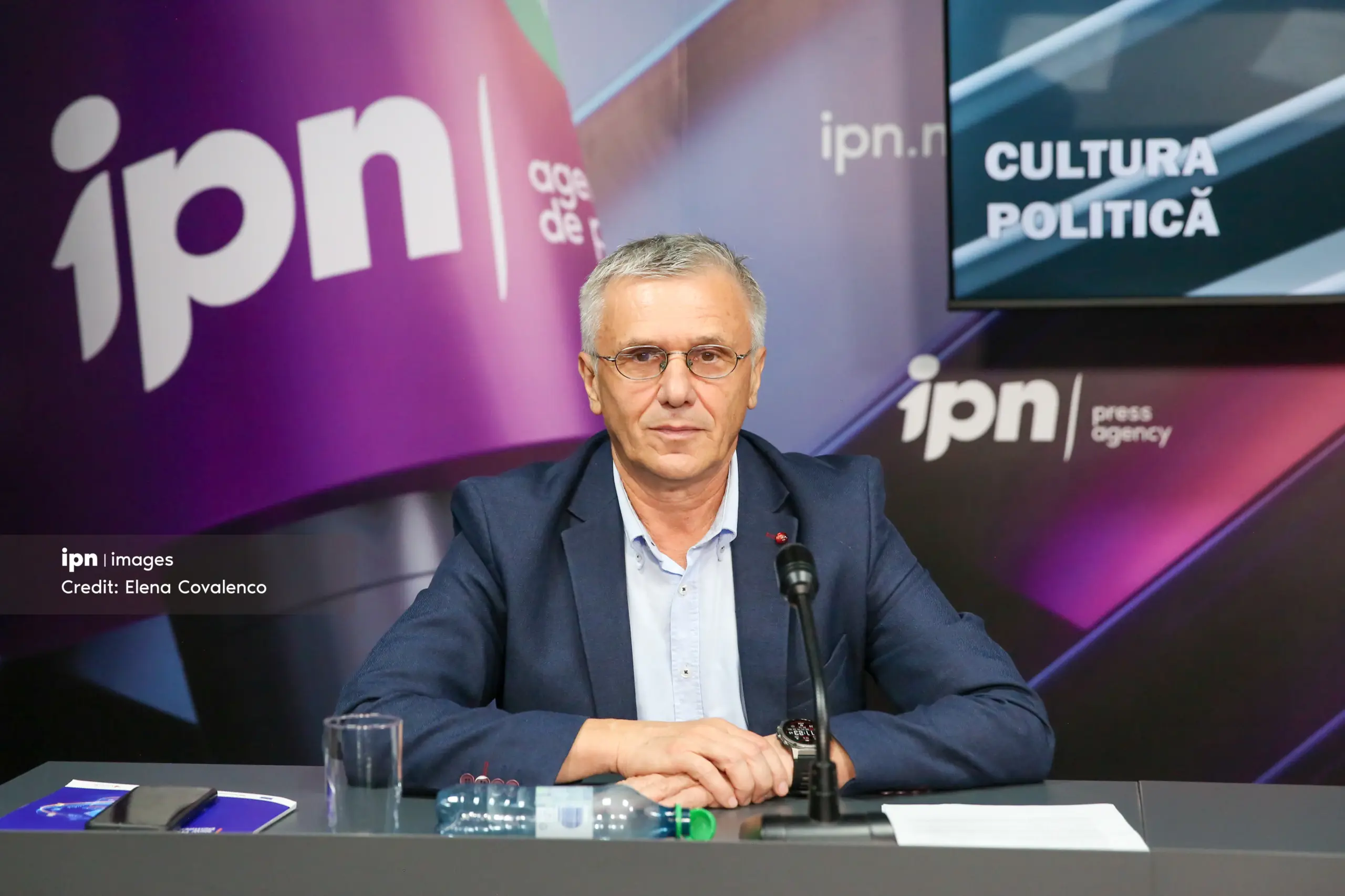
Igor Botan: The self-censorship of the press is imposed in the circumstances of a hybrid war

The phenomenon of self-censorship in the press needs to be analyzed also through the lens of hybrid warfare and the external pressures exerted on the Republic of Moldova. The statement belongs to expert Igor Botan and was made during the public debate “The new media law: updates, benefits, risks”, organized by the IPN Press Agency. According to the expert, in the current security context, some journalists end up limiting their own expression out of a desire not to harm the public interest or the European path of the country.

Igor Botan emphasized that the project of the new media law consolidates the main regulations in the field into a single normative act. In his opinion, the adoption of the law is necessary also from the perspective of the challenges generated by hybrid warfare and the informational vulnerabilities of the Republic of Moldova.

“The new mass-media law is necessary because as a framework law it encompasses three other very important laws: The Press Law, The Law on Freedom of Expression, and The Audiovisual Media Services Code. The law is important in the context of hybrid warfare and the vulnerabilities that arise from it,” explained the project’s permanent expert.

Referring to the Amnesty International Moldova report on self-censorship in the media, Igor Botan pointed out that this phenomenon should not be reduced only to potential direct pressures on journalists. In his opinion, self-censorship can also arise as an effect of the geopolitical context, in which editorial teams try to avoid amplifying risks to state security.

“Self-censorship does not occur when someone has been contacted and warned to be more careful, but self-censorship is imposed in the circumstances related to this hybrid war. People start from the principle of not causing harm, because the pressures coming from outside on the Republic of Moldova are immense and these pressures can jeopardize the European path. There are circumstances that impose this self-censorship. It’s a worrying phenomenon,” explained Igor Botan.

The expert pointed out that the new media law aims to strengthen guarantees regarding press independence and to respond to challenges generated by the development of online platforms.

“The new press law sets very clear objectives regarding the protection of media pluralism, transparency of media ownership, editorial independence, protection of journalistic activity, and the public’s right to access pluralistic content. In addition, the development of online platforms requires new approaches, because the greatest danger comes from misinformation,” the expert further stated.

The public debate “The new media law: updates, benefits, risks” is the 353rd edition in the series “Developing political culture in public debates”. The IPN Agency carries out this series with the support of the German Hanns Seidel Foundation.


The Moldovan firefighters stationed in Greece have participated in their first intervention to extinguish a vegetation fire. The mission took place in the town of Souroti in the Thessaloniki region, where Greek authorities requested additional support to extinguish several outbreaks, reports IPN.

According to the General Inspectorate for Emergency Situations, the team was mobilized Thursday morning and intervened alongside Greek firefighters to extinguish the fire. The Moldovan rescuers were divided into two teams, they extinguished the hotspots and checked the affected perimeter to prevent their reignition.

Subsequently, the firefighters returned to the operational base, where the fire trucks, equipment, and necessary reserves for potential interventions were checked.

Moldovan firefighters are participating, from July 14 to August 1, in a pre-positioning mission in Greece, organized through the European Union Civil Protection Mechanism. The purpose of this mission is to support Greek authorities in managing vegetation and forest fires during the high-risk season.

0 FacebookTwitterPinterestEmail


Igor Botan: The self-censorship of the press is imposed in the circumstances of a hybrid war

The phenomenon of self-censorship in the press needs to be analyzed also through the lens of hybrid warfare and the external pressures exerted on the Republic of Moldova. The statement belongs to expert Igor Botan and was made during the public debate “The new media law: updates, benefits, risks”, organized by the IPN Press Agency. According to the expert, in the current security context, some journalists end up limiting their own expression out of a desire not to harm the public interest or the European path of the country.

Igor Botan emphasized that the project of the new media law consolidates the main regulations in the field into a single normative act. In his opinion, the adoption of the law is necessary also from the perspective of the challenges generated by hybrid warfare and the informational vulnerabilities of the Republic of Moldova.

“The new mass-media law is necessary because as a framework law it encompasses three other very important laws: The Press Law, The Law on Freedom of Expression, and The Audiovisual Media Services Code. The law is important in the context of hybrid warfare and the vulnerabilities that arise from it,” explained the project’s permanent expert.

Referring to the Amnesty International Moldova report on self-censorship in the media, Igor Botan pointed out that this phenomenon should not be reduced only to potential direct pressures on journalists. In his opinion, self-censorship can also arise as an effect of the geopolitical context, in which editorial teams try to avoid amplifying risks to state security.

“Self-censorship does not occur when someone has been contacted and warned to be more careful, but self-censorship is imposed in the circumstances related to this hybrid war. People start from the principle of not causing harm, because the pressures coming from outside on the Republic of Moldova are immense and these pressures can jeopardize the European path. There are circumstances that impose this self-censorship. It’s a worrying phenomenon,” explained Igor Botan.

The expert pointed out that the new media law aims to strengthen guarantees regarding press independence and to respond to challenges generated by the development of online platforms.

“The new press law sets very clear objectives regarding the protection of media pluralism, transparency of media ownership, editorial independence, protection of journalistic activity, and the public’s right to access pluralistic content. In addition, the development of online platforms requires new approaches, because the greatest danger comes from misinformation,” the expert further stated.

The public debate “The new media law: updates, benefits, risks” is the 353rd edition in the series “Developing political culture in public debates”. The IPN Agency carries out this series with the support of the German Hanns Seidel Foundation.


Igor Botan: The self-censorship of the press is imposed in the circumstances of a hybrid war

Approximately 13,400 non-commercial vehicles from the Transnistrian region have been registered with neutral model plates since the launch of this...

Acest material este disponibil doar pe bază de abonament.
Abonează-te pentru a avea acces la mai multe materiale și funcționalități exclusive!

0 FacebookTwitterPinterestEmail


1 IANUARIE, 2025
1 IANUARIE, 2025