




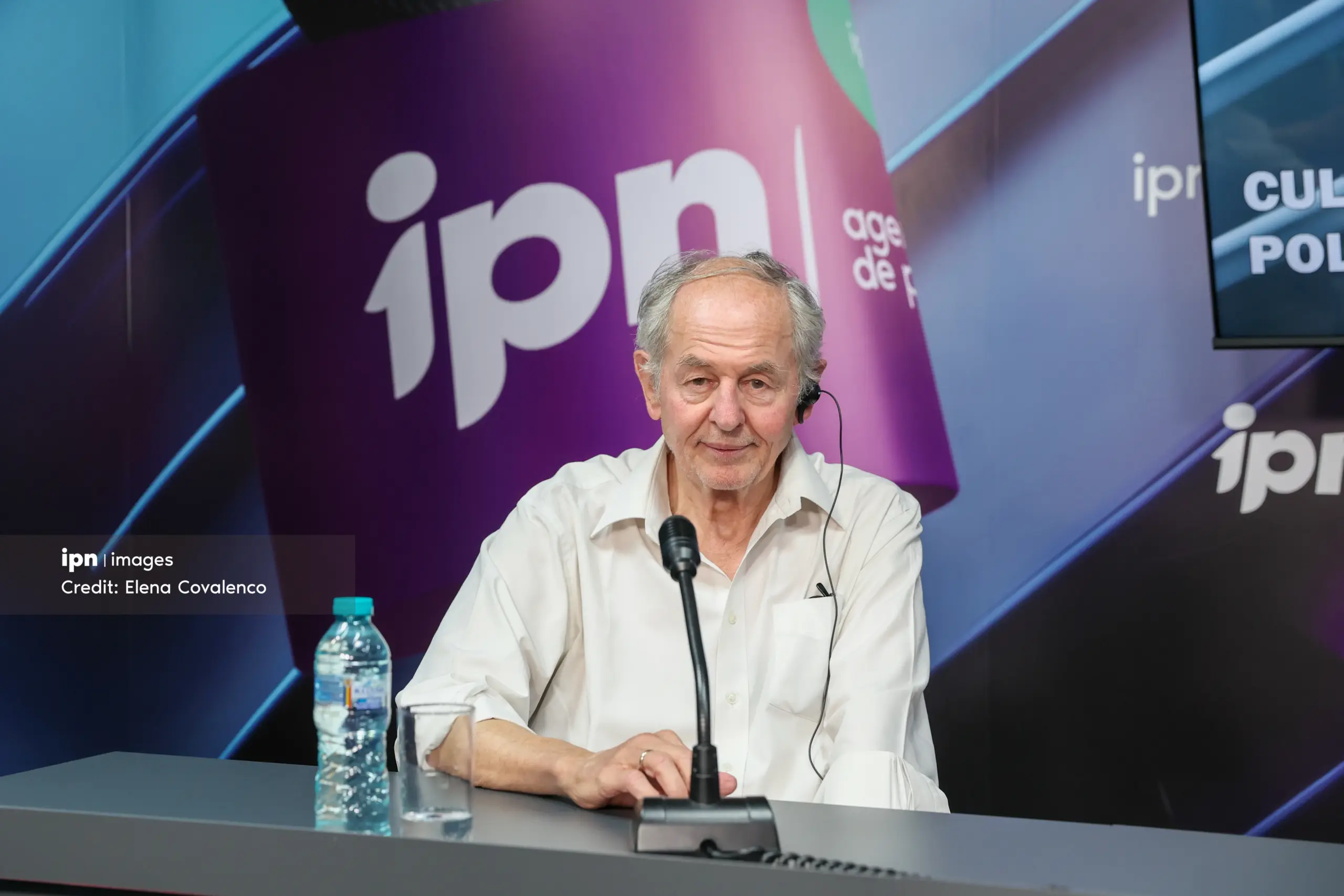
The future of the European Union is not guaranteed, and the European construction remains vulnerable due to the lack of common historical roots and the difficulties in reaching consensus among member states. The statement belongs to the French writer, journalist, and historian, Thierry Wolton, and was made during the interview “Postcommunism, a brake on the civilizational development of the world”, conducted by the IPN Press Agency. During the interview, Thierry Wolton analyzed the challenges currently facing the European project.
According to Thierry Wolton, the European Union is a relatively recent political construction, and its existence should not be viewed as an irreversible fact. “We should worry about the future of the European Union. The European Union is a very new construction, which is less than half a century old. 50-60 years is very little in relation to history. The European Union, which is a new phenomenon, can disappear as it appeared, even if it is a very good phenomenon, unmatched in the world. The EU can die at some point. Unlike Russia, the USA, France, countries that have roots. The European Union is made up of different cultures, which often do not agree with each other, and this represents a fragility,” said the French writer and journalist.
Furthermore, the writer believes that the decision-making mechanism based on unanimity represents one of the main vulnerabilities of the European Union. He argues that achieving the agreement of all 27 member states is an extremely difficult objective to reach.
“When you ask the 27 countries with different leaders, different thinking, to agree unanimously, it’s something almost impossible. The European Union suffers because of this democracy, although democracy is the best thing humanity has invented so far. The European Union has adopted these structures, but you can’t equate Lithuania and France. Therefore, this unanimity mechanism is a brake,” said the French writer, journalist, and historian, Thierry Wolton.
At the same time, Europeans must be aware of this vulnerability, not to accentuate it, but also to find solutions that would reduce these weaknesses. As an example, Thierry Wolton admitted the need to establish a decision-making center within the EU, composed of a certain number of countries, which could make binding decisions for all other members and operate on a rotation principle, but without the right to veto. “The right to veto has made the UN Security Council and, to a large extent, the UN as a whole, dysfunctional,” Thierry Wolton stated.
The video interview: “Post-communism, a brake on the civilizational development of the world” is produced by the IPN Press Agency, in partnership with the Hanns Seidel Foundation Romania, the Corneliu Coposu Foundation and the Hanns Seidel Foundation Republic of Moldova.
