

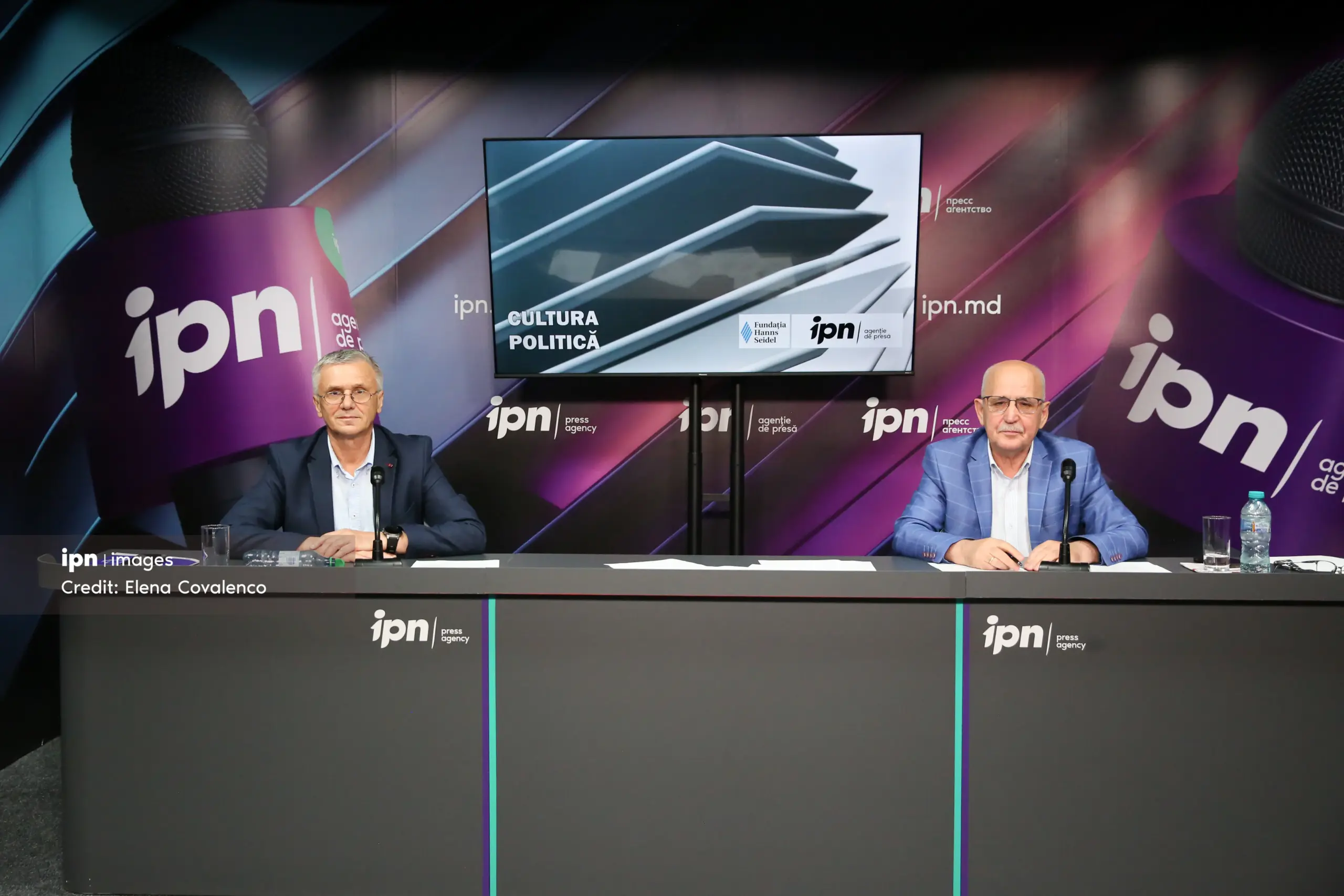
The new mass media law: updates, benefits, risks. IPN Debate

The need to adopt a new media law, the alignment of legislation with European standards, and the financial challenges facing the media in the Republic of Moldova were the main issues addressed during the public debate “The new media law: updates, benefits, risks”, organized by the IPN News Agency. Journalists and experts pointed out that the new law, which has been approved in its first reading, aims to create a clearer framework for both traditional and online media.

The project’s permanent expert, Igor Boțan, explained why the new law must take into account the diversification of platforms through which content is distributed. According to him, the media landscape is no longer limited to television, radio and print media, but also includes digital services.

“Media services represent the totality of channels and platforms that transmit information, entertainment, or culture to a broad audience. These include television, radio, print media and digital platforms, primarily classified into linear services (live broadcasts, such as TV/radio stations) and non-linear services (streaming or VOD platforms). VOD (Video on Demand) platforms are digital services that allow users to watch movies, series and shows at any time, without depending on a fixed broadcast schedule”, stated Igor Botan.

Tatiana Puiu, the Council of Europe’s media expert, noted that the current legislation no longer meets the realities of the journalistic environment. According to her, the draft of the new law is also designed to align the Republic of Moldova with European standards on media freedom and pluralism.

“Currently, the print press is regulated by the Press Law which was adopted back in 1994. At that time, the media space was dominated by printed publications and press agencies. Now for the online press, we largely have a legislative void. The project of the new mass media law is elaborated also in the context of recent developments of the European normative framework in the field of mass media. In the expansion reports of the European Commission, for the third year in a row, the need for the Republic of Moldova to consolidate the normative framework regarding the freedom and pluralism of the mass media was highlighted, including through the adoption of a modern law that ensures the transparency of mass media ownership”, explained Tatiana Puiu.

In the same context, journalist Viorica Zaharia noted that the small advertising market in the Republic of Moldova makes it difficult for editorial offices to self-finance, which is why they are forced to diversify their income sources and resort to external funding.

“Moldova is a small country, respectively with a small market. On such a market, it is very difficult to develop the media, so as to make a business out of it. Therefore, media institutions will always have this constant concern for survival. The media tries to diversify its sources of funding because you can hardly cover your expenses from subscriptions and advertising alone. Therefore, the press accesses grants, where possible, from development partners”, said Viorica Zaharia, the president of the Council of Experts, mandated by the Press Council to examine complaints about the violation of the provisions of the Journalist’s Code of Ethics.

The public debate “The new media law: updates, benefits, risks” is the 353rd edition in the series “Developing political culture in public debates”. The IPN Agency carries out this series with the support of the German Hanns Seidel Foundation.


Artist Maria Procopenco has released the song “When you blow on the cake” right on her birthday. According to a press release, the singer chose to mark the anniversary with a musical gift for the audience, reports IPN.

The artist’s representatives mention that the new song is a thematic premiere in Maria Procopenco’s repertoire, being the first creation dedicated to her own anniversary and having a more personal character than previous releases.

Inspired by the atmosphere of a birthday, the melody captures the preparations for the celebration, meeting with friends, the wishes received, and the moment of blowing out the candles. According to the statement, the song conveys a message about the passage of time, authenticity, gratitude, and confidence in the future.

Maria Procopenco is a member of the Experimental Studio of the National Opera in Bucharest. In the last year, the artist has released several pieces, among which are “Waiting to Forgive”, “Hypnosis”, “Your Beloved Eye” and “Wasted Love”.

Originally from the Republic of Moldova, the soprano is a graduate of the “Stefan Neaga” Music College, specializing in choral conducting, and of classical singing studies at the Conservatory in Bucharest. Currently, she is active within the Experimental Studio of the National Opera in Bucharest and collaborates with the ArtPulse Association.


0 FacebookTwitterPinterestEmail


The new mass media law: updates, benefits, risks. IPN Debate

The need to adopt a new media law, the alignment of legislation with European standards, and the financial challenges facing the media in the Republic of Moldova were the main issues addressed during the public debate “The new media law: updates, benefits, risks”, organized by the IPN News Agency. Journalists and experts pointed out that the new law, which has been approved in its first reading, aims to create a clearer framework for both traditional and online media.

The project’s permanent expert, Igor Boțan, explained why the new law must take into account the diversification of platforms through which content is distributed. According to him, the media landscape is no longer limited to television, radio and print media, but also includes digital services.

“Media services represent the totality of channels and platforms that transmit information, entertainment, or culture to a broad audience. These include television, radio, print media and digital platforms, primarily classified into linear services (live broadcasts, such as TV/radio stations) and non-linear services (streaming or VOD platforms). VOD (Video on Demand) platforms are digital services that allow users to watch movies, series and shows at any time, without depending on a fixed broadcast schedule”, stated Igor Botan.

Tatiana Puiu, the Council of Europe’s media expert, noted that the current legislation no longer meets the realities of the journalistic environment. According to her, the draft of the new law is also designed to align the Republic of Moldova with European standards on media freedom and pluralism.

“Currently, the print press is regulated by the Press Law which was adopted back in 1994. At that time, the media space was dominated by printed publications and press agencies. Now for the online press, we largely have a legislative void. The project of the new mass media law is elaborated also in the context of recent developments of the European normative framework in the field of mass media. In the expansion reports of the European Commission, for the third year in a row, the need for the Republic of Moldova to consolidate the normative framework regarding the freedom and pluralism of the mass media was highlighted, including through the adoption of a modern law that ensures the transparency of mass media ownership”, explained Tatiana Puiu.

In the same context, journalist Viorica Zaharia noted that the small advertising market in the Republic of Moldova makes it difficult for editorial offices to self-finance, which is why they are forced to diversify their income sources and resort to external funding.

“Moldova is a small country, respectively with a small market. On such a market, it is very difficult to develop the media, so as to make a business out of it. Therefore, media institutions will always have this constant concern for survival. The media tries to diversify its sources of funding because you can hardly cover your expenses from subscriptions and advertising alone. Therefore, the press accesses grants, where possible, from development partners”, said Viorica Zaharia, the president of the Council of Experts, mandated by the Press Council to examine complaints about the violation of the provisions of the Journalist’s Code of Ethics.

The public debate “The new media law: updates, benefits, risks” is the 353rd edition in the series “Developing political culture in public debates”. The IPN Agency carries out this series with the support of the German Hanns Seidel Foundation.


A capture parking lot is set to be arranged on Vadul lui Voda Street in the Ciocana sector of the capital. According to the municipality, it will have a capacity of approximately 550 spaces and will allow drivers to leave their cars and travel to the city center or other sectors by public transport, reports IPN.

The City Hall of Chisinau mentions that a square and a public transport station will be arranged near the parking lot. The prefect of the Ciocana sector, Sinilga Scolnic, specifies that the project aims to reduce traffic congestion and to provide a convenient alternative for those entering the city.

The works involve the preparation and leveling of the ground, the arrangement of access roads and the installation of infrastructure. The municipal authorities specify that such “Park & Ride” type capture car parks will be arranged in all sectors of the capital, at the entrances to the city. Also, the car parks will be equipped with sanitary blocks, recreation areas, urban furniture and green areas.

The head of the Parking Department within the General Directorate of Urban Mobility, Sergiu Popovici, specified that four such capture parking lots are at the stage of starting construction work: on Vadul lui Voda Street, on Calea Orheiului, on Ghidighici Street near “La Izvor” park, and on Codrilor Street.

Sergiu Popovici mentions that entrepreneurs have designed video surveillance and access control systems in parking lots. In an initial phase after commissioning, parking will be free, and the access system will monitor the occupancy rate and allow entry within the limit of available spaces.

0 FacebookTwitterPinterestEmail


1 IANUARIE, 2025
1 IANUARIE, 2025