

Netherlands supports opening EU accession clusters for Moldova . Ambassador Duijn for IPN

The Netherlands supports the opening of negotiation chapter clusters for Moldova’s accession to the European Union. This is the firm message conveyed by the ambassador of the Netherlands to Chisinau, Fred Duijn. In an interview for IPN, the diplomat mentioned that Moldova has substantial funds available through the Growth Program, which it must manage efficiently.

Ladies and gentlemen, good day! The cooperation between the Republic of Moldova and the Kingdom of the Netherlands has significantly intensified in recent years, with the opening of the Embassy in Chisinau and the constant support offered to the Republic of Moldova in the process of reforms and European integration. Under these circumstances, we discuss with His Excellency, Mr. Fred Duijn, the ambassador of the Kingdom of the Netherlands to the Republic of Moldova, about our country’s European journey, regional security challenges, bilateral cooperation and how Moldova is viewed from the perspective of a founding state of the European Union. Excellency, we thank you for accepting the invitation of the IPN Press Agency.

Thank you for the invitation.

The Netherlands has repeatedly expressed its support for the European path of the Republic of Moldova. In your opinion, what are the most important reforms that Moldova still needs to implement in order to confidently advance towards joining the European Union?

Thank you for the invitation. And thank you for this question. First of all, I would like to underline what you said about the Netherlands’ support for the European path of the Republic of Moldova. On May 20, President Maia Sandu made a visit to the Netherlands, in The Hague, where she met with the new Prime Minister, Rob Jetten, as well as with members of the government, the Minister of Foreign Affairs and the Minister of Defense. She had the opportunity to personally hear about the firm support that the Netherlands offers to the Republic of Moldova and which they will continue in the future.

I am very pleased to emphasize that the Netherlands is ready to support and officially open the clusters that are so important for advancing the accession process. Of course, Moldova has challenges, and you asked me about the most important reforms to come. I believe that, at this stage, the most important aspect is implementation.

There are already many funds available through the European Union’s Growth Plan, and these funds must be used efficiently. This requires proper project management. People are needed who can plan, sometimes at a technical level, but also people who manage the projects and take responsibility for them.

I believe that this would accelerate the reforms if the implementation will progress and will help Moldova to build a credible history. Reforms can exist legally and on paper, but for accession to the European Union, it is important that they work in practice and that Moldova demonstrates that they are effectively functioning. Therefore, a concrete history is very important.
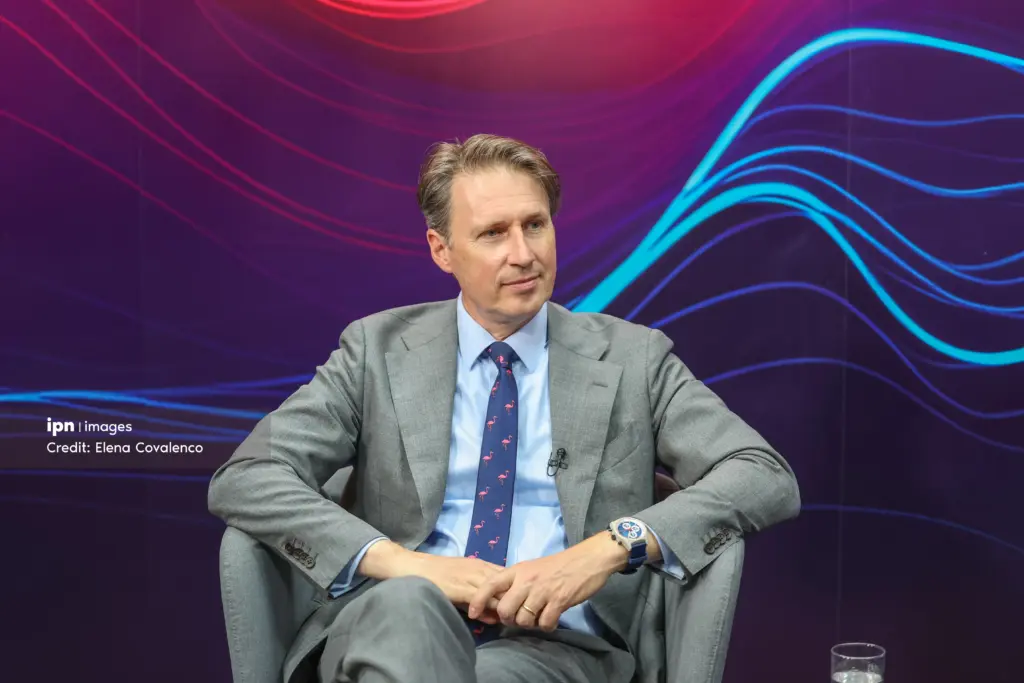
Since the opening of the Dutch Embassy in Chisinau, the relations between our countries have become more dynamic. In which areas of cooperation have the greatest progress been recorded so far?

Indeed, the Netherlands has intensified its relations with Moldova in many areas. I would like to highlight our cooperation in the field of cyber security. Why? Because cyber security has been essential for the integrity and security of the elections. The Netherlands, together with partners such as the European Union partnership mission and the NATO liaison office, managed to contribute to the protection of the Electoral Council’s computers against massive cyber attacks that took place before the elections and even on election day. These attacks were a clear indication that Moldova’s democracy was under threat.

However, Moldova has resisted. These attacks were repelled, and this is a significant outcome. Not just that. I mentioned cybersecurity because it is a mutually beneficial field. Whoever attacks in cyberspace, in a way, reveals their methods. You can learn from the attack and better prepare your own defense. Thus, the Netherlands and Moldova have had bilateral consultations in the field of cybersecurity, and the cooperation has been very fruitful for both parties.

The Netherlands is known for its strong emphasis on the rule of law and institutional integrity. How does your country appreciate the efforts of the Republic of Moldova in judicial reform and the fight against corruption?

I am of the opinion that what people observe when they look at Moldova’s reforms in this area is the fact that the initiative to start these reforms came from within. In 2021, the Moldovans truly desired a change and the fight against corruption. This happened before Moldova obtained the status of a candidate country for the European Union and before the start of accession negotiations. Of course, now this is also a condition, because for a member state of the European Union it is important to have a rule of law, a functional, independent, fair and accessible justice system.

I believe that what is seen in the Netherlands is the fact that Moldova is undertaking these reforms for its own reasons. Of course, it is a process that requires time and must be carried out with great care. The Government of the Republic of Moldova also takes into account the recommendations of institutions such as the Venice Commission. It is an ongoing process, but it is moving in the right direction and is already producing results. People have noticed, of course, that certain individuals have been convicted. This demonstrates that the system is working. Overall, these are the aspects that stand out in Moldova’s reforms to combat corruption.

The Republic of Moldova is facing increasingly larger challenges related to disinformation and regional security due to the war in neighboring Ukraine. How can European partners, including the Netherlands, help Moldova to strengthen its resilience?

I believe that a strong Moldova means strong institutions and involved, capable citizens. Systems, institutions and people are important. However, I would like to focus on the role of mass media. I believe that independent press, including in Russian language, so it can be accessible to Russian speakers, is extremely important. This is an area that we already support. Not only the Netherlands, but also other states and institutions. And I think this is essential for the future as well.

I have seen impressive examples of investigative journalism in Moldova. For instance, a journalist’s infiltration into Shor’s network clearly revealed what is happening there. This type of journalism is truly impressive and serves to unveil the truth. This is exactly the role of journalists: to reveal the truth and contribute to a transparent society.
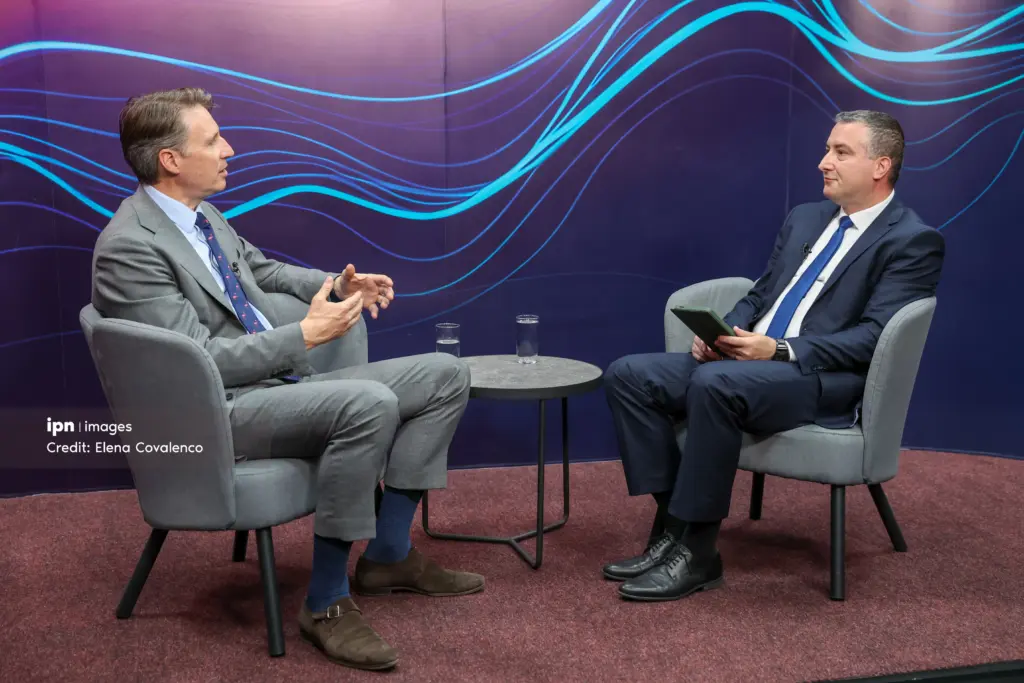
Officials from the Netherlands have often highlighted the democratic progress of the Republic of Moldova in recent years. What changes in Moldovan society or governance have personally impressed you during your tenure here?

What impressed me the most were the people. Of course, we talk a lot about institutions, but as an embassy, we have a program dedicated to supporting and empowering young people. The program is called Tulip Youth Academy. Over the course of ten days – or ten Saturdays – young people learn about the challenges of society, but also about how to implement a project: how to write it, manage it, finance it and take responsibility for it.

I have seen many different people who have achieved results as human rights defenders in areas where you might not have expected. For example, Mrs. Diana Mazniuc was involved in supporting young offenders from the penitentiary system to help them reintegrate into society. It is very important, very specific work and you need someone with passion to do it.

That’s why I say that I like what I see in Moldovans: young people who want to change things and who believe in Moldova. I notice the same thing in the economic field. We have another program called Tulip Business Incubator, which focuses on young entrepreneurs. These are young people who want to start a business here. It’s a similar program, but focused on economics and how a business is run. This impressed me a lot.

The economic cooperation between the Republic of Moldova and the Netherlands is also expanding. What sectors of the Moldovan economy do you think have the greatest potential to attract Dutch investments and expertise?

When I first came here, I felt that I needed to explore first to be able to answer this question. Over the past three years, together with the embassy team, we have organized several business forums and invited business people from Moldova and the Netherlands to see in which areas there is interest. I would divide them into three categories: digital, agriculture and other diverse areas, such as logistics and construction.

In this context, I noticed that business people in the digital field were already finding opportunities on their own, while in agriculture and especially in horticulture, I believe we can continue to make a difference. As a farmer, you need to learn about innovations and modern techniques, but you also have to manage government regulations, for example those related to food safety.

I believe there is a lot of room for development here, as Moldova already has a very active ecosystem in the field of horticulture. Your wines are, of course, famous, but apples, cherries and plums are also produced here. The Netherlands can offer more modern techniques. Thus, on June 11, in Maastricht, in the Netherlands, together with Belgium and Luxembourg, Moldova Invest is organizing a trade event. Approximately 20 Moldovan companies will first travel to Amsterdam, to GreenTech, to learn about innovation, and then they will have bilateral meetings in Maastricht.

I am very excited about this, as I see a lot of potential. For example, I see opportunities for building greenhouses in Moldova. To turn this into reality, we want to provide a concrete example and launch a pilot project here. We are working very closely with a technical university and I see opportunities to connect this project with energy efficiency, especially through the use of geothermal energy.

In the Netherlands, this may be found perhaps at 2,000 meters deep, while here it could be just 200 meters. If this is possible, then cheaper energy can also be obtained, which is very important for greenhouses. Of course, we are still at the beginning, but this is the kind of field where I see a lot of room for Moldovan-Dutch cooperation.
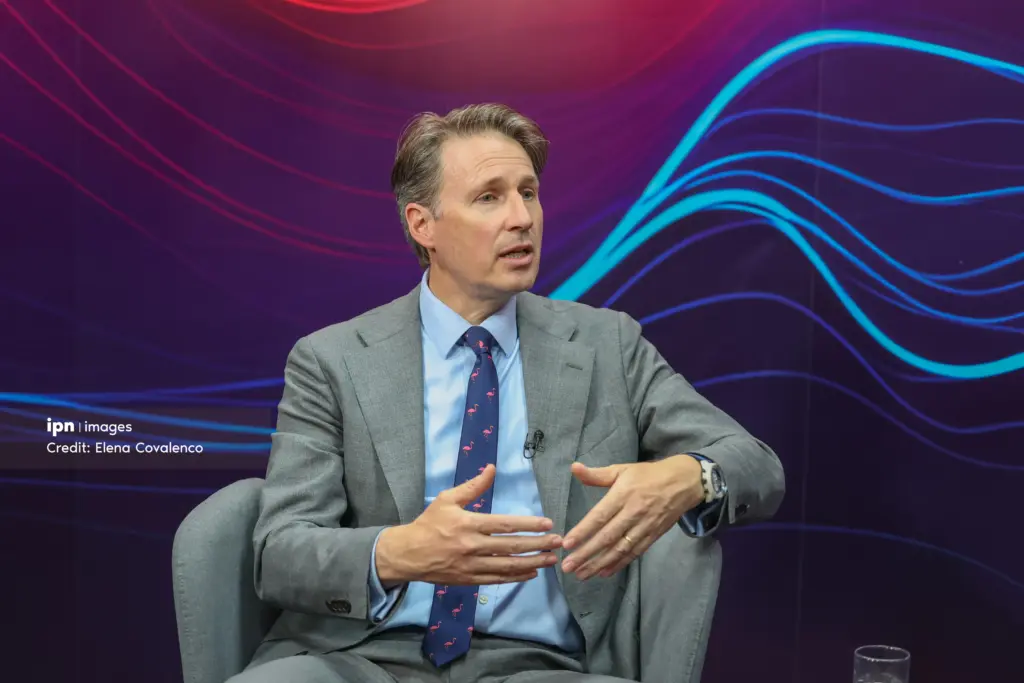
And, finally, Excellency, many citizens of the Republic of Moldova see European integration not only as a political objective, but also as a hope for a better future. Based on your experience, what message would you like to convey to Moldovans about their European aspirations?

Here I rely on the Dutch experience. The Netherlands and the Dutch are surrounded by large countries, just like Moldova. In the Netherlands, we learn that it is important to speak the languages of our neighbors — in our case French, German and English. But it is equally important to have open borders. I believe that Moldova can draw inspiration from this model. Moldova is surrounded by two large countries: Romania and Ukraine. Unfortunately, the war is not yet over, but Odessa remains close.

I believe that by joining the European Union, Moldova and Moldovans will fully find themselves at home, in a space with open borders, where people can move, travel and trade freely in the region. This is my hope for the accession of the Republic of Moldova to the European Union.

Excellency, thank you very much for this interview!

It was my pleasure, thank you!

Octavian Bratosin, IPN


The interview stage of the competition for the appointment of the general director of the public company Teleradio-Moldova, scheduled for July 18, has been postponed at the request of the Information and Security Service. The decision of the Supervisory Council of the institution comes after the director of the SIS, Alexandru Musteata, requested additional time to verify the candidates, reports IPN.

The decision to postpone was approved with five votes in favor and two against.

At the interview stage, four candidates were admitted: Dorin Scobioala, Ecaterina Cheptanaru, Sergiu Sandulescu and Andrei Zapsa. Adrian Graur’s candidacy did not meet the necessary conditions to proceed to the next stage. The file of a sixth candidate, Dumitru Vieru, about whom the Supervisory Council only announced on Thursday, was also rejected on Thursday, on the grounds that it did not meet all the requirements set out in the regulations.

The competition for the appointment of the general director of TRM was launched after the former director, Vlad Turcanu, resigned in the wake of the scandal triggered by the score given by the jury from Moldova to Romania at Eurovision.

0 FacebookTwitterPinterestEmail


Netherlands supports opening EU accession clusters for Moldova . Ambassador Duijn for IPN

The Netherlands supports the opening of negotiation chapter clusters for Moldova’s accession to the European Union. This is the firm message conveyed by the ambassador of the Netherlands to Chisinau, Fred Duijn. In an interview for IPN, the diplomat mentioned that Moldova has substantial funds available through the Growth Program, which it must manage efficiently.

Ladies and gentlemen, good day! The cooperation between the Republic of Moldova and the Kingdom of the Netherlands has significantly intensified in recent years, with the opening of the Embassy in Chisinau and the constant support offered to the Republic of Moldova in the process of reforms and European integration. Under these circumstances, we discuss with His Excellency, Mr. Fred Duijn, the ambassador of the Kingdom of the Netherlands to the Republic of Moldova, about our country’s European journey, regional security challenges, bilateral cooperation and how Moldova is viewed from the perspective of a founding state of the European Union. Excellency, we thank you for accepting the invitation of the IPN Press Agency.

Thank you for the invitation.

The Netherlands has repeatedly expressed its support for the European path of the Republic of Moldova. In your opinion, what are the most important reforms that Moldova still needs to implement in order to confidently advance towards joining the European Union?

Thank you for the invitation. And thank you for this question. First of all, I would like to underline what you said about the Netherlands’ support for the European path of the Republic of Moldova. On May 20, President Maia Sandu made a visit to the Netherlands, in The Hague, where she met with the new Prime Minister, Rob Jetten, as well as with members of the government, the Minister of Foreign Affairs and the Minister of Defense. She had the opportunity to personally hear about the firm support that the Netherlands offers to the Republic of Moldova and which they will continue in the future.

I am very pleased to emphasize that the Netherlands is ready to support and officially open the clusters that are so important for advancing the accession process. Of course, Moldova has challenges, and you asked me about the most important reforms to come. I believe that, at this stage, the most important aspect is implementation.

There are already many funds available through the European Union’s Growth Plan, and these funds must be used efficiently. This requires proper project management. People are needed who can plan, sometimes at a technical level, but also people who manage the projects and take responsibility for them.

I believe that this would accelerate the reforms if the implementation will progress and will help Moldova to build a credible history. Reforms can exist legally and on paper, but for accession to the European Union, it is important that they work in practice and that Moldova demonstrates that they are effectively functioning. Therefore, a concrete history is very important.

Since the opening of the Dutch Embassy in Chisinau, the relations between our countries have become more dynamic. In which areas of cooperation have the greatest progress been recorded so far?

Indeed, the Netherlands has intensified its relations with Moldova in many areas. I would like to highlight our cooperation in the field of cyber security. Why? Because cyber security has been essential for the integrity and security of the elections. The Netherlands, together with partners such as the European Union partnership mission and the NATO liaison office, managed to contribute to the protection of the Electoral Council’s computers against massive cyber attacks that took place before the elections and even on election day. These attacks were a clear indication that Moldova’s democracy was under threat.

However, Moldova has resisted. These attacks were repelled, and this is a significant outcome. Not just that. I mentioned cybersecurity because it is a mutually beneficial field. Whoever attacks in cyberspace, in a way, reveals their methods. You can learn from the attack and better prepare your own defense. Thus, the Netherlands and Moldova have had bilateral consultations in the field of cybersecurity, and the cooperation has been very fruitful for both parties.

The Netherlands is known for its strong emphasis on the rule of law and institutional integrity. How does your country appreciate the efforts of the Republic of Moldova in judicial reform and the fight against corruption?

I am of the opinion that what people observe when they look at Moldova’s reforms in this area is the fact that the initiative to start these reforms came from within. In 2021, the Moldovans truly desired a change and the fight against corruption. This happened before Moldova obtained the status of a candidate country for the European Union and before the start of accession negotiations. Of course, now this is also a condition, because for a member state of the European Union it is important to have a rule of law, a functional, independent, fair and accessible justice system.

I believe that what is seen in the Netherlands is the fact that Moldova is undertaking these reforms for its own reasons. Of course, it is a process that requires time and must be carried out with great care. The Government of the Republic of Moldova also takes into account the recommendations of institutions such as the Venice Commission. It is an ongoing process, but it is moving in the right direction and is already producing results. People have noticed, of course, that certain individuals have been convicted. This demonstrates that the system is working. Overall, these are the aspects that stand out in Moldova’s reforms to combat corruption.

The Republic of Moldova is facing increasingly larger challenges related to disinformation and regional security due to the war in neighboring Ukraine. How can European partners, including the Netherlands, help Moldova to strengthen its resilience?

I believe that a strong Moldova means strong institutions and involved, capable citizens. Systems, institutions and people are important. However, I would like to focus on the role of mass media. I believe that independent press, including in Russian language, so it can be accessible to Russian speakers, is extremely important. This is an area that we already support. Not only the Netherlands, but also other states and institutions. And I think this is essential for the future as well.

I have seen impressive examples of investigative journalism in Moldova. For instance, a journalist’s infiltration into Shor’s network clearly revealed what is happening there. This type of journalism is truly impressive and serves to unveil the truth. This is exactly the role of journalists: to reveal the truth and contribute to a transparent society.

Officials from the Netherlands have often highlighted the democratic progress of the Republic of Moldova in recent years. What changes in Moldovan society or governance have personally impressed you during your tenure here?

What impressed me the most were the people. Of course, we talk a lot about institutions, but as an embassy, we have a program dedicated to supporting and empowering young people. The program is called Tulip Youth Academy. Over the course of ten days – or ten Saturdays – young people learn about the challenges of society, but also about how to implement a project: how to write it, manage it, finance it and take responsibility for it.

I have seen many different people who have achieved results as human rights defenders in areas where you might not have expected. For example, Mrs. Diana Mazniuc was involved in supporting young offenders from the penitentiary system to help them reintegrate into society. It is very important, very specific work and you need someone with passion to do it.

That’s why I say that I like what I see in Moldovans: young people who want to change things and who believe in Moldova. I notice the same thing in the economic field. We have another program called Tulip Business Incubator, which focuses on young entrepreneurs. These are young people who want to start a business here. It’s a similar program, but focused on economics and how a business is run. This impressed me a lot.

The economic cooperation between the Republic of Moldova and the Netherlands is also expanding. What sectors of the Moldovan economy do you think have the greatest potential to attract Dutch investments and expertise?

When I first came here, I felt that I needed to explore first to be able to answer this question. Over the past three years, together with the embassy team, we have organized several business forums and invited business people from Moldova and the Netherlands to see in which areas there is interest. I would divide them into three categories: digital, agriculture and other diverse areas, such as logistics and construction.

In this context, I noticed that business people in the digital field were already finding opportunities on their own, while in agriculture and especially in horticulture, I believe we can continue to make a difference. As a farmer, you need to learn about innovations and modern techniques, but you also have to manage government regulations, for example those related to food safety.

I believe there is a lot of room for development here, as Moldova already has a very active ecosystem in the field of horticulture. Your wines are, of course, famous, but apples, cherries and plums are also produced here. The Netherlands can offer more modern techniques. Thus, on June 11, in Maastricht, in the Netherlands, together with Belgium and Luxembourg, Moldova Invest is organizing a trade event. Approximately 20 Moldovan companies will first travel to Amsterdam, to GreenTech, to learn about innovation, and then they will have bilateral meetings in Maastricht.

I am very excited about this, as I see a lot of potential. For example, I see opportunities for building greenhouses in Moldova. To turn this into reality, we want to provide a concrete example and launch a pilot project here. We are working very closely with a technical university and I see opportunities to connect this project with energy efficiency, especially through the use of geothermal energy.

In the Netherlands, this may be found perhaps at 2,000 meters deep, while here it could be just 200 meters. If this is possible, then cheaper energy can also be obtained, which is very important for greenhouses. Of course, we are still at the beginning, but this is the kind of field where I see a lot of room for Moldovan-Dutch cooperation.

And, finally, Excellency, many citizens of the Republic of Moldova see European integration not only as a political objective, but also as a hope for a better future. Based on your experience, what message would you like to convey to Moldovans about their European aspirations?

Here I rely on the Dutch experience. The Netherlands and the Dutch are surrounded by large countries, just like Moldova. In the Netherlands, we learn that it is important to speak the languages of our neighbors — in our case French, German and English. But it is equally important to have open borders. I believe that Moldova can draw inspiration from this model. Moldova is surrounded by two large countries: Romania and Ukraine. Unfortunately, the war is not yet over, but Odessa remains close.

I believe that by joining the European Union, Moldova and Moldovans will fully find themselves at home, in a space with open borders, where people can move, travel and trade freely in the region. This is my hope for the accession of the Republic of Moldova to the European Union.

Excellency, thank you very much for this interview!

It was my pleasure, thank you!

Octavian Bratosin, IPN


The death toll from the earthquakes that occurred in Venezuela last month has reached nearly five thousand, and approximately 50 thousand people are reported missing following the collapses caused by the earthquakes. The European Union has allocated an emergency aid of 20 million euros for reconstruction and medical assistance, reports IPN.

The official data regarding the number of deceased was announced by the President of the Parliament from Caracas, Jorge Rodríguez. The estimate regarding the number of missing persons was presented by the United Nations Organization, which warns that tens of thousands of people could still be under the rubble.

The earthquakes left about 17,000 people injured and more than 21,000 forced to take refuge in makeshift shelters. Locals said that in the first hours after the earthquakes, the authorities’ intervention was slow, with the first rescue efforts being organized by civilians and independent groups, Al Jazeera reports.

To support recovery efforts, the European Union has announced aid of 20 million euros. Half of this amount will be allocated to the affected communities, while the other half will go to rescue teams, medical staff and experts involved in interventions.

The European Commissioner for Equality, Training and Crisis Management, Hadja Lahbib, went to Caracas to coordinate the support offered and to discuss with local authorities. Through the European Union Civil Protection Mechanism, 750 rescuers from 18 countries have been mobilized so far, as well as approximately 80 tons of supplies.

The UN estimates that the reconstruction of Venezuela after the disaster could require approximately 37 billion dollars.

0 FacebookTwitterPinterestEmail


1 IANUARIE, 2025
1 IANUARIE, 2025