

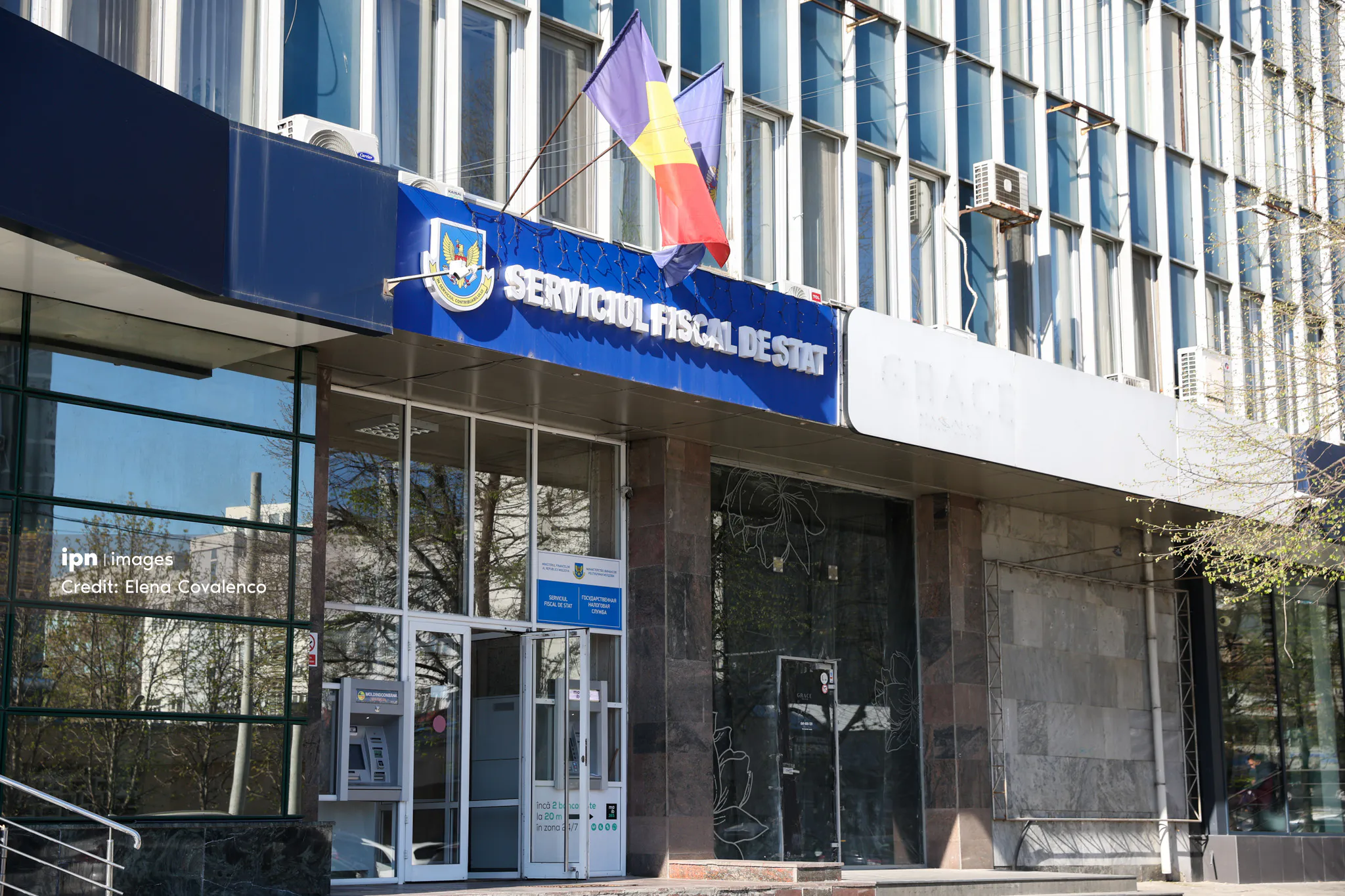
Over 700 cases of illicit economic activity, detected by tax inspectors in the month of June

In June, fiscal inspectors detected 769 cases of illicit economic activity carried out by individuals and imposed fines totaling over 1.2 million lei. According to the State Fiscal Service, the most violations were found in commerce, service provision and passenger transportation in taxi mode, IPN reports.

The SFS data shows that 81% of the detected cases targeted goods trading, 10% – service provision, 8% – passenger transportation in taxi mode and 1% – online trading.

The largest penalties were applied in the field of commerce, where fines exceeded one million lei. For illicit activities in the service sector, penalties of over 136 thousand lei were applied, in passenger transport in taxi regime – over 98 thousand lei and in online commerce – 7 thousand lei.

According to the SFS, individuals who carry out economic activities without legal registration risk fines between 1,500 and 4,500 lei, in accordance with the provisions of the Contravention Code.

The institution recommends that individuals conducting economic activities register legally, declare their income, and fulfill their tax obligations. According to the authorities, economic activity carried out outside the legal framework affects fair competition and reduces resources intended for the financing of public services.


The reform of local government in the UTA Gagauzia requires a different approach than the one applied in the rest of the country. The statement belongs to the expert in local public administration, Igor Guseinov, and was made during the public debate “Reform of public administration in the Gagauzia Autonomous Region”, organized by the IPN Press Agency. According to the expert, although the reform is considered necessary in autonomy, currently the voluntary amalgamation procedure cannot be carried out due to the limited functionality of the People’s Assembly.

Igor Guseinov mentioned that the mechanism for implementing reform in autonomy implies an additional stage compared to the rest of the country. After the decision of amalgamation is adopted by the local councils, it must be submitted for review to the People’s Assembly.

“The implementation of the LPA reform at the level of Gagauzia requires a special approach. The procedure is as follows: after the villages, communes, cities, agree on voluntary amalgamation, the decision is taken by the local council. Subsequently, this decision is transmitted to the Popular Assembly”, explained Igor Guseinov.

According to the expert, the main problem is that, under the current conditions, the People’s Assembly cannot adopt legislative acts, which makes the completion of the voluntary amalgamation procedure impossible.

“Currently, the Popular Assembly has limited functionality and cannot pass laws. This is the first challenge that local authorities in autonomy are facing. Now, even if there would be localities within the autonomy that want to merge, legally, this procedure is not possible”, Igor Guseinov further stated.

According to him, the most likely scenario is the maintenance of the current administrative organization in autonomy, given that the first stage of the voluntary amalgamation process has not been utilized by any municipality in Gagauzia.

“There have been discussions between the representatives of the State Chancellery and the mayors of Gagauzia, but it is necessary for many aspects to be discussed with the People’s Assembly as well. However, such discussions have not taken place. Following the discussions we had in autonomy, no one doubts the necessity of reform, but the question arises: in what way? One of the scenarios is that things in autonomy remain as they are. We believe that this scenario is the most likely. And this is because the first stage of voluntary amalgamation, anticipated until July 31, has already been missed by the mayors of Gagauzia”, said Igor Guseinov.

Disclaimer: This material was developed by the IPN Press Agency, within the project “Local Government Reform in Dialogue”, financed by the Ministry of Culture from the Media Subsidy Fund.


0 FacebookTwitterPinterestEmail


Over 700 cases of illicit economic activity, detected by tax inspectors in the month of June

In June, fiscal inspectors detected 769 cases of illicit economic activity carried out by individuals and imposed fines totaling over 1.2 million lei. According to the State Fiscal Service, the most violations were found in commerce, service provision and passenger transportation in taxi mode, IPN reports.

The SFS data shows that 81% of the detected cases targeted goods trading, 10% – service provision, 8% – passenger transportation in taxi mode and 1% – online trading.

The largest penalties were applied in the field of commerce, where fines exceeded one million lei. For illicit activities in the service sector, penalties of over 136 thousand lei were applied, in passenger transport in taxi regime – over 98 thousand lei and in online commerce – 7 thousand lei.

According to the SFS, individuals who carry out economic activities without legal registration risk fines between 1,500 and 4,500 lei, in accordance with the provisions of the Contravention Code.

The institution recommends that individuals conducting economic activities register legally, declare their income, and fulfill their tax obligations. According to the authorities, economic activity carried out outside the legal framework affects fair competition and reduces resources intended for the financing of public services.


The 12 business incubators in the Republic of Moldova will benefit from investments totaling 386 thousand dollars, provided through a project supported by Sweden, Norway and UNDP. The funds are intended for energy efficiency measures, the use of renewable sources, and the development of institutional capacities, reports IPN.

According to UNDP Moldova, the investments will allow the installation of photovoltaic systems and energy storage equipment, heat pumps and LED lighting. Additionally, insulation work, window and door replacements, as well as the procurement of equipment designed to reduce energy consumption and operational costs are planned.

In addition to infrastructure modernization, the incubators will benefit from an institutional development program. This aims to integrate the principles of gender equality and climate action into the consulting, training, and support services offered to small and medium enterprises. At the same time, informational activities will be organized in communities, including for women working in agriculture.

According to UNDP data, this year, energy audits have been conducted in 10 out of the 12 incubators. The implementation of the recommended measures would require investments of about 1.8 million dollars, but would allow annual savings of approximately 2.8 million lei, reducing energy consumption by over a million kWh and decreasing CO2 emissions.

Business incubators operate in Leova, Cahul, Calarasi, Ceadar-Lunga, Cimislia, Dubasari, Nisporeni, Rezina, Soroca, Stefan Voda, Sangerei and the municipality of Chisinau. They host nearly 300 enterprises and support over a thousand jobs.

0 FacebookTwitterPinterestEmail


1 IANUARIE, 2025
1 IANUARIE, 2025