

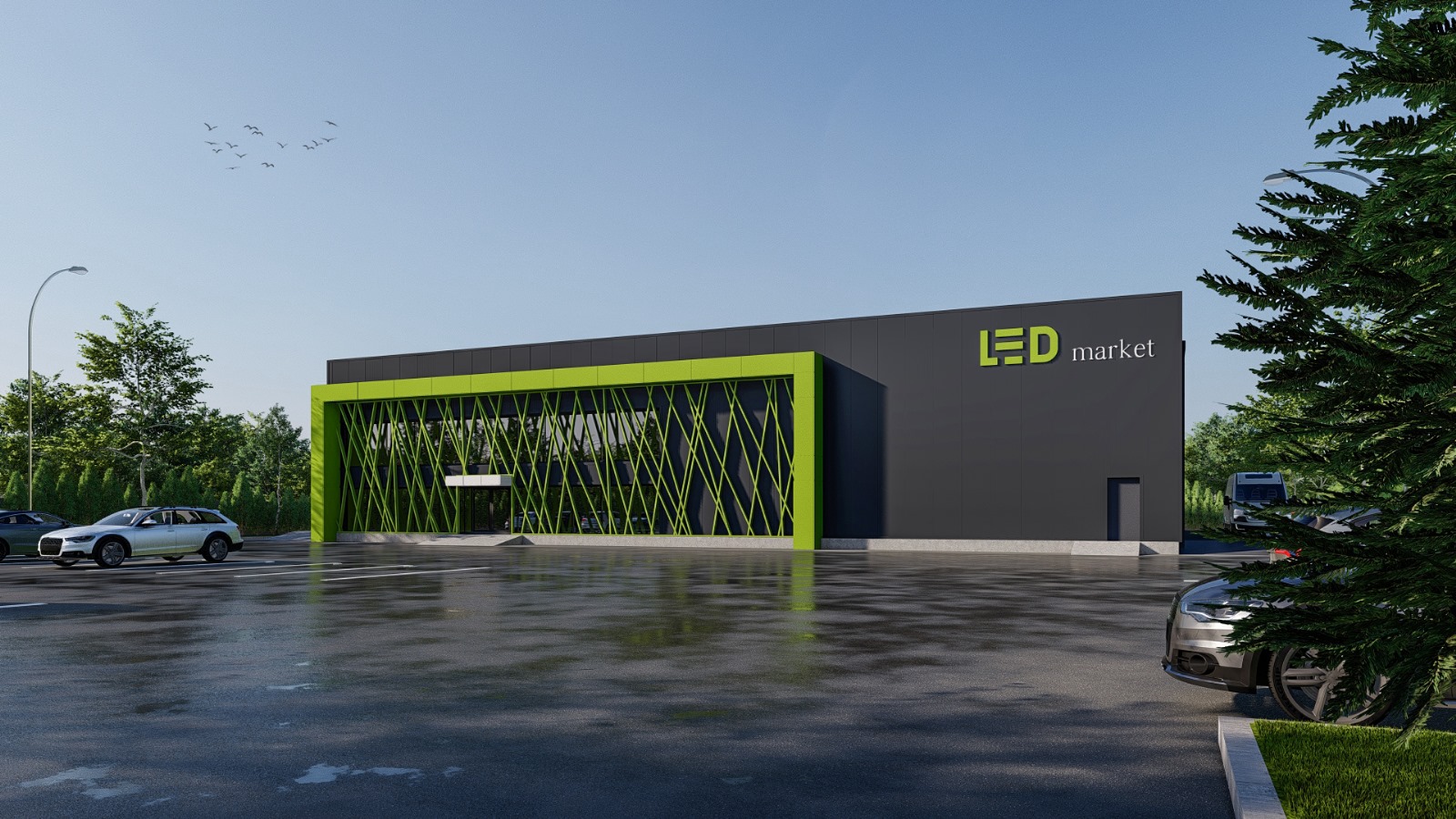
LED Market: Lighting solutions developed in Republic of Moldova, delivered to foreign markets

LED Market remains one of the most visible manufacturers of energy-efficient lighting solutions in the region. With over two decades of experience, the company combines engineering, local production, and international technical standards in a modern infrastructure, supported by a growing team of 80 employees in 2025.

LED Market covers the entire production process, being an integrated company with advanced technology: PCB design, testing, assembly, installation, and post-sales support. The SMT equipment and electronic microscopes with up to 2000× magnification allow strict quality control. The portfolio includes household, industrial, commercial, street, architectural lighting and solutions for horticulture.
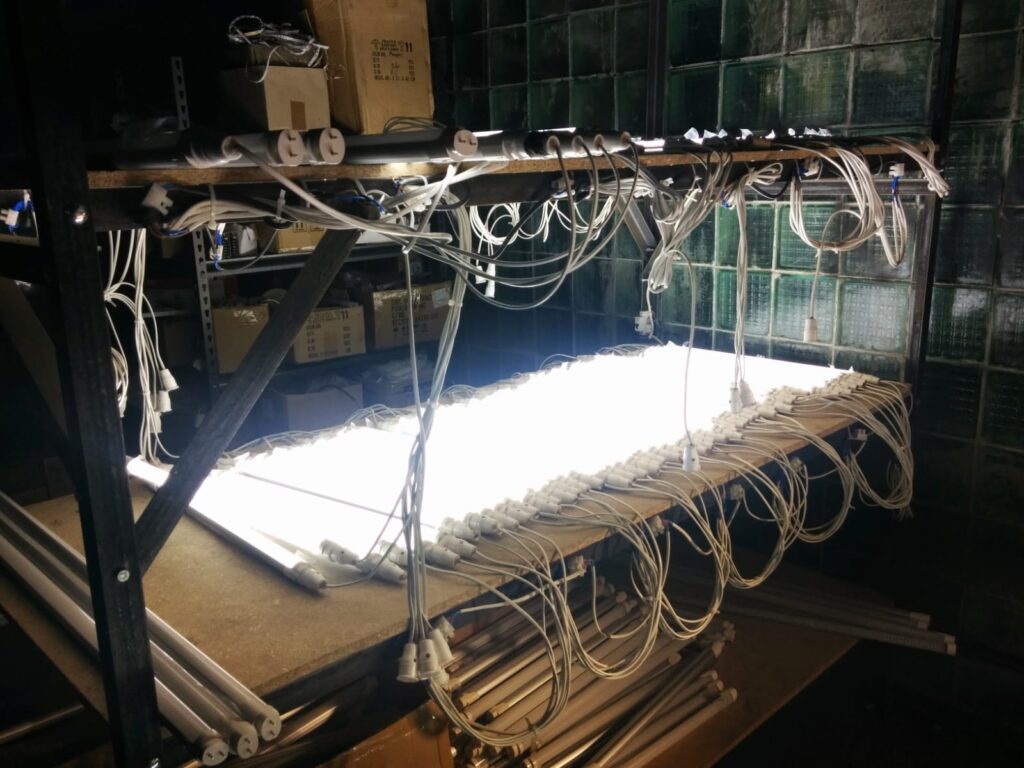
The estimated turnover for 2025 is approximately 4 million euros, and the production capacity is currently operating at 65 – 70%, with the possibility of rapid expansion depending on projects and demand.

A competitive market, but with international collaborations

External expansion remains a major objective, but the process is gradual. “We are already collaborating with a company in Romania, which represents all our products, and we have partners in France, Germany and Ireland“, says Vadim Nanu, CEO of LED Market.

The company primarily focuses on the business-to-business segment, sales to economic agents such as distributors, store networks, installers, architects and designers.

Major projects: from Chisinau to Europe

In recent years, the company has carried out significant projects both nationally and in collaboration with international partners. Locally, among the clients are Digital Park, maib Park, PORT MALL, Hotel IBIS, Satul German, as well as the Bonus, Nr1, JYSK, AZART and DITA store chains.
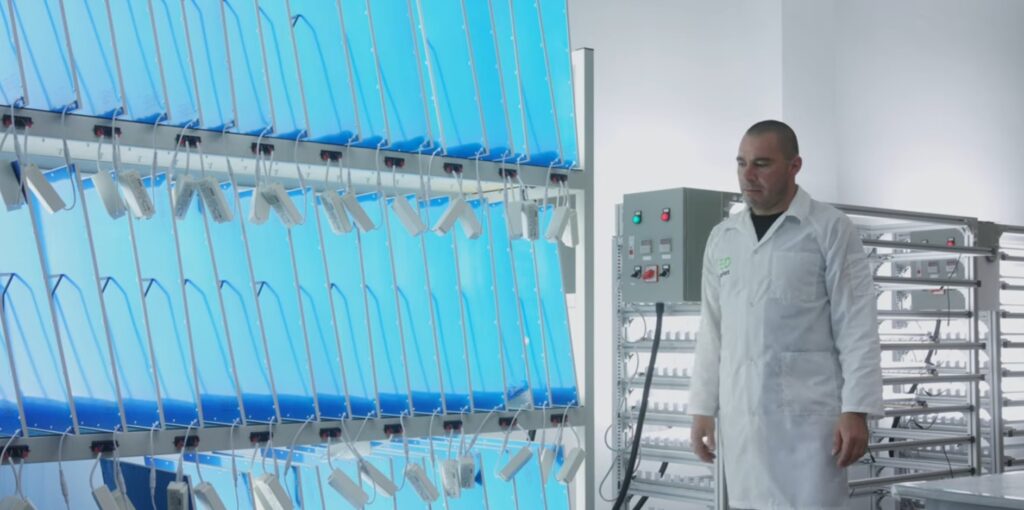
“Internationally, the company has collaborated with MixMarkt (Germany), Starbucks, Burger King, Cărturești and Moldova Mall Iași (Romania)”, adds Vadim Nanu. These collaborations confirm that products developed in Moldova are competitive and can be integrated into projects of internationally recognized brands, even in a demanding market.

The electronics industry in Moldova – a sector undergoing transformation

The electronics industry in the Republic of Moldova is based on a solid industrial tradition and has developed into a competitive sector at the regional level. With over 170 companies and approximately 16,000 employees, the field significantly contributes to the economy through production, exports and attracting foreign investments. The sector is supported by a strong technical educational base, including dual vocational education, specialty colleges and technical universities, with programs constantly adapted to the requirements of the industry.

In addition to production capabilities, Moldovan companies offer research, development, and engineering services, benefiting from a competitive tax regime and proximity to EU and CIS markets. The skilled workforce, advantageous operational costs, and existing industrial infrastructure position Moldova as an attractive destination for the development and manufacture of electronic products, from simple components to advanced hardware and software solutions.

This material is part of the campaign “From Moldova. To the Whole World.” — an initiative of the Invest Moldova Agency to promote local producers on international markets.

The campaign highlights the real stories of local producers who develop competitive products and successfully export both from the Republic of Moldova and to international markets.

The Invest Moldova Agency promotes Moldovan companies from various fields, such as agri-food, fashion, technology, electronics and IT, highlighting their development and access to foreign markets. The aim is to increase the visibility of products from the Republic of Moldova and strengthen the country’s brand through authentic stories. Discover more success stories of Moldovan exporters on the website invest.gov.md.

Moldova’s exports of goods reached $345.4 million in September 2025, up 23.1% from the same period last year. The main markets remain Romania (29.6%), Italy (9.3%) and Turkey (8.8%), and the entire EU-27 continues to be a solid economic partner for Moldovan producers, accounting for 68.1% of total exports. Through its programs, the Invest Moldova Agency supports companies that want to promote their products and expand into international markets. In 2025, 71 companies participated in Export Missions – Romania and Export Missions – Germany, where they identified relevant partners and new business opportunities.


The reform of local government in the UTA Gagauzia requires a different approach than the one applied in the rest of the country. The statement belongs to the expert in local public administration, Igor Guseinov, and was made during the public debate “Reform of public administration in the Gagauzia Autonomous Region”, organized by the IPN Press Agency. According to the expert, although the reform is considered necessary in autonomy, currently the voluntary amalgamation procedure cannot be carried out due to the limited functionality of the People’s Assembly.

Igor Guseinov mentioned that the mechanism for implementing reform in autonomy implies an additional stage compared to the rest of the country. After the decision of amalgamation is adopted by the local councils, it must be submitted for review to the People’s Assembly.

“The implementation of the LPA reform at the level of Gagauzia requires a special approach. The procedure is as follows: after the villages, communes, cities, agree on voluntary amalgamation, the decision is taken by the local council. Subsequently, this decision is transmitted to the Popular Assembly”, explained Igor Guseinov.

According to the expert, the main problem is that, under the current conditions, the People’s Assembly cannot adopt legislative acts, which makes the completion of the voluntary amalgamation procedure impossible.

“Currently, the Popular Assembly has limited functionality and cannot pass laws. This is the first challenge that local authorities in autonomy are facing. Now, even if there would be localities within the autonomy that want to merge, legally, this procedure is not possible”, Igor Guseinov further stated.

According to him, the most likely scenario is the maintenance of the current administrative organization in autonomy, given that the first stage of the voluntary amalgamation process has not been utilized by any municipality in Gagauzia.

“There have been discussions between the representatives of the State Chancellery and the mayors of Gagauzia, but it is necessary for many aspects to be discussed with the People’s Assembly as well. However, such discussions have not taken place. Following the discussions we had in autonomy, no one doubts the necessity of reform, but the question arises: in what way? One of the scenarios is that things in autonomy remain as they are. We believe that this scenario is the most likely. And this is because the first stage of voluntary amalgamation, anticipated until July 31, has already been missed by the mayors of Gagauzia”, said Igor Guseinov.

Disclaimer: This material was developed by the IPN Press Agency, within the project “Local Government Reform in Dialogue”, financed by the Ministry of Culture from the Media Subsidy Fund.


0 FacebookTwitterPinterestEmail


LED Market: Lighting solutions developed in Republic of Moldova, delivered to foreign markets

LED Market remains one of the most visible manufacturers of energy-efficient lighting solutions in the region. With over two decades of experience, the company combines engineering, local production, and international technical standards in a modern infrastructure, supported by a growing team of 80 employees in 2025.

LED Market covers the entire production process, being an integrated company with advanced technology: PCB design, testing, assembly, installation, and post-sales support. The SMT equipment and electronic microscopes with up to 2000× magnification allow strict quality control. The portfolio includes household, industrial, commercial, street, architectural lighting and solutions for horticulture.

The estimated turnover for 2025 is approximately 4 million euros, and the production capacity is currently operating at 65 – 70%, with the possibility of rapid expansion depending on projects and demand.

A competitive market, but with international collaborations

External expansion remains a major objective, but the process is gradual. “We are already collaborating with a company in Romania, which represents all our products, and we have partners in France, Germany and Ireland“, says Vadim Nanu, CEO of LED Market.

The company primarily focuses on the business-to-business segment, sales to economic agents such as distributors, store networks, installers, architects and designers.

Major projects: from Chisinau to Europe

In recent years, the company has carried out significant projects both nationally and in collaboration with international partners. Locally, among the clients are Digital Park, maib Park, PORT MALL, Hotel IBIS, Satul German, as well as the Bonus, Nr1, JYSK, AZART and DITA store chains.

“Internationally, the company has collaborated with MixMarkt (Germany), Starbucks, Burger King, Cărturești and Moldova Mall Iași (Romania)”, adds Vadim Nanu. These collaborations confirm that products developed in Moldova are competitive and can be integrated into projects of internationally recognized brands, even in a demanding market.

The electronics industry in Moldova – a sector undergoing transformation

The electronics industry in the Republic of Moldova is based on a solid industrial tradition and has developed into a competitive sector at the regional level. With over 170 companies and approximately 16,000 employees, the field significantly contributes to the economy through production, exports and attracting foreign investments. The sector is supported by a strong technical educational base, including dual vocational education, specialty colleges and technical universities, with programs constantly adapted to the requirements of the industry.

In addition to production capabilities, Moldovan companies offer research, development, and engineering services, benefiting from a competitive tax regime and proximity to EU and CIS markets. The skilled workforce, advantageous operational costs, and existing industrial infrastructure position Moldova as an attractive destination for the development and manufacture of electronic products, from simple components to advanced hardware and software solutions.

This material is part of the campaign “From Moldova. To the Whole World.” — an initiative of the Invest Moldova Agency to promote local producers on international markets.

The campaign highlights the real stories of local producers who develop competitive products and successfully export both from the Republic of Moldova and to international markets.

The Invest Moldova Agency promotes Moldovan companies from various fields, such as agri-food, fashion, technology, electronics and IT, highlighting their development and access to foreign markets. The aim is to increase the visibility of products from the Republic of Moldova and strengthen the country’s brand through authentic stories. Discover more success stories of Moldovan exporters on the website invest.gov.md.

Moldova’s exports of goods reached $345.4 million in September 2025, up 23.1% from the same period last year. The main markets remain Romania (29.6%), Italy (9.3%) and Turkey (8.8%), and the entire EU-27 continues to be a solid economic partner for Moldovan producers, accounting for 68.1% of total exports. Through its programs, the Invest Moldova Agency supports companies that want to promote their products and expand into international markets. In 2025, 71 companies participated in Export Missions – Romania and Export Missions – Germany, where they identified relevant partners and new business opportunities.


The 12 business incubators in the Republic of Moldova will benefit from investments totaling 386 thousand dollars, provided through a project supported by Sweden, Norway and UNDP. The funds are intended for energy efficiency measures, the use of renewable sources, and the development of institutional capacities, reports IPN.

According to UNDP Moldova, the investments will allow the installation of photovoltaic systems and energy storage equipment, heat pumps and LED lighting. Additionally, insulation work, window and door replacements, as well as the procurement of equipment designed to reduce energy consumption and operational costs are planned.

In addition to infrastructure modernization, the incubators will benefit from an institutional development program. This aims to integrate the principles of gender equality and climate action into the consulting, training, and support services offered to small and medium enterprises. At the same time, informational activities will be organized in communities, including for women working in agriculture.

According to UNDP data, this year, energy audits have been conducted in 10 out of the 12 incubators. The implementation of the recommended measures would require investments of about 1.8 million dollars, but would allow annual savings of approximately 2.8 million lei, reducing energy consumption by over a million kWh and decreasing CO2 emissions.

Business incubators operate in Leova, Cahul, Calarasi, Ceadar-Lunga, Cimislia, Dubasari, Nisporeni, Rezina, Soroca, Stefan Voda, Sangerei and the municipality of Chisinau. They host nearly 300 enterprises and support over a thousand jobs.

0 FacebookTwitterPinterestEmail


1 IANUARIE, 2025
1 IANUARIE, 2025