

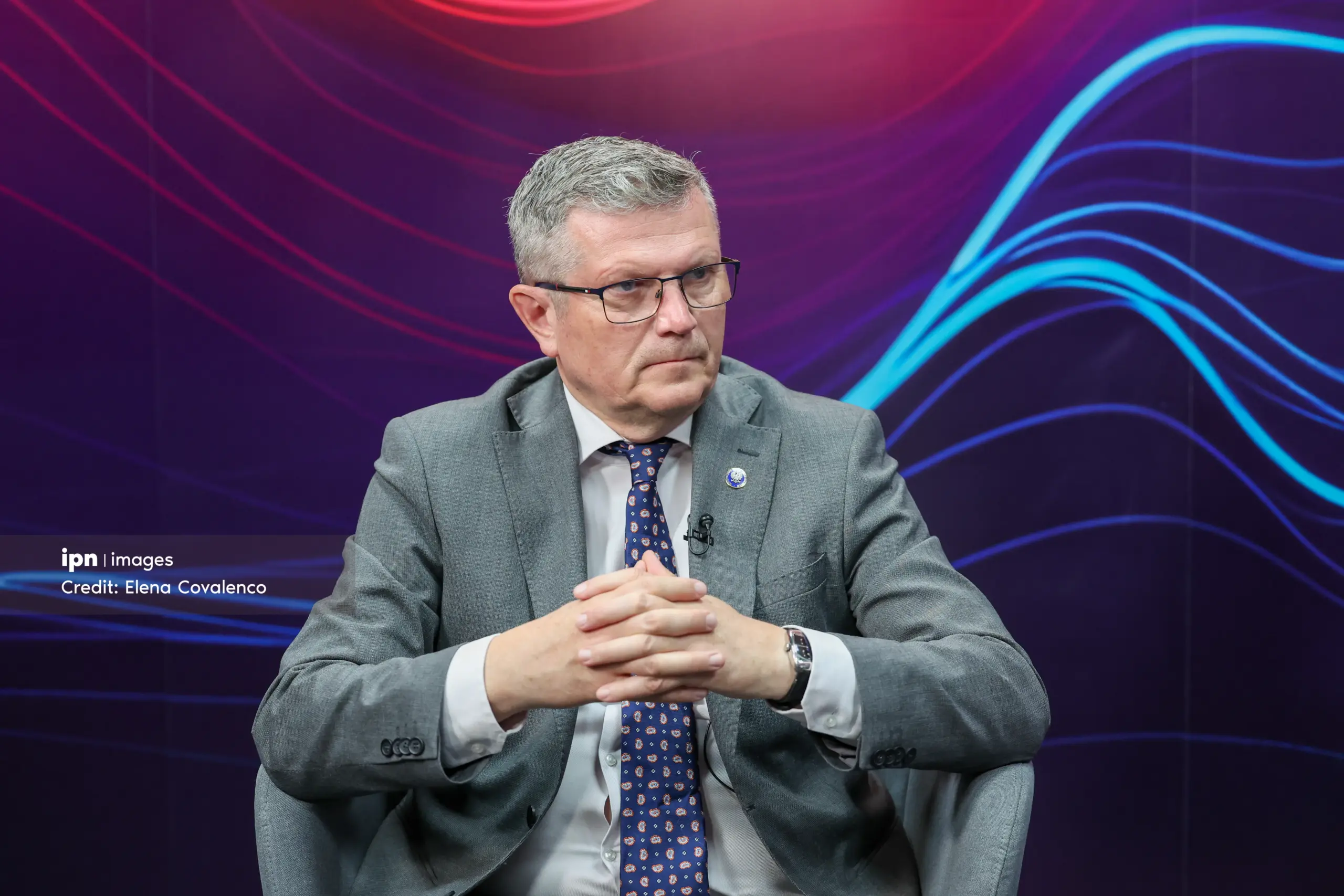
Moldova is the top candidate for EU accession. IPN interview with Marcin Bosacki

Moldova is the leading candidate in the European Union’s current wave of expansion, according to Marcin Bosacki, State Secretary at the Polish Ministry of Foreign Affairs. In an interview with IPN, the official noted that Warsaw advocates for Moldova’s full integration into the EU.

Mr. Bosacki, good afternoon and welcome to Chisinau!

The pleasure is mine. Thank you very much for the invitation.

Mr. Secretary of State, the European Union has opened negotiations with Moldova on the first cluster. How will the accession negotiations proceed, and what are the benchmarks that the European Union will monitor and that Moldova must meet?

Firstly, congratulations to the Moldovans and the authorities for finally opening negotiations to become members of the European Union. This is great news. I believe that most Moldovans have wanted this for a long time.

Friends of Moldova, including Poland, have desired this for many years. And, finally, we are opening negotiations. It’s excellent news.

That being said, joining the European Union is not an easy process. We went through this 25-26-27 years ago, when we had our own negotiations, and we joined the European Union 22 years ago.

It’s difficult, as you have to adopt all the legislation of the European Union. You need to change your judicial system, administration, and, in some aspects, the way of doing business. You have to get rid of corruption.

It’s not easy, but it’s absolutely worth it. Poland’s success, economic success, we’ve just joined the club of the top 20 economies on Earth, would not have been possible without European accession, the opening of European markets, European cohesion funds and European agricultural funds.

It’s not easy, but it’s something that Moldovans, Moldovan businesses and agriculture will rejoice when you join the EU, which I hope will happen in three, four, at most five years.

I hope for negotiations and a smooth accession of Moldova, it is a merit-based process, but I hope for a trouble-free journey.
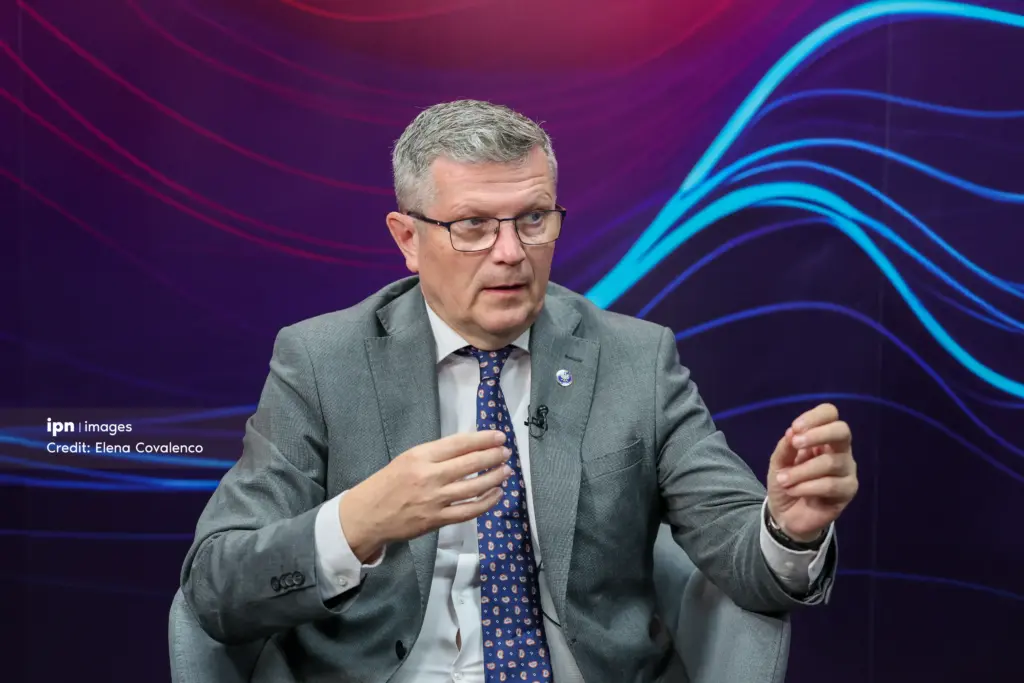
Poland is one of the leading advocates for Moldova’s accession to the European Union. How does Warsaw assess the progress made by Chisinau so far?

You’ve done wonderfully. You have initiated and, in some cases, completed many reforms in the judicial system. And now we begin together the reform of the administration, because the secret of Poland’s success and that of many other countries is that not all the money is centralized in the capital, in Warsaw, in Chisinau or in Prague.

European funds are dispersed in regions, cities, counties and municipalities, and they can use them as they wish. Of course, according to the rules, we have a certain oversight against corruption and waste of public money, but Moldova has done a splendid job so far. We hope it will continue with the help of friends like Poland, so that Moldova can meet all the criteria and all the clusters. We are now opening a single group of chapters, but we hope to open another one very soon.

Let’s hope that we will continue on this wonderful path that Moldova has already taken in the last few years.

Five European Union member states—Germany, France, Belgium, the Netherlands and Luxembourg—have proposed introducing safeguard clauses and even temporarily limiting the voting rights of future EU members. Doesn’t this risk sending a message to candidate countries that accession will no longer mean full and equal membership in the European project?

We do not support this initiative. We believe that the goal should be full membership, with all the rights and privileges of a member state. If there is some kind of quick accession, but “halfway”, this would be frustrating for both parties. It would be frustrating for Moldovans and citizens of other candidate states, because the quality of membership will not be complete, and for citizens of EU member states, because the new states would be invited without meeting all the criteria.

The negotiations and implementation of European law and values must be real, but as fast as possible, and at the end of this process there must be full accession. This is Poland’s position.
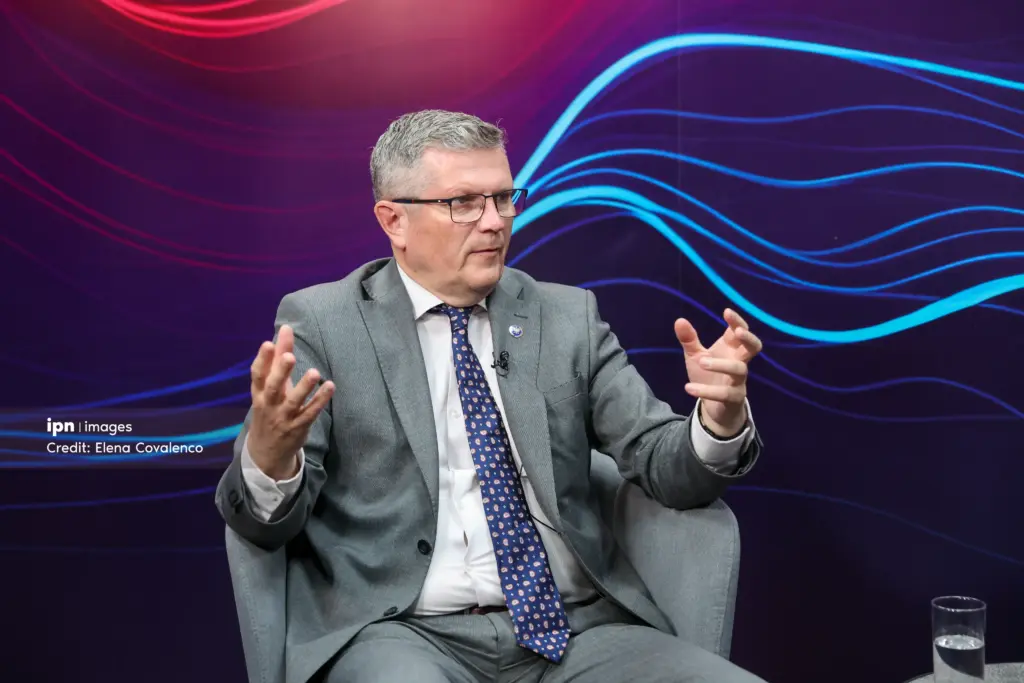
You have observed international politics both from the newsroom, as a journalist, and later as a correspondent in Washington for Gazeta Wyborcza, as well as in your capacity as a diplomat. What is the biggest difference between how the West viewed Eastern Europe 15–20 years ago and how it views Moldova today?

It’s immense. I remember the times when friends from Paris, Madrid, or Berlin would ask us, the Poles: “Do you have white bears in your forests?” or “What time zone are you in?”.

Knowledge about the so-called former communist states was scant 20 years ago. We were also looked down upon through the prism of their desire to conclude high-caliber deals with Russia. Russia was big, so it was important.

Central European countries, such as Moldova, Poland, Hungary, the Czech Republic, the Baltic states, were treated as obstacles in the way of good relations with Russia and were unfortunately considered by many to be intrinsically Russophobic. That has changed.

I must admit, the change came after Putin first invaded Crimea and Donbas, and then, in 2022, the whole of Ukraine. The courage and heroism of the Ukrainian people have changed a lot.

Today, the entire region, as well as Moldova, is treated not as one of the post-communist countries, but as a country that has contributed to the future of Europeans, to the development of Europeans, and to European security, thanks to the strategic position that our countries, Poland, Romania, Moldova, the Baltic states, have in the context of the greatest threat to European security, which is Russia.

And my last sentence: I have proven, Western Europeans, that I was right in our assessment of Russia, which was a suspicious one, a cautious one, and they were mistaken. And this bears fruit.

And indeed, this is the last sentence of my response: year by year, we are achieving greater economic success, and they see this, we are catching up with Western Europe in terms of economic development and growth rate.
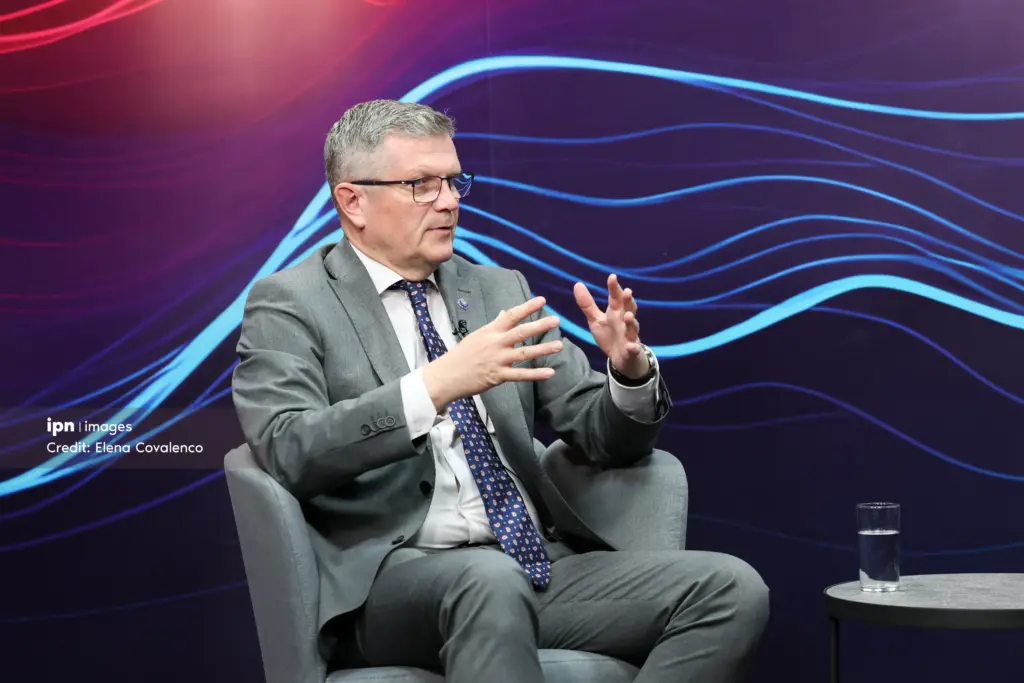
You recently stated that Poland is coordinating its positions more closely with candidate countries regarding accession negotiations. How can Moldova make more effective use of Poland’s expertise, given that Poland has gone through its own process of transformation and European integration?

That is actually the reason for my trip to Moldova. I’ve only just begun. I met with the Secretary General of the Government, Mr. Buzu, but I will have many other meetings—in various ministries and even with the Deputy Prime Minister—because Poland has two advantages. One is—and we share this with Moldova—how to best absorb European funds. There is a seven-year European budget, and funds have been allocated for your country, your government, your economy and your administration. Poland sometimes uses more than 100% of these funds.

How is this possible? They are accounted for along with inflation, so sometimes we use 107-108% of the money allocated to Poland, because our administration, both central and local, is so well prepared and trained to properly allocate European funds. In the 22 years since we joined the EU, Poland has received almost a billion euros per month, net, from Brussels, and we use all this money to the advantage of our companies, our agricultural sector, our farmers, our roads, our bridges, our schools, our universities, etc.

And we can share this experience with Moldova. Secondly, we can share the experience of empowering regional administrations at the level of counties, regions, municipalities, cities. Also, this is something that Moldova needs and we can share it, because in Poland, the municipalities and regions are very strong and very wealthy.

Moldova argues that its accession to the European Union is not only an economic goal but also a security one. Given the war in Ukraine and the hybrid pressures exerted by Russia in the region, do you believe that Moldova’s European integration has become a strategic necessity for the entire European Union?

Absolutely, yes. And, also, in the context of the war in Ukraine, the aggressive war waged by Russia against Ukraine, Moldova is, for geographical reasons, necessary to resolve this war and end it peacefully, we hope, with a peace agreement. But Moldova, as such, is important for the entire region, as another piece of the puzzle of Central and Eastern Europe, which must be, firstly, modern, secondly, developed, prosperous and, thirdly, safe and peaceful.

And therefore, it is necessary to also resolve, we hope peacefully, the issue of the Transnistrian region, created by Russia a long time ago. But we want to integrate the whole of Moldova into the European Union, not just the majority of it, but also the Transnistrian region.
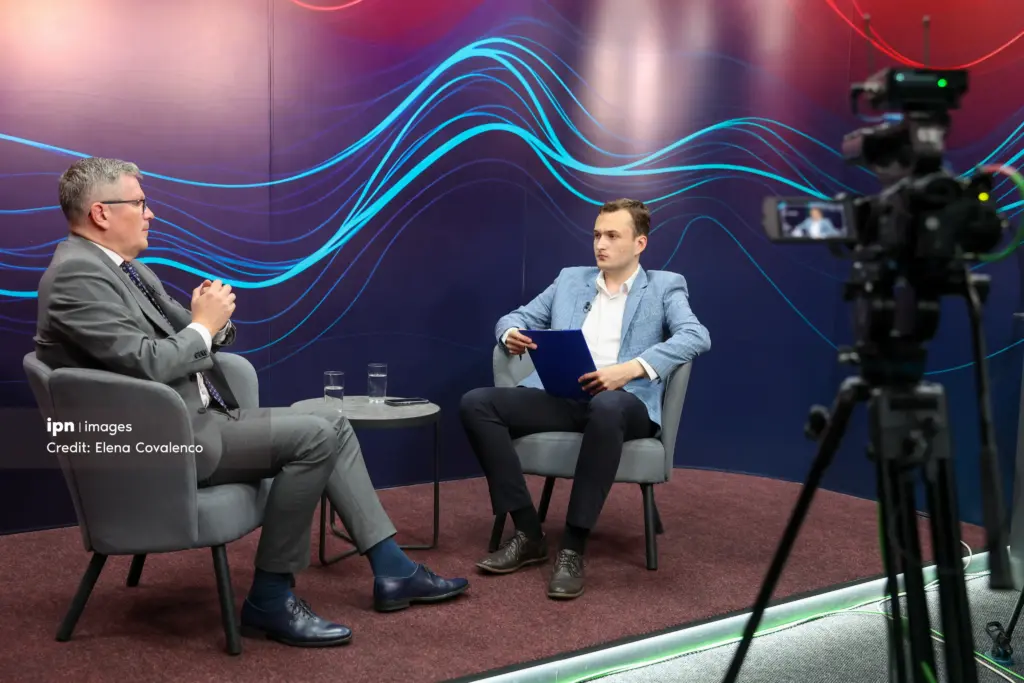
The European Union insists that the accession process remains based on merit and the fulfillment of criteria. However, as discussions about reforming the European Union ahead of enlargement intensify, there is a risk that candidate countries will have to wait not only for their own reforms but also for the Union’s internal reforms. How real is this risk in the case of Moldova?

I don’t believe it’s real. I think, you know, the European Union, right from the start, from the 1950s, has always operated in this way, with periods of faster integration and expansion, followed by periods of slowing down. But, overall, this is an extremely successful project.

It brought not only peace, but also prosperity to the majority of Europe. And now we are certainly in the stage, in the period of expansion. No major, crucial reform, no internal reform of the European Union is foreseen in the next three, four, five years. But the expansion is.

My prediction and also the goal of my Government, of the Polish Government, is to expand perhaps in 2030, maybe in 2031. Everything is based on how the candidate countries will adopt the European legislation and values.

But this is realistic. Expansion in three, four, five years. And Moldova is, undoubtedly, the top candidate. We hope for expansion if they meet the criteria, including Ukraine and some states from the Western Balkans. However, Moldova is certainly a favored state.

Mr. Bosacki, thank you very much for this conversation.

Thank you and good luck to the important people of Moldova on their journey towards the European Union and Western structures. Thank you very much.

Maxim Bolohan, IPN


Ten ministers from the current executive will also be found in the Government proposed by the designated Prime Minister Vasile Tofan, while four portfolios will return to new members of the cabinet. At the same time, the Deputy Prime Ministers for reintegration and for European integration, Valeriu Chiveri and Cristina Gherasimov, will keep their positions, reports IPN.

For the position of Minister of Health, Alexandru Gasnas, presidential advisor, is appointed. Radu Musteata, the director of the National Agency for Food Safety, is proposed for the leadership of the Ministry of Agriculture and Food Industry, and for the position of Minister of Finance, Victoria Belous, a PAS deputy, who previously held the position of minister, is put forward.

Dan Suruceanu, a cultural manager and administrator, particularly known as the executive director of the Chisinau Arena multimedia and sports complex, is proposed to lead the Ministry of Culture.

Vasile Tofan announced that he has completed consultations with parliamentary factions, as well as with representatives of associations and organizations, and the government’s work program is in the finalization stage. “On July 21, I will go to Parliament with a team of good professionals, who will give all government institutions a fast pace of work and move things forward,” declared the designated candidate.

Vasile Tofan has been nominated for the position of Prime Minister by President Maia Sandu, at the proposal of the Action and Solidarity Party, following the resignation of Alexandru Munteanu. The government’s swearing-in session is scheduled for July 21.

0 FacebookTwitterPinterestEmail


Moldova is the top candidate for EU accession. IPN interview with Marcin Bosacki

Moldova is the leading candidate in the European Union’s current wave of expansion, according to Marcin Bosacki, State Secretary at the Polish Ministry of Foreign Affairs. In an interview with IPN, the official noted that Warsaw advocates for Moldova’s full integration into the EU.

Mr. Bosacki, good afternoon and welcome to Chisinau!

The pleasure is mine. Thank you very much for the invitation.

Mr. Secretary of State, the European Union has opened negotiations with Moldova on the first cluster. How will the accession negotiations proceed, and what are the benchmarks that the European Union will monitor and that Moldova must meet?

Firstly, congratulations to the Moldovans and the authorities for finally opening negotiations to become members of the European Union. This is great news. I believe that most Moldovans have wanted this for a long time.

Friends of Moldova, including Poland, have desired this for many years. And, finally, we are opening negotiations. It’s excellent news.

That being said, joining the European Union is not an easy process. We went through this 25-26-27 years ago, when we had our own negotiations, and we joined the European Union 22 years ago.

It’s difficult, as you have to adopt all the legislation of the European Union. You need to change your judicial system, administration, and, in some aspects, the way of doing business. You have to get rid of corruption.

It’s not easy, but it’s absolutely worth it. Poland’s success, economic success, we’ve just joined the club of the top 20 economies on Earth, would not have been possible without European accession, the opening of European markets, European cohesion funds and European agricultural funds.

It’s not easy, but it’s something that Moldovans, Moldovan businesses and agriculture will rejoice when you join the EU, which I hope will happen in three, four, at most five years.

I hope for negotiations and a smooth accession of Moldova, it is a merit-based process, but I hope for a trouble-free journey.

Poland is one of the leading advocates for Moldova’s accession to the European Union. How does Warsaw assess the progress made by Chisinau so far?

You’ve done wonderfully. You have initiated and, in some cases, completed many reforms in the judicial system. And now we begin together the reform of the administration, because the secret of Poland’s success and that of many other countries is that not all the money is centralized in the capital, in Warsaw, in Chisinau or in Prague.

European funds are dispersed in regions, cities, counties and municipalities, and they can use them as they wish. Of course, according to the rules, we have a certain oversight against corruption and waste of public money, but Moldova has done a splendid job so far. We hope it will continue with the help of friends like Poland, so that Moldova can meet all the criteria and all the clusters. We are now opening a single group of chapters, but we hope to open another one very soon.

Let’s hope that we will continue on this wonderful path that Moldova has already taken in the last few years.

Five European Union member states—Germany, France, Belgium, the Netherlands and Luxembourg—have proposed introducing safeguard clauses and even temporarily limiting the voting rights of future EU members. Doesn’t this risk sending a message to candidate countries that accession will no longer mean full and equal membership in the European project?

We do not support this initiative. We believe that the goal should be full membership, with all the rights and privileges of a member state. If there is some kind of quick accession, but “halfway”, this would be frustrating for both parties. It would be frustrating for Moldovans and citizens of other candidate states, because the quality of membership will not be complete, and for citizens of EU member states, because the new states would be invited without meeting all the criteria.

The negotiations and implementation of European law and values must be real, but as fast as possible, and at the end of this process there must be full accession. This is Poland’s position.

You have observed international politics both from the newsroom, as a journalist, and later as a correspondent in Washington for Gazeta Wyborcza, as well as in your capacity as a diplomat. What is the biggest difference between how the West viewed Eastern Europe 15–20 years ago and how it views Moldova today?

It’s immense. I remember the times when friends from Paris, Madrid, or Berlin would ask us, the Poles: “Do you have white bears in your forests?” or “What time zone are you in?”.

Knowledge about the so-called former communist states was scant 20 years ago. We were also looked down upon through the prism of their desire to conclude high-caliber deals with Russia. Russia was big, so it was important.

Central European countries, such as Moldova, Poland, Hungary, the Czech Republic, the Baltic states, were treated as obstacles in the way of good relations with Russia and were unfortunately considered by many to be intrinsically Russophobic. That has changed.

I must admit, the change came after Putin first invaded Crimea and Donbas, and then, in 2022, the whole of Ukraine. The courage and heroism of the Ukrainian people have changed a lot.

Today, the entire region, as well as Moldova, is treated not as one of the post-communist countries, but as a country that has contributed to the future of Europeans, to the development of Europeans, and to European security, thanks to the strategic position that our countries, Poland, Romania, Moldova, the Baltic states, have in the context of the greatest threat to European security, which is Russia.

And my last sentence: I have proven, Western Europeans, that I was right in our assessment of Russia, which was a suspicious one, a cautious one, and they were mistaken. And this bears fruit.

And indeed, this is the last sentence of my response: year by year, we are achieving greater economic success, and they see this, we are catching up with Western Europe in terms of economic development and growth rate.

You recently stated that Poland is coordinating its positions more closely with candidate countries regarding accession negotiations. How can Moldova make more effective use of Poland’s expertise, given that Poland has gone through its own process of transformation and European integration?

That is actually the reason for my trip to Moldova. I’ve only just begun. I met with the Secretary General of the Government, Mr. Buzu, but I will have many other meetings—in various ministries and even with the Deputy Prime Minister—because Poland has two advantages. One is—and we share this with Moldova—how to best absorb European funds. There is a seven-year European budget, and funds have been allocated for your country, your government, your economy and your administration. Poland sometimes uses more than 100% of these funds.

How is this possible? They are accounted for along with inflation, so sometimes we use 107-108% of the money allocated to Poland, because our administration, both central and local, is so well prepared and trained to properly allocate European funds. In the 22 years since we joined the EU, Poland has received almost a billion euros per month, net, from Brussels, and we use all this money to the advantage of our companies, our agricultural sector, our farmers, our roads, our bridges, our schools, our universities, etc.

And we can share this experience with Moldova. Secondly, we can share the experience of empowering regional administrations at the level of counties, regions, municipalities, cities. Also, this is something that Moldova needs and we can share it, because in Poland, the municipalities and regions are very strong and very wealthy.

Moldova argues that its accession to the European Union is not only an economic goal but also a security one. Given the war in Ukraine and the hybrid pressures exerted by Russia in the region, do you believe that Moldova’s European integration has become a strategic necessity for the entire European Union?

Absolutely, yes. And, also, in the context of the war in Ukraine, the aggressive war waged by Russia against Ukraine, Moldova is, for geographical reasons, necessary to resolve this war and end it peacefully, we hope, with a peace agreement. But Moldova, as such, is important for the entire region, as another piece of the puzzle of Central and Eastern Europe, which must be, firstly, modern, secondly, developed, prosperous and, thirdly, safe and peaceful.

And therefore, it is necessary to also resolve, we hope peacefully, the issue of the Transnistrian region, created by Russia a long time ago. But we want to integrate the whole of Moldova into the European Union, not just the majority of it, but also the Transnistrian region.

The European Union insists that the accession process remains based on merit and the fulfillment of criteria. However, as discussions about reforming the European Union ahead of enlargement intensify, there is a risk that candidate countries will have to wait not only for their own reforms but also for the Union’s internal reforms. How real is this risk in the case of Moldova?

I don’t believe it’s real. I think, you know, the European Union, right from the start, from the 1950s, has always operated in this way, with periods of faster integration and expansion, followed by periods of slowing down. But, overall, this is an extremely successful project.

It brought not only peace, but also prosperity to the majority of Europe. And now we are certainly in the stage, in the period of expansion. No major, crucial reform, no internal reform of the European Union is foreseen in the next three, four, five years. But the expansion is.

My prediction and also the goal of my Government, of the Polish Government, is to expand perhaps in 2030, maybe in 2031. Everything is based on how the candidate countries will adopt the European legislation and values.

But this is realistic. Expansion in three, four, five years. And Moldova is, undoubtedly, the top candidate. We hope for expansion if they meet the criteria, including Ukraine and some states from the Western Balkans. However, Moldova is certainly a favored state.

Mr. Bosacki, thank you very much for this conversation.

Thank you and good luck to the important people of Moldova on their journey towards the European Union and Western structures. Thank you very much.

Maxim Bolohan, IPN


The yellow fire hazard code has been extended until July 22. Meteorologists warn that the lack of precipitation and high temperatures will maintain an exceptional risk of vegetation fires, reports IPN.

The warning mainly targets the central area, but the municipality of Bălți and the northern districts of Glodeni and Soroca are also affected. In the southern area, the yellow code is valid until Cimislia, Basarabeasca and Taraclia.

In the context of maintaining an increased risk of fires, authorities urge the population to demonstrate maximum responsibility and to respect fire prevention rules. Rescuers recommend avoiding the use of open fire near forests, agricultural lands, and dry vegetation, prohibiting the burning of plant residues, garbage, and stubble, as well as avoiding the random throwing of cigarette butts or other lit objects. Any fire outbreak must be immediately reported to Service 112.

0 FacebookTwitterPinterestEmail


1 IANUARIE, 2025
1 IANUARIE, 2025