



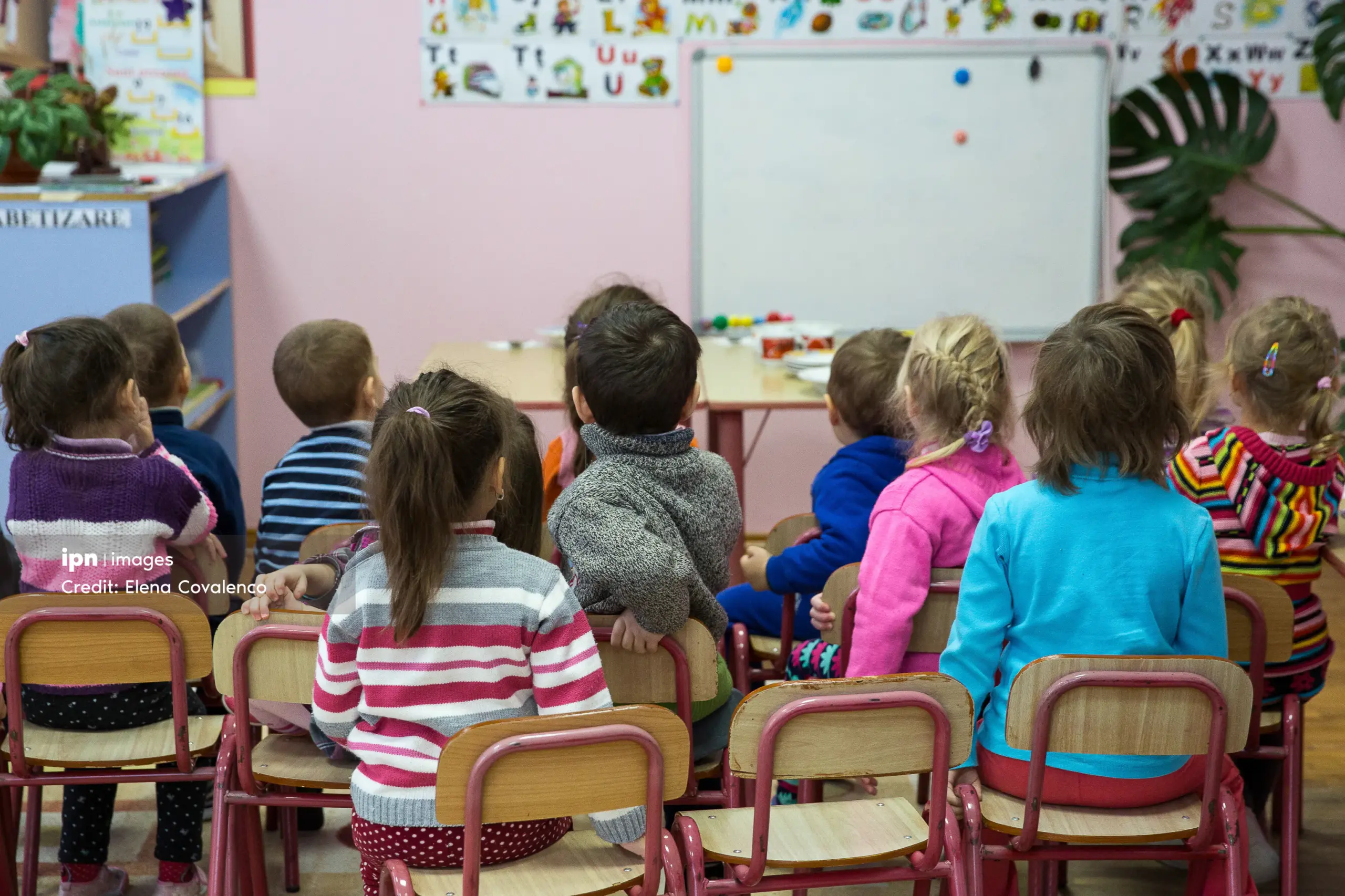
Children who will go to school in the fall are, generally, prepared for the new level of education, the national average score being 81%. However, although the evaluation shows good results in mathematics and physical activities, the data indicates difficulties in managing emotions and relating to other children. These are the conclusions of the first national study on the level of children’s development at the end of kindergarten, presented by the Ministry of Education and Research in partnership with UNICEF, reports IPN.
Mihai Bologan, the director of the sociological company IData, who conducted the study, pointed out that, in physical exercises, the little ones scored 85%, and in mathematics, 84%. Children also do well in reading and writing, accumulating a score of 82%.
The difficulties arise, however, in how they control their emotions and how they get along with others, where the score was the lowest, at 75%. The hardest thing for them is to make new friends and talk about it, the score being the lowest here – only 49%. Experts argue that educators need to emphasize kindness and friendship and how children can resolve their quarrels and grievances.
The study also shows large differences in the regions of the country. The most developed are the preschoolers from Chisinau with 85%, followed by those from the center and south. At the other end of the list are the children from the north, with a score of 77%. Furthermore, the study shows that girls are more prepared than boys, and children from urban areas rank ahead of those from villages by about 6 percentage points.
Special attention has been given to children with special needs. They scored 51% in terms of preparation, and they found managing emotions the most difficult, at 39%. Only a quarter of them passed the school test. Specialists, however, say that the tests were the same for everyone and were not adapted for them, so the state needs to change the way these children are taught and helped to transition to school.
All these data were gathered after specialists went to kindergartens, tested the children through games, and had conversations with parents. For a child to be considered ready for school, they had to pass the threshold of 66%.
The research was conducted in the spring on a representative sample of 1,768 children aged between 6 and 7 years old from 120 kindergartens across the country.
