

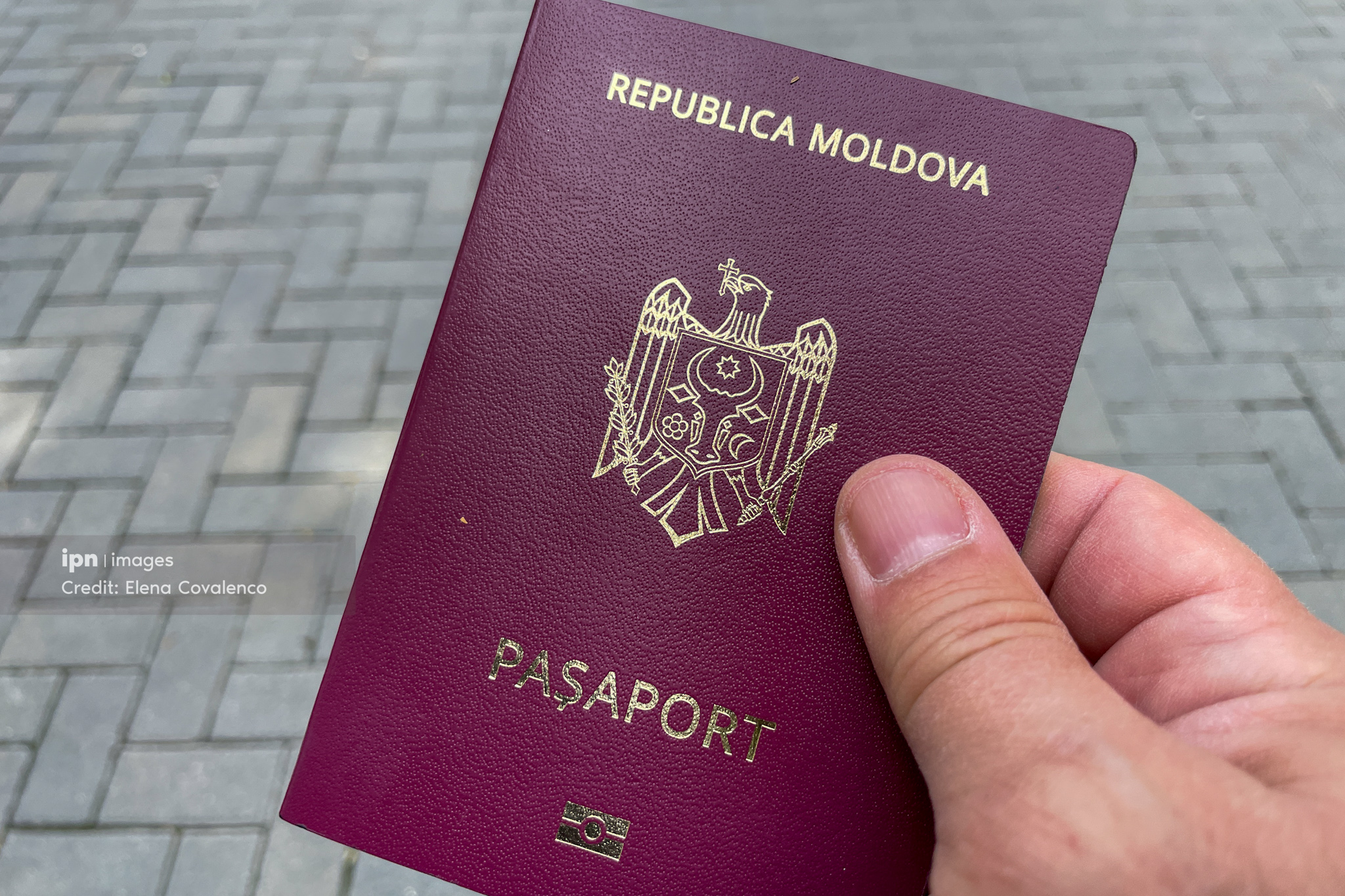
The Moldovan passport has strengthened its position in the global Henley Passport Index

The Moldovan passport has ranked 48th in the updated Henley & Partners passport ranking, reports IPN. Holders of this passport can travel visa-free or with a visa upon arrival in 121 countries, with Moldova advancing one position compared to last year.

According to data from the Henley Passport Index, the Republic of Moldova has improved its international mobility indicators, maintaining a stable level of access for its citizens to countries in Europe, Asia and Latin America.

Over the past ten years, Moldova has shown a gradual increase. In 2013, the country was ranked 68th, but after the introduction of the liberalized visa regime with the European Union in 2014, it climbed to the 46th place. Since then, its ranking has fluctuated between the 45th and 50th places, reflecting the stability of its foreign policy and the gradual expansion of visa liberalization agreements.

This year, in the ranking, Moldova is situated between Albania, which is in 47th place, and Venezuela, which is in 49th place. These are also ahead of the Russian Federation, which is in 50th place. Meanwhile, Romania and Ukraine are higher up in the ranking, in 13th and 33rd place, respectively.

Singapore retains the top spot in the ranking again this year. It is followed by South Korea and Japan. Among the European countries leading the ranking are Germany, Italy, Spain, France and Switzerland.

The Henley Passport Index is used by Governments, expert groups, and investors as an indicator of diplomatic and economic ties.


The President of India, Droupadi Murmu, is making an official visit to the Republic of Moldova on Monday, July 20, at the invitation of President Maia Sandu. This is the first visit of an Indian head of state to Moldova since the establishment of diplomatic relations between the two countries in 1992, reports IPN.

During the meeting, Maia Sandu and Droupadi Murmu will analyze the state of bilateral relations and will discuss the expansion of cooperation in various fields. On the discussion agenda is the facilitation of access for Moldovan products to the Indian market, attracting investments from India, as well as collaboration in the field of renewable energy and digital transformation.

After the meeting, the two heads of state will hold press statements. They will also participate in the opening of the Moldova-India Business Forum, organized by the Investment Agency. The event will bring together representatives of the business environment from both countries, including a delegation of approximately 30 businessmen from India.

The visit’s agenda also includes a meeting of the President of India with the President of the Parliament, Igor Grosu, and with members of the Parliamentary Friendship Group, as well as a meeting with members of the Indian community in the Republic of Moldova.

Diplomatic relations between the Republic of Moldova and India were established on March 20, 1992. According to the presidency, in recent years, cooperation between the two states has intensified through the resumption of bilateral political consultations, the inauguration of the Embassy of the Republic of Moldova in New Delhi, and the expansion of collaboration in areas such as trade, energy and education.

0 FacebookTwitterPinterestEmail


The Moldovan passport has strengthened its position in the global Henley Passport Index

The Moldovan passport has ranked 48th in the updated Henley & Partners passport ranking, reports IPN. Holders of this passport can travel visa-free or with a visa upon arrival in 121 countries, with Moldova advancing one position compared to last year.

According to data from the Henley Passport Index, the Republic of Moldova has improved its international mobility indicators, maintaining a stable level of access for its citizens to countries in Europe, Asia and Latin America.

Over the past ten years, Moldova has shown a gradual increase. In 2013, the country was ranked 68th, but after the introduction of the liberalized visa regime with the European Union in 2014, it climbed to the 46th place. Since then, its ranking has fluctuated between the 45th and 50th places, reflecting the stability of its foreign policy and the gradual expansion of visa liberalization agreements.

This year, in the ranking, Moldova is situated between Albania, which is in 47th place, and Venezuela, which is in 49th place. These are also ahead of the Russian Federation, which is in 50th place. Meanwhile, Romania and Ukraine are higher up in the ranking, in 13th and 33rd place, respectively.

Singapore retains the top spot in the ranking again this year. It is followed by South Korea and Japan. Among the European countries leading the ranking are Germany, Italy, Spain, France and Switzerland.

The Henley Passport Index is used by Governments, expert groups, and investors as an indicator of diplomatic and economic ties.


Frauds within the medical system cannot be completely eliminated, but they can be significantly reduced through digitization, checks, and sanctions for those who break the rules. Most often, these refer to the unjustified reporting of services, unnecessary hospitalizations or other practices through which public funds are improperly used. The subject was discussed during parliamentary hearings on the execution of compulsory medical assistance funds for the year 2025, reports IPN.

Asked about fraud in the medical system and the measures taken to combat it, the director of CNAM, Ion Dodon, stated that such cases will continue to exist, but institutions must minimize the waste of public money. “There are frauds and, excuse me, there will be. We must fight to significantly reduce the level of these frauds as much as possible”, Ion Dodon affirmed.

According to him, one of the main tools is the digitalization of the medical system, which allows authorities to almost real-time track reported medical services and more easily detect any irregularities. The CNAM director specified that the institution also checks the quality of the medical act, penalizes providers when deviations are found, and alerts law enforcement agencies if there are indications of fraud.

The head of CNAM has also provided examples of irregularities detected in the system. According to him, there have been cases where patients were kept hospitalized longer than necessary or situations where a doctor prescribed medical services for himself. He pointed out that such cases are isolated, but they demonstrate the need for constant monitoring.

Another topic addressed during the hearings concerned complaints that patients are forced, in some hospitals, to buy out of their own pocket consumables such as cotton, syringes or other medical materials that should be provided by health institutions. The director of CNAM described such situations as unacceptable and said that all medical institutions must ensure essential consumables. He urged patients who are asked to procure such materials, to keep the receipts and file a petition with CNAM, and the institution will force the hospitals, in confirmed cases, to reimburse the expenses incurred. According to Ion Dodon, in recent years several hundred thousand lei have been returned to patients as a result of such reports.

At the same time, during the hearings, the CNAM management presented the results recorded in 2025. Over 17 billion lei were spent from the compulsory health insurance funds, almost 10% more than in the previous year, and additional funding allowed the expansion of access to medical services. According to Ion Dodon, the waiting lists for cataract surgery and prosthetics of the locomotor apparatus were reduced by increasing the volume of contracted services, and the implementation of the e-Prescription system and other digital tools contribute both to simplifying patient access to treatment and reducing fraud in the system.

The members of the Parliamentary Committee for Social Protection, Health and Family appreciated the financial results presented by CNAM. During the hearings, they insisted on the need to orient the medical system towards measurable results, with an emphasis on prevention, primary medicine, and the evaluation of the impact of investments on the population’s health.

0 FacebookTwitterPinterestEmail


1 IANUARIE, 2025
1 IANUARIE, 2025