

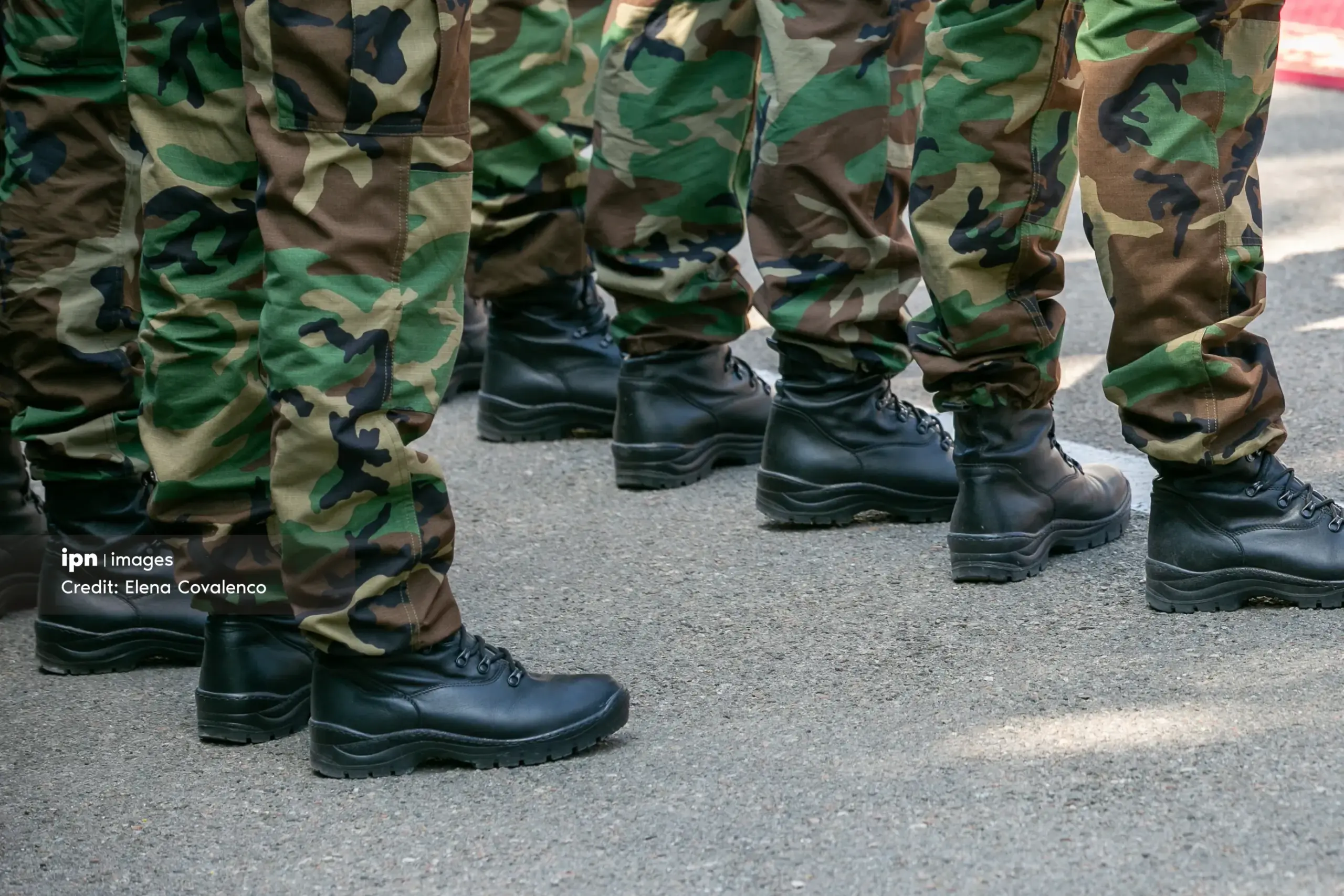
Up to 1,200 recruits will be incorporated into the National Army during the period October 2026 – January 2027

The National Army is set to incorporate up to 1,200 recruits into the regular military service and another ten into the short-term military service, during the period from October 2026 to January 2027. The provisions are found in a project drafted by the Ministry of Defense, which sets the tasks for the new recruitment campaign. The document is to be approved by the Government, reports IPN.

According to the document, the largest number of recruits will be incorporated from the municipality of Chisinau – 167. For the municipality of Balti, 43 recruits are planned, and from UTA Gagauzia, 46 are expected to be incorporated. In the Cahul and Hancesti districts, 53 recruits each are planned, while in the Ungheni district – 47.

The incorporation will be organized by the Ministry of Defense in collaboration with the local public administration authorities and military centers. The authorities will also ensure the medical examination of the recruits, while the Ministry of Education and Research, local authorities, and military centers will organize educational activities with a military-patriotic theme.

The document also provides for the discharge from military service and the transition to the reserve of the Armed Forces for the military personnel whose service term has expired.

According to the explanatory note, the determination of the number of recruits aims to ensure the personnel needs of the National Army and the temporary maintenance of the mixed system of replenishment of the Armed Forces, until the optimal configuration of the national defense system is determined.


The PRESS AGENCY IPN invites media representatives to the public debate on the topic: “70 years since the suppression of the Hungarian Revolution: lessons learned and lessons to be learned”, the 66th edition of the cycle “The impact of the past on the processes of trust and peace consolidation”. Participants: Anatol Petrencu, university professor, doctor habilitat in history, president of the Association of Historians from the Republic of Moldova “Alexandru Moșanu”; Mihai Isac, expert in international relations and security, graduate in history and Igor Boțan, the permanent expert of the project /Conference room of the IPN Agency, Teatrului street, 2/2, 3rd floor, online on the YouTube channel of the Agency, on the Facebook page IPN Press Agency and accessed later in the archive; Realitatea TV, live or replayed, as well as on www.Rlive.md /01:00 PM/.

The Italian Embassy in Chisinau inaugurates the XXVI edition of the Italian Language Week in the World, which takes place annually in over 130 countries around the globe, under the high patronage of the President of the Italian Republic /National Library of the Republic of Moldova /03:30 PM/.

0 FacebookTwitterPinterestEmail


Up to 1,200 recruits will be incorporated into the National Army during the period October 2026 – January 2027

The National Army is set to incorporate up to 1,200 recruits into the regular military service and another ten into the short-term military service, during the period from October 2026 to January 2027. The provisions are found in a project drafted by the Ministry of Defense, which sets the tasks for the new recruitment campaign. The document is to be approved by the Government, reports IPN.

According to the document, the largest number of recruits will be incorporated from the municipality of Chisinau – 167. For the municipality of Balti, 43 recruits are planned, and from UTA Gagauzia, 46 are expected to be incorporated. In the Cahul and Hancesti districts, 53 recruits each are planned, while in the Ungheni district – 47.

The incorporation will be organized by the Ministry of Defense in collaboration with the local public administration authorities and military centers. The authorities will also ensure the medical examination of the recruits, while the Ministry of Education and Research, local authorities, and military centers will organize educational activities with a military-patriotic theme.

The document also provides for the discharge from military service and the transition to the reserve of the Armed Forces for the military personnel whose service term has expired.

According to the explanatory note, the determination of the number of recruits aims to ensure the personnel needs of the National Army and the temporary maintenance of the mixed system of replenishment of the Armed Forces, until the optimal configuration of the national defense system is determined.


The damages caused by the pollution of the Nistru river with petroleum products in the spring of 2026 are estimated at 47 million lei, and approximately 100 thousand people were temporarily left without water from the centralized system. The data is found in the Post-Disaster Needs Assessment Report, presented by the National Crisis Management Center, in partnership with the European Union and the United Nations, reports IPN.

During the intervention, over 620 tons of drinking and technical water were distributed. Some non-urgent medical services were postponed, and in the city of Balti, schools temporarily switched to online learning.

The report specifies that the most vulnerable were the elderly, people with disabilities, households without means of transport, and families with low incomes. Although the incident did not cause destruction of infrastructure, buildings or equipment, the response operations and maintenance of public services generated costs, and the surrounding environment suffered.

The greatest damages were recorded in the disaster risk reduction sector, estimated at 23.71 million lei. This is followed by the environment, with 14.55 million lei, water and sanitation, with 6.61 million lei, and health, with 1.95 million lei. Locally, the Soroca district was the most affected. The assessment did not identify measurable macroeconomic effects.

The document establishes and requires recovery needs for the period 2026-2031, with a focus on preventing similar crises and preparing authorities for interventions. Among the priorities are the strengthening of environmental monitoring, the development of laboratory capacities, the management of contaminated waste, the replenishment of intervention stocks, and the procurement of specialized equipment. Measures are also provided for ensuring reserve water sources, the continuity of water and energy supply to medical institutions, as well as the training of intervention teams.

The report recommends seven priority action packages, including the completion of monitoring and decontamination where justified, increasing the resilience of water supply systems, real-time monitoring and data exchange between institutions, as well as strengthening cross-border cooperation with Ukraine. Other measures aim at civil protection, supporting vulnerable individuals, and restoring the ecosystems of the Dniester basin.

0 FacebookTwitterPinterestEmail


1 IANUARIE, 2025
1 IANUARIE, 2025