

POB 2026: Four parties would enter Parliament if elections were to take place next Sunday

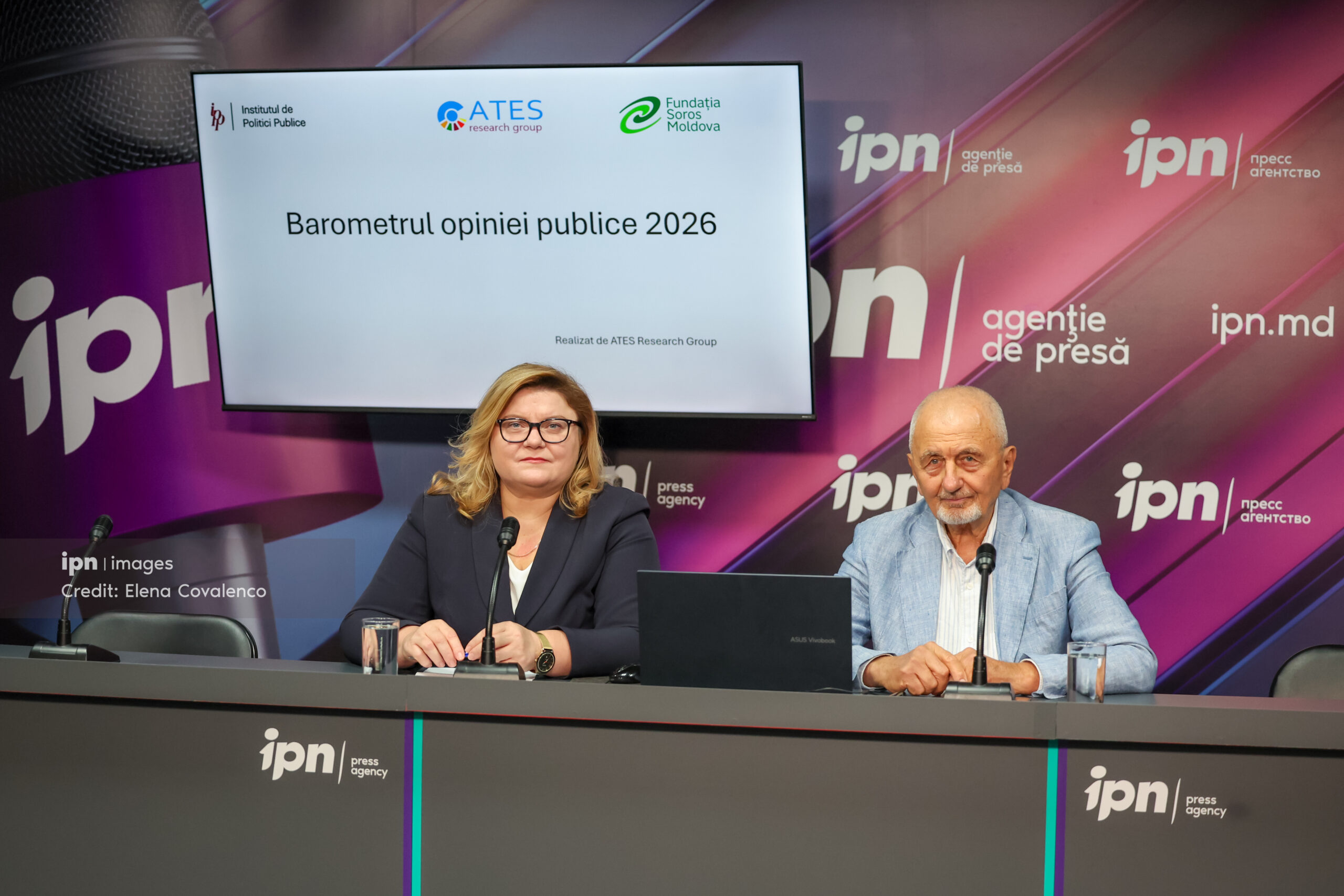
Four political formations would enter Parliament if elections were to take place next Sunday, according to data from the Public Opinion Barometer 2026, presented by the Institute of Public Policies. Thus, 27% of respondents say they would vote for the Action and Solidarity Party, 11.2% for the Party of Socialists, 8.6% for the “Democratia Acasa” Party, and 5.7% for “Partidul Nostru” Political Party. At the same time, almost a third of those interviewed are undecided.

At an IPN press conference, IPP Executive Director Arcadie Barbarosie stated that 24.2% of respondents do not know whom they would vote for, 4.9% say they would not participate in the elections, and 4.8% did not provide an answer. He noted that redistributing the preferences of undecided voters could alter the election outcome. Based on the calculation presented, the Communist Party—which registered 4.5% in voting intentions—would thus surpass the electoral threshold.

At the same time, the survey indicates a relatively low interest in politics. Thus, 26.8% of respondents say they are very interested or interested in politics, while 44.5% claim they are little or not at all interested. Another 28.5% say they are neither much nor little interested.

The research data also shows a high level of mistrust in the fairness of elections. Nearly 60% of participants believe that elections in the Republic of Moldova are not free and fair, while 34.5% think they are free and fair. At the same time, over 72% of respondents say that the country is not governed according to the will of the people, and 21.6% have a contrary opinion.

Referring to the level of trust in political parties, Arcadie Barbarosie stated that, in the case of PAS, 26% of respondents said they have some trust, and 10% – a lot of trust. In total, 36% of respondents trust the party. In the case of PSRM, the two categories total 29.6%, and for the “Democratia Acasa” Party, the trust level is 24.7%. In the case of PPPN, the proportion is 24.6%.

The Public Opinion Barometer 2026 is conducted by the Institute of Public Policies, and the data was collected and processed by ATES Research Group. The survey was carried out between August 25 – September 11, on a sample of 1,116 individuals. The maximum margin of error is ±2.9%. The 47th edition of the BOP was made possible with the financial support of the Soros Foundation Moldova.

Note: The IPN Agency offers a right of reply to individuals who consider themselves affected by news reports based on statements made by the organizers of this press conference, including by facilitating the organization of another press conference under similar conditions.


Moldova does not intend to join NATO and wishes to remain neutral. The statement was made by Prime Minister Vasile Tofan in an interview for the American television station Bloomberg, reports IPN.

According to the Prime Minister, Moscow is promoting the idea that Moldova would join the North Atlantic Alliance to instill fear in society and undermine the country’s European path. The official emphasized that at the same time, it is important for Moldova to have good relations with NATO, including with Romania, which is a member state of the Alliance.

In a context where Russian officials have previously suggested that a potential move to join NATO could draw Moldova into the war in Ukraine, Vasile Tofan mentioned that Russia is waging a hybrid war against Moldova, particularly through interference in electoral processes.

0 FacebookTwitterPinterestEmail


POB 2026: Four parties would enter Parliament if elections were to take place next Sunday

Four political formations would enter Parliament if elections were to take place next Sunday, according to data from the Public Opinion Barometer 2026, presented by the Institute of Public Policies. Thus, 27% of respondents say they would vote for the Action and Solidarity Party, 11.2% for the Party of Socialists, 8.6% for the “Democratia Acasa” Party, and 5.7% for “Partidul Nostru” Political Party. At the same time, almost a third of those interviewed are undecided.

At an IPN press conference, IPP Executive Director Arcadie Barbarosie stated that 24.2% of respondents do not know whom they would vote for, 4.9% say they would not participate in the elections, and 4.8% did not provide an answer. He noted that redistributing the preferences of undecided voters could alter the election outcome. Based on the calculation presented, the Communist Party—which registered 4.5% in voting intentions—would thus surpass the electoral threshold.

At the same time, the survey indicates a relatively low interest in politics. Thus, 26.8% of respondents say they are very interested or interested in politics, while 44.5% claim they are little or not at all interested. Another 28.5% say they are neither much nor little interested.

The research data also shows a high level of mistrust in the fairness of elections. Nearly 60% of participants believe that elections in the Republic of Moldova are not free and fair, while 34.5% think they are free and fair. At the same time, over 72% of respondents say that the country is not governed according to the will of the people, and 21.6% have a contrary opinion.

Referring to the level of trust in political parties, Arcadie Barbarosie stated that, in the case of PAS, 26% of respondents said they have some trust, and 10% – a lot of trust. In total, 36% of respondents trust the party. In the case of PSRM, the two categories total 29.6%, and for the “Democratia Acasa” Party, the trust level is 24.7%. In the case of PPPN, the proportion is 24.6%.

The Public Opinion Barometer 2026 is conducted by the Institute of Public Policies, and the data was collected and processed by ATES Research Group. The survey was carried out between August 25 – September 11, on a sample of 1,116 individuals. The maximum margin of error is ±2.9%. The 47th edition of the BOP was made possible with the financial support of the Soros Foundation Moldova.

Note: The IPN Agency offers a right of reply to individuals who consider themselves affected by news reports based on statements made by the organizers of this press conference, including by facilitating the organization of another press conference under similar conditions.


The European Union has suspended customs duties for about 80% of Armenia’s exports to the community bloc countries for two years. The decision was made on Thursday by the EU Council, as Moscow imposed trade restrictions in relations with Yerevan, reports IPN.

According to the European forum, the exemption covers a wide range of products, including some agricultural goods, and is in line with the objectives of the Comprehensive and Enhanced Partnership Agreement. The preferential regime is conditional and includes safeguard clauses, which protect the European market if imports affect EU producers.

Since April, Russia has imposed successive restrictions on imports of flowers, vegetables, fruit, live fish and alcohol from Armenia, including on their transit through Russia to other Eurasian Economic Union states. The most recent measure is a ban on Armenian dairy products, which came into effect on July 27. Moscow cited alleged sanitary irregularities discovered at Armenian milk processing plants as the reason.

0 FacebookTwitterPinterestEmail


1 IANUARIE, 2025
1 IANUARIE, 2025