

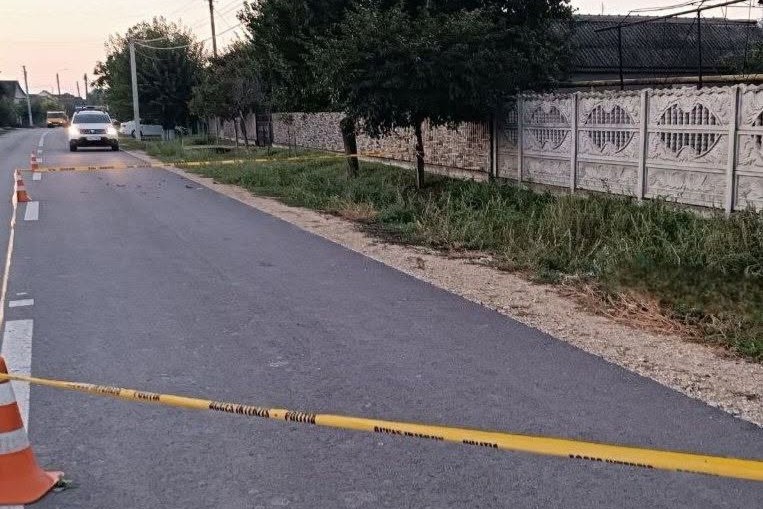
The driver who fatally hit a woman in Sadaclia and fled the scene has turned himself in to the police

Photo source: IGP

The driver who fatally hit a woman in the village of Sadaclia, Basarabeasca district, and fled the scene, voluntarily turned himself in to the police. According to law enforcement, he is to be detained for the determination of all circumstances surrounding the accident, reports IPN.

The General Inspectorate of Police specifies that the man is 26 years old. The accident occurred on September 16, and the victim, a 64-year-old woman, died at the scene.

On Wednesday morning, the police were notified by a passerby about the occurrence of an accident on a street in the town.
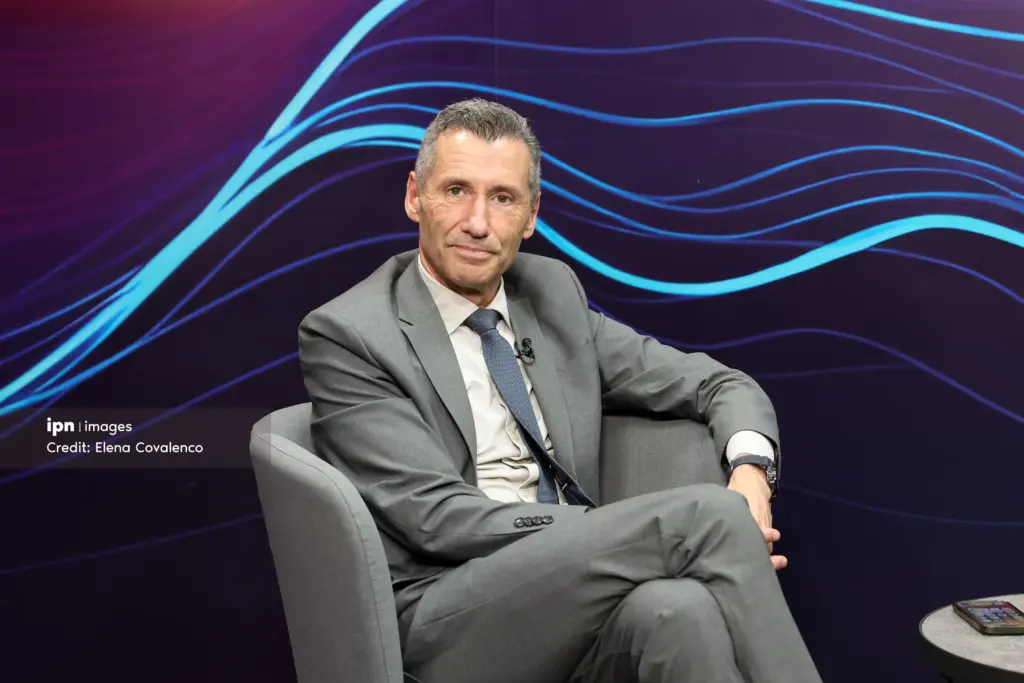
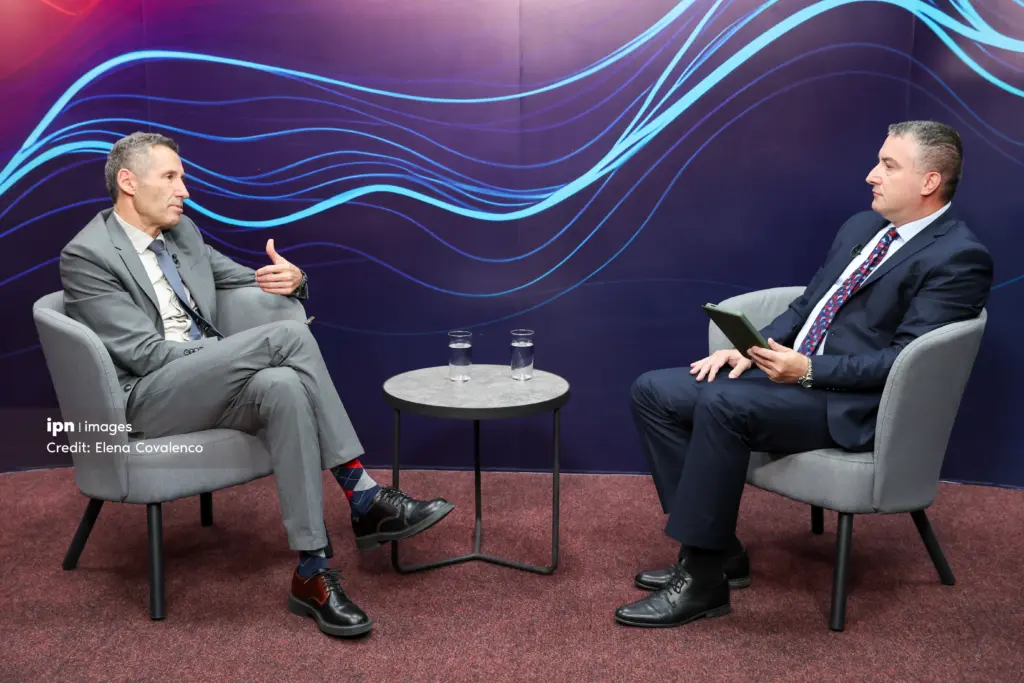
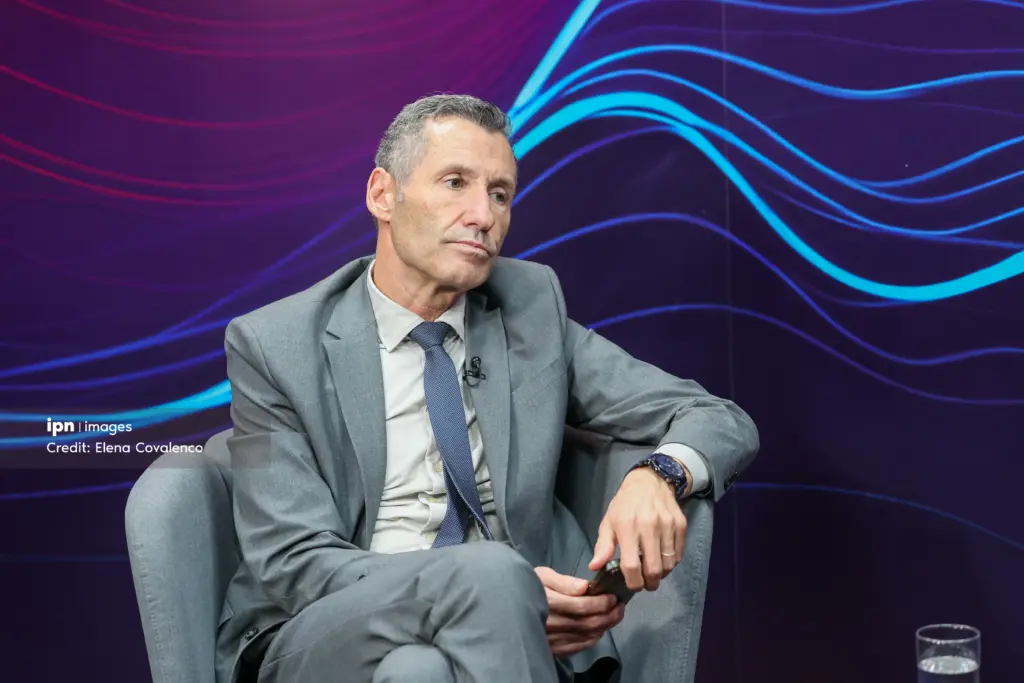
Drought, soil degradation, and climate change are increasingly pressuring the agriculture of the Republic of Moldova. How can the agri-food sector become more resilient, more competitive, and closer to European standards? In an interview for IPN, Raimund Jehle, the representative of FAO – United Nations Organization for Food and Agriculture – in the Republic of Moldova, spoke about solutions, investments, and the future of Moldovan agriculture.

Ladies and gentlemen, good day! Today we are discussing with the representative of the United Nations Food and Agriculture Organization (FAO) in the Republic of Moldova, Mr. Raimund Jehle. Mr. Jehle, we thank you for coming to IPN and for accepting our invitation.

Thank you very much for the invitation. It’s a pleasure to discuss.

Mr. Jehle, what does a resilient and sustainable agri-food system mean for the Republic of Moldova and how important is it for the country’s European path?

I believe it is always a challenge to explain to someone what a food system is, and it is probably even more difficult to explain what a resilient agri-food system means. What we need to understand in this case and why it is important for Moldova is that, currently, food products are increasingly linked to many other areas. Food is not just about how the products are obtained, but also about how they are consumed.

It’s about the type of resources used, the energy used for processing, and the energy consumed for transportation. Therefore, it’s a system that we want to make more sustainable and resilient. By resilience, we understand the ability to cope with shocks. We saw this during the pandemic and in the context of the crisis in Ukraine, when sudden challenges related to food availability and food production emerged.

A resilient food system means that we want to ensure that, in the face of such shocks, including those related to climate, the system and production are better prepared. Of course, this is very important for Moldova, not only based on past experiences, but also in the context of the process of joining the European Union. Resilient agri-food systems and EU membership are not two separate things. They evolve in parallel and complement each other. Accession and European integration will, in turn, contribute to the development of a more resilient agri-food system.

You spoke about challenges. What are the biggest vulnerabilities facing Moldova’s agriculture today, from climate change, drought, and soil degradation to antimicrobial resistance, and how does FAO help our country?

As I have already mentioned, all these aspects are closely related to each other. Climate changes are becoming increasingly evident and have a more pronounced long-term character. Moldova is a country that has often faced drought. It is not a new phenomenon, however, the increasing frequency of droughts is an aspect that needs to be taken more and more into consideration. This is, undoubtedly, a major challenge.

It is necessary to switch to crops more resistant to drought and to use technologies more resistant to drought. We also need to apply so-called smart agriculture production methods from a climate perspective, to cope with these multiple threats. Another important area is cross-border diseases and animal diseases. The pandemic has shown us that these are not easily controlled. Rising temperatures and climate changes bring new challenges in turn.

From the FAO perspective, we support Moldova in developing climate-smart agriculture. We provide support at the institutional level, but also at the farm level, including through the training of farmers. We also promote and facilitate a “One Health” approach. It is necessary to correlate aspects related to cross-border animal diseases with a more integrated process within the agri-food systems we discussed earlier.

How does FAO support Moldova in aligning agricultural policies and legislation with EU standards, while at the same time providing practical support to farmers in our country?

FAO’s approach and, I believe, its distinctive element, lies in the organization’s ability to work both in the normative and legislative field, as well as directly at the farm level and in rural areas. Globally, FAO has considerable capacity in terms of standards. At the same time, we have significant experience in direct collaboration with farmers. These are the two methods we also apply in Moldova.

We work at an institutional level and support the Ministry of Agriculture and the Ministry of the Environment in the development and amendment of policies. A concrete example is the support we are currently providing to the Ministry of Agriculture in the development of an action plan on resilience.

On the other hand, we work directly with farmers. We develop their capabilities through field schools for farmers, in the field of fruit and vegetable production, but also in the livestock and milk production sector. Thus, small farmers acquire additional knowledge that helps them cope with the challenges of climate change and market changes, while also contributing to improving their livelihoods in rural areas.

Currently, you manage projects in Moldova worth over 7 million dollars. How important are donors and strategic partners in achieving results?

FAO is a member-based organization, which means that, of course, we cannot work without donors and partners. However, I would like to emphasize that the term “donors” is one that I always regard with a certain reserve. In fact, we have partners who provide us with resources, and we collaborate with them and implement the projects together. We have partners, including governments, who provide resources and whose technical expertise we value.

In the context of the EU accession process, the Agri-food Partnership Platform, which we particularly support within the Ministry of Agriculture, is a relevant example. There is funding from institutional donors and contributions from partners who provide resources. At the same time, we value relevant technical expertise.

When we talk about the EU accession process and, in particular, about the application and adaptation of the community acquis, we need partners from the European Union, food safety agencies, laboratories, and statistical institutions. We need partners who can provide practical experience in terms of implementation. Therefore, the FAO is closely connected to partners.

It’s not just about member states, but also, increasingly, about the private sector. The private sector plays an important role. If we want to facilitate investments in value chains, this cannot be achieved exclusively by governments. We need partnerships with the private sector and, of course, civil society, because agriculture and agri-food systems also have social components and dimensions. Civil society must also be a partner in the implementation process.

Let’s discuss a bit about initiatives. How can the Farmer Field Schools and the development of the agricultural extension services network help farmers make better decisions and develop their businesses? How do these reflect the FAO message “Innovate today, feed tomorrow”?

I believe that the Farmer Field Schools are an excellent example of how learning through practice is applied with some guidance. I myself come from a farming family. I know that farmers have very good knowledge, but sometimes they need time to adapt. And I think that’s natural. If you grow wheat or produce vegetables, you can’t just immediately apply a change, saying that you will modify something, because these changes can have economic implications.

Learning through practice and observing how changes can be applied is the basic principle of field schools for farmers. Farmers learn from each other. They do not learn from someone who may have never produced anything. In this way, we have a very good example of how knowledge can be applied sustainably. We live in an environment where agricultural technologies must continue to evolve.

We’ve discussed climate change. 20 or 30 years ago, plowing was practiced everywhere. Today, we no longer till the soil in the same way. We use the so-called “no-till” technology, that is, agriculture without plowing. This is a technology that has evolved, and its development must be based not only on the recommendations of agricultural extension services. Farmers must also learn from each other.

The Farmer Field Schools are an excellent example of knowledge transfer, but also of applying this knowledge in a sustainable way, in a language that farmers understand.

How does FAO help rural women transition from agricultural work and informal contributions to entrepreneurship, leadership, and greater involvement in their communities?

One thing is very clear: equal access for women and men to resources, knowledge, and innovations is important, not just in agriculture, but especially in this sector. Based on data collected globally, the FAO notes that facilitating additional access to resources and capacity development opportunities for rural women, in the field of agricultural technologies and production methods, represents a significant opportunity for the development of more sustainable agriculture.

FAO specifically addresses the gender dimension through its projects and programs, by analyzing data and supporting the policy-making process. We support rural women, and the International Year of Rural Women 2026 represents an excellent opportunity to highlight their role. It is also an occasion to identify and make visible the gaps that still exist. I believe it is very important to undertake additional actions in this context.

I would like to also mention that, as part of the celebration of the World Food Day in 2026, which will take place on October 15 at our headquarters, FAO will award 100 female farmers, considered global heroes. One of these 100 women is from Moldova. Therefore, the contribution of women to the development of agriculture will certainly receive special attention.

Mr. Jehle, how can rural communities transform their connection with the land into better protection of the soil, water, and biodiversity, while at the same time improving their livelihoods?

I believe this is again an important aspect: environmental protection and biodiversity are not contradictory to the economic development of agriculture. I would like to give you an example from the time when I was trained as a farmer in Germany. At that time, considerable efforts were made to level and standardize the lands. All streams and elements of biodiversity, such as small shrubs on the edge of the fields, were eliminated.

Subsequently, it was understood that we need protective forest curtains and biotopic areas in order to have a more productive agriculture. We know that, in the absence of bees, we will have problems with pollination. Consequently, the production of fruits and vegetables would be severely affected. We must maintain biodiversity to ensure the economic development of the agricultural sector.

I believe it is important to understand that biodiversity is not a contradiction or an obstacle. It is an opportunity to make agriculture more resilient, as I mentioned at the beginning.

The FAO project on land degradation neutrality is nearing its end. What tangible results will it leave behind, especially in terms of soil protection, protective forest belts, and sustainable land management? And how can these measures contribute to increasing farmers’ income?

The first thing I would like to mention is that this project has contributed, in principle, to promoting sustainable land management in certain areas, such as Orhei and Rezina. There we can see the concrete application of this concept. A second aspect is the soil monitoring system. Approximately 130 hectares of protective forest curtains have been prepared.

Also, within the project, approximately 32 local action plans were developed, and over 1,600 farmers benefited from training. When we talk about land degradation neutrality, in the literal sense of the term, the project contributes to reducing erosion and soil contamination. Also, it contributes to reducing the unsustainable use of land and soil, ensuring a long-term perspective for the use of this important resource in sustainable agricultural production.

And finally, Mr. Jehle, how do you see the agriculture and agri-food system in Moldova in, let’s say, 10 years? What is your message to decision-makers, farmers, and young people who choose a future in agriculture?

I am not in a position to predict how European integration will continue to evolve. But what I can say is that, from the FAO’s perspective, we do not think of things solely in institutional terms. We want Moldova to continue to be integrated into the global and European architecture of sustainable food production. We also want to contribute to ensuring the livelihoods of the rural population.

I believe that Moldova has the necessary base to produce safe, healthy and affordable food for the population, despite the challenges of climate change that we have discussed. Of course, it is important to ensure and facilitate the livelihoods of farmers in the future. I believe that, considering the global challenges related to food security, all European countries have the responsibility to continue to produce food in a sustainable and healthy way.

Mr. Jehle, thank you very much for this interview.

Thank you very much for the invitation. It was a pleasure.

Octavian Bratosin, IPN


0 FacebookTwitterPinterestEmail


The driver who fatally hit a woman in Sadaclia and fled the scene has turned himself in to the police

Photo source: IGP

The driver who fatally hit a woman in the village of Sadaclia, Basarabeasca district, and fled the scene, voluntarily turned himself in to the police. According to law enforcement, he is to be detained for the determination of all circumstances surrounding the accident, reports IPN.

The General Inspectorate of Police specifies that the man is 26 years old. The accident occurred on September 16, and the victim, a 64-year-old woman, died at the scene.

On Wednesday morning, the police were notified by a passerby about the occurrence of an accident on a street in the town.


The driver who fatally hit a woman in Sadaclia and fled the scene has turned himself in to the police

Access to social platforms will be prohibited for children under 13 years old in the member countries of the European...

Acest material este disponibil doar pe bază de abonament.
Abonează-te pentru a avea acces la mai multe materiale și funcționalități exclusive!

0 FacebookTwitterPinterestEmail


1 IANUARIE, 2025
1 IANUARIE, 2025