
The Clinical Hospital in Balti will acquire an ultrasound machine through a grant provided by Japan under the “Kusanone” program

Photo source: Embassy of Japan in Moldova

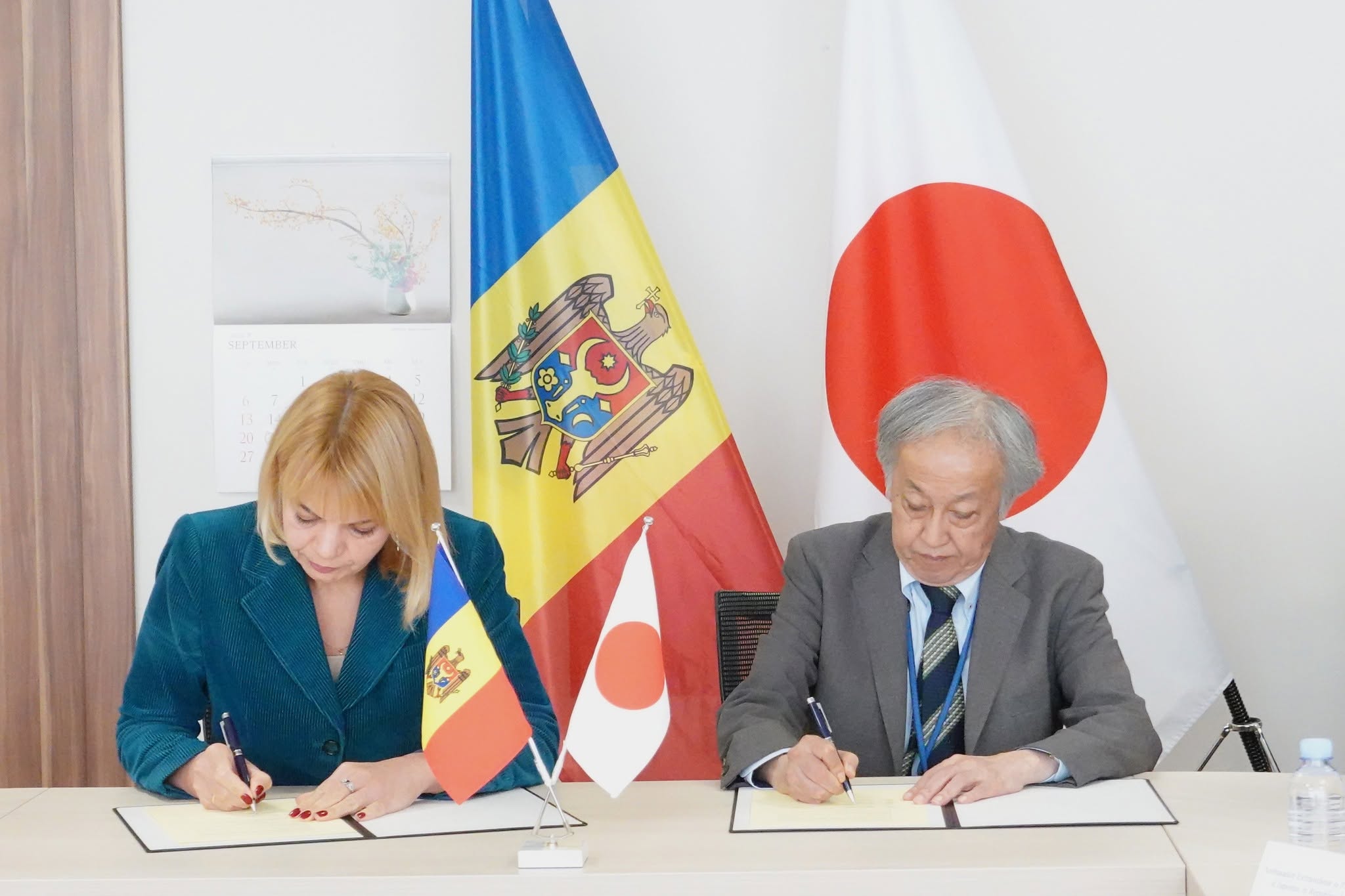
The Clinical Hospital in Balti will be equipped with a new ultrasound machine worth nearly 96 thousand dollars. The procurement of the equipment is funded by the Government of Japan under the “Kusanone” grant program, reports IPN.

At the grant contract signing ceremony, the Ambassador of Japan to the Republic of Moldova, Kazuyuki Takeuchi, reaffirmed Japan’s commitment to supporting the medical sector in Moldova.

“The Balti Clinical Hospital plays a central role in providing medical assistance to the population in the north of the country. Having access to quality cardiovascular services, patients will no longer have to travel to Chisinau, bear additional costs, and lose time on the road just to get an examination. This will make a real difference in people’s everyday lives,” said the Japanese diplomat.

The interim director of the Bălți Clinical Hospital, Ludmila Capcelea, mentioned that the device to be purchased will allow doctors to diagnose patients much faster and more accurately.

“This device represents much more than just high-performance equipment. It means increased access to high-performance medical services and a much faster and more accurate diagnostic capability,” Capcelea noted.

Through the “Kusanone” program, launched in the Republic of Moldova in 2008, the Government of Japan has funded 98 development projects in the fields of health, education, and public utilities with 8 million dollars.


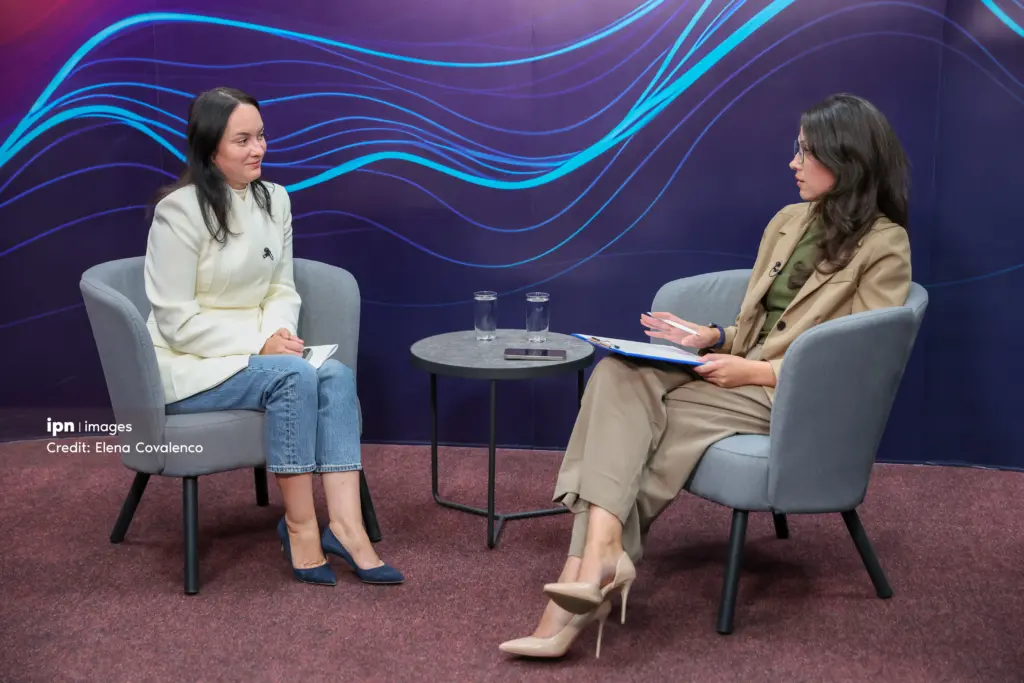
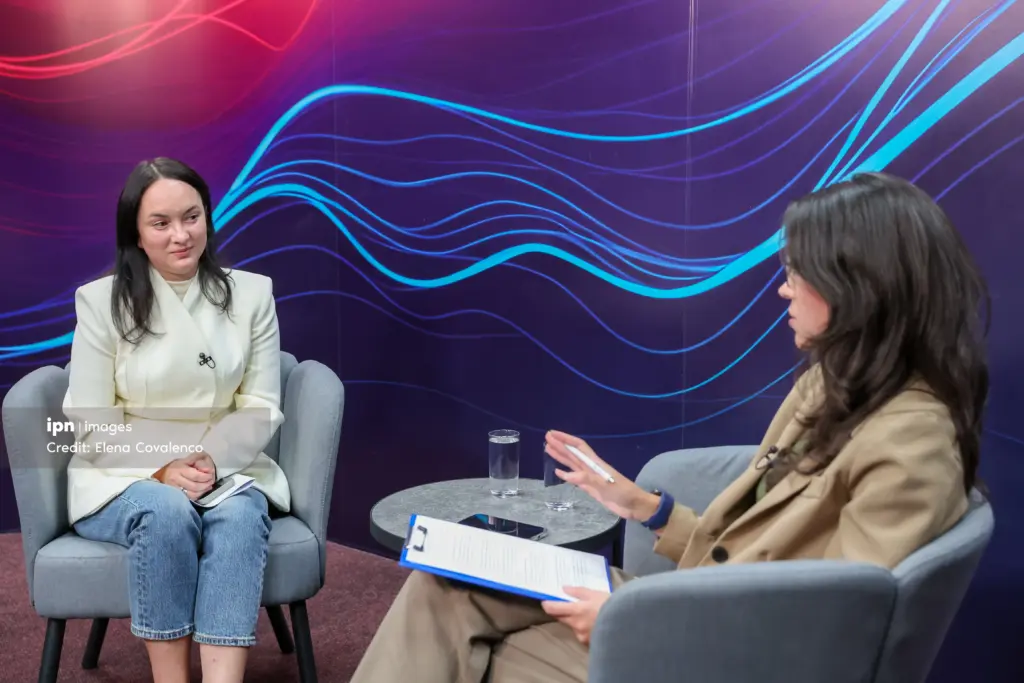
The experience of field consultations shows an openness towards the reform of local public administration in communities that have chosen to amalgamate, but also the need for changes to be better explained to citizens. In an interview for IPN, expert Inna Vrinceanu from the ADEPT Association, talks about the next stage of the reform, normative amalgamation, reorganization of districts and access to European funds, but also about the situation in Gagauzia and the peculiarities of the communities in the Security Zone.

Madam Vrinceanu, given the constant travels you undertake in the field with the ADEPT Association, what is the actual mood of the mayors and citizens in relation to the reform?

We have just concluded, for the most part, the cycle of public consultations and support for local working groups from clusters that have voluntarily amalgamated. Judging from our experience, together with other local experts, and the activities we have conducted, those working group meetings, the discussions are positive, people understand what they are doing, people understand why this reform is necessary.

However, yesterday the public opinion barometer was published and one of the questions referred to the citizens’ perception of this reform. The figures show that over 30% of the population, in general, understand that this reform is necessary. One fact, however, which is also noted by us, as civil society, is that the reform needs to be better explained – which we have also tried to do over the last, I believe, two years, starting with the strategy, when the general reform strategy was voted on.

All the efforts that have been made, both by the government and civil society organizations, with the support of development partners, have had an impact and have been very important. However, given that it is a complex reform, there are still things that need to be clarified, which we also expect from the Government in the upcoming period.

What is the most common question or what are the citizens afraid of as a result of this reform?

I will refer again to the barometer of public opinion, because it is a relevant survey that tells us the state of affairs in the country. It is people’s fear of losing access to the town hall, to the town hall headquarters. But, in the process of voluntary amalgamation, the clusters in which we have worked, most of them aim to open these Unified Service Delivery Centers from the first incentive, the one of 400 thousand lei.

Starting with the consultations that took place in the spring of this year, on the concept of reform, these questions regarding these services have continued to persist. And behold, in response, the localities and communities that have voluntarily amalgamated specifically desire the opening of these CUPS.

Speaking of discussions within communities. There are often local-level dissonances: the mayor supports the amalgamation phase, but local councillors block the decision for various reasons. To what extent does ADEPT get involved in mediating these situations, internal conflicts and what exact solutions are found when local politics hinders reform?

In the normative stage, some of our colleagues, experts, will be and are involved in these discussions. So, this consultation stage has an aspect of informational discussions, not so much consultation, because it is very clear, or in the notifications that the State Chancellery sends, it is exactly indicated what the options are for normative amalgamation. We no longer have those initiation proposals from several clusters and then the community, at the local level, must decide.

Indeed, these consultations and discussions are not easy and I want to tell you that, from north to south, the clusters are very different.

I have had situations where I worked in clusters and, in the end, small communities that, obviously, were to be amalgamated and were only going to benefit from this amalgamation process, eventually gave up. So, they did not go ahead, they did not vote for the final decision and it is a regret for them, but, anyway, a basis for communication and discussion was established through working groups, which will be the ones who, in the following year, will work for these amalgamated communities.

Speaking of the number of districts. The authorities have not yet announced what this number will be, but they have mentioned that there will be fewer. The President of the Parliament, Igor Grosu, confirmed emphatically: “We will not have districts. There will be fewer territorial-administrative units.” From a sociological and logistical point of view, how will citizens from remote villages absorb this transition from 32 districts to fewer regional centers? Isn’t there a risk of complete abandonment of the peripheries?

So, in the Reform Strategy we have two options: either 10 districts, according to the territorial offices of the State Chancellery, one of the proposals, the other targeting the regions. We are yet to see exactly how they will be and if this regionalization is accepted.

Yet, what would be the best option for the Republic of Moldova?

In order for there to be capacity and the possibility of absorbing large European funds, because we are actually preparing for this, I believe that the option for development regions is a particularly good one. This is my opinion.

Is it just about funds or also about benefits?

For example, the regionalization of public services such as communal utilities, water, sewage, waste, because these are services that, unfortunately, in our country, to be efficient, need to be provided to a larger number of citizens. For instance, a simple look at the water and sewage rates, which the city of Chișinău pays, having a larger population and more consumers, is much lower than in my hometown, for example, where it is, if I’m not mistaken, over 60 lei for a cubic meter of water.

Accordingly, the more people and the more beneficiaries we have for a certain service, the lower its price and the higher the quality of service provision. This is also one of the expected results of the reform. And when there will be 10 districts or there will be 7 districts or there will be 5 regions, my opinion is that: the fewer the class of bosses, as I say, the better.

So, we need to have services that are provided based on performance, not on how many administrators we have for these services. This is exactly an example for the communities that have merged: the trend is that the first thing those at the local level want to do is to establish municipal utility companies. And this, again, is a small local result that can be expanded or is, in fact, expanding at the national level.

We will linger a bit more on the topic of regions, and I will refer here to Gagauzia. You recently participated in debates on the reform in the ATU Gagauzia. Although in the current concept, Gagauzia is not included, the authorities mentioned that after the elections for the Popular Assembly, the reform will also reach there. What are the main specific fears identified in the autonomous region and how can the local elected officials there be convinced that the reform does not dilute their political status, but enhances their economic efficiency?

In the territory, we have not worked with local communities. It is true that we have had several public events in which our partners or colleagues with whom we collaborate in Gagauzia have presented their own scenarios for normative or voluntary amalgamation, and people understand exactly as they do on the whole in the country, people understand that this amalgamation is important. Moreover, the tax system in Gagauzia is a bit different from the national one, and there small communities can still solve certain problems from the account of the financial resources they have.

However, for instance, in a discussion with the youth, we simulated a process of voluntary amalgamation, they acknowledged that it is quite difficult to negotiate. But it is not impossible. In the territory of Gagauzia, the population number in the first-level communities, in localities, is quite large.

So, in practice, half, if I noted correctly, of those UATs could fall under the incidence of less than 3 thousand inhabitants. I don’t believe it’s not possible. If there will be a law at the national level.

But let’s see how the elections on November 15th in Gagauzia will turn out, and after that I believe we can discuss. Right now, there are just some scenarios that we hypothetically discuss.

I want to touch briefly on the security zone towards the end. The Dubasari district. The Promo-LEX Association has pointed out that the reform should approach the Dubăsari district and the Security Zone in a very special way. How do you see the technical approach to the localities near the Nistru, where the presence of state institutions also plays a geopolitical role in asserting constitutional jurisdiction?

I wouldn’t want to offer certain scenarios, but, from my experience, in a cluster where I worked, we had a community from the Security Zone. Eventually, it gave up amalgamating, so it is not part of the cluster from a locality in Anenii Noi. Regrettably, although the mayor and the working group, for the most part, were very okay, they were open to collaboration, but the Local Council decided that it does not see benefits in this process.

I do not know what the Government is about to propose for the security sector and area, but, given the sensitive circumstances we are in, it is good to have an approach that may not be very special, but with great attention to these communities in the Security Zone.

Why? Might the citizens not agree?

It would probably be necessary to have more communication for them, so they can understand what this means and how. There are some benefits that those in the Security Zone have, and when they come to join a cluster, and the city hall does not necessarily have to be in the security zone, in that city hall, the residence of the city hall, and then it becomes problematic, because they lose certain benefits they have and benefit from being in that security zone. I am speaking here, from the perspective of the citizens. This was one of the arguments put forward in the working process in those clusters.

Thank you very much for this discussion.

I thank you too.

Irina Botu, IPN

Disclaimer: This material was prepared by the IPN Press Agency, within the project “Local Public Administration Reform in Dialogue”, funded by the Ministry of Culture from the Media Subsidy Fund.


0 FacebookTwitterPinterestEmail


The Clinical Hospital in Balti will acquire an ultrasound machine through a grant provided by Japan under the “Kusanone” program

Photo source: Embassy of Japan in Moldova

The Clinical Hospital in Balti will be equipped with a new ultrasound machine worth nearly 96 thousand dollars. The procurement of the equipment is funded by the Government of Japan under the “Kusanone” grant program, reports IPN.

At the grant contract signing ceremony, the Ambassador of Japan to the Republic of Moldova, Kazuyuki Takeuchi, reaffirmed Japan’s commitment to supporting the medical sector in Moldova.

“The Balti Clinical Hospital plays a central role in providing medical assistance to the population in the north of the country. Having access to quality cardiovascular services, patients will no longer have to travel to Chisinau, bear additional costs, and lose time on the road just to get an examination. This will make a real difference in people’s everyday lives,” said the Japanese diplomat.

The interim director of the Bălți Clinical Hospital, Ludmila Capcelea, mentioned that the device to be purchased will allow doctors to diagnose patients much faster and more accurately.

“This device represents much more than just high-performance equipment. It means increased access to high-performance medical services and a much faster and more accurate diagnostic capability,” Capcelea noted.

Through the “Kusanone” program, launched in the Republic of Moldova in 2008, the Government of Japan has funded 98 development projects in the fields of health, education, and public utilities with 8 million dollars.


Representatives of the creative industries report difficulties in supporting creative entrepreneurship, talent development, and preparing new generations of specialists. The issues in the sector were discussed during a meeting with the Minister of Culture, Dan Suruceanu, reports IPN.

According to the Ministry of Culture, the discussions with the representatives of the Association of Creative Companies of Moldova focused on the needs of companies, freelancers, and independent professionals, as well as the possibilities of strengthening collaboration between authorities and the sector.

At the same time, the meeting also addressed the involvement of creative industries in public interest projects, as well as their contribution to the international promotion of the Republic of Moldova. The Ministry of Culture collaborates with the Association of Creative Companies through the National Program “Creative Moldova” 2024-2027, the Artcor and Mediacor centers, and through several educational and entrepreneurial initiatives.

The Ministry of Culture notes that the revenues generated by this type of companies reached nearly 5.6 billion lei in 2024. The sector includes fields such as advertising, architecture, design, audiovisual, creative technologies and performing arts.

0 FacebookTwitterPinterestEmail


1 IANUARIE, 2025
1 IANUARIE, 2025