

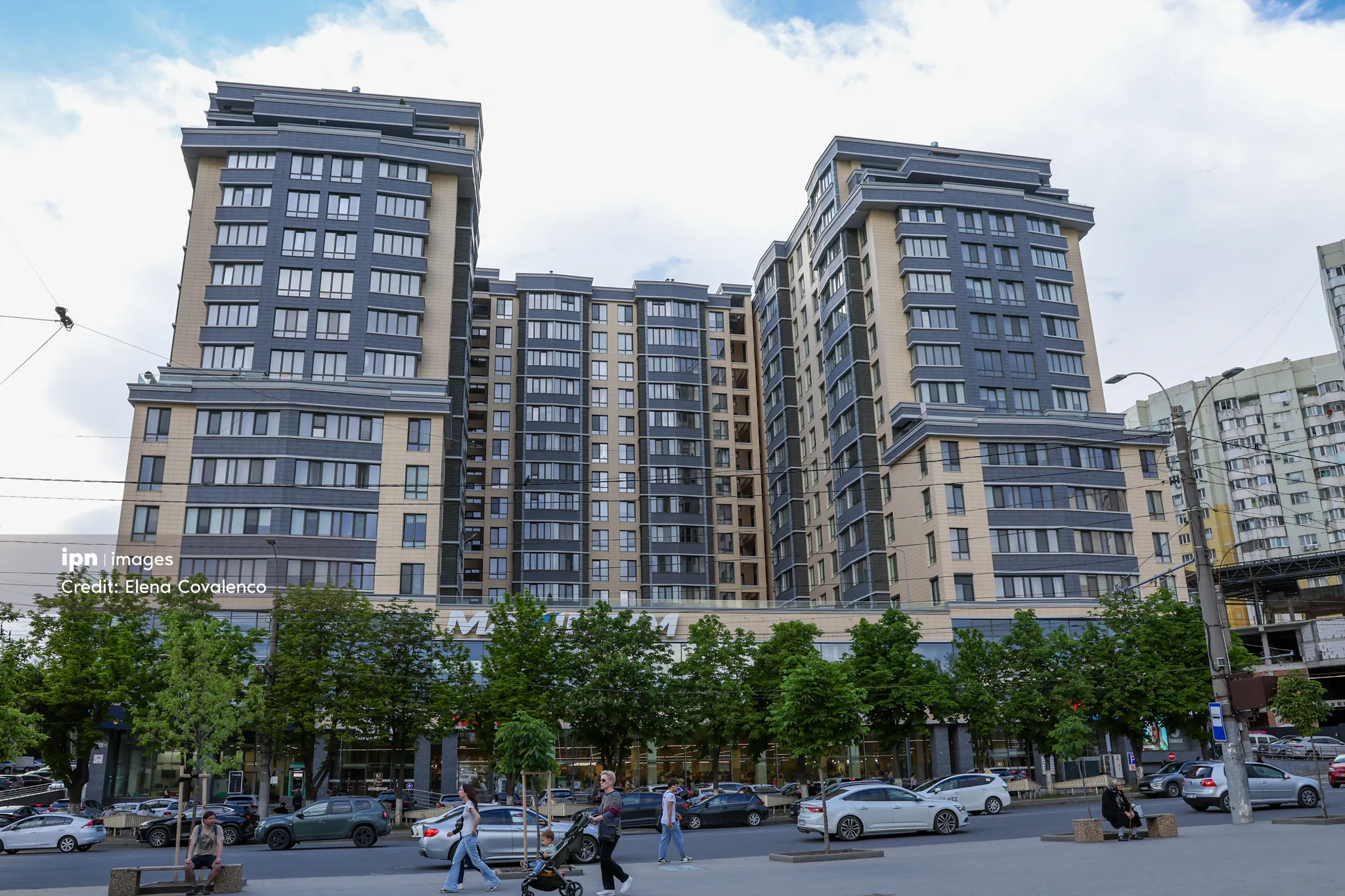
Apartment owners, encouraged to take a more active role in the management of the buildings

Residential buildings in Moldova are deteriorating day by day, and apartment owners should take a more active role in managing the buildings. This is stated by participants at the Forum of Tenants’ Associations in Moldova. According to them, the formation of tenants’ associations can facilitate access to grants for carrying out maintenance and energy renovation works of residential buildings, reports IPN.

Deputy Prime Minister Vladimir Bolea, Minister of Infrastructure and Regional Development, pointed out that in order to halt the degradation of apartment buildings, it is necessary to form condominium associations, so that all owners can subsequently get involved in the building’s management. According to him, condominium associations need to be widely promoted by mayors, municipal councils, and by people who understand their importance.

The Minister of Energy, Dorin Junghietu, stated that homeowners’ associations are essential partners for the authorities, as public policies and funding programs achieve their purpose when people organize and decide to access them. The official added that a residential block represents a shared responsibility of all apartment owners.

The Director of the National Center for Sustainable Energy, Ion Muntean, stated that the representative of the association’s management must organize the owners, so that the association can submit an application to the government tools for energy efficiency in the residential sector of Moldova. According to him, delaying the decision on the renovation of the block could mean another heating season with higher costs for tenants.

The UNDP Resident Representative in the Republic of Moldova, Daniela Gasparikova, stated that the organization will continue to collaborate with homeowners’ associations to develop concrete projects and access funding programs in the field of energy efficiency. She mentioned that the UNDP will support, with financial backing from Denmark, 10 initiative groups intending to form homeowners’ associations, helping them transition from an informal to a formal organization.

The Forum of Homeowners Associations of Moldova, now in its second edition, is a platform for dialogue and exchange of experience between homeowners associations from various residential buildings with different forms of organization, central and local public authorities, development partners, and representatives of the private sector.


Inflation in Moldova will return to the target range only in the third quarter of 2027. The estimate was made by the Governor of the National Bank of Moldova, Anca Dragu, during an interview for IPN. The official emphasized that the main risk for this development is the external, geopolitical one, namely the price of oil on the international market.

Madam Dragu, during your visit to Brussels, you met with the Head of the General Directorate for Economic and Financial Affairs of the European Commission, the European Commissioner for Financial Services and the Union of Economies and Investments, and the Head of the Representation of the European Central Bank in Brussels. What was the message conveyed and the topics of discussion?

We had discussions about the macroeconomic developments in the country. Of course, these developments and discussions are placed in a broader regional and international context. At the same time, we talked about the progress that the National Bank of Moldova is making in terms of adopting and implementing the community acquis, that is, these directives, laws, regulations and rules, which are to bring the country’s economy closer to European standards, to prepare us to be members of the European Union and to have a functional market economy.

Regarding the macroeconomic framework, we discussed the inflationary pressures we are facing in the context, of course, of pressures on the energy market, the oil market in particular, the crisis in the Middle East, which puts pressure on everyone, indeed. They also presented us their forecasts. Regarding legislation, the community acquis, we reviewed the most important changes. We have a series of deadlines that we have committed to by the end of 2026.

We have managed to outpace most of these terms, so a series of important laws that we set for the end of the year, for December, we have already managed to finalize. And here I would mention the law on crypto-assets, which implements the MiCA directive. It has already been approved at the parliamentary level. We also have legislation on the liberalization of the capital account. Basically, all financial and capital transactions will be carried out more easily, with fewer restrictions, so that we can gradually eliminate these restrictions. It was already approved yesterday in Parliament, this law, so I came with very fresh news.

About the independence of the central bank, today the law was approved in Parliament, in the first reading. We are awaiting the following discussions and the second reading. As for the banking resolution, we also have very significant progress: we are now implementing what has just been voted at the European Union level. That is, we will probably be among the first states to apply these new changes, perhaps even before some European Union member states, they having different implementation deadlines, we have this commitment for the end of the year.

In the area of prevention and combating money laundering, payments, in the insurance area, we have covered the entire range of subjects related to the National Bank of Moldova. I must say that we have quite a large hat, we have many duties, many responsibilities. If we look at other central banks, even from the European Union, so we have the monetary policy part, but we have financial stability, banking supervision, regulation, many states have a separate entity for this.

And we have not only the banking sector, but we also have the non-banking financial sector, we have the insurance sector, we have payments, we also have the central depository here. That is, this means that we also have many legislative commitments. For this year, we have about 20 laws to approve and we are on the right track with all of them.

The National Bank of Moldova is directly responsible for three negotiation chapters for accession to the European Union, and the banking sector is targeted in about ten chapters. To what extent is it prepared for integration into the European Union’s banking system and what remains to be done?

The banking sector in the Republic of Moldova looks very good when we analyze it in relation to European rules. Regarding legislation, at the moment we became members of the euro payment area, SEPA, we then had intense discussions for about a year and we showed that, in certain areas, on prevention and combating money laundering and combating terrorism financing, payments, supervision, we are aligned with European legislation.

So we actually had to show that these areas are aligned and functional. We now have a process, the so-called legislative equivalence of the banking sector legislation. This assessment is carried out together with the European Banking Authority. It is the entity that deals strictly with the banking area at the European Union level. And we have carried out about two-thirds of the legislative framework assessment with them. So we expect that in a few months we will have this assessment completed. This will be confirmed by the European Banking Authority, yes, the banking system in Moldova is aligned with European legislation.

So, the banking sector has – in terms of legislation – institutions, good practices, I would say we are quite well aligned with European rules. Moreover, in the banking sector, about 95% of banking assets are owned by investors from the European Union, even from the euro zone. This means that they already have all the organizational and reporting requirements from the European Union, this means that these banks operate and report according to European rules. So, in short, I don’t want to seem immodest, but the banking sector is doing quite well in terms of alignment with European rules.

Taking into account the current inflation rate and the target set by the BNM, when do you estimate it will return to the reference range and what are the main risks affecting the desired evolution?

The main risk is the external one, geopolitical, oil prices. And I believe that every person involved in this area, in the inflation forecast, any central banker, wakes up every morning and checks the current oil price on the international market, because from here derive a series of negative effects on the prices of all goods and services.

The inflation target of the National Bank is 5%, it is fixed. We currently have inflation below 7 percent, 6.96%. We estimate that inflation will continue to rise, but we estimate that, in the third quarter of 2027, we will return to the target range, that is somewhere around five, plus or minus 1.5 percentage points, more precisely below 6.5%. So, in the third quarter of 2027, we will return with inflation to the area that we consider acceptable for both savings and investments.

Foreign exchange reserves play an important role in maintaining the economic stability of a country. How are these calculated and what is the optimal level for Moldova?

Yes, indeed, foreign exchange reserves represent a direct and even psychological tool for the financial stability of a country. There are several calculation methods, related to the country’s imports and exports. There is a more traditional method that recommends these reserves to be able to cover a few months of imports, 3-4 months. In our case, these reserves, which are around five billion, cover more, somewhere around 5-6 months, so we are comfortable with this indicator.

There is also another calculation method, referring to external payment obligations, which strictly involves financial relations: short-term external obligations are taken, after the remaining maturity, and the reserves must be able to cover these obligations more than comfortably. And here we are very comfortable. As we see every month, quarterly, we see small fluctuations in reserves. These fluctuations are the result of payments made on account of debt or collections from loans, sometimes even interventions. We do not have a regime where we intervene in the market, we only intervene to mitigate certain sudden shocks.

Otherwise, we have a free-floating currency regime, so we are very transparent about these reserves. And a very important element: as of January 1, 2025, we made the decision for the reserves and investments to switch from dollars to euros. Of course, this does not happen overnight, we gradually change the composition of these reserves. Why did we do this? To align ourselves with the organic changes in the economy. At this moment, we have about 70% of financial flows with the European Union and in euros. Imports, exports are somewhere around 65-70% also towards the European Union and, as such, the country’s reserves also had to be in euros. By changing the denomination and composition of the reserves from dollars to euros, I believe that about 11 million euros were saved.

Moldova’s external debt has been steadily increasing in recent years, particularly for financing the budget deficit. Is this level sustainable for the country’s economy and what should the authorities be aware of in view of joining the European Union?

In the rules and European economic governance, there are a few figures that we must know very well and we are in the safe zone. We have the budget deficit and the public debt. The total public debt must be under 60% of the gross domestic product. At this moment, the debt is somewhere under 40%, at 38%. So, we are in a more than comfortable zone. A European average is far above this 60% limit.

Regarding public debt, we are at a sustainable level. Of course, we need to ensure that this debt and the deficits from each year that accumulate to the debt go as much as possible towards investments. Because, in this way, the cost associated with the debt is worth the money. It’s like when a person takes a loan and needs to be careful what they do with that money, because if they invest it in something, in a house, in education, then yes, it is a cost that you can afford and perhaps it is a wise investment and a wise loan. Under other circumstances, it probably isn’t a wise decision.

Madam Dragu, thank you for this discussion.

I thank you.

Maxim Bolohan, IPN


0 FacebookTwitterPinterestEmail


Apartment owners, encouraged to take a more active role in the management of the buildings

Residential buildings in Moldova are deteriorating day by day, and apartment owners should take a more active role in managing the buildings. This is stated by participants at the Forum of Tenants’ Associations in Moldova. According to them, the formation of tenants’ associations can facilitate access to grants for carrying out maintenance and energy renovation works of residential buildings, reports IPN.

Deputy Prime Minister Vladimir Bolea, Minister of Infrastructure and Regional Development, pointed out that in order to halt the degradation of apartment buildings, it is necessary to form condominium associations, so that all owners can subsequently get involved in the building’s management. According to him, condominium associations need to be widely promoted by mayors, municipal councils, and by people who understand their importance.

The Minister of Energy, Dorin Junghietu, stated that homeowners’ associations are essential partners for the authorities, as public policies and funding programs achieve their purpose when people organize and decide to access them. The official added that a residential block represents a shared responsibility of all apartment owners.

The Director of the National Center for Sustainable Energy, Ion Muntean, stated that the representative of the association’s management must organize the owners, so that the association can submit an application to the government tools for energy efficiency in the residential sector of Moldova. According to him, delaying the decision on the renovation of the block could mean another heating season with higher costs for tenants.

The UNDP Resident Representative in the Republic of Moldova, Daniela Gasparikova, stated that the organization will continue to collaborate with homeowners’ associations to develop concrete projects and access funding programs in the field of energy efficiency. She mentioned that the UNDP will support, with financial backing from Denmark, 10 initiative groups intending to form homeowners’ associations, helping them transition from an informal to a formal organization.

The Forum of Homeowners Associations of Moldova, now in its second edition, is a platform for dialogue and exchange of experience between homeowners associations from various residential buildings with different forms of organization, central and local public authorities, development partners, and representatives of the private sector.


The six-year-old girl, seriously injured in the accident that occurred nearly two weeks ago near Fagureni, Straseni district, has died in the hospital. At the same time, law enforcement has determined that the child’s mother, who was in a state of advanced intoxication, was behind the wheel of the car.

The police representatives clarified for IPN that the biological samples taken from the woman indicated a concentration of 1.35 grams of alcohol per liter of blood. A criminal case has been initiated, and the woman is being investigated in freedom. The investigators continue to gather evidence to establish all the circumstances.

The spokesperson for the Mother and Child Institute, Maxim Cazacu, told IPN that the girl passed away despite the doctors’ efforts. The child had been admitted in extremely critical condition, with multiple traumas and severe injuries.

The accident occurred on the night of September 13, after the car in which the family was traveling skidded and ended up in a water drainage canal. The woman’s husband, aged 39, was tested for alcohol, the result indicating 0.85 mg/l alcohol in the exhaled air, and biological samples were taken from the woman. At that moment, it was not clear who was driving.

0 FacebookTwitterPinterestEmail


1 IANUARIE, 2025
1 IANUARIE, 2025