




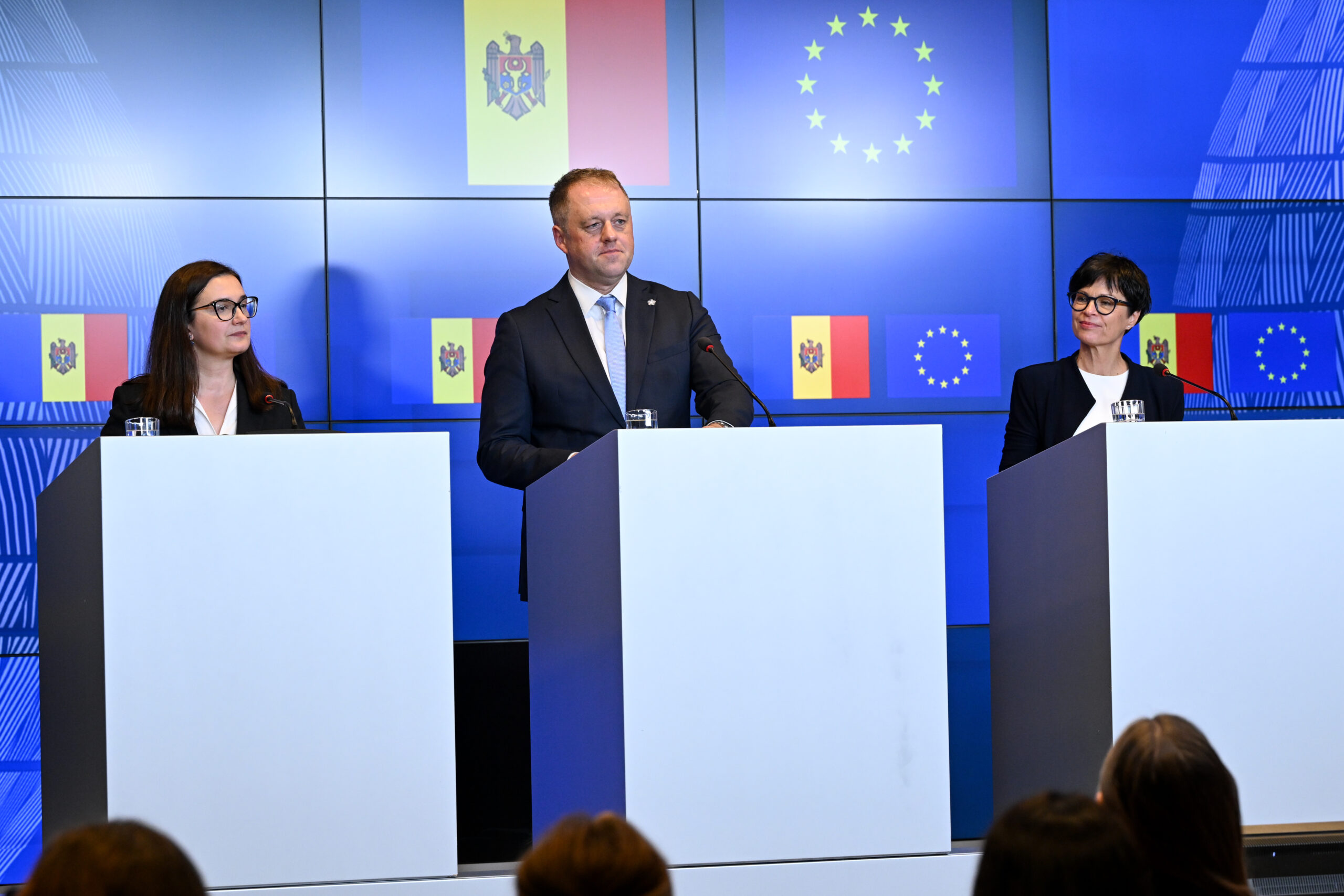
The European Commissioner for Expansion, Marta Kos, says that the Republic of Moldova could reach a total of 500 million euros received through the Growth Plan by the end of the year, if it continues the reforms. The statement was made after the EU-Moldova intergovernmental conference in Luxembourg, during which the accession negotiations for clusters 2 – “Internal Market” and 3 – “Competitiveness and inclusive growth” were opened, reports IPN.
Marta Kos urged the authorities in Chisinau to maintain the pace of reforms, reminding that within the EU-Moldova Association Council, a tranche of over 150 million euros was unlocked through the Growth Plan. According to the commissioner, the continuation of reforms can attract European funds and can bring the country closer to the EU.
The official mentioned that the reforms in the two clusters aim to strengthen the economy, attract investments, create jobs and facilitate the access of Moldovan enterprises to the European market. They also aim to improve education, protect employee rights and increase product safety.
At the same time, the Irish Minister of State for European Affairs and Defense, Thomas Byrne, appreciated the progress made by the Republic of Moldova in the accession process, especially in the last year, and the reforms carried out in all negotiation chapters. The official emphasized Chisinau’s commitment to the European path and EU values.
The Deputy Prime Minister for European Integration, Cristina Gherasimov, noted that reforms can improve citizens’ lives and create economic opportunities, including in the digital sector, research and production. The Growth Plan will support these objectives through investments, supporting businesses, and developing infrastructure.
Cluster 2 – “Internal Market” includes nine chapters and aims at the free movement of persons, goods, services and capital, as well as areas such as consumer protection, competition and financial services. Cluster 3 – “Competitiveness and Inclusive Growth” includes eight chapters, which aim at digital transformation, taxation, economic and monetary policy, employment, industry, research, education, culture and the customs sector.
