

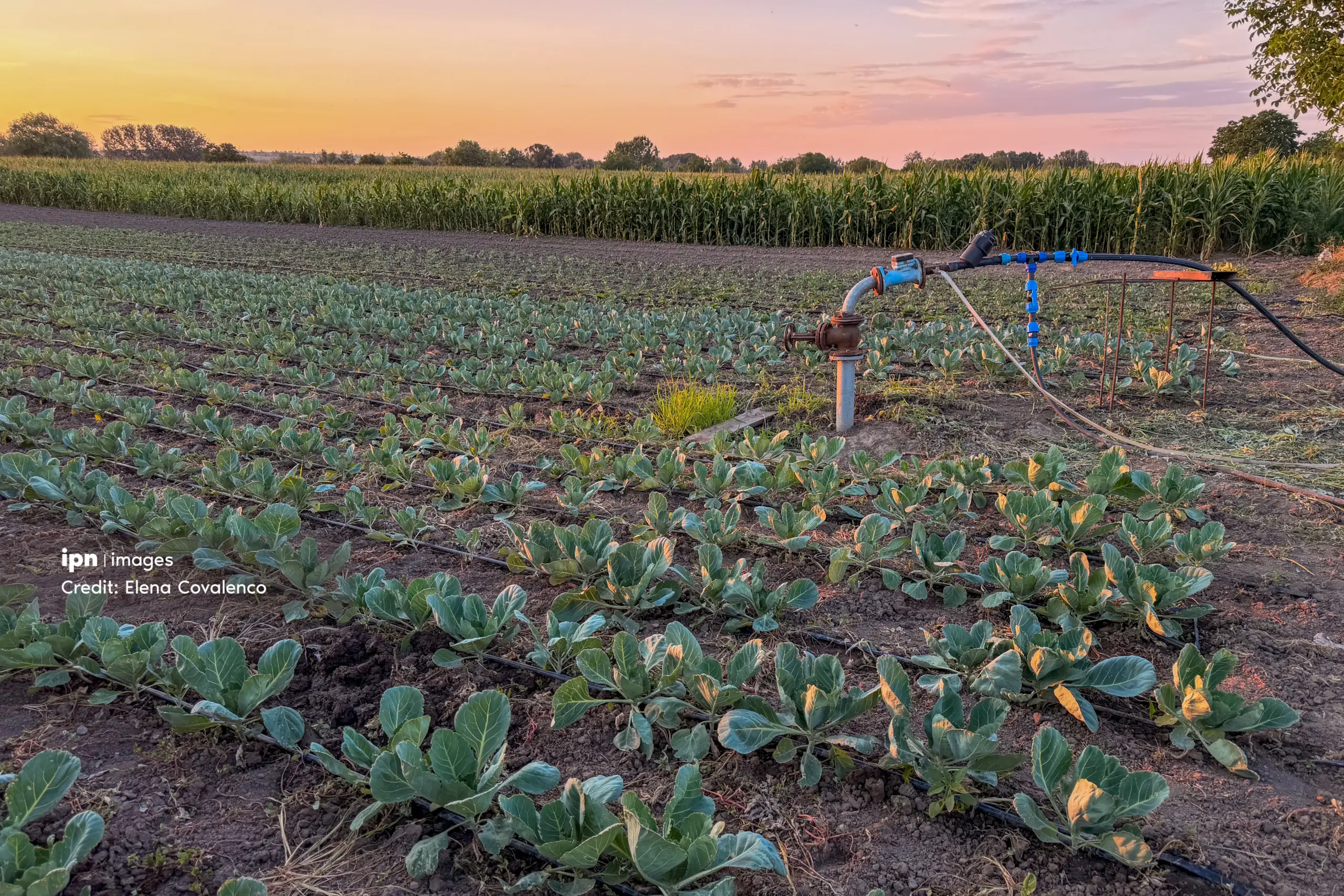
Moldova has signed a loan agreement with the EBRD for over 102 million euros, funds for the rehabilitation of irrigation systems

The Republic of Moldova and the European Bank for Reconstruction and Development have signed a loan agreement for more than 102.9 million euros to rehabilitate the country’s irrigation systems. The project will be supplemented by a 4.8 million euro grant and a national contribution of seven million euros, according to IPN.

According to an EBRD press release, up to 49.8 million euros of the loan will be allocated to the rehabilitation of the Puhacenii de Sus and Masivul Causeni centralized irrigation systems, located in the Dniester River basin. The work will include the modernization of water collection, pumping, and distribution infrastructure, as the existing systems are outdated, non-functional, or underutilized. An additional amount of up to 53.1 million euros will be allocated to the rehabilitation of priority centralized irrigation systems, which are to be identified by the government.

The Minister of Agriculture and Food Industry, Eugeniu Osmochescu, stated that the Republic of Moldova must develop not only its irrigation and water storage infrastructure but also its water collection capabilities in order to better address hydrological challenges.

The project will also receive a grant of 4.8 million euros from the European Union through the Neighborhood Investment Platform, and the national contribution of up to 7.2 million euros will be provided through the Growth Plan for Moldova.

According to EBRD estimates, the modernization of infrastructure will enable more efficient distribution of water and energy and could help triple annual agricultural production in the rehabilitated areas. The investments also aim to reduce farmers’ vulnerability to the effects of climate change and support more competitive and sustainable agriculture.

The project also aims to strengthen the capacity of the National Land Improvement Agency and to support water user associations and farmers in the management and maintenance of irrigation systems.


The Ombudsman’s Office raises an alarm regarding the number of psychiatrists in the country. During the public hearings organized by the Parliamentary Commission for Social Protection, Health and Family, the deputy of the ombudsman, Olesea Doronceanu, stated that only 231 psychiatrists are dealing with nearly 143 thousand patients with mental disorders, reports IPN.

The Deputy Ombudsman stated that the shortage of psychiatrists persists and cited the Botanica Community Mental Health Center as an example. According to data presented by Olesea Doronceanu, the institution serves 20,700 people, and one psychiatrist has 886 patients on record, a situation that hampers the efficient management of violence risks.

The interim director of the Clinical Psychiatry Hospital, Andrei Esanu, stated that currently, there is no action being taken towards the prevention and early detection of individuals with mental disorders and potentially dangerous behavior. Andrei Eșanu emphasized that the Republic of Moldova needs an efficient system for managing violence risks, based on formal communication mechanisms and the transfer of responsibilities between medical services, police, and social services.

The Vice President of the Parliamentary Commission for Social Protection, Health and Family, Liliana Grosu, stated that there is a need for a risk assessment tool for violence, applicable not only to people with mental health issues, but to all adults. Another important aspect, in her opinion, is the monitoring of people with mental health problems in society after discharge.

Among the recommendations presented in the report are the creation of local intersectoral cooperation mechanisms, which would allow for the early identification of situations at risk of violence and coordinated intervention before they escalate into the criminal sphere. Also, it is recommended to support the expansion of ongoing professional training programs for judges, prosecutors, prison system staff, with an emphasis on the intersection between criminal law, mental health, and human rights.

The report on the evaluation of the regulatory framework and institutional mechanisms for preventing, identifying, and managing violence in the context of mental disorders, as well as measures to protect children in risk situations, was carried out with the support of UNICEF, within the partnership with the Ombudsman’s Office.

0 FacebookTwitterPinterestEmail


Moldova has signed a loan agreement with the EBRD for over 102 million euros, funds for the rehabilitation of irrigation systems

The Republic of Moldova and the European Bank for Reconstruction and Development have signed a loan agreement for more than 102.9 million euros to rehabilitate the country’s irrigation systems. The project will be supplemented by a 4.8 million euro grant and a national contribution of seven million euros, according to IPN.

According to an EBRD press release, up to 49.8 million euros of the loan will be allocated to the rehabilitation of the Puhacenii de Sus and Masivul Causeni centralized irrigation systems, located in the Dniester River basin. The work will include the modernization of water collection, pumping, and distribution infrastructure, as the existing systems are outdated, non-functional, or underutilized. An additional amount of up to 53.1 million euros will be allocated to the rehabilitation of priority centralized irrigation systems, which are to be identified by the government.

The Minister of Agriculture and Food Industry, Eugeniu Osmochescu, stated that the Republic of Moldova must develop not only its irrigation and water storage infrastructure but also its water collection capabilities in order to better address hydrological challenges.

The project will also receive a grant of 4.8 million euros from the European Union through the Neighborhood Investment Platform, and the national contribution of up to 7.2 million euros will be provided through the Growth Plan for Moldova.

According to EBRD estimates, the modernization of infrastructure will enable more efficient distribution of water and energy and could help triple annual agricultural production in the rehabilitated areas. The investments also aim to reduce farmers’ vulnerability to the effects of climate change and support more competitive and sustainable agriculture.

The project also aims to strengthen the capacity of the National Land Improvement Agency and to support water user associations and farmers in the management and maintenance of irrigation systems.


Three individuals have been convicted for abuse of office in the case of the illegal alienation of lands in the Truseni commune, Chisinau municipality. One of the defendants, a former cadastral engineer, received a 9-year prison sentence for embezzlement of foreign property. The other two defendants were released from punishment due to the expiration of the statute of limitations, reports IPN.

According to the Anti-Corruption Prosecutor’s Office, between 2010 and 2016, the former cadastral engineer allegedly conspired with two former mayors of Truseni commune, the president of a fruit-growing association, and other individuals to illegally alienate lands owned by the local public administration. The scheme would have involved intermediaries, fictitious sales-purchase contracts, and cadastral documents drawn up to create the appearance of legality in the transactions.

The damage caused to the local budget as a result of these actions is estimated at 1.87 million lei.

The prosecutors also mention that, during the period 2000-2011, other lands would have been allocated for free to intermediaries, based on non-existent decisions or ones that did not provide for the transfer of the lots into ownership. Subsequently, the lands would have been sold for prices ranging between 10 thousand and 15 thousand dollars for each lot, the estimated damage in this case exceeding 1.65 million lei.

The court has in principle admitted the civil action filed by the Truseni Communal Council for the recovery of damages, this being set to be examined within the framework of a civil procedure. At the same time, it ordered the seizure of seven plots of land and maintained the seizures previously imposed on other properties.

The sentence can be appealed to the Court of Appeal.

0 FacebookTwitterPinterestEmail


1 IANUARIE, 2025
1 IANUARIE, 2025