

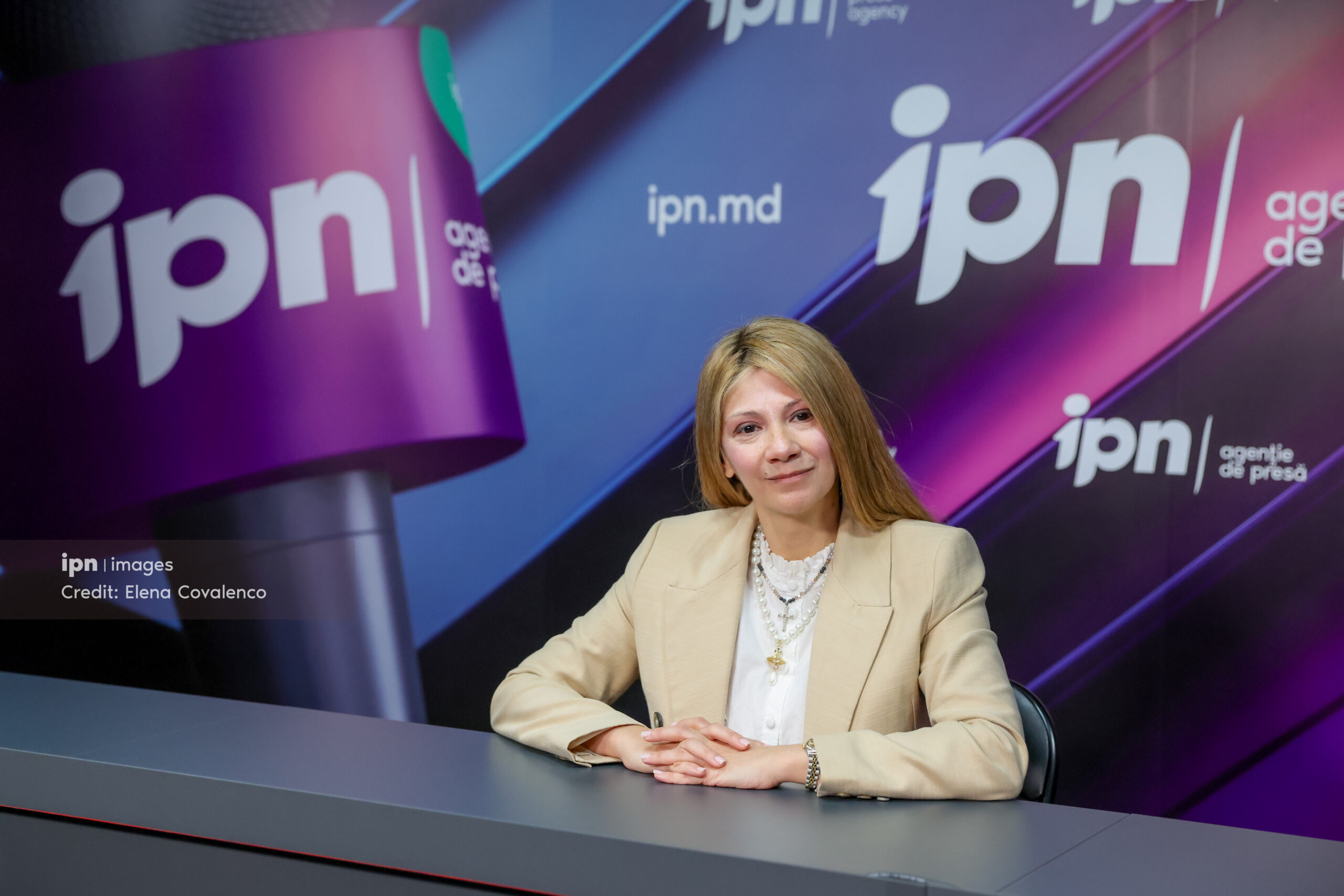
Hybrid threats – A challenge for independent press. IPN Interview with Gulnara Akhundova

The independent press plays a vital role in strengthening democracy, and in a context marked by disinformation, economic pressures and hybrid threats, international support for the media is becoming increasingly important. For five years, International Media Support (IMS) has been supporting the development of the media sector in the Republic of Moldova through projects focused on journalist safety, editorial sustainability and media reforms. In an interview with IPN, IMS Regional Director for Europe Gulnara Akhundova spoke about the challenges facing the press in the Republic of Moldova, the progress made and the organization’s priorities in the context of the country’s European integration process.

Ladies and gentlemen, good day. In a time when journalists around the world are facing increasing threats – from legal harassment and online abuses to imprisonment and exile – international support for independent press has become more important than ever. Our guest today is Gulnara Akhundova, Regional Director for Europe of International Media Support and a long-term advocate for press freedom and the protection of journalists in risky situations. Ms. Akhundova, we thank you for accepting the invitation of the IPN Press Agency.

International Media Support has been collaborating with independent media outlets in the Eastern Partnership countries for many years. What are the main projects that IMS has supported so far in the Republic of Moldova and what impact have they had?

IMS is a global media development organization, headquartered in Copenhagen, Denmark and the Eastern Partnership region, or as we like to call it, Europe, is part of our global portfolio. We also operate in the Middle East and North Africa, in Asia and in Africa. Therefore, we are truly a global organization. We have been working in the Republic of Moldova since 2021, through a comprehensive approach, oriented towards the entire media sector. Simply put, it’s not just about supporting independent media institutions, but also about working in the field of media reform, legislation, journalists’ safety, media education and other areas. That’s why we say we have a comprehensive approach. We have this approach not only in the Republic of Moldova, but also in other European countries, in Ukraine and in other states. The challenges are, to a certain extent, similar in Europe and, practically, around the world.

For instance, if we talk about generative artificial intelligence and the way traffic is redirected due to its development, we notice that this phenomenon directly affects the media and financial sustainability, as well as the revenues of media institutions. This is just one example of a common challenge for the entire region.

Based on your work with journalists in this region, what are the biggest challenges facing journalists in the Republic of Moldova? And how do these compare to the situation in other Eastern Partnership countries?

Firstly, it’s about sustainability. Sustainability and the ability to compete in a fair and competitive market. We fully understand the economic situation, the fact that it is also difficult for media institutions in the Republic of Moldova to attract the business environment. And after the withdrawal of the United States as a donor from this market, the situation has become very difficult.

What we observe on the media market in the Republic of Moldova is that there are certain conditions that need to be improved, including as part of the Republic of Moldova’s accession plan, so that the market can become fair, competitive and transparent and be prepared for accession to the European Union.

Another fundamental challenge for the independent press in the Republic of Moldova and, again, it is not a challenge specific only to the Republic of Moldova, but to the entire region, is represented by hybrid threats, hostile propaganda and disinformation. We see how media institutions struggle to make themselves heard amidst all this informational noise created by propaganda actors and those who seek to spread malicious propaganda and disinformation.

And here I must congratulate our partners in the Republic of Moldova, including your media institution, for working 24 hours a day, 7 days a week, to defend the informational space of the Republic of Moldova and to promote a healthy and responsible public debate, an important factor for democratic development and for accession to the European Union.

You have programs for journalists at risk. What types of support are currently available? Can journalists and media organizations in the Republic of Moldova apply for these opportunities?

IMS is a global organization and, by implementing programs in different regions of the world, we learn. We learn from our partners, innovate together with them and develop new methods. Methods that can be replicated and applied from one region to another.

Thus, what we can offer to our partners in the Republic of Moldova – media institutions, but also public authorities and civil society organizations – are methodologies developed in other parts of the world, including Europe.

It’s about new methods of combating disinformation and hostile propaganda. It’s about ways of organizing activity in an editorial office, about editorial workflows, about different ways of managing an editorial office. It’s also about preparing for crisis situations – how an editorial office can be prepared for a crisis, already having a management plan for it. It’s about developing safety protocols that allow media institutions to carry out their activities in secure conditions and about many other methodologies.

I want to say that, being a global organization and operating in different parts of the world, we have the privilege of discovering new solutions developed in these countries, which we subsequently replicate in other regions.

The Republic of Moldova ranks 31st in the World Press Freedom Index compiled by Reporters Without Borders. In your view, what progress has the country made in strengthening press freedom and what challenges remain?

I would say that the main progress, from my point of view, is the state’s commitment to strengthen the independent press and to build an independent media sector. I saw this commitment first expressed in the National Mass Media Development Plan, which is nearing its end, and is now to be replaced by a media strategy developed by the Ministry of Culture together with actors in the media field.

This is a very important step taken by the state, through which the development of the press is placed among national priorities. And I believe that this is how it should be done in all the countries where we operate. That’s why I like to say that the Republic of Moldova represents a positive example and a source of inspiration for neighboring countries and for the entire region in terms of including media development in national strategies.

I would say that this is the main element through which we observe the state’s commitment to promote media development. We also observe that the Republic of Moldova now has an action plan for journalists’ safety. This is another important moment. Again, the state has taken a step forward by developing a national strategy for the protection of journalists.

This was accomplished in cooperation with the Council of Europe and other significant actors in this field. These are just a few examples of commitment at a macro level and of creating the general conditions for the functioning of the media. Because, when we talk about conditions, they can exist at various levels.

They can exist at the level of a media institution, but what is truly important is what we call the favorable environment in which the mass media carries out its activity. These conditions have already been created or are in the process of being created so that the press can operate in a safe and favorable environment.

Of course, challenges still exist and we are aware of them. That’s precisely why we are here, as IMS, and we work together with our partners – media institutions, civil society organizations and public authorities – to strengthen the independence and freedom of the press in the Republic of Moldova.

When it comes to the challenges journalists face, disinformation, online harassment and digital surveillance are becoming increasingly sophisticated. How does IMS help journalists build resilience in the face of these types of threats?

IMS understands safety from three perspectives. We talk about physical safety, psychological safety, and digital safety. As a global organization, learning from the experience of different countries, we have developed methodologies regarding the safety of editorial offices. For example, here, in the Republic of Moldova, we offer our partners a complete training package on crisis preparedness. This includes digital safety, physical safety and psychological safety.

Looking ahead, what are IMS’s priorities for the Republic of Moldova? Are there any new programs or initiatives that journalists and independent media organizations can expect in the near future?

IMS is dedicated to the principle we call localization. This means that our priorities are not set in Copenhagen. Our priorities are determined by the existing needs in the countries where we operate. Therefore, here we listen to what our media partners say, organizations like yours, civil society organizations and public authorities. And we act in accordance with national priorities.

For us, the priority is to collaborate with our partners and the Ministry of Culture in developing the Media Development Strategy. This strategy will continue to guide the work of IMS. For now, I can say that it is no surprise that the main challenge remains the sustainability of independent press. We have high hopes for a serious reform of the market, so that there are, at least at a macro level, the necessary conditions for media institutions to be sustainable and able to carry out their activities.

Media education and combating disinformation will also remain priorities. We will continue to work, primarily, with media institutions, because at IMS, we believe that quality journalism is the best response to disinformation.

But we will continue to collaborate with other actors – civil society, media institutions, media development organizations, and authorities – to strengthen media education and resilience in the face of disinformation and hybrid threats.

During your visit to the Republic of Moldova, you had several meetings, including one with the President of the Republic of Moldova. What topics were discussed?

The meeting focused on the mass-media sector in the Republic of Moldova and the importance of an independent and strong press for democracy. I heard directly from the president a firm commitment to support, develop and strengthen the independent mass-media sector and to continue the reform in the press field. I heard directly from the president that the mass-media is extremely important for democracy.

As you know, the Republic of Moldova is moving toward accession to the European Union. What role can international partners, such as IMS, play in strengthening independent journalism and developing a more resilient media sector?

I can say that it is a huge task. The entire process of joining the European Union represents a major challenge for the Republic of Moldova. If we look back at countries like Croatia, for example, during its accession period, there were far fewer requirements in terms of media reform. However, today, when we talk about press reform, we are not only referring to the Code of Audiovisual Media Services, but also to the European Regulation on Press Freedom.

We are talking about the Digital Services Regulation, the Digital Markets Regulation, the Personal Data Protection Regulation, and all other related legislative acts. Therefore, when we analyze the accession process to the European Union, we see that there is a comprehensive package of requirements that must be met.

It is a considerable task for both the state and the mass media and civil society of the Republic of Moldova on the path to accession. In this context, the role of international non-governmental organizations and international and regional organizations, such as, for example, the Council of Europe, is very important.

It is essential for the Republic of Moldova to benefit from international technical assistance, international support and international best practices as it steadily progresses on the path of accession.

Ms. Akhundova, thank you very much for this interview and for sharing your experience and perspective with us.

Thank you very much for the invitation.

Octavian Bratosin, IPN


The annual road tax could be replaced with a vehicle tax collected by municipalities, and the vignette would become mandatory for all vehicles, including those registered in the Republic of Moldova. The changes are provided in a public policy document drafted by the Ministry of Infrastructure and Regional Development and submitted for public consultation, reports IPN.

The document stipulates the adoption of a new law that will replace the current provisions in the Tax Code regarding the road tax and vignette. The reform is part of the commitments undertaken by the Republic of Moldova in the process of accession to the European Union and aims to transpose by the end of 2027 the European directive on road infrastructure taxation.

One of the main changes is the decentralization of the vehicle tax collection. Starting from January 1, 2028, this is expected to be paid at the town hall within whose jurisdiction the vehicle is registered, and the revenues will remain entirely in the local budgets. The money can only be used for the maintenance and administration of local roads, with local authorities required to present annual public reports and subject expenditures to an audit. The document also indicates that the new system will introduce differentiation of the tax based on CO2 emissions and there will be incentives for vehicles with low or zero emissions, in accordance with European legislation.

The reform also introduces a universal vignette, which will be paid both by vehicles registered in the Republic of Moldova and by those registered in other states. According to the authors of the document, this measure eliminates the differentiated treatment between local and foreign users and simplifies the administration system. Agricultural vehicles – tractors, combine harvesters and other agricultural machinery – will be exempt from the vehicle tax and the vignette.

According to the document, the increase in taxes will be done gradually. In 2028, the amount of the tax will remain at the current level, and during the period 2029-2032 it will increase annually by approximately 25%. In 2033, the minimum level provided by European legislation will be reached, and from 2034 local public authorities will be able to set taxes above this minimum threshold, depending on the needs of the communities. The current amounts are estimated to be 60-70% below the minimum levels provided by the European Directive.

The Ministry argues the necessity of the reform by stating that the current system no longer meets European requirements and does not provide sufficient resources for the maintenance of road infrastructure. The authors estimate that the reform will lead to an increase in revenues dedicated to road maintenance by approximately 205% by 2033, which would allow the elimination of the funding deficit and the modernization of road infrastructure. The revenues currently collected amount to approximately 850-900 million lei annually, while the estimated requirement is 2.5-3 billion lei for the maintenance of the road network.

0 FacebookTwitterPinterestEmail


Hybrid threats – A challenge for independent press. IPN Interview with Gulnara Akhundova

The independent press plays a vital role in strengthening democracy, and in a context marked by disinformation, economic pressures and hybrid threats, international support for the media is becoming increasingly important. For five years, International Media Support (IMS) has been supporting the development of the media sector in the Republic of Moldova through projects focused on journalist safety, editorial sustainability and media reforms. In an interview with IPN, IMS Regional Director for Europe Gulnara Akhundova spoke about the challenges facing the press in the Republic of Moldova, the progress made and the organization’s priorities in the context of the country’s European integration process.

Ladies and gentlemen, good day. In a time when journalists around the world are facing increasing threats – from legal harassment and online abuses to imprisonment and exile – international support for independent press has become more important than ever. Our guest today is Gulnara Akhundova, Regional Director for Europe of International Media Support and a long-term advocate for press freedom and the protection of journalists in risky situations. Ms. Akhundova, we thank you for accepting the invitation of the IPN Press Agency.

International Media Support has been collaborating with independent media outlets in the Eastern Partnership countries for many years. What are the main projects that IMS has supported so far in the Republic of Moldova and what impact have they had?

IMS is a global media development organization, headquartered in Copenhagen, Denmark and the Eastern Partnership region, or as we like to call it, Europe, is part of our global portfolio. We also operate in the Middle East and North Africa, in Asia and in Africa. Therefore, we are truly a global organization. We have been working in the Republic of Moldova since 2021, through a comprehensive approach, oriented towards the entire media sector. Simply put, it’s not just about supporting independent media institutions, but also about working in the field of media reform, legislation, journalists’ safety, media education and other areas. That’s why we say we have a comprehensive approach. We have this approach not only in the Republic of Moldova, but also in other European countries, in Ukraine and in other states. The challenges are, to a certain extent, similar in Europe and, practically, around the world.

For instance, if we talk about generative artificial intelligence and the way traffic is redirected due to its development, we notice that this phenomenon directly affects the media and financial sustainability, as well as the revenues of media institutions. This is just one example of a common challenge for the entire region.

Based on your work with journalists in this region, what are the biggest challenges facing journalists in the Republic of Moldova? And how do these compare to the situation in other Eastern Partnership countries?

Firstly, it’s about sustainability. Sustainability and the ability to compete in a fair and competitive market. We fully understand the economic situation, the fact that it is also difficult for media institutions in the Republic of Moldova to attract the business environment. And after the withdrawal of the United States as a donor from this market, the situation has become very difficult.

What we observe on the media market in the Republic of Moldova is that there are certain conditions that need to be improved, including as part of the Republic of Moldova’s accession plan, so that the market can become fair, competitive and transparent and be prepared for accession to the European Union.

Another fundamental challenge for the independent press in the Republic of Moldova and, again, it is not a challenge specific only to the Republic of Moldova, but to the entire region, is represented by hybrid threats, hostile propaganda and disinformation. We see how media institutions struggle to make themselves heard amidst all this informational noise created by propaganda actors and those who seek to spread malicious propaganda and disinformation.

And here I must congratulate our partners in the Republic of Moldova, including your media institution, for working 24 hours a day, 7 days a week, to defend the informational space of the Republic of Moldova and to promote a healthy and responsible public debate, an important factor for democratic development and for accession to the European Union.

You have programs for journalists at risk. What types of support are currently available? Can journalists and media organizations in the Republic of Moldova apply for these opportunities?

IMS is a global organization and, by implementing programs in different regions of the world, we learn. We learn from our partners, innovate together with them and develop new methods. Methods that can be replicated and applied from one region to another.

Thus, what we can offer to our partners in the Republic of Moldova – media institutions, but also public authorities and civil society organizations – are methodologies developed in other parts of the world, including Europe.

It’s about new methods of combating disinformation and hostile propaganda. It’s about ways of organizing activity in an editorial office, about editorial workflows, about different ways of managing an editorial office. It’s also about preparing for crisis situations – how an editorial office can be prepared for a crisis, already having a management plan for it. It’s about developing safety protocols that allow media institutions to carry out their activities in secure conditions and about many other methodologies.

I want to say that, being a global organization and operating in different parts of the world, we have the privilege of discovering new solutions developed in these countries, which we subsequently replicate in other regions.

The Republic of Moldova ranks 31st in the World Press Freedom Index compiled by Reporters Without Borders. In your view, what progress has the country made in strengthening press freedom and what challenges remain?

I would say that the main progress, from my point of view, is the state’s commitment to strengthen the independent press and to build an independent media sector. I saw this commitment first expressed in the National Mass Media Development Plan, which is nearing its end, and is now to be replaced by a media strategy developed by the Ministry of Culture together with actors in the media field.

This is a very important step taken by the state, through which the development of the press is placed among national priorities. And I believe that this is how it should be done in all the countries where we operate. That’s why I like to say that the Republic of Moldova represents a positive example and a source of inspiration for neighboring countries and for the entire region in terms of including media development in national strategies.

I would say that this is the main element through which we observe the state’s commitment to promote media development. We also observe that the Republic of Moldova now has an action plan for journalists’ safety. This is another important moment. Again, the state has taken a step forward by developing a national strategy for the protection of journalists.

This was accomplished in cooperation with the Council of Europe and other significant actors in this field. These are just a few examples of commitment at a macro level and of creating the general conditions for the functioning of the media. Because, when we talk about conditions, they can exist at various levels.

They can exist at the level of a media institution, but what is truly important is what we call the favorable environment in which the mass media carries out its activity. These conditions have already been created or are in the process of being created so that the press can operate in a safe and favorable environment.

Of course, challenges still exist and we are aware of them. That’s precisely why we are here, as IMS, and we work together with our partners – media institutions, civil society organizations and public authorities – to strengthen the independence and freedom of the press in the Republic of Moldova.

When it comes to the challenges journalists face, disinformation, online harassment and digital surveillance are becoming increasingly sophisticated. How does IMS help journalists build resilience in the face of these types of threats?

IMS understands safety from three perspectives. We talk about physical safety, psychological safety, and digital safety. As a global organization, learning from the experience of different countries, we have developed methodologies regarding the safety of editorial offices. For example, here, in the Republic of Moldova, we offer our partners a complete training package on crisis preparedness. This includes digital safety, physical safety and psychological safety.

Looking ahead, what are IMS’s priorities for the Republic of Moldova? Are there any new programs or initiatives that journalists and independent media organizations can expect in the near future?

IMS is dedicated to the principle we call localization. This means that our priorities are not set in Copenhagen. Our priorities are determined by the existing needs in the countries where we operate. Therefore, here we listen to what our media partners say, organizations like yours, civil society organizations and public authorities. And we act in accordance with national priorities.

For us, the priority is to collaborate with our partners and the Ministry of Culture in developing the Media Development Strategy. This strategy will continue to guide the work of IMS. For now, I can say that it is no surprise that the main challenge remains the sustainability of independent press. We have high hopes for a serious reform of the market, so that there are, at least at a macro level, the necessary conditions for media institutions to be sustainable and able to carry out their activities.

Media education and combating disinformation will also remain priorities. We will continue to work, primarily, with media institutions, because at IMS, we believe that quality journalism is the best response to disinformation.

But we will continue to collaborate with other actors – civil society, media institutions, media development organizations, and authorities – to strengthen media education and resilience in the face of disinformation and hybrid threats.

During your visit to the Republic of Moldova, you had several meetings, including one with the President of the Republic of Moldova. What topics were discussed?

The meeting focused on the mass-media sector in the Republic of Moldova and the importance of an independent and strong press for democracy. I heard directly from the president a firm commitment to support, develop and strengthen the independent mass-media sector and to continue the reform in the press field. I heard directly from the president that the mass-media is extremely important for democracy.

As you know, the Republic of Moldova is moving toward accession to the European Union. What role can international partners, such as IMS, play in strengthening independent journalism and developing a more resilient media sector?

I can say that it is a huge task. The entire process of joining the European Union represents a major challenge for the Republic of Moldova. If we look back at countries like Croatia, for example, during its accession period, there were far fewer requirements in terms of media reform. However, today, when we talk about press reform, we are not only referring to the Code of Audiovisual Media Services, but also to the European Regulation on Press Freedom.

We are talking about the Digital Services Regulation, the Digital Markets Regulation, the Personal Data Protection Regulation, and all other related legislative acts. Therefore, when we analyze the accession process to the European Union, we see that there is a comprehensive package of requirements that must be met.

It is a considerable task for both the state and the mass media and civil society of the Republic of Moldova on the path to accession. In this context, the role of international non-governmental organizations and international and regional organizations, such as, for example, the Council of Europe, is very important.

It is essential for the Republic of Moldova to benefit from international technical assistance, international support and international best practices as it steadily progresses on the path of accession.

Ms. Akhundova, thank you very much for this interview and for sharing your experience and perspective with us.

Thank you very much for the invitation.

Octavian Bratosin, IPN


Almost 13 thousand hectares of vegetation have been completely burned in the large-scale fires triggered by the heatwave in Spain. Thousands of people have been evacuated due to the danger, and the authorities in Madrid have mobilized additional firefighter units and tanker aircraft, reports IPN.

The most severe fire was reported in the town of Cinco Villas in the province of Zaragoza, where 12 thousand hectares of vegetation were burned. Over 1,100 people from six localities were evacuated due to the rapidly advancing flames. The Civil Guard arrested a man suspected of having started the fire. At the time of his arrest, he had several flammable items on him. Moreover, the suspect has a history of arson.

Another fire, which destroyed over 900 hectares of forest in just a few hours, led to the evacuation of residents from three other localities. The third active outbreak is north of Madrid, where 70 hectares of vegetation have burned. The Civil Guard evacuated 50 children from a summer camp, and traffic on the A1 highway was temporarily restricted.

The scorching temperatures of this summer have favored the appearance of several outbreaks in different areas of Spain. On July 9, a devastating fire resulted in 13 deaths and 7,000 hectares of vegetation destroyed in the province of Andalusia.

0 FacebookTwitterPinterestEmail


1 IANUARIE, 2025
1 IANUARIE, 2025