

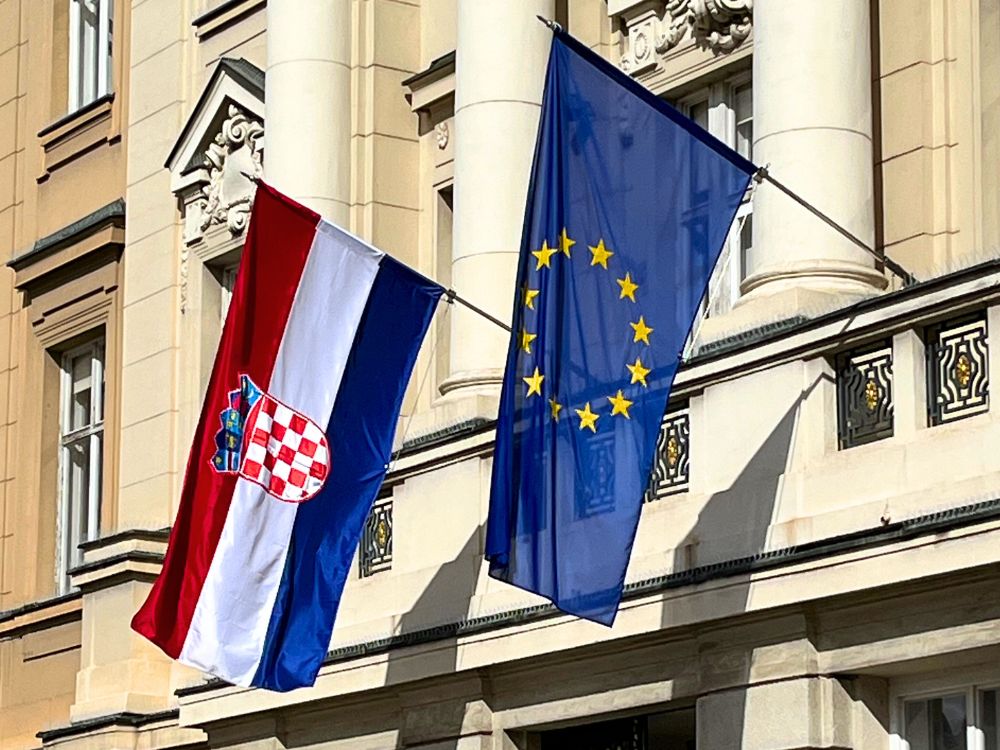
Croatia steps up pressure on Montenegro to resolve the territorial dispute over the Prevlaka Peninsula

Photo credit: expatincroatia.com

Croatia is stepping up diplomatic pressure on Montenegro to resolve a territorial dispute dating back to the breakup of the former Yugoslavia, as Podgorica seeks to conclude its European Union accession negotiations. According to two diplomats cited by Euronews, the dispute centres on the Prevlaka peninsula and its surrounding territorial waters, IPN reports.

The other demands, which Podgorica has already partially met, concern identifying the remains of prisoners of war, compensating Croatian families whose property was expropriated, and returning a naval training ship that was in Montenegro when Yugoslavia broke up in 1991.

For her part, Montenegro’s Minister of European Affairs, Maida Gorčević, said last week that if the two countries failed to reach an acceptable solution to their border dispute, the matter could be settled by an international arbitration tribunal.

To date, Croatia has opposed international arbitration, insisting that Montenegro recognize the current international borders based on the boundaries of the former Yugoslav republics. The Prevlaka Peninsula is a largely uninhabited strip of rocky land, but its strategic location makes it crucial to determining the maritime boundary between the two countries. The dispute has implications for navigation, access to the Bay of Kotor, and potential oil and natural gas reserves. Since 2002, the two countries have maintained peaceful relations under an interim agreement whereby Croatia controls the peninsula, while Montenegro controls most of the surrounding waters.

Montenegro aims to conclude EU accession negotiations by the end of this year. According to the roadmap recently presented by the European Commission, the country is expected to sign its accession treaty in June 2027 and become a member state in 2028.


The Court of Accounts reviews the performance audit of the “Real Estate Cadastre” information system /CCRM /09:00 AM/.

The Office of the People’s Advocate is organizing the national conference “20 Years of Torture Prevention in the Republic of Moldova” /Mimi Hotel /09:00 AM/.

The Superior Council of Magistracy will convene for a meeting /CSM /09:30 AM/.

The third edition of the monthly press conference “Economic Realities: An Expert-Grup Analysis” will take place /Expert-Grup, 95/1 Vasile Alecsandri Street /10:00 AM/.

The Ministry of Education and Research is hosting the reopening ceremony for Moldova State University’s Student Residence Hall No. 2 /2 Tighina Street /11:00 AM/.

The Chisinau Municipal Council meeting that began on November 19 resumes /Chisinau City Hall /01:00 PM/.

The Central Electoral Commission will hold a meeting /CEC /01:00 PM/.

The first school-based FabLab in Chisinau, a modern digital fabrication laboratory, will be inaugurated /Mihai Eminescu Theoretical High School, 2 Varsovia Street /01:00 PM/.

The Court of Accounts reviews the performance audit of the process for determining the subsistence minimum and the income needed to ensure a decent standard of living (SDG 1) /CCRM /02:00 PM/.

Parliamentary committees will hold meetings /Parliament /02:00–03:00 PM/.

The League of Students from Bessarabia presents the findings of a survey on the challenges and needs of students from the Republic of Moldova /Glia Impact Hub, 61 Banulescu-Bodoni Street /03:00 PM/.

0 FacebookTwitterPinterestEmail


Croatia steps up pressure on Montenegro to resolve the territorial dispute over the Prevlaka Peninsula

Photo credit: expatincroatia.com

Croatia is stepping up diplomatic pressure on Montenegro to resolve a territorial dispute dating back to the breakup of the former Yugoslavia, as Podgorica seeks to conclude its European Union accession negotiations. According to two diplomats cited by Euronews, the dispute centres on the Prevlaka peninsula and its surrounding territorial waters, IPN reports.

The other demands, which Podgorica has already partially met, concern identifying the remains of prisoners of war, compensating Croatian families whose property was expropriated, and returning a naval training ship that was in Montenegro when Yugoslavia broke up in 1991.

For her part, Montenegro’s Minister of European Affairs, Maida Gorčević, said last week that if the two countries failed to reach an acceptable solution to their border dispute, the matter could be settled by an international arbitration tribunal.

To date, Croatia has opposed international arbitration, insisting that Montenegro recognize the current international borders based on the boundaries of the former Yugoslav republics. The Prevlaka Peninsula is a largely uninhabited strip of rocky land, but its strategic location makes it crucial to determining the maritime boundary between the two countries. The dispute has implications for navigation, access to the Bay of Kotor, and potential oil and natural gas reserves. Since 2002, the two countries have maintained peaceful relations under an interim agreement whereby Croatia controls the peninsula, while Montenegro controls most of the surrounding waters.

Montenegro aims to conclude EU accession negotiations by the end of this year. According to the roadmap recently presented by the European Commission, the country is expected to sign its accession treaty in June 2027 and become a member state in 2028.


President Maia Sandu met with NATO Secretary General Mark Rutte to discuss the Republic of Moldova’s cooperation with the North Atlantic Alliance, strengthening its defence capabilities, and the security situation in the region. The meeting took place in Berlin on the sidelines of the annual session of the NATO Parliamentary Assembly, IPN reports.

According to a statement issued by the President’s Office, the two officials reviewed ongoing NATO cooperation projects in the Republic of Moldova and priorities for the coming period, noting the advanced level of political dialogue between Chisinau and the Alliance. Mark Rutte expressed NATO’s support for strengthening the Republic of Moldova’s resilience and defence capabilities in the face of current threats.

Maia Sandu also met with Bundestag President Julia Klöckner and German Foreign Minister Johann Wadephul. In her talks with Julia Klöckner, the Moldovan president discussed the Republic of Moldova’s EU accession process and ways to strengthen ties between the two countries’ parliaments.

During the meeting with German Foreign Minister Johann Wadephul, discussions also focused on the Republic of Moldova’s path towards European integration, Russia’s war against Ukraine, and Moscow’s hybrid attacks on European democracies.

0 FacebookTwitterPinterestEmail


1 IANUARIE, 2025
1 IANUARIE, 2025