



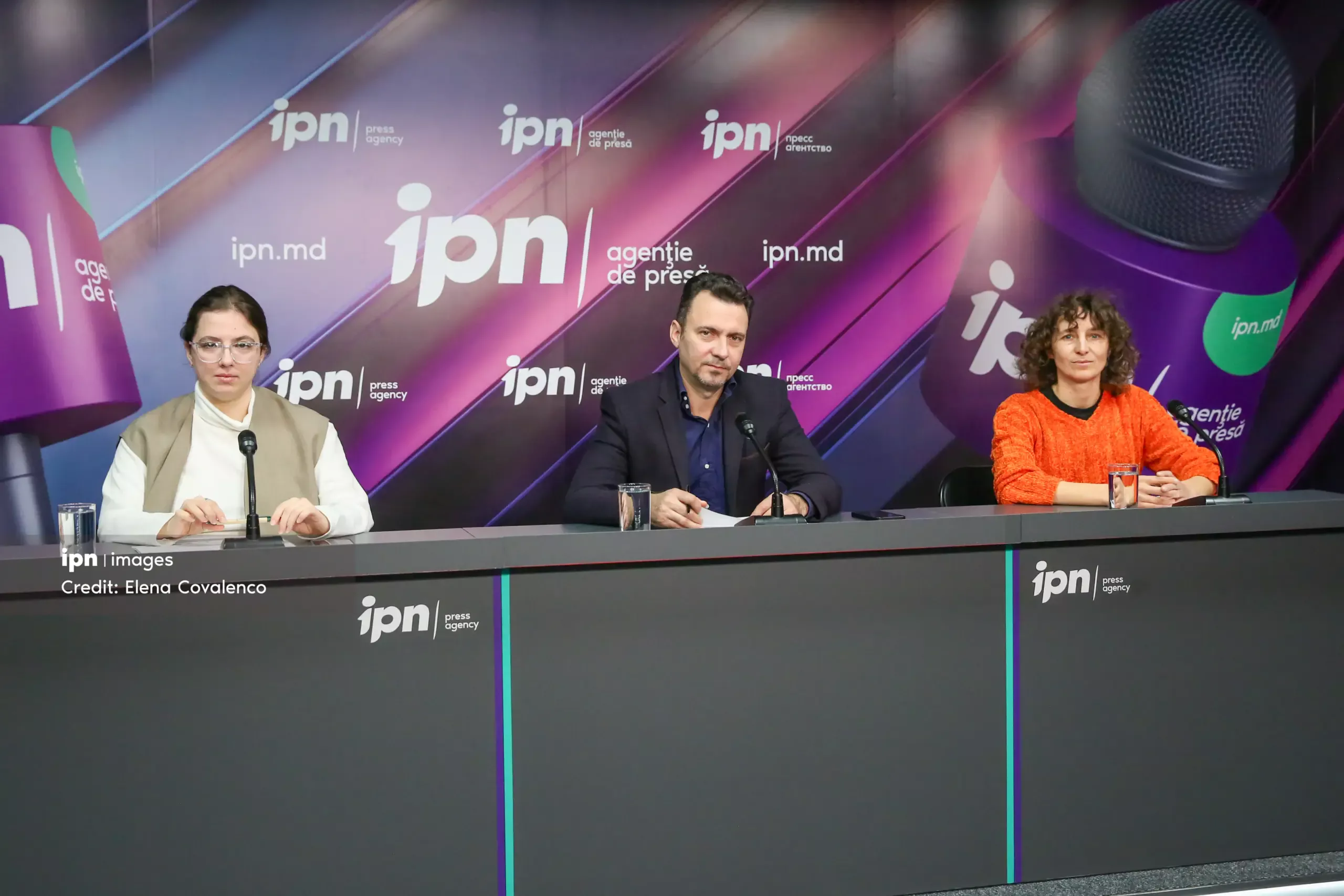
Civil society organizations in the Republic of Moldova are proposing a legal framework for public–civic partnerships that would allow unused or underused public buildings and spaces to be jointly managed with non-governmental organizations for the benefit of local communities. The concept was presented at a press conference hosted by the IPN News Agency.
According to Rusanda Curca, advocacy coordinator at the Independent Cultural Sector Coalition, the initiative is a response to the shortage of spaces for civil society organizations, particularly those working in culture, social services, and education.
A survey conducted in 2024 shows that nine out of ten participating organizations need spaces to carry out their activities. The research also found that more than half of respondents see the lack of a legal framework and the reluctance of local authorities as the main barriers to gaining access to public infrastructure.
The proposal’s authors argue that non-governmental organizations should no longer be treated merely as tenants, but as partners of public authorities in managing public assets. The concept calls for contracts lasting between 3 and 15 years, simplified procedures for selecting partners, and recognition of contributions to the community, not just financial investments.
Legal expert and co-author of the concept Anatolii Albin explained that the proposed mechanism would differ from a public-private partnership in its non-commercial nature and exclusive focus on the public interest. Infrastructure would remain publicly owned and could not be privatized under this mechanism.
The proposal’s authors believe it is particularly relevant in the context of local government reform, as institutional restructuring could leave many buildings no longer serving their original purpose. These could be repurposed for cultural, educational and social projects developed in partnership with local communities.
Note: IPN News Agency offers a right of reply to anyone who considers themselves to be the subject of news reports based on statements made by the organizers of this press conference, including by helping to arrange another press conference under similar conditions.
