

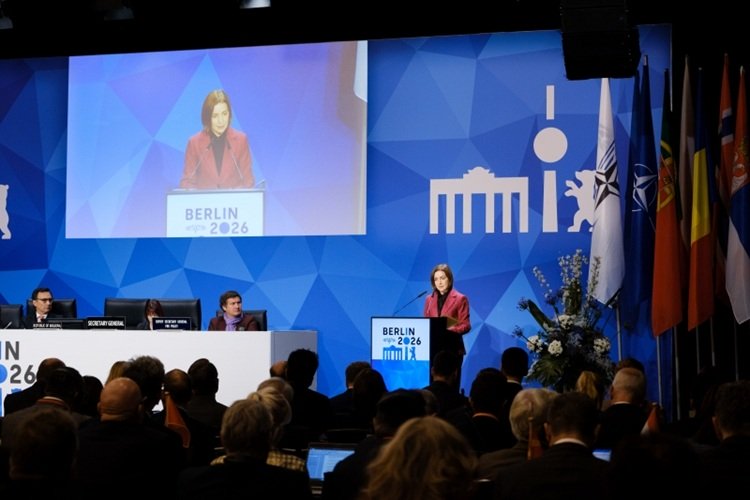
Maia Sandu: Russia is waging cognitive warfare against European democracies through manipulation

Photo credit: Office of the President

President Maia Sandu has warned that, alongside its war against Ukraine, Russia is waging a cognitive war against European democracies and NATO member states through information manipulation, cyberattacks and electoral interference. She made the remarks in Berlin during an address to the annual session of the NATO Parliamentary Assembly, where she proposed five courses of action to counter these threats, IPN reports.

The president explained that the conventional war against Ukraine is being fought with missiles, drones and artillery to seize Ukrainian territory and deprive its people of their freedom. At the same time, Russia is waging a cognitive war, seeking to influence what people believe, what they fear and whom they trust.

In this context, the president warned countries preparing to hold elections that the integrity of the vote must be safeguarded long before election campaigns begin. She noted that Russia can spend years shaping citizens’ perceptions and beliefs in order to influence their choices at the ballot box.

Maia Sandu proposed five courses of action to counter these threats. These include a coordinated response to acts of sabotage, arson and cyberattacks; transparency about security threats; tracking the financial flows that fund these operations; and enforcing common standards to combat information manipulation and foreign interference.

During the session, President Maia Sandu was presented with the NATO Parliamentary Assembly’s “Women for Peace and Security” Award in recognition of her contribution to promoting peace and security.


The Ministry of Justice proposes extending the overall deadline for external evaluations until December 31, 2027, and the period for holding selection competitions that require certain categories of candidates to undergo vetting until August 31, 2027. The Superior Council of Prosecutors warns that these measures could prolong interim appointments and delay the filling of vacant posts. It proposes allowing successful candidates to be appointed before their external evaluations are completed, IPN reports.

The deadline for evaluating candidates for vacant positions expired on August 31, while the deadline for completing the overall external evaluation is December 31. According to the draft, 349 of the 528 judicial posts are filled, and 264 judges in first-instance courts have not undergone extraordinary integrity vetting. The Ministry proposes prioritizing the evaluation of certain categories of judges, including those temporarily transferred to higher courts and those specializing in insolvency and administrative litigation.

With regard to prosecutors, the draft provides that the results of the external financial integrity assessment will be taken into account in regular evaluations, and that the Board for the Selection and Evaluation of Prosecutors will examine only the period following the one covered by the vetting process. The mandate of the Prosecutors Evaluation Commission is to be extended until December 31, 2027.

The Superior Council of Prosecutors (CSP) warns that extending recruitment competition deadlines could delay the filling of vacant positions in the prosecution service. At the beginning of November, there were 59 vacant leadership positions and 34 vacant prosecutor positions in specialized prosecution offices. All leadership positions were filled on an interim basis—a situation that, according to the Council, also limits opportunities for young professionals to enter the service.

At present, successful candidates in recruitment competitions can only be appointed after passing the vetting process, which can take several months. The Superior Council of Prosecutors (CSP) proposes allowing them to take office before the assessment is completed, but removing them from office and barring them from serving as prosecutors for five to seven years if they fail the vetting process. The Council also proposes that the extension of competition deadlines should not apply to prosecutorial posts, or that the current deadline should remain in place for certain categories of candidates.

0 FacebookTwitterPinterestEmail


1 IANUARIE, 2025
1 IANUARIE, 2025