


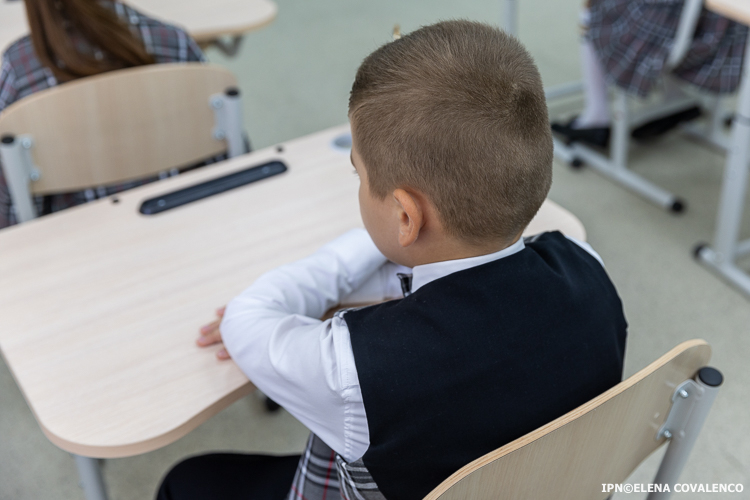
Starting next school year, primary and lower secondary pupils would have one compulsory critical reading lesson a week, while a new STEAM subject, combining science, technology, art and mathematics, would be introduced in grades 5-8. The measures are part of a plan drawn up by the Ministry of Education and Research to improve pupils’ reading, mathematics and science skills, IPN reports.
“We want young people to be able to understand a text and assess the credibility of information”, said Minister of Education and Research Dan Perciun at the presentation of the plan. He explained that students need to be able to solve mathematical problems and apply theoretical knowledge to real-life situations, as well as work with data and explain scientific phenomena.
According to data presented by the ministry, only around 48% of Moldovan students achieved the minimum proficiency level in reading in the latest PISA assessment, while 44% did so in mathematics. The goal is to raise these figures to at least 60% and 55%, respectively.
The new compulsory critical reading class will focus on understanding texts and assessing the credibility of information, with around 6,000 teachers set to receive training. The ministry also plans to purchase approximately 216,000 books in 2027-2028 for preschoolers and school students, including those preparing for the PISA assessment.
At the same time, mathematics textbooks based on the Estonian model will be introduced, and the free supplementary tuition programme will be extended to eighth-grade students. Science will be taught from first grade, while STEAM will become compulsory in grades five to eight. The ministry also plans to equip at least 500 laboratories in 250 schools over the next four years.
Changes will also be made to the lower secondary school leaving exams. From June 2027, the mathematics and Romanian language and literature exams will each include up to two questions reframed in real-life contexts. The syllabus, exam duration and test structure will remain unchanged.
The Ministry of Education and Research says that implementing the plan will require an estimated 90 million lei in additional investment next year. Of this, around 20 million lei will be allocated to purchasing books, five million to developing school clubs and extracurricular groups, and at least ten million to teacher training. Equipping laboratories will be the most expensive component. According to the ministry, approximately 70% of the necessary funding has been identified in the state budget, while talks are under way with international partners to secure the remainder.
The plan will be discussed with teachers over the coming weeks before its expected approval at the end of December.
