

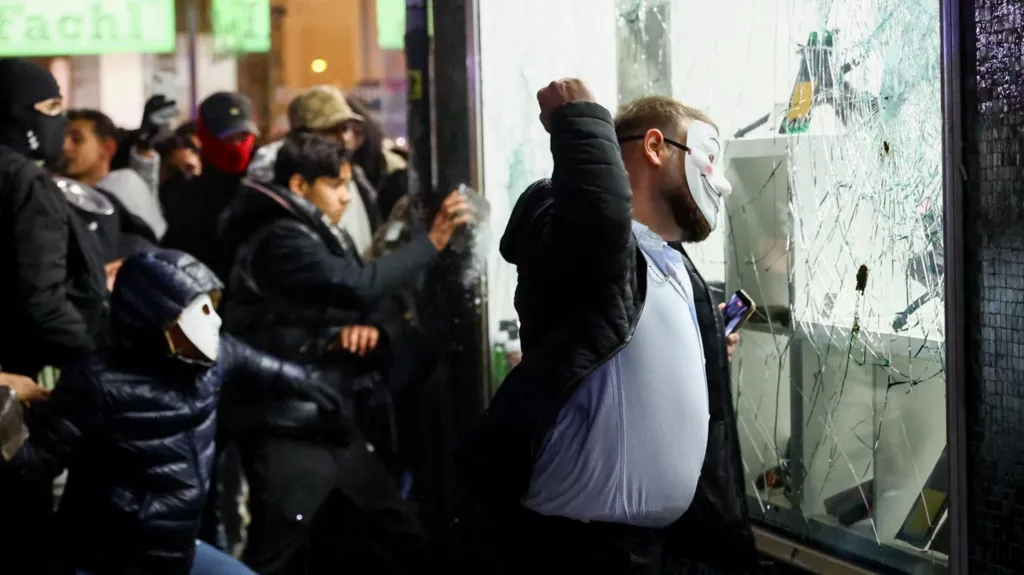
Violent protests in Germany as demonstrators loot several stores

Photo credit: Reuters

Violent protests in Germany as demonstrators loot several stores

Protests organized by young people in Germany descended into violence, with demonstrators looting several shops. The incidents took place on...

Acest material este disponibil doar pe bază de abonament.
Abonează-te pentru a avea acces la mai multe materiale și funcționalități exclusive!


When an attack on infrastructure in southern Ukraine shuts down a border crossing, the trucks do not disappear—they are rerouted. Within hours, the pressure shifts to other border crossings, waiting times increase, and logistics chains become more fragile.

The war in Ukraine has changed not only the security risks along the Moldova–Ukraine border, but also how its operation must be understood. State border crossing points are no longer merely places where people and goods are checked. They form part of a regional infrastructure for mobility, trade and security, whose operation can be directly affected by military developments and risks.

The attacks on infrastructure in southern Ukraine have shown that suspending operations at a border crossing can have repercussions far beyond the area where the incident occurred. Traffic is rerouted, pressure shifts to other border crossings, processing times increase, and logistics chains become more vulnerable. Under such circumstances, protecting personnel and ensuring the continuity of border controls cannot be treated as separate concerns.

The Moldovan authorities’ decision in September 2026 to temporarily withdraw Border Police and Customs Service personnel from Ukrainian territory brought this dilemma into sharp focus. The state has a duty to reduce its personnel’s exposure to risk. Yet protecting them must not come at the cost of disrupted cooperation or greater vulnerability for cross-border flows.

A sustainable solution to this challenge is joint control at the state border, designed as a flexible bilateral mechanism tailored to the risk profile of each crossing point. Rather than a uniformly applied administrative measure or simply the relocation of teams from one country’s territory to another, it should be a bilateral mechanism that can be adapted to risks, infrastructure and operational needs. The Republic of Moldova already has experience in organising joint controls on its own territory, including at Palanca–Maiaki-Udobnoe and, for rail traffic, at Basarabeasca–Serpniovo-1. These precedents show that solutions are available that can be adapted while respecting the legal framework and the specific circumstances of each crossing point.

However, the issue goes beyond choosing where border checks take place. A resilient border requires the institutions of both states to work together in a coordinated manner, even when normal arrangements are no longer possible. This means agreeing on standard operating procedures in advance, clearly defining responsibilities, sharing information, ensuring access to interoperable systems, maintaining the capacity to relocate operations, and testing contingency plans. It also means coordinating strategic communications between the institutions of both states, not only to provide consistent information to citizens and transport operators, but also to anticipate and swiftly counter attempts at manipulation and disinformation. This would keep the authorities one step ahead of those seeking to exploit security incidents to sow confusion, mistrust, and tension.

For this reason, the Republic of Moldova and Ukraine need a joint plan to reorganize border controls. Such a plan should begin with an assessment of each crossing point, rather than a blanket decision to transfer control. Priorities should be set according to the risks faced by personnel, logistical importance, infrastructure capacity, and the availability of alternatives. The proposed solutions should then be tested through joint exercises and evaluated against specific indicators: processing times, operational continuity, system availability, and the capacity to reroute traffic.

The regional dimension cannot be overlooked. The Republic of Moldova, Romania and Ukraine are linked by transport corridors that extend beyond the administrative framework of any single border. Disruption along one route can affect access to ports on the Danube and the Black Sea, including trade flows and shipments bound for Ukraine. Experience with coordinated border controls at Leușeni–Albița and Giurgiulești–Galați, together with regional cooperation mechanisms, can provide a basis for preventive assessments and continuity procedures. In this context, the Galați Contact Point should also be used to support information sharing and coordination among the competent authorities. Strengthening trilateral cooperation between the Republic of Moldova, Romania and Ukraine within the Odesa Triangle can help identify disruptions affecting border crossings and logistics corridors at an early stage.

The key lesson is that preparations must begin before infrastructure is struck or a crossing point becomes unavailable. Authorities must identify alternatives in advance, clarify responsibilities, and test coordination mechanisms. Otherwise, each incident risks prompting yet another improvised response.

In wartime, border resilience means more than the ability to respond to a threat. It means the state’s ability to protect its people, maintain control, and keep essential functions running even as the security environment deteriorates. A well-prepared border does not wait for a crisis to discover how it should operate.

0 FacebookTwitterPinterestEmail


Violent protests in Germany as demonstrators loot several stores

Photo credit: Reuters

Violent protests in Germany as demonstrators loot several stores

Protests organized by young people in Germany descended into violence, with demonstrators looting several shops. The incidents took place on...

Acest material este disponibil doar pe bază de abonament.
Abonează-te pentru a avea acces la mai multe materiale și funcționalități exclusive!


October digest. Most important news articles of „IPN Chisinau” news flow

1 October: Road traffic will be suspended on the night from Thursday to Friday on the section between Mitropolit Gurie Grosu and Lech Kaczynski streets of Hancesti Highway in Chisinau. According to the capital’s City Hall, restrictions are imposed for the performance of ongoing road repair works.

1 October: Traveling by public transport in Chisinau will be paid for through a transport card, bank card, or with the help of a phone. These are the solutions proposed by the concept of electronic taxation, developed within the project “MOVE IT like Lublin”, financed by the European Union and the Chisinau City Hall.

1 October: Road traffic will be suspended in the area of the Great National Assembly Square in Chisinau, between October 2nd and 5th, in the context of organizing the National Wine Day. The restrictions will apply from 05:00 PM on Friday on Stefan cel Mare and Sfant Boulevard and from 10:00 PM on Banulescu-Bodoni street.

2 October: A terrace is set to be arranged on the first lake of the “Valea Trandafirilor” park in the capital. According to the Chisinau City Hall, the works have already started, and the project will complement the leisure areas of the park.

2 October: Traffic will be halted tonight on Hancesti Highway in Chisinau, on the section between Mitropolit Gurie Grosu and Lech Kaczynski streets. The Chisinau City Hall specifies that the restriction comes into effect from 09:00 PM.

5 October: The municipal trolleybus route number 30 will change its itinerary starting from October 5th. The trolleys will run from Chisinau International Airport to the “Nicolae Testemitanu” University of Medicine and Pharmacy, and not to the Press House, as before.

5 October: New constructions in the historic center of Chisinau could have height limits set according to nearby historic buildings, and the widening of streets could be prohibited in two of the capital’s historic areas. These provisions are found in the foundational study for the update of the General Urban Plan Chisinau 2040.

5 October: The municipality has intensified the sanitation, arrangement, and maintenance works of public spaces and housing stock in all five sectors of the capital, in the context of preparations for the City’s Patron Saint Day. Daily, the General Directorate of Housing and Community Facilities involves over 400 workers.

5 October: The teaching staff from the city of Chisinau were awarded for their merits in the field of education, during a concert dedicated to Teacher’s Day, organized by the municipal authorities at the “Nicolae Sulac” National Palace. In total, 40 specialists in the field of education were celebrated.

6 October: Construction work on the storm sewer has begun in the area of Carbunari and Ismail streets in the capital. The municipality specifies that the interventions are part of the modernization and reorganization project of traffic in the Ismail road junction.

6 October: Two day centers for the elderly are set to be established in the city of Chisinau, each with a capacity of up to 50 beneficiaries. They will provide psychological counseling services, physical rehabilitation, and socialization activities. The creation of this new social service was approved by the Chisinau Municipal Council.

7 October: The Volunteer Week was launched in Chisinau, and the city’s youth are invited to participate in a series of actions dedicated to civic involvement. The program includes several events, among which a volunteer marathon.

7 October: The electronic fare collection in public transportation in Chisinau will be implemented in stages over the next three years. According to the E-ticketing system concept, approved by the Chisinau Municipal Council, in the first stage, the possibility of cash payment will be retained, and gradually, electronic payment will become the main method of paying.

8 October: Traffic on Gheorghe Asachi Street will be halted on Thursday nights to Friday and the following night, between the hours of 09:00 PM and 07:00 AM, on the section between Vasili Dokuceav and Pan Halippa streets. According to the Chisinau City Hall, the measure is necessary for road rehabilitation works.

9 October: The buses running on suburban route no. 31 will have a modified route in the town of Vadul lui Voda, during the period of October 9-November 10. According to the Chișinău City Hall, the changes are due to the reconstruction works on Ștefan cel Mare și Sfant street.

11 October: The asphalt works on Gheorghe Asachi Street in Chisinau, on the section between the “40 years” roundabout and Miorita Street, have been completed. According to the capital’s City Hall, the road surface has been fully rehabilitated, however, the works for the modernization of the pedestrian infrastructure and the arrangement of the adjacent spaces continue.

12 October: Chisinau will celebrate the city’s patron saint day with a festive program dedicated to the 590 years since its first documentary attestation. On October 14, concerts featuring local artists, musical performances, thematic fairs and activities for children will take place in the city center.

12 October: The terminus station of bus no. 6 and trolleybus no. 34 in the commune of Truseni has been relocated due to the works carried out in the town center. The new station is located near the Truseni Health Center. The authorities mention that the change is valid starting from October 12th.

12 October: The autumn clean-up campaign is underway in the city of Chisinau until November 30th. Residents’ associations and economic agents are encouraged to join the actions. Those who do not ensure cleanliness on the managed territories risk fines of up to 12 thousand lei.

12 October: Kindergartens in Chisinau will have a reduced schedule on the eve of the city’s Patron Saint Day. The General Directorate of Education, Youth and Sports specifies that the institutions will operate two hours less. DGETS specifies that, in order to meet the needs of families, each kindergarten will ensure the operation of a service group.

13 October: Public transport in Chisinau will operate under a special regime for the city’s Patron Saint Day. Traffic will be halted on some sections of Stefan cel Mare si Sfant Boulevard from October 13, and on Wednesday, on some sections of Maria Cebotari Street.

13 October: Chisinau could have a new Sustainable Tourism Development Strategy for the years 2027-2032. The proposals, which include new thematic tourist routes and support measures for businesses in the field, were developed during the third meeting of the project “SUSDEST-NET”.

14 October: Today, Chisinau is celebrating the City Day, coinciding with the religious holiday of the Protection of the Mother of God. This year, the capital marks 590 years since its first documentary attestation. The day’s program begins with the Holy Liturgy at the Metropolitan Cathedral “The Nativity of the Lord” and continues with shows, and concerts.

14 October: Chisinau is the city of people who work, create, and call it home. This is the message conveyed by the mayor, Ion Ceban, on the occasion of the city’s patron saint day, celebrated today. The mayor thanked the residents for their contribution to the city’s development, which this year marks 590 years since its first documentary attestation.

14 October: The celebration dedicated to the Patron Saint’s Day of Chisinau was inaugurated on Wednesday, after the Holy Liturgy held at the Metropolitan Cathedral “Birth of the Lord”. Subsequently, the Metropolitan of Chisinau and all of Moldova, His Eminence Vladimir, and the general mayor Ion Ceban, addressed congratulatory messages to those present.

15 October: The bus on suburban route no. 15 is extending its route to Costiujeni street in the city of Codru starting Thursday. The Chisinau City Hall announces that the changes were made at the request of suburban residents. Previously, the Chisinau City Hall extended the route of bus no. 14, at the request of the residents and local elected officials from Codru.

16 October: In the city of Sangera, a sidewalk with a length of 750 meters will be built on Chisinau Street. According to the Chisinau City Hall, the value of the project is 2.3 million lei, and the funding is provided by the city halls of the two cities. The works are being carried out on the section between Suveranitatii and Radautanu streets.

16 October: The Chisinau City Hall has begun the preservation work on the municipal fountains for the cold season. The municipal enterprise “Green Spaces Management Association” announced that seven artesian fountains have been emptied of water, and the basins have been cleaned.


19 October: The Center of Excellence in Transportation has received a Škoda 14Tr model trolleybus, manufactured in 2001, which will be used in the practical training process of students. The transportation unit was transferred free of charge by the City Hall of Chisinau.

19 October: Social institutions in the city of Chisinau, including kindergartens, are beginning to be connected to the heating agent. The general mayor Ion Ceban has signed a directive to this effect. Previously, Termoelectrica announced that residential buildings, public institutions, and economic agents can be connected to the centralized heating system upon request.

20 October: Only 7.5% of teaching and management staff in schools were under 30 years old in the academic year 2025-2026, while over 22% were at least 60 years old. The data was presented at the Municipal Forum of Teaching Staff, held in Chisinau.

20 October: The Municipal Enterprise “Infocom” recorded sales revenues of 11.37 million lei in 2025, but the net profit was only 10,322 lei. Moreover, the operational activity ended with a loss of over 859 thousand lei, according to the financial statements for the past year.

21 October: At the roundabout at the intersection of Gheorghe Asachi, Pantelimon Halippa, Vasile Alecsandri and Hancesti Highway streets in the capital, modernization and landscaping works are being carried out. According to the Chisinau City Hall, the curbs of the roundabouts are currently being replaced, which will subsequently be arranged based on a landscaping project.

21 October: Traffic on Columna, Henri Coanda and Calea Orheiului streets in Chisinau will be partially suspended starting from Thursday. According to the Chisinau City Hall, the restrictions are imposed for the execution of some road repair works.

21 October: The degradation of historical monuments and difficult authorization procedures hinder investments in the center of Chisinau, warned several participants in the public consultations on the General Urban Plan Chisinau 2040. They requested clear rules for the restoration of buildings, so that the protection of heritage does not block investments.

22 October: The municipality has signed the contract for the completion of the works at the Wastewater Treatment Station in the city of Chisinau, worth 170 million lei. According to local authorities, this creates the necessary conditions for the complete completion of the works and ensures the efficient operation of the entire system.

22 October: The fibrobronchoscopy unit at the Municipal Clinical Hospital for Phthisiopneumology in Chisinau has been reopened after renovation. The space has been equipped with modern equipment necessary for improving diagnostics and increasing the safety of patients and medical staff.


26 October: Reclamation work at the former landfill in the capital’s Ciocana district has been completed. According to the municipal authorities, the work included securing, cleaning and regrading the site, as well as installing four tanks to collect leachate and 26 biogas collection points.

27 October: A municipal day centre for older people has opened in Chisinau. Those attending will have access to cultural and educational activities, as well as programmes to support their health. The capital’s mayor, Ion Ceban, said the new centre aims to provide older people with a space where they can spend their free time and socialise.

28 October: More than 60 families in Chișinău received municipal financial assistance in October, totaling approximately 476,000 lei. The recipients include families with children with disabilities, single-parent families and families with children under guardianship or trusteeship.

29 October: The old windows in the stairwells of an apartment block on Alecu Russo Street in Chisinau will be replaced. According to the municipal authorities, the work will cover the communal areas of all seven stairwells in the building, which contains around 250 apartments.

29 October: A section of Columna Street in the capital’s Buiucani district is undergoing repairs. According to Chisinau City Hall, the work covers the stretch between Henri Coanda and Mihai Viteazul streets and includes resurfacing the road, upgrading the sidewalks and creating a parking area.


29 October: Industriala Street in Chisinau will be completely rebuilt, with four traffic lanes, sidewalks, cycle paths and an overpass across the railway. The construction contract, worth €34.7 million, is due to be signed by November 15, with work scheduled to take two years. The project was presented by municipal authorities at an event in Chisinau.

30 October: The year 2027 will be designated the Ion and Doina Aldea-Teodorovici Year of Culture in Chisinau. The municipality will also take over the organization of the “Two Twin Hearts” Festival starting next year. Chisinau Mayor Ion Ceban made the announcement at a commemorative event marking the 34th anniversary of the artists’ deaths.

0 FacebookTwitterPinterestEmail


1 IANUARIE, 2025
1 IANUARIE, 2025