

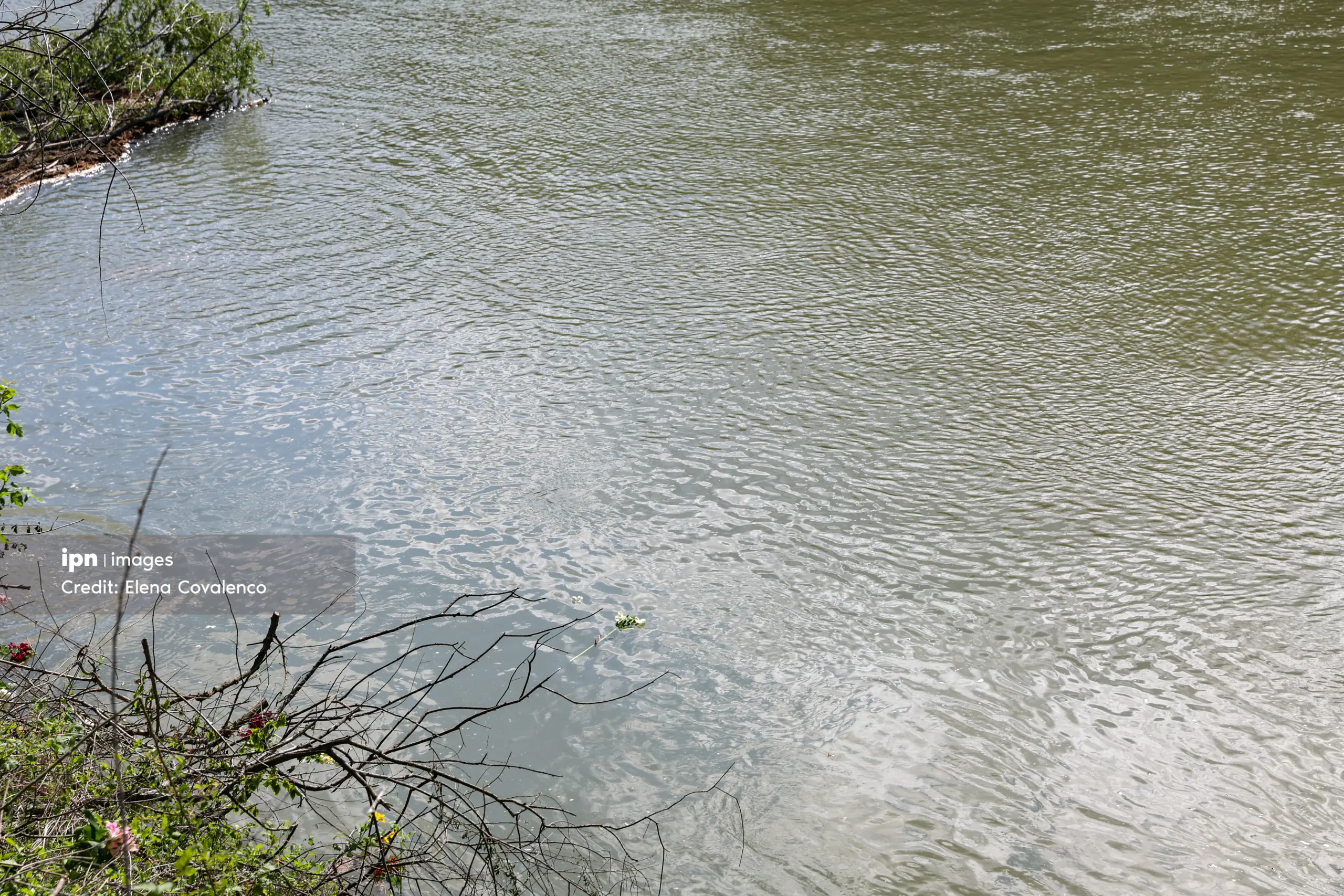
The Dniester and the Prut, at a critical level. Authorities are seeking solutions for water supply

The hydrological situation on the Dniester and Prut remains critical, and the authorities are preparing for a scenario in which the water level will continue to decrease, due to the lack of precipitation. The Minister of Environment, Gheorghe Hajder, says that solutions are being sought for the water intake stations in the south of the country, as well as for the water supply of the city of Chisinau, reports IPN.

The authorities maintain that one of the biggest issues is at the Prut water intake station, which provides water for 11 localities in the west and south of the country. Approximately 18 thousand people depend on this station, and the river level has reached its operational limit. The government is set to purchase an additional pump, with a larger capacity.

“I have seen those interventions at the water collection stations from where Leova and other localities are supplied, respectively, certain measures were taken this morning. We are certainly monitoring and ensuring that people do not run out of water. We are also monitoring other collection stations on the Prut and Nistru rivers. The situation is equally serious on both rivers,” said the Minister of Environment.

The authorities are seeking solutions for the Vadul lui Voda intake station, which provides water for the city of Chisinau. According to Hajder, the infrastructure is old and no longer copes with the current hydrological situation. In the short term, the construction of a subaquatic dam is being considered, and a new intake station is expected to be built within the next three years.

The Mayor of Chisinau, Ion Ceban, stated, following a visit to the Vadul lui Voda water intake station, that the City Hall has prepared several measures for the eventuality of a drastic decrease in flow. The municipality has three emergency intervention zones, equipped with pumps of various capacities: one of 4 thousand cubic meters per hour, a submersible pump of 3,200 cubic meters per hour, installed in the protection dam area, as well as several motor pumps provided by the Government.

The mayor also said that the project for a new water intake station for Chisinau has been in progress for almost five years, and construction work is expected to begin next year.

The Republic of Moldova has been in a state of emergency in the energy and hydrological sectors for nearly two weeks, due to drought and very low levels of the Nistru and Prut rivers. Authorities say that, for now, there are enough resources to supply the population and urge people to use water rationally.


The hydrological situation on the Dniester and Prut remains critical, and the authorities are preparing for a scenario in which the water level will continue to decrease, due to the lack of precipitation. The Minister of Environment, Gheorghe Hajder, says that solutions are being sought for the water intake stations in the south of the country, as well as for the water supply of the city of Chisinau, reports IPN.

The authorities maintain that one of the biggest issues is at the Prut water intake station, which provides water for 11 localities in the west and south of the country. Approximately 18 thousand people depend on this station, and the river level has reached its operational limit. The government is set to purchase an additional pump, with a larger capacity.

“I have seen those interventions at the water collection stations from where Leova and other localities are supplied, respectively, certain measures were taken this morning. We are certainly monitoring and ensuring that people do not run out of water. We are also monitoring other collection stations on the Prut and Nistru rivers. The situation is equally serious on both rivers,” said the Minister of Environment.

The authorities are seeking solutions for the Vadul lui Voda intake station, which provides water for the city of Chisinau. According to Hajder, the infrastructure is old and no longer copes with the current hydrological situation. In the short term, the construction of a subaquatic dam is being considered, and a new intake station is expected to be built within the next three years.

The Mayor of Chisinau, Ion Ceban, stated, following a visit to the Vadul lui Voda water intake station, that the City Hall has prepared several measures for the eventuality of a drastic decrease in flow. The municipality has three emergency intervention zones, equipped with pumps of various capacities: one of 4 thousand cubic meters per hour, a submersible pump of 3,200 cubic meters per hour, installed in the protection dam area, as well as several motor pumps provided by the Government.

The mayor also said that the project for a new water intake station for Chisinau has been in progress for almost five years, and construction work is expected to begin next year.

The Republic of Moldova has been in a state of emergency in the energy and hydrological sectors for nearly two weeks, due to drought and very low levels of the Nistru and Prut rivers. Authorities say that, for now, there are enough resources to supply the population and urge people to use water rationally.

0 FacebookTwitterPinterestEmail


The Dniester and the Prut, at a critical level. Authorities are seeking solutions for water supply

The hydrological situation on the Dniester and Prut remains critical, and the authorities are preparing for a scenario in which the water level will continue to decrease, due to the lack of precipitation. The Minister of Environment, Gheorghe Hajder, says that solutions are being sought for the water intake stations in the south of the country, as well as for the water supply of the city of Chisinau, reports IPN.

The authorities maintain that one of the biggest issues is at the Prut water intake station, which provides water for 11 localities in the west and south of the country. Approximately 18 thousand people depend on this station, and the river level has reached its operational limit. The government is set to purchase an additional pump, with a larger capacity.

“I have seen those interventions at the water collection stations from where Leova and other localities are supplied, respectively, certain measures were taken this morning. We are certainly monitoring and ensuring that people do not run out of water. We are also monitoring other collection stations on the Prut and Nistru rivers. The situation is equally serious on both rivers,” said the Minister of Environment.

The authorities are seeking solutions for the Vadul lui Voda intake station, which provides water for the city of Chisinau. According to Hajder, the infrastructure is old and no longer copes with the current hydrological situation. In the short term, the construction of a subaquatic dam is being considered, and a new intake station is expected to be built within the next three years.

The Mayor of Chisinau, Ion Ceban, stated, following a visit to the Vadul lui Voda water intake station, that the City Hall has prepared several measures for the eventuality of a drastic decrease in flow. The municipality has three emergency intervention zones, equipped with pumps of various capacities: one of 4 thousand cubic meters per hour, a submersible pump of 3,200 cubic meters per hour, installed in the protection dam area, as well as several motor pumps provided by the Government.

The mayor also said that the project for a new water intake station for Chisinau has been in progress for almost five years, and construction work is expected to begin next year.

The Republic of Moldova has been in a state of emergency in the energy and hydrological sectors for nearly two weeks, due to drought and very low levels of the Nistru and Prut rivers. Authorities say that, for now, there are enough resources to supply the population and urge people to use water rationally.


School textbooks will be accessible on a national platform that also includes didactic projects and video lessons. This refers to eduresurse.gov.md, launched by the Ministry of Education and Research, which also features an artificial intelligence-based assistant that can help students, teachers, and parents more easily find the necessary materials, reports IPN.

The Minister of Education, Dan Perciun, stated that the need for such a platform has been discussed in the education system for over 15 years. According to him, the resources are gathered in a single space and organized by classes and subjects. Users can filter them by level of education, class, subject, profile, type of resource, and language of instruction, and some materials can be consulted directly, without being downloaded.

The artificial intelligence-based assistant can help students find worksheets, scales, and video lessons. It only searches within the platform’s content and does not access external sources.

The platform was developed by UNICEF, in partnership with the Ministry of Education, with the financial support of the European Union. Present at the launch event, the UNICEF representative in the Republic of Moldova, Deyana Kostadinova, emphasized that the platform is part of a broader process of reforming and digitizing education.

In turn, the EU Ambassador to the Republic of Moldova, Iwona Piórko, stated that the platform offers children wider access to quality educational materials, regardless of location or situation. She mentioned that the EU supports education in the Republic of Moldova at all levels, including through the Erasmus+ and Horizon Europe programs.

According to the MEC, the platform will be further supplemented with new resources, including from organizations and the private sector. The materials will be usable by both students and teachers, as well as parents.

0 FacebookTwitterPinterestEmail


1 IANUARIE, 2025
1 IANUARIE, 2025