

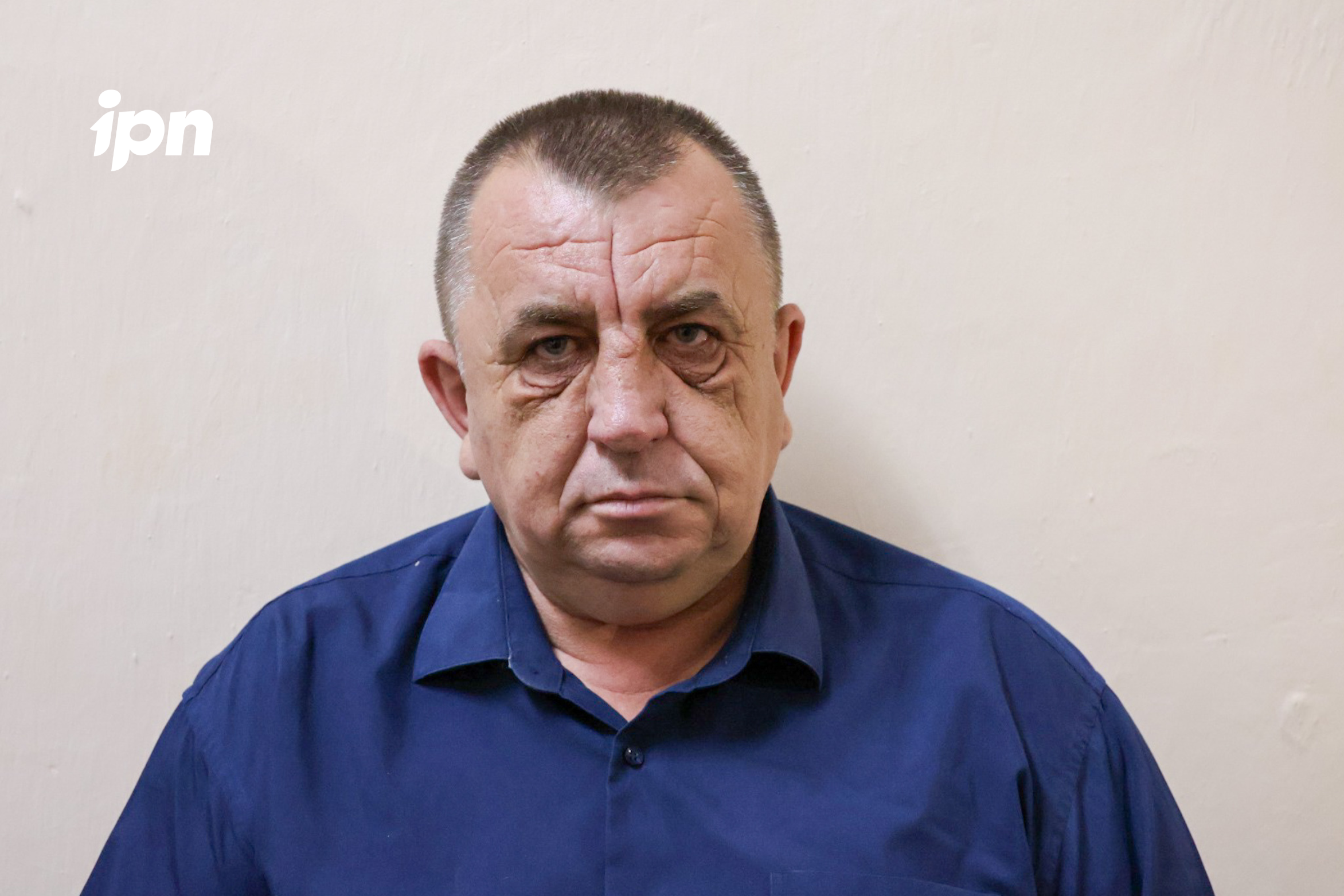
Oleg Bercu: Elections in Gagauzia must be treated as regional elections

The November 15 elections to the People’s Assembly and for the post of Bashkan of Gagauzia should be treated as regional elections and held in accordance with the national electoral framework, under the supervision of the Central Electoral Commission. Historian Oleg Bercu expressed this view during the public debate “Historical Roots in the Present and Future of the Gagauz People,” organized by the IPN News Agency.

According to the historian, applying different electoral rules within the same country can make it difficult to ensure fair elections. He explained that elections in the Republic of Moldova must be conducted under a common set of rules established by national law. In his view, responsibility for administering elections in the autonomous region should lie with the central electoral authority, while the electoral body in Comrat should work in coordination with the Central Electoral Commission (CEC).

“We cannot have the rule of law when a different electoral law applies in certain parts of the Republic of Moldova. Under the Constitution and the Electoral Code, the Central Electoral Commission is the sole authority responsible for electoral processes nationwide. Accordingly, the electoral authority in Comrat must be subordinate to Chișinău, and elections in the autonomous region must be treated as regional elections,” explained Oleg Bercu, who holds a doctorate in history and is the author of the monograph “The Sociopolitical Evolution of the Gagauz Population from the Mid-Nineteenth to the Late Twentieth Century.”

The historian also explained the role of electoral oversight in preventing irregularities and increasing transparency in elections. He said the involvement of the Central Electoral Commission (CEC) would enable closer monitoring of the electoral process and reduce the risk of fraud. His remarks came after Moldova’s Parliament amended the electoral legislation and the CEC officially assumed responsibility for organizing elections in the region.

“Electoral processes must be overseen by the Central Electoral Commission (CEC), which will ensure that the law is applied consistently nationwide. This will also allow for closer oversight, reducing the risk of electoral fraud. There have been attempts to rig elections in the autonomous region in some cases. In a state governed by the rule of law, the law must prevail,” historian Oleg Bercu added.

The public debate “Historical Roots in the Present and Future of the Gagauz People” is the 66th event in the series “The Impact of the Past on Confidence-Building and Peacebuilding Processes”. The IPN News Agency organises this debate series with the support of Germany’s Hanns Seidel Foundation.


Following the administrative and territorial reorganization and the transition from districts to regions, each region will have a council comprising 35, 41 or 47 councillors, depending on its population. These provisions are set out in a draft law to amend the legal framework governing local public administration, IPN reports.

Under the draft proposal, regional councils will have 35 members in regions with a population of up to 300,000, 41 members in those with more than 300,000 but fewer than 600,000 residents, and 47 members in regions with more than 600,000 residents. Population figures will be determined using data from the State Population Register as of January 1 of the year in which the elections are held.

The draft also sets out the responsibilities of first-tier local public authorities and the future regions. Local authorities will continue to manage areas such as local development, spatial planning, local roads, transport and municipal services, within the scope of their statutory powers. The regions’ responsibilities will focus on regional development, including drawing up and implementing development strategies and projects, securing funding, fostering cooperation between localities and promoting cross-border collaboration. They will also be able to support local authorities at their request.

Another bill, drafted by the State Chancellery and put out for public consultation, concerns the administrative and territorial reorganization of the Republic of Moldova. It provides for the creation of three regions—Central, Northern and Southern—with administrative centres in Chișinău, Bălți and Cahul, respectively. The municipalities of Chișinău, Bălți and Taraclia would have separate status as second-tier administrative-territorial units, while the Autonomous Territorial Unit of Gagauzia would retain its special status as an autonomous region.

According to the document, first-tier administrative units with fewer than 3,000 residents would be reorganized through either voluntary amalgamation or government-mandated mergers initiated after consultation with local authorities.

The explanatory note shows that, in 2024, 776 of the 892 local authorities surveyed administered areas with fewer than 3,000 residents. These areas were home to 40.3% of the country’s population. In 2025, only 41 local authorities managed to cover their administrative expenses entirely from their own revenues.

The authors maintain that the reorganization is intended to adapt local public administration to changes in healthcare, education, and social welfare, where some district-level responsibilities have been or are due to be transferred to the central authorities. The powers and funding arrangements of the future regional authorities will be governed by separate legislation.

According to the explanatory note accompanying the first draft law, the amendments concerning voluntary amalgamation would take effect on the date the law is published, while the remaining provisions on the structure of local public administration would enter into force on the date of the first round of the 2027 general local elections.

0 FacebookTwitterPinterestEmail


Oleg Bercu: Elections in Gagauzia must be treated as regional elections

The November 15 elections to the People’s Assembly and for the post of Bashkan of Gagauzia should be treated as regional elections and held in accordance with the national electoral framework, under the supervision of the Central Electoral Commission. Historian Oleg Bercu expressed this view during the public debate “Historical Roots in the Present and Future of the Gagauz People,” organized by the IPN News Agency.

According to the historian, applying different electoral rules within the same country can make it difficult to ensure fair elections. He explained that elections in the Republic of Moldova must be conducted under a common set of rules established by national law. In his view, responsibility for administering elections in the autonomous region should lie with the central electoral authority, while the electoral body in Comrat should work in coordination with the Central Electoral Commission (CEC).

“We cannot have the rule of law when a different electoral law applies in certain parts of the Republic of Moldova. Under the Constitution and the Electoral Code, the Central Electoral Commission is the sole authority responsible for electoral processes nationwide. Accordingly, the electoral authority in Comrat must be subordinate to Chișinău, and elections in the autonomous region must be treated as regional elections,” explained Oleg Bercu, who holds a doctorate in history and is the author of the monograph “The Sociopolitical Evolution of the Gagauz Population from the Mid-Nineteenth to the Late Twentieth Century.”

The historian also explained the role of electoral oversight in preventing irregularities and increasing transparency in elections. He said the involvement of the Central Electoral Commission (CEC) would enable closer monitoring of the electoral process and reduce the risk of fraud. His remarks came after Moldova’s Parliament amended the electoral legislation and the CEC officially assumed responsibility for organizing elections in the region.

“Electoral processes must be overseen by the Central Electoral Commission (CEC), which will ensure that the law is applied consistently nationwide. This will also allow for closer oversight, reducing the risk of electoral fraud. There have been attempts to rig elections in the autonomous region in some cases. In a state governed by the rule of law, the law must prevail,” historian Oleg Bercu added.

The public debate “Historical Roots in the Present and Future of the Gagauz People” is the 66th event in the series “The Impact of the Past on Confidence-Building and Peacebuilding Processes”. The IPN News Agency organises this debate series with the support of Germany’s Hanns Seidel Foundation.


Minister of Education and Research Dan Perciun said there was no doubt about Ion Antonescu’s responsibility for the Holocaust in Bessarabia. At the same time, the minister acknowledged that certain passages in the new textbook, “History of the Romanians and World History,” could have been worded more clearly. He made the remarks on the programme “Teritoria Svobodi,” hosted by Lilia Burakovski, IPN reports.

“There is no doubt that Antonescu was a war criminal. He took part in the Holocaust in Bessarabia and bears direct responsibility for it,” Dan Perciun emphasized.

The minister acknowledged that some of the criticisms of the textbook’s content, particularly those concerning its presentation of historical events in the 20th century, were justified. “We agree that certain passages in this textbook could have been worded more clearly and explicitly,” he said.

According to Perciun, the Ministry of Education and Research has already developed a supplementary teaching resource of approximately 100 pages devoted entirely to the Holocaust. It includes detailed information, statistical data, and explanations of the historical events. The supplementary materials have been distributed to all teachers in both Romanian and Russian.

“We published a 100-page supplement to the textbook devoted exclusively to the Holocaust, with detailed explanations and comprehensive statistical data. We made it available to all teachers in both Romanian and Russian,” the minister said.

The Ministry of Education and Research is currently updating the school curriculum. Representatives of the Jewish community have been invited to share their views on its content, including the chapters devoted to the Holocaust.

Dan Perciun assured the Jewish community that its proposals would be taken into account when the next history textbook is developed. “We have asked representatives of the Jewish community to share their views on the new curriculum, particularly regarding Holocaust education. We will take their proposals into account and hope that the next textbook will raise fewer questions,” the minister said.

The Ministry of Education and Research thus acknowledges the need to clarify certain passages in the current textbook and intends to take the Jewish community’s comments into account when updating the content of the school history curriculum.

0 FacebookTwitterPinterestEmail


1 IANUARIE, 2025
1 IANUARIE, 2025