

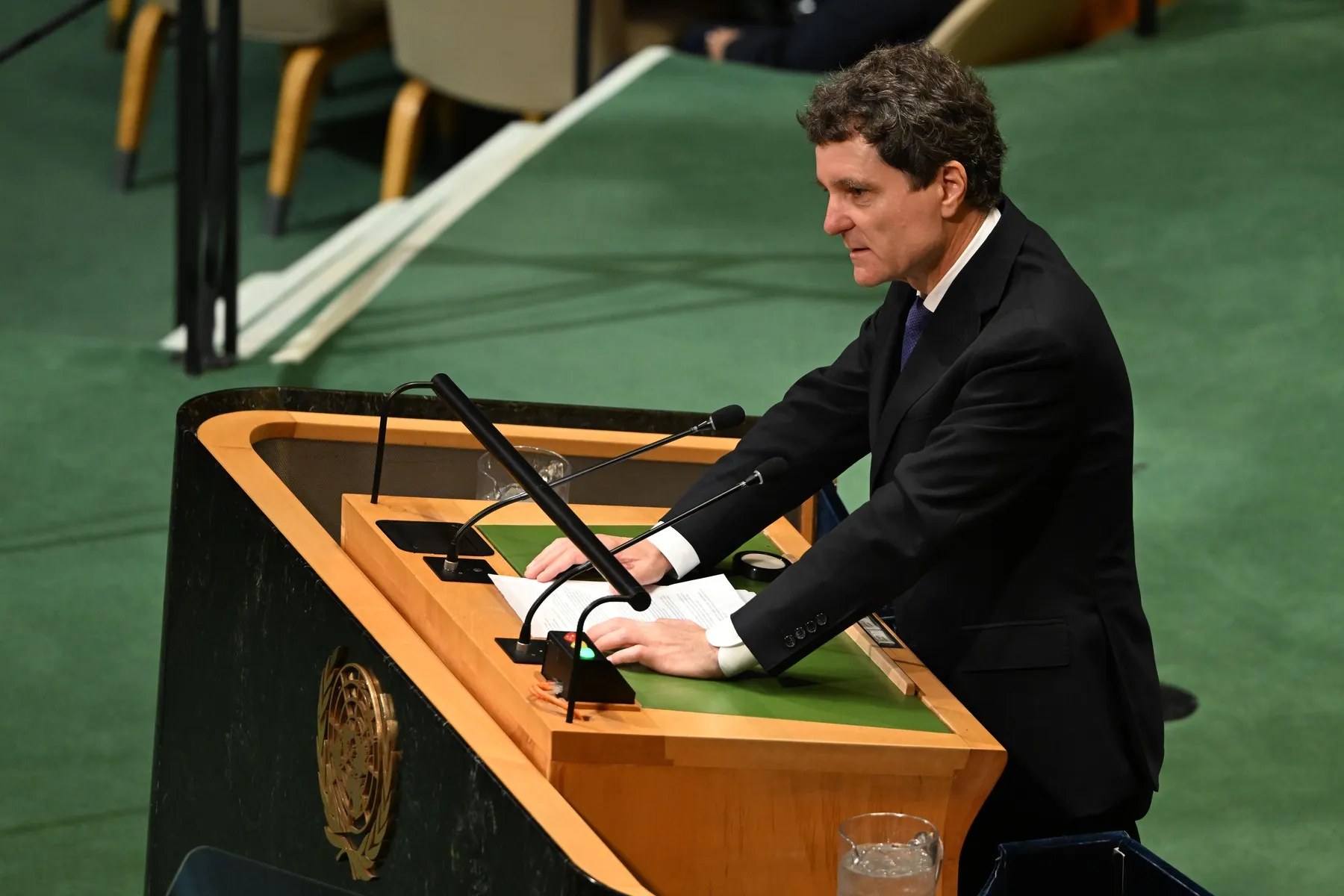
Nicusor Dan, at the UN General Assembly: Romania remains the strongest advocate for Moldova in the EU

Photo source: Profimedia

Romania will continue to support Moldova’s resilience capacity and remains its strongest advocate in the European Union. The statement was made by the Romanian president, Nicusor Dan, in his speech at the podium of the United Nations General Assembly, reports IPN.

The Romanian leader mentioned that Moldova is the second most affected country by the war in Ukraine, dealing with the effects of the economic shock caused by Russia’s aggression and a hybrid campaign of disinformation, energy pressure, and attempts to destabilize its democratic institutions. President Dan emphasized that Bucharest continues to share with Chisinau from its own EU accession experience and to offer it political, technical, and diplomatic support for its European path.

Additionally, Nicusor Dan reiterated Romania’s unconditional support for Ukraine and its people. The leader from Cotroceni clarified that Romania, as an EU member state with the longest land border with Ukraine, directly feels the effects of the conflict through repeated airspace violations. He recalled the case when a Russian drone crashed in May over a building in Galati, an incident that resulted in injuries and material damage.

Nicusor Dan warned that the threat from Russia is not limited to Ukraine alone and pointed out that Europe is the target of a hybrid war, through cyber attacks, disinformation campaigns, sabotage, and disruptions of critical infrastructures. Under these circumstances, the Romanian president called for discouraging the Russian threat by increasing military spending and added that the target assumed within NATO is to allocate 5% of GDP for defense, and Romania has already reached 3.7%.


The Balti Clinical Hospital records systemic deficiencies in administrative and clinical activity. These are the conclusions of the audit conducted by the Ministry of Health, which requests a corrective action plan from the medical institution, reports IPN.

The Ministry of Health points out that a major internal control deficiency is that the institution has not prepared the semi-annual and annual reports on the execution of the Procurement Plan, nor the reports on the execution of contracts. In their absence, there is no consolidated and verifiable image of the executed contracts, delays, non-executions, complaints, sanctions, and the reception of goods, works, or services.

At the same time, issues were identified in the infrastructure that require urgent intervention, including fire safety. Deficiencies in the internal hydrant network were found, as well as the absence of hoses and extinguishers, lack of documented checks, and incomplete operation of protection systems.

The report also records non-compliant investments: the space intended for sterilization was renovated with approximately 3.3 million lei, but it cannot be used according to its purpose due to the lack of necessary electrical supply. Deficiencies in the sanitary-hygienic regime and infection control were also found, as well as problems with access and circuits in the operating block area.

The Ministry recommends the urgent remediation of fire safety issues and patient safety risks, the standardization of clinical processes from admission to discharge, including for critical patients and transfers. It also calls for the reorganization of procurement and contract planning and monitoring, as well as clarification of responsibilities regarding infrastructure and medical devices.

The Ministry specifies that under the conditions of systemic deficiencies observed and in the absence of their remediation, the institution’s preparation for an evaluation and accreditation process according to current standards is significantly affected.

In August, a new interim director, Ludmila Capcelea, was appointed at the Bălți Clinical Hospital, following the scandal related to the poor conditions in the institution’s food block. The appointment comes after Iurie Osoianu’s departure from the interim leadership of the Balti Clinical Hospital.

0 FacebookTwitterPinterestEmail


Nicusor Dan, at the UN General Assembly: Romania remains the strongest advocate for Moldova in the EU

Photo source: Profimedia

Romania will continue to support Moldova’s resilience capacity and remains its strongest advocate in the European Union. The statement was made by the Romanian president, Nicusor Dan, in his speech at the podium of the United Nations General Assembly, reports IPN.

The Romanian leader mentioned that Moldova is the second most affected country by the war in Ukraine, dealing with the effects of the economic shock caused by Russia’s aggression and a hybrid campaign of disinformation, energy pressure, and attempts to destabilize its democratic institutions. President Dan emphasized that Bucharest continues to share with Chisinau from its own EU accession experience and to offer it political, technical, and diplomatic support for its European path.

Additionally, Nicusor Dan reiterated Romania’s unconditional support for Ukraine and its people. The leader from Cotroceni clarified that Romania, as an EU member state with the longest land border with Ukraine, directly feels the effects of the conflict through repeated airspace violations. He recalled the case when a Russian drone crashed in May over a building in Galati, an incident that resulted in injuries and material damage.

Nicusor Dan warned that the threat from Russia is not limited to Ukraine alone and pointed out that Europe is the target of a hybrid war, through cyber attacks, disinformation campaigns, sabotage, and disruptions of critical infrastructures. Under these circumstances, the Romanian president called for discouraging the Russian threat by increasing military spending and added that the target assumed within NATO is to allocate 5% of GDP for defense, and Romania has already reached 3.7%.


The Balti Clinical Hospital records systemic deficiencies in administrative and clinical activity. These are the conclusions of the audit conducted by the Ministry of Health, which requests a corrective action plan from the medical institution, reports IPN.

The Ministry of Health points out that a major internal control deficiency is that the institution has not prepared the semi-annual and annual reports on the execution of the Procurement Plan, nor the reports on the execution of contracts. In their absence, there is no consolidated and verifiable image of the executed contracts, delays, non-executions, complaints, sanctions, and the reception of goods, works, or services.

At the same time, issues were identified in the infrastructure that require urgent intervention, including fire safety. Deficiencies in the internal hydrant network were found, as well as the absence of hoses and extinguishers, lack of documented checks, and incomplete operation of protection systems.

The report also records non-compliant investments: the space intended for sterilization was renovated with approximately 3.3 million lei, but it cannot be used according to its purpose due to the lack of necessary electrical supply. Deficiencies in the sanitary-hygienic regime and infection control were also found, as well as problems with access and circuits in the operating block area.

The Ministry recommends the urgent remediation of fire safety issues and patient safety risks, the standardization of clinical processes from admission to discharge, including for critical patients and transfers. It also calls for the reorganization of procurement and contract planning and monitoring, as well as clarification of responsibilities regarding infrastructure and medical devices.

The Ministry specifies that under the conditions of systemic deficiencies observed and in the absence of their remediation, the institution’s preparation for an evaluation and accreditation process according to current standards is significantly affected.

In August, a new interim director, Ludmila Capcelea, was appointed at the Bălți Clinical Hospital, following the scandal related to the poor conditions in the institution’s food block. The appointment comes after Iurie Osoianu’s departure from the interim leadership of the Balti Clinical Hospital.

0 FacebookTwitterPinterestEmail


1 IANUARIE, 2025
1 IANUARIE, 2025