

Five more Moldovan dishes get Traditional Specialty Guaranteed status

Another five Moldovan dishes got Traditional Specialty Guaranteed status after being registered as such by the Moldovan Intellectual Property Agency.

All these dishes represent the culinary and cultural heritage of Ștefan Vodă district and were submitted for registration by the “Nistrul de Jos Meleag Natal” NGO.

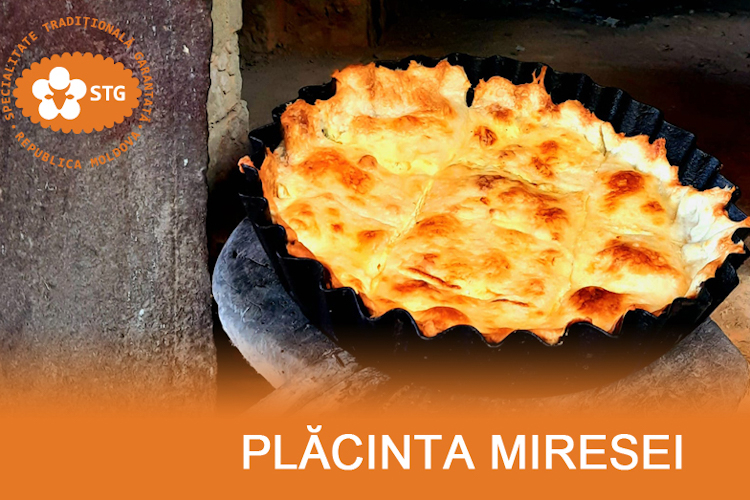
Plăcinta Miresei, or Bride’s Pie, is a combination of baked dough and a filling of cottage cheese, eggs, sugar and salt, having a fine and layered texture. It is traditionally baked in a wood-fired masonry oven. It can be paired with sour cream, natural yogurt or fruit yogurt, chișleag (traditional fermented milk) or cold non-alcoholic drinks.

Ghițman is a pie made of baked leavened dough and a filling of cubed potatoes, pork chops, onions and salt. Also baked in a traditional masonry oven.

Rasol de șuvai is a fish stew with a pronounced sweet and sour taste and a translucid reddish appearance, made of a type of fish found in the Nistru River and vegetables.

Plachie de pește is a grilled fish dish that combines catfish, pike and carp with vegetables.
 
Borș cu burecheți is a sour soup with vegetables and sponge cake made with pork and eggs. It owes it sourness to tomato sauce and traditional fermented bran juice called borș.

The TSG status protects the dishes from “unauthorized use”, thus helping to keep the authenticity of the Moldovan cuisine.

TSG highlights traditional aspects, such as the way the dish is made or its composition, without tying it to a specific geographical area.

At present Moldova has 7 national designations of origin, 11 national geographical indications and 6 national traditional specialties guaranteed.


Meteorologists have issued a yellow code warning for atmospheric instability across the entire country. The warning is valid from Sunday, 04:00 PM, until Monday, 02:00 AM, during which time rain, lightning, hail, and strong wind are expected, reports IPN.

According to the Authority of Meteorology and Environmental Monitoring, widespread short-duration rains accompanied by electrical discharges will occur. Isolated, there will be recorded heavy showers, and the water quantities can reach 15-35 liters per square meter.

Also, hail falls and storms are forecasted, with wind gusts between 54-72 kilometers per hour.

Meteorologists specify that the forecast can be updated depending on the evolution and intensity of weather phenomena.

0 FacebookTwitterPinterestEmail


Five more Moldovan dishes get Traditional Specialty Guaranteed status

Another five Moldovan dishes got Traditional Specialty Guaranteed status after being registered as such by the Moldovan Intellectual Property Agency.

All these dishes represent the culinary and cultural heritage of Ștefan Vodă district and were submitted for registration by the “Nistrul de Jos Meleag Natal” NGO.

Plăcinta Miresei, or Bride’s Pie, is a combination of baked dough and a filling of cottage cheese, eggs, sugar and salt, having a fine and layered texture. It is traditionally baked in a wood-fired masonry oven. It can be paired with sour cream, natural yogurt or fruit yogurt, chișleag (traditional fermented milk) or cold non-alcoholic drinks.

Ghițman is a pie made of baked leavened dough and a filling of cubed potatoes, pork chops, onions and salt. Also baked in a traditional masonry oven.

Rasol de șuvai is a fish stew with a pronounced sweet and sour taste and a translucid reddish appearance, made of a type of fish found in the Nistru River and vegetables.

Plachie de pește is a grilled fish dish that combines catfish, pike and carp with vegetables.
 
Borș cu burecheți is a sour soup with vegetables and sponge cake made with pork and eggs. It owes it sourness to tomato sauce and traditional fermented bran juice called borș.

The TSG status protects the dishes from “unauthorized use”, thus helping to keep the authenticity of the Moldovan cuisine.

TSG highlights traditional aspects, such as the way the dish is made or its composition, without tying it to a specific geographical area.

At present Moldova has 7 national designations of origin, 11 national geographical indications and 6 national traditional specialties guaranteed.


In the last five years, in the Republic of Moldova, there has not been a single case of poisoning caused solely by the consumption of watermelon or melon. In the context of the melon selling season, the National Agency for Food Safety clarifies that nausea or other digestive disorders appearing after their consumption does not automatically mean that the fruits contain a dangerous level of nitrates, reports IPN.

According to the data from the National Agency for Public Health, the 25 cases of nitrate poisoning recorded during the period 2021-2025 were mainly caused by the consumption of water from wells with a high nitrate content, and not by the consumption of green or yellow watermelons.

Specialists explain that the malaise that occurs after consuming watermelons can have other causes. Among these are the consumption of a large quantity in a short time, the digestive sensitivity of some people, non-compliance with hygiene rules before consumption, contamination of the fruit during handling, or storing the cut watermelon at inappropriate temperatures.

ANSA also refers to the conclusions of the European Food Safety Authority, according to which illnesses associated with watermelon consumption are usually caused by microbiological contamination, including bacteria such as Salmonella or E. coli, and not by nitrate content.

To mitigate risks, ANSA recommends purchasing watermelons only from authorized locations, washing the rind before cutting, and storing the cut fruit in the refrigerator. The institution emphasizes that nitrate poisoning cannot be determined solely based on digestive symptoms, but requires medical and laboratory confirmation.

0 FacebookTwitterPinterestEmail


1 IANUARIE, 2025
1 IANUARIE, 2025