

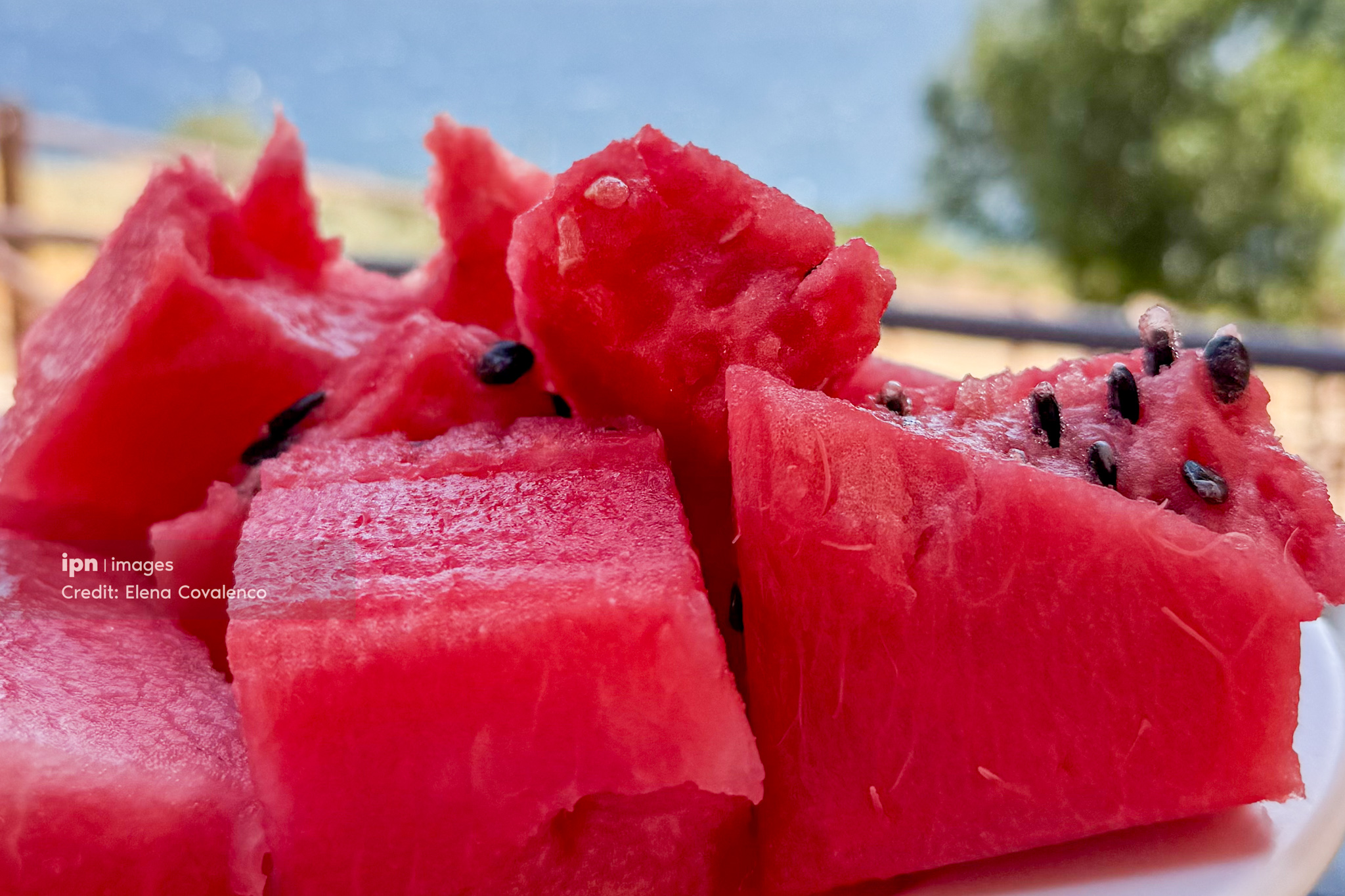
ANSA: Illness after consuming watermelon does not indicate nitrate poisoning

In the last five years, in the Republic of Moldova, there has not been a single case of poisoning caused solely by the consumption of watermelon or melon. In the context of the melon selling season, the National Agency for Food Safety clarifies that nausea or other digestive disorders appearing after their consumption does not automatically mean that the fruits contain a dangerous level of nitrates, reports IPN.

According to the data from the National Agency for Public Health, the 25 cases of nitrate poisoning recorded during the period 2021-2025 were mainly caused by the consumption of water from wells with a high nitrate content, and not by the consumption of green or yellow watermelons.

Specialists explain that the malaise that occurs after consuming watermelons can have other causes. Among these are the consumption of a large quantity in a short time, the digestive sensitivity of some people, non-compliance with hygiene rules before consumption, contamination of the fruit during handling, or storing the cut watermelon at inappropriate temperatures.

ANSA also refers to the conclusions of the European Food Safety Authority, according to which illnesses associated with watermelon consumption are usually caused by microbiological contamination, including bacteria such as Salmonella or E. coli, and not by nitrate content.

To mitigate risks, ANSA recommends purchasing watermelons only from authorized locations, washing the rind before cutting, and storing the cut fruit in the refrigerator. The institution emphasizes that nitrate poisoning cannot be determined solely based on digestive symptoms, but requires medical and laboratory confirmation.


Official documents issued in the Republic of Moldova and Germany may now be used in each other’s countries with only an apostille, without the need for the legalization procedure. The measure enters into force following the Federal Republic of Germany’s withdrawal of the reservation it made in 2007 when the Republic of Moldova acceded to the Hague Apostille Convention, IPN reports.

The Ministry of Foreign Affairs states that the decision was made following steps taken by Deputy Prime Minister Mihai Popsoi, Minister of Foreign Affairs, during his May 18–19 meeting with his German counterpart, Johann David Wadephul.

The ministry emphasizes that the new system will eliminate the need to visit multiple institutions or diplomatic missions to have documents legalized, which will reduce both the time required and the costs incurred by citizens. The simplified procedure will apply to official documents such as birth, marriage, divorce, and death certificates, criminal records, academic diplomas, and diploma supplements.

The Hague Convention on the Apostille entered into force for the Republic of Moldova on March 16, 2007. With its implementation in relations with Germany, the Republic of Moldova will benefit from the same simplified procedure for the recognition of official documents as it does with all 130 states and entities that are parties to the convention.

0 FacebookTwitterPinterestEmail


ANSA: Illness after consuming watermelon does not indicate nitrate poisoning

In the last five years, in the Republic of Moldova, there has not been a single case of poisoning caused solely by the consumption of watermelon or melon. In the context of the melon selling season, the National Agency for Food Safety clarifies that nausea or other digestive disorders appearing after their consumption does not automatically mean that the fruits contain a dangerous level of nitrates, reports IPN.

According to the data from the National Agency for Public Health, the 25 cases of nitrate poisoning recorded during the period 2021-2025 were mainly caused by the consumption of water from wells with a high nitrate content, and not by the consumption of green or yellow watermelons.

Specialists explain that the malaise that occurs after consuming watermelons can have other causes. Among these are the consumption of a large quantity in a short time, the digestive sensitivity of some people, non-compliance with hygiene rules before consumption, contamination of the fruit during handling, or storing the cut watermelon at inappropriate temperatures.

ANSA also refers to the conclusions of the European Food Safety Authority, according to which illnesses associated with watermelon consumption are usually caused by microbiological contamination, including bacteria such as Salmonella or E. coli, and not by nitrate content.

To mitigate risks, ANSA recommends purchasing watermelons only from authorized locations, washing the rind before cutting, and storing the cut fruit in the refrigerator. The institution emphasizes that nitrate poisoning cannot be determined solely based on digestive symptoms, but requires medical and laboratory confirmation.


Maritime schools could be opened in Moldova following the full transposition of relevant European legislation. The statement was made by Deputy Prime Minister Vladimir Bolea, Minister of Infrastructure and Regional Development, who noted that there is growing interest in such programs, including from Ukrainian citizens affected by the war, according to IPN.

Vladimir Bolea stated that the new regulations will allow seaman’s books to be issued based on studies completed in the Republic of Moldova at authorized institutions.

The minister told the press that, at present, no ships are sailing under the flag of the Republic of Moldova, but the authorities are working to transpose European legislation and develop the legal framework necessary for the development of this sector.

According to him, the state and the Naval Agency could generate significant revenue both from ships sailing under the Moldovan flag and from institutions that train seafarers.

0 FacebookTwitterPinterestEmail


1 IANUARIE, 2025
1 IANUARIE, 2025