

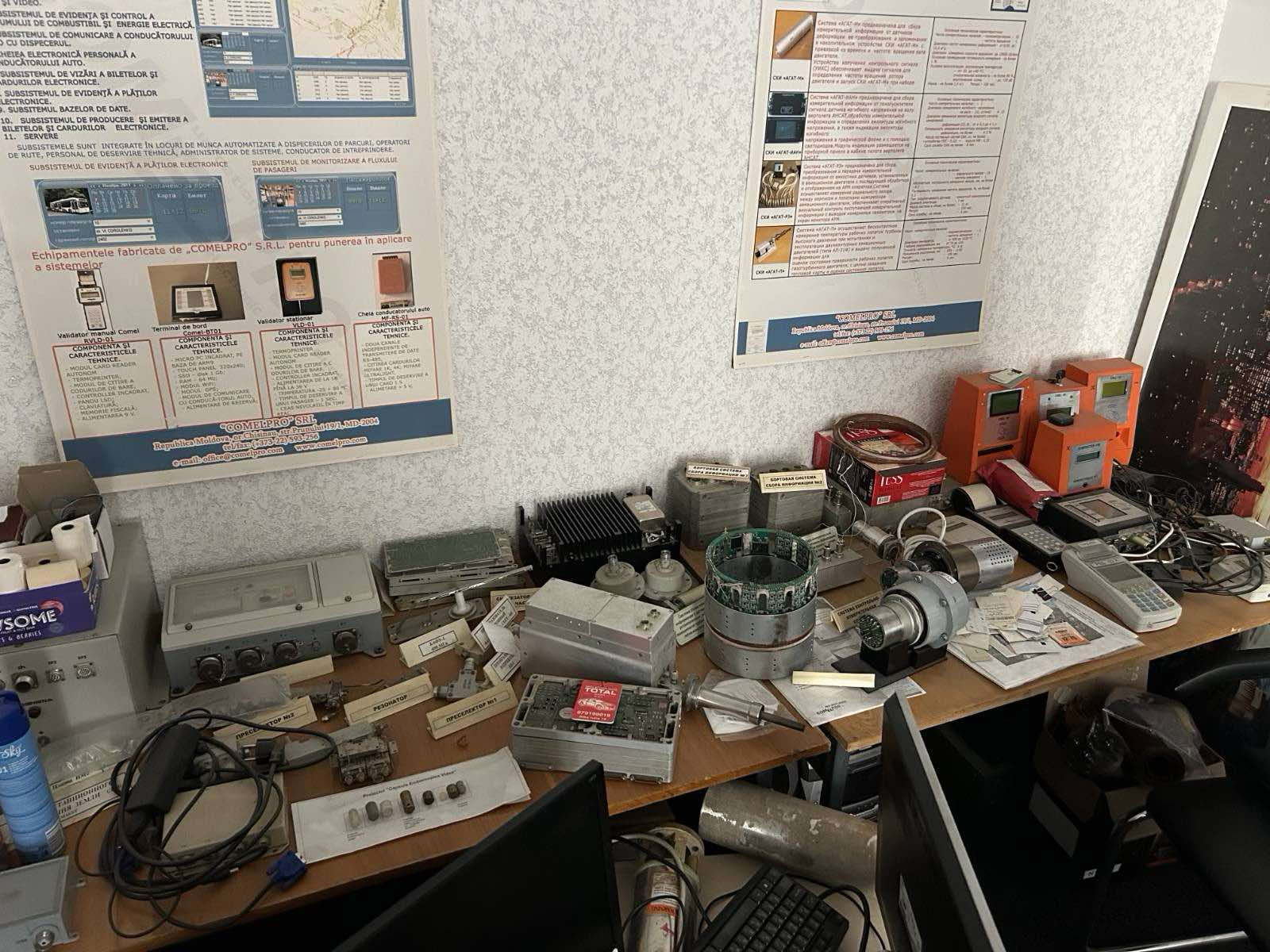
Details about the company that allegedly supplied dual-use equipment to the Russian military aviation

The company targeted by the searches conducted by law enforcement agencies is “Comelpro” SRL, which is alleged to have produced and exported electronic systems used to test fighter jet engines to the Russian Federation for years. After international sanctions became an obstacle, the company did not stop its deliveries but instead changed the names of its products. The criminal investigation launched by the PCCOCS and SIS led to searches at the owners’ homes and at the company’s headquarters on Prunului Street in Chisinau, according to IPN.

On Prunului Street, 19/1 in the Buiucani sector of the capital, electronic systems have been assembled for many years with a special purpose: measuring and controlling the parameters of Russian military aviation engines. Engine shaft speeds, gas temperatures, pressure in fuel supply systems – vital data for maintaining the combat readiness of the Russian army’s Su-27 and Yak-130 aircraft.

The company that produced these devices is called “Comelpro” LLC. According to the documents obtained by the IPN editorial team, the company is run by Mihail Pavel Vladov (the father) and Mihail Mihail Vladov (the son), and the main engineer involved in production would be Pavel Budai. All three individuals are now under the investigators’ scrutiny.

How the devices worked

The systems produced by “Comelpro” are known under the abbreviated name SKI – systems for control and recording of information. Essentially, they collect real-time data from sensors placed on the aircraft’s engines: rotations, temperatures, pressures – and process them for the analysis of the engine’s technical condition.

The documents show that some types of devices manufactured in Chisinau are directly compatible with engines of the Russian military aviation. The SKI “AGAT-ANT” system was intended for testing the AV-222-25 turboprop engines, mounted on the Yak-130 training and combat aircraft. The SKI “AGAT-L” system was designed for the AL-31F engine, which equips the famous Su-27 fighter aircraft.

Both aircraft are actively used by the Russian Aerospace Forces in the war in Ukraine.

A change in names, not in destination

Before the large-scale invasion of Russia into Ukraine, the devices were openly exported under the conventional names SKI “AGAT”, with several modifications (204, 72, 72T, 96 and 500M). The last delivery under this label would have taken place on January 28, 2022 – a few weeks before the Russian tanks crossed the Ukrainian border.

What happened next? The products did not disappear, their names were just changed. In the transactions from 2022-2023, the same equipment began to appear in documents as “OKI-500”. According to IPN sources, the maneuver aimed to mask the real nature of the devices and to mislead the customs staff.

But the most spectacular documentary transformation came from 2024: the same sophisticated electronic systems began to appear in documents under the name “ЧП-МС3” – that is, “parts and accessories for the waste incineration plant”. An analysis of the technical passports, which IPN saw, demonstrated that the technical specifications are practically identical to those of the previous measuring devices.

The entire route: from the seized components to Moscow by air

The entire chain of operations looked as follows: “Comelpro” imported into Moldova high-tech microelectronic components – integrated circuits classified under tariff codes 8542.31, 8542.32, 8542.33, and 8542.39. According to Regulation No. 833/2014 of the Council of the European Union, these components are on the “List of common items with high priority” – the most sensitive categories of dual-use goods, the export of which to Russia is prohibited.

The components would have been purchased, brought to Moldova, assembled into the final devices at the factory on Prunului Street – and then shipped to Russia via EMS post, by air, without arousing suspicion. The recipient was an affiliated company from the Russian Federation, with the same ultimate beneficiary as the Moldovan firm.

From there, the investigators presume, the devices would reach enterprises within the Russian military-industrial complex.

A two-way relationship with the Russian military-industrial complex

The connection between “Comelpro” and the Russian military structures was not a simple supplier-client one. The data gathered by investigators indicates an active and ongoing technical collaboration.

Periodically, the Russian side would send updated production schemes, specifications, observations on the delivered or in-process devices, as well as data obtained from the tests carried out during the actual flights of Russian military pilots to Chisinau. Essentially, the Russian army was sending technical feedback from the theater of operations, and the engineers in Chisinau were improving the product.

Moreover, some devices were returned to Chisinau for repairs and software updates, and the company provided specialized programming services, including reading and interpreting data collected from tests in the Russian Federation.

The case would have come to the attention of the prosecutors through the Information and Security Service, which notified the Prosecutor’s Office for Combating Organized Crime and Special Causes. Based on this notification, a criminal case was initiated.

The editorial team requested a point of view from the LLC “Comelpro” and its representatives. Until publication, we have not received any response.


Environmental inspectors are verifying the legality of some mineral resource exploitation works in the locality of Valeni, Cahul district. The checks are taking place after clay and sand extraction activities were detected in the area, reports IPN.

According to the Environmental Protection Inspectorate, the institution took action following operational information and conducted on-site checks. During the control actions, mining activities were observed. Therefore, they documented the situation, and the legality of the activities is to be determined in accordance with the provisions of the current legislation.

The institution specifies that it will continue monitoring the case and will undertake the necessary measures depending on the results of the checks.

0 FacebookTwitterPinterestEmail


Details about the company that allegedly supplied dual-use equipment to the Russian military aviation

The company targeted by the searches conducted by law enforcement agencies is “Comelpro” SRL, which is alleged to have produced and exported electronic systems used to test fighter jet engines to the Russian Federation for years. After international sanctions became an obstacle, the company did not stop its deliveries but instead changed the names of its products. The criminal investigation launched by the PCCOCS and SIS led to searches at the owners’ homes and at the company’s headquarters on Prunului Street in Chisinau, according to IPN.

On Prunului Street, 19/1 in the Buiucani sector of the capital, electronic systems have been assembled for many years with a special purpose: measuring and controlling the parameters of Russian military aviation engines. Engine shaft speeds, gas temperatures, pressure in fuel supply systems – vital data for maintaining the combat readiness of the Russian army’s Su-27 and Yak-130 aircraft.

The company that produced these devices is called “Comelpro” LLC. According to the documents obtained by the IPN editorial team, the company is run by Mihail Pavel Vladov (the father) and Mihail Mihail Vladov (the son), and the main engineer involved in production would be Pavel Budai. All three individuals are now under the investigators’ scrutiny.

How the devices worked

The systems produced by “Comelpro” are known under the abbreviated name SKI – systems for control and recording of information. Essentially, they collect real-time data from sensors placed on the aircraft’s engines: rotations, temperatures, pressures – and process them for the analysis of the engine’s technical condition.

The documents show that some types of devices manufactured in Chisinau are directly compatible with engines of the Russian military aviation. The SKI “AGAT-ANT” system was intended for testing the AV-222-25 turboprop engines, mounted on the Yak-130 training and combat aircraft. The SKI “AGAT-L” system was designed for the AL-31F engine, which equips the famous Su-27 fighter aircraft.

Both aircraft are actively used by the Russian Aerospace Forces in the war in Ukraine.

A change in names, not in destination

Before the large-scale invasion of Russia into Ukraine, the devices were openly exported under the conventional names SKI “AGAT”, with several modifications (204, 72, 72T, 96 and 500M). The last delivery under this label would have taken place on January 28, 2022 – a few weeks before the Russian tanks crossed the Ukrainian border.

What happened next? The products did not disappear, their names were just changed. In the transactions from 2022-2023, the same equipment began to appear in documents as “OKI-500”. According to IPN sources, the maneuver aimed to mask the real nature of the devices and to mislead the customs staff.

But the most spectacular documentary transformation came from 2024: the same sophisticated electronic systems began to appear in documents under the name “ЧП-МС3” – that is, “parts and accessories for the waste incineration plant”. An analysis of the technical passports, which IPN saw, demonstrated that the technical specifications are practically identical to those of the previous measuring devices.

The entire route: from the seized components to Moscow by air

The entire chain of operations looked as follows: “Comelpro” imported into Moldova high-tech microelectronic components – integrated circuits classified under tariff codes 8542.31, 8542.32, 8542.33, and 8542.39. According to Regulation No. 833/2014 of the Council of the European Union, these components are on the “List of common items with high priority” – the most sensitive categories of dual-use goods, the export of which to Russia is prohibited.

The components would have been purchased, brought to Moldova, assembled into the final devices at the factory on Prunului Street – and then shipped to Russia via EMS post, by air, without arousing suspicion. The recipient was an affiliated company from the Russian Federation, with the same ultimate beneficiary as the Moldovan firm.

From there, the investigators presume, the devices would reach enterprises within the Russian military-industrial complex.

A two-way relationship with the Russian military-industrial complex

The connection between “Comelpro” and the Russian military structures was not a simple supplier-client one. The data gathered by investigators indicates an active and ongoing technical collaboration.

Periodically, the Russian side would send updated production schemes, specifications, observations on the delivered or in-process devices, as well as data obtained from the tests carried out during the actual flights of Russian military pilots to Chisinau. Essentially, the Russian army was sending technical feedback from the theater of operations, and the engineers in Chisinau were improving the product.

Moreover, some devices were returned to Chisinau for repairs and software updates, and the company provided specialized programming services, including reading and interpreting data collected from tests in the Russian Federation.

The case would have come to the attention of the prosecutors through the Information and Security Service, which notified the Prosecutor’s Office for Combating Organized Crime and Special Causes. Based on this notification, a criminal case was initiated.

The editorial team requested a point of view from the LLC “Comelpro” and its representatives. Until publication, we have not received any response.


The opening of negotiations on cluster 6 of chapters brings the Republic of Moldova closer to European security and defense mechanisms, including participation in joint missions of the European Union. The Deputy Prime Minister and interim Foreign Minister, Mihai Popsoi, stated in an interview for IPN, that alignment with the EU’s foreign and security policy has already been achieved by 91%, and the authorities aim to reach 100% as soon as possible.

Mihai Popsoi emphasized that the opening of negotiations for chapters 30 and 31 marks a stage where the Republic of Moldova must demonstrate not only that it can harmonize its legislation with the acquis communautaire, but also that it is capable of acting as a future member state of the European Union in the field of foreign and security policy.

The head of diplomacy in Chisinau stated that in order to close chapter 31, legislative adjustments and continued alignment with the EU’s foreign and security policy are necessary, including in the field of European sanctions. In his opinion, this chapter is one of the most advanced, and the Republic of Moldova is close to achieving the set objectives.

At the same time, referring to the regional context, Minister Popsoi mentioned that the war waged by Russia against Ukraine and hybrid threats have accelerated the cooperation of the Republic of Moldova with the European Union in the field of security. He emphasized that European support has concrete results, including through strengthening defense capabilities and protecting citizens.

0 FacebookTwitterPinterestEmail


1 IANUARIE, 2025
1 IANUARIE, 2025