

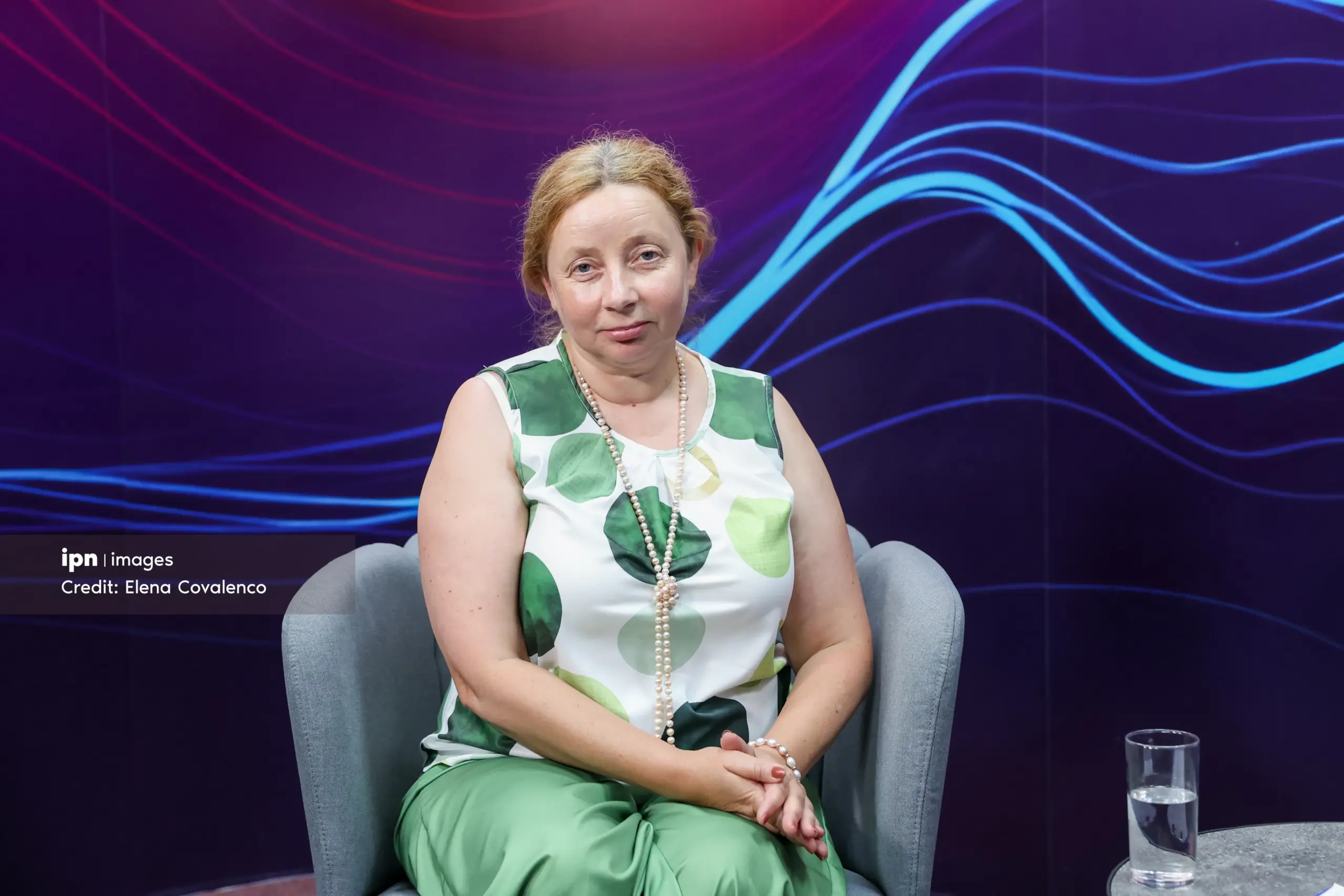
APL Reform: We can no longer operate in old structures. IPN Interview with the mayor of Telita commune

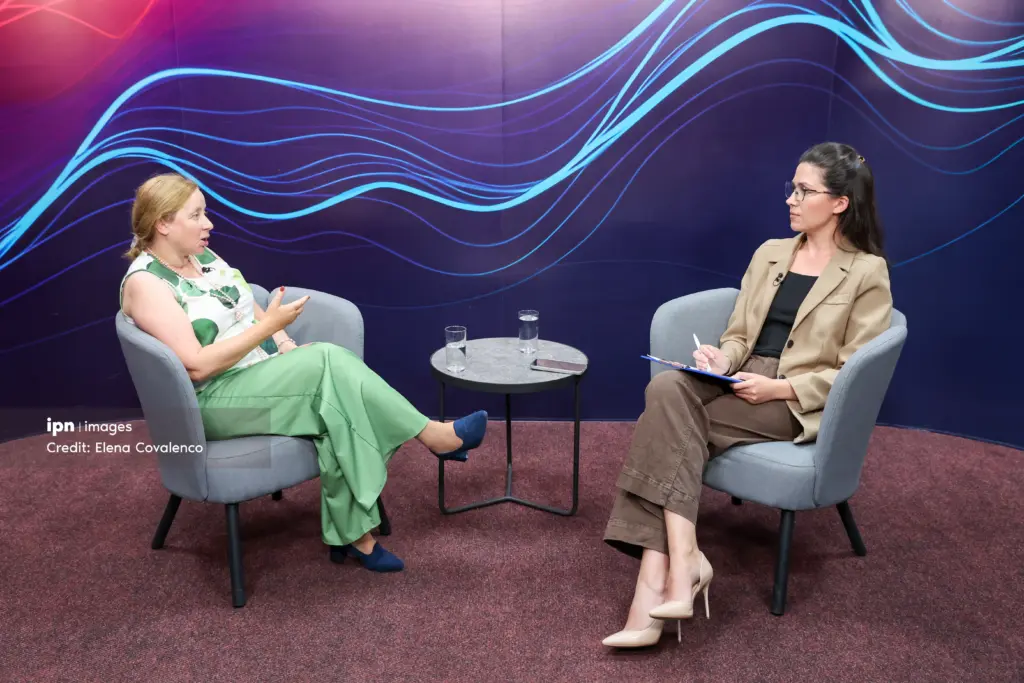
The reform of local public administration is taking shape in the territory, against the backdrop of voluntary amalgamation processes of localities. Telita, Roscani and Calfa from the Anenii Noi district are among the communities that have reached a final decision on unification, following nearly two years of consultations, analyses and negotiations. About the course of the process, the reasons that led local authorities to opt for reform, and the changes envisaged in the coming years, including in the perspective of the 2027 elections, spoke, in an interview for IPN, the mayor of Telita commune, Rodica Russu.

I recently saw the announcement of the final decision to merge between Telita, Roscani, Calfa. You have reached a common denominator with these localities. How did the process go?

It was a lengthy, well-thought-out and well-calculated process. The decision to initiate the voluntary amalgamation of local public authorities from our communities was taken in the second half of 2024. Thus, we had almost two years at our disposal, a period during which intense work was carried out on consultations, establishing a common vision, developing strategies, organizational charts and many other necessary documents.

The most important thing, however, is that the objectives and priorities of this process of uniting efforts have been established, because we see amalgamation as a consolidation of the potential we possess.

What convinced you that this is the most optimal and best solution?

Only our analyses, our forecasts, and the moment when we realized that we can carry out a fundamental, cardinal reform. Local authorities, as an institution in the Republic of Moldova, operate in a somewhat outdated format, with older organizational structures that no longer cope with new challenges, new development strategies and new visions regarding national and European development funds. Therefore, it is absolutely and, a priori, necessary to reset all these components, and a reform allows you to rethink things in a new way. Because, in an old structure, you can make certain modifications, but they are limited by a legal and administrative framework. In the context of this reform, things are permissive from a democratic point of view, obviously within the limits of the law, and you can structure an organizational chart based on the development visions of the community.

If, for example, the localities that unite have the vision to develop tourism, you can set these objectives in the organizational chart and hire a specialist in the field. Or perhaps you have the idea to develop the region as an industrial region and then, again, you form a team of specialists in the field. It is precisely a structural reform that allows you to think about things in a different way. At this moment we have mobilized to consolidate our efforts and to work together.

We are deeply grateful to our development partners and the State Chancellery, who have stood by us, who have thought together with us, and with whom we have overcome certain legal and organizational obstacles, to finally arrive, optimistic that we will succeed in fundamentally changing things.
You are not in your first term, you already have several years of experience in this regard. Have there been situations where, because of these reasons you mentioned, you were unable to complete certain projects in the locality?

In reality, if we analyze the situation at a country level, our localities, as they currently stand, have lower capacities to absorb substantial funds. Now, the European funds, if colleagues have tried to apply in the program for direct funds from Brussels, they will see that the structure of this application is quite voluminous. The same goes for the packages of documents you need to be prepared with: feasibility studies, economic impact studies, technical documentation, arguments. All of these require certain resources and capacities to be developed and produced.

After that, including filling out forms, both online and in physical format, again, requires quite a lot of competence. And I want to say that, in the European Union, project implementation units assume employees specialized in several fields: technical employees, procurement specialists, economists, etc. So, a prepared team is necessary for accessing funds and implementing these projects. Obviously, we did not have it and we could not afford to hire it. Only within this amalgamation process can we afford to think in a different manner including the administrative structure of our communities.

And it is clear that, when you consolidate potential, including human potential, from one, two or three town halls, you can form a good team, specialized in different fields: child and family protection, community animation, the cultural part and cultural animation, economic development and attracting investments.

We have strengthened ourselves in this manner and in the same way we have worked with donors and those who have supported us in developing our vision. They continue to support us in the development of complex document packages, strategies, analyses, feasibility studies, energy studies etc.

Do the localities of the Republic of Moldova generally have this human potential you are talking about? You also mentioned European funds, we understand that we are now in an advanced process, the official opening of accession negotiations. Are our localities prepared for this?

Obviously, we will learn, we will learn on the go. We have good practices from our colleagues in neighboring localities, from Romania, Poland and the Baltic states, who are open to us and want to help us learn this process. Democracy is learned, the administrative act is learned. We also have in our localities young people, university graduates, whom we will try to involve.

How do we involve them in local communities? How do we bring young people with potential to the villages of the Republic of Moldova?

It is important to mention that this is only possible through sustainable wages. And we can also ensure sustainable wages when we have these investments, when we manage to attract these funds, because even European funds include a wage component, meaning we will be able to establish wage bonuses for these people, so that they can work. Because implementing a European project is an extraordinarily large task.

Only the document packages, only these administrative packages, can occupy an entire shelf of folders full of documentation and reports. It’s a diligent job, a complicated job, because for every euro you invest, you need to report very concrete results, on very concrete visions, on very concrete strategies, on well-calculated technical documents. They don’t offer money just for nice words, meaning you have to argue why you need a large sewerage system for 5, 6 or 7 thousand inhabitants. Because when you write that you want 1 million or 2 million euros for a community of a thousand inhabitants and you compete there with similar projects of large cities from France, for example: there’s your file with a thousand inhabitants and the Paris file. Who do you think that evaluation committee will prioritize? You see, it will prioritize where the number of beneficiaries is larger.

And even for these reasons, we decided to take the step towards amalgamation, in order to also have a sustainable population number for project applications. Then there is also the contribution component.

European projects start from 1 million euros upwards, so you can’t apply with a project that is worth less than 1 million euros, and the contribution for this project is a minimum of 20 or 30%. Therefore, for large infrastructure projects, you need to be prepared from a budgetary point of view, meaning you need to have these resources at a local level, to identify them. Again, the consolidation and optimization of expenses at the level of local authorities, on the administrative cycle, gives you the opportunity to create a safety fund and a contribution fund for projects at a local level.

This aspect is very important for us to be aware of and to plan from the start, which is what we, in fact, do together with our colleagues, or what we have already done, what we have already established. Because we have made these calculations, we have set these quotas in our visions, in our strategic plans, in our plans to prepare document packages. At the moment, for example, we are supported to prepare a technical document package worth 80 thousand dollars. It is a very good support for us. We will prepare technical documents for the repair of several local roads, for the energy efficiency of institutions and for the development of local services.

These are, in fact, the main objectives we have set for ourselves: to have water and sanitation, to have good roads, to have well-equipped institutions, but also well-staffed, that is, repaired and adapted for minimal energy resource consumption. And here, again, we have set our goal to develop the measure of energy locality, to expand access to renewable energy sources.

In the case of the localities we are discussing, Roscani, Telita and Calfa, where will the administrative center be?

The administrative center is established based on geographical criteria. We specifically analyzed this aspect, so that it would be convenient for travel, and we chose the geographical point that is essentially halfway between our localities, to be convenient for all communities. Because there is anyway an administrative process in which, perhaps once a year or once every few years, you need to go for a certain procedure, maybe for a meeting, you need to get to the mayor or, including, the mayor needs to go and visit all the localities under his management. Accordingly, we opted for the geographical criterion.

How was the discussion with the citizens? Were they all open from the start or did it take more discussions to convince them?

I want to say that when we started this process, because we were basically the first, we were very skeptical. There was still a historical memory of the first administrative-territorial reform, which was not very successful, and people still remember many negative moments from that reform. We believed that, on the wave of those memories, there would be a much greater reluctance.

However, we were surprised to find that people are very relaxed, very open to new things, especially in the digital age, when practically all services can be requested digitally and received digitally. We have the personal office, you can have all these documents through a software, you can unite all communities, regardless of distance, and provide them with these services without the need for travel or additional costs.

People have understood this aspect and are very calm, very peaceful. I don’t believe that in big cities the citizens go to the city hall every day. I don’t think, Irina, that you have been to the city hall very often lately, have you? Maybe just occasionally, for a procedure or a specialized service, when you need to be served.

So it is with the local authorities. The administrative center will continue to develop and implement local policies, and the services will remain decentralized on our territories. In each locality there will exist and operate, as it already exists and operates with us, the Unified Service Delivery Center.

These unified service delivery centers not only offer the multitude of services provided by the ASPs, but they are also the front-offices of the new administrative-territorial units. That is, the person comes, submits a request to the city hall, and then receives the response from the same place, without the need to travel.

What follows after this voluntary amalgamation decision that has been approved?

Next comes the administrative-legal part, a rather complicated stage, where things need to be arranged in their place. The inventory of all assets is made, objectives and priorities are reestablished, internal regulations are elaborated, the package related to roles, organizational chart, job descriptions and all other necessary documents are prepared.

An administrative-legal process follows, which lasts approximately a year and a half, two years. What is good is that, by 2027, our community, which already has the decisions finalized, has this time interval in which we can prepare the entire legal package and we can approve it at the level of our local councils, so that it becomes functional.

In this way, the new administrative-territorial unit, which in 2027 will go through the local general elections and will choose its new mayor and local council, will be able to exercise its rights and service obligations from the very first day. There will be no need to start with the elaboration of regulations, the statute and other documents of this kind.

All these packages will be prepared, and we have this period at our disposal in which we will strive and put in a lot of administrative effort and many hours of work.

So is it possible that this issue could be resolved by 2027?

Absolutely, because we started preparations somewhat earlier than many of our colleagues. Thus, we have already fulfilled the vast majority of tasks, and what remains is to be prepared, so that, starting from the year 2027, after the general local elections, the new structure can become functional without problems and without impediments.

Some of your fellow mayors have started this process later, as you also mentioned. From what you say, for you it was a quite difficult and complex process. Do you believe that the other city halls will manage to finalize all these technical aspects and everything else that needs to be solved by the upcoming elections?

Perhaps it will be a bit more limited in terms of time, but we were pioneers, which is why we were the ones who paved the way. We were among the first who had to think through this entire journey together with the Chancellery, together with experts from different fields, and we prepared those implementation matrices so that our colleagues could use them.

These matrices are already provided by the State Chancellery, including packages of documents on how they should look and be prepared, as well as what the route is and how it should be traversed. It is easier and simpler for those who come after us.
What are the myths about this reform, the most common ones, including in discussions with citizens?

Because I said that we had a very advanced consultation process, we even conducted some surveys in which we asked the population what risks they perceive and where they think problems might arise. For the most part, we noticed that the main concerns are about the fair and uniform development of localities, as well as the fair and uniform distribution of budgets.

Because, in the end, people want every locality, whether small or large, but located in a unique commune, to have a comparable level of development. That is, it should not happen that one locality concentrates all the funds and ensures its own development, somehow leaving behind the “satellite” localities that have amalgamated. These were the main fears.

It is important to mention that these fears can be dispelled by us, those at the local level, because this reform is carried out by us. The risks can be managed through a development agreement which, even if it does not have a very binding legal effect, will have a safety and commitment effect. Thus, the population, but also the local councils, will have the certainty that there is an understanding for the next five years, that the budget will be allocated to concrete quotas, and that there will be investments in clearly established and voted infrastructure.

That’s why we prepare these strategies and plans with well-defined costs, so that the population knows that the first investment will be here, the second there, and so on. Including the Leova Amalgamation Cluster demonstrates that the city council has begun to invest much more in the amalgamated communities, including to give them a sustainable boost, even symbolically.

Thus, it can be seen that this amalgamation is in favor of the communities and that we want to ensure a balance of development. We do not want to leave communities behind, undeveloped. I do not believe that there is still that selfishness of the type “only my community needs to develop”.

Voluntary amalgamation allows things to be organized from a common perspective. We can arrange for council meetings to take place in different localities, we can keep the town hall in one locality and the council in another, we can create an art school in one community and a community stadium in another. All these decisions can be freely thought out at the local level, considering the entire group of communities involved in the amalgamation process.

Thus, there is the freedom to build a common vision, adapted and comfortable for communities. Perhaps our model will not be replicable for the neighboring cluster, which will have a different approach, and this is positive, as each cluster can come up with innovative visions for the Republic of Moldova.

In a few years, we will see which models are more efficient and which ones require adjustments. The administrative process is a living one, changing according to the national, regional, and European context, especially now, when the Republic of Moldova has opened accession negotiations and this path becomes reality.

Therefore, at the local level, we need to study European strategies and programs. Depending on their objectives, the large funds of the European Union will be directed, but there will also be pre-accession funds, which will help us approach their level of development.

If we look at things more broadly, in an innovative manner, we must understand how their visions are linked with ours, so that we can build a common development. We have all the necessary potential and the ability to learn quickly. Our localities have demonstrated that they can do a lot with limited resources.

As a colleague from Romania once said: “if you give them access to large funds, they will perform, because they have learned to make much out of little”. And when there is already operational capacity and resilience in the face of crises and challenges, things can move in a good direction and, I believe, in a beautiful way.

Madam Mayor, I thank you very much for this discussion and wish you success!

Thank you!

Irina Boțu, IPN

Disclaimer: This material was prepared by the IPN Press Agency, within the project “Local Public Administration Reform in Dialogue”, funded by the Ministry of Culture from the Media Subsidy Fund.

https://www.youtube.com/watch?v=OCfIKyzWXe4


Ten ministers from the current executive will also be found in the Government proposed by the designated Prime Minister Vasile Tofan, while four portfolios will return to new members of the cabinet. At the same time, the Deputy Prime Ministers for reintegration and for European integration, Valeriu Chiveri and Cristina Gherasimov, will keep their positions, reports IPN.

For the position of Minister of Health, Alexandru Gasnas, presidential advisor, is appointed. Radu Musteata, the director of the National Agency for Food Safety, is proposed for the leadership of the Ministry of Agriculture and Food Industry, and for the position of Minister of Finance, Victoria Belous, a PAS deputy, who previously held the position of minister, is put forward.

Dan Suruceanu, a cultural manager and administrator, particularly known as the executive director of the Chisinau Arena multimedia and sports complex, is proposed to lead the Ministry of Culture.

Vasile Tofan announced that he has completed consultations with parliamentary factions, as well as with representatives of associations and organizations, and the government’s work program is in the finalization stage. “On July 21, I will go to Parliament with a team of good professionals, who will give all government institutions a fast pace of work and move things forward,” declared the designated candidate.

Vasile Tofan has been nominated for the position of Prime Minister by President Maia Sandu, at the proposal of the Action and Solidarity Party, following the resignation of Alexandru Munteanu. The government’s swearing-in session is scheduled for July 21.

0 FacebookTwitterPinterestEmail


APL Reform: We can no longer operate in old structures. IPN Interview with the mayor of Telita commune

The reform of local public administration is taking shape in the territory, against the backdrop of voluntary amalgamation processes of localities. Telita, Roscani and Calfa from the Anenii Noi district are among the communities that have reached a final decision on unification, following nearly two years of consultations, analyses and negotiations. About the course of the process, the reasons that led local authorities to opt for reform, and the changes envisaged in the coming years, including in the perspective of the 2027 elections, spoke, in an interview for IPN, the mayor of Telita commune, Rodica Russu.

I recently saw the announcement of the final decision to merge between Telita, Roscani, Calfa. You have reached a common denominator with these localities. How did the process go?

It was a lengthy, well-thought-out and well-calculated process. The decision to initiate the voluntary amalgamation of local public authorities from our communities was taken in the second half of 2024. Thus, we had almost two years at our disposal, a period during which intense work was carried out on consultations, establishing a common vision, developing strategies, organizational charts and many other necessary documents.

The most important thing, however, is that the objectives and priorities of this process of uniting efforts have been established, because we see amalgamation as a consolidation of the potential we possess.

What convinced you that this is the most optimal and best solution?

Only our analyses, our forecasts, and the moment when we realized that we can carry out a fundamental, cardinal reform. Local authorities, as an institution in the Republic of Moldova, operate in a somewhat outdated format, with older organizational structures that no longer cope with new challenges, new development strategies and new visions regarding national and European development funds. Therefore, it is absolutely and, a priori, necessary to reset all these components, and a reform allows you to rethink things in a new way. Because, in an old structure, you can make certain modifications, but they are limited by a legal and administrative framework. In the context of this reform, things are permissive from a democratic point of view, obviously within the limits of the law, and you can structure an organizational chart based on the development visions of the community.

If, for example, the localities that unite have the vision to develop tourism, you can set these objectives in the organizational chart and hire a specialist in the field. Or perhaps you have the idea to develop the region as an industrial region and then, again, you form a team of specialists in the field. It is precisely a structural reform that allows you to think about things in a different way. At this moment we have mobilized to consolidate our efforts and to work together.

We are deeply grateful to our development partners and the State Chancellery, who have stood by us, who have thought together with us, and with whom we have overcome certain legal and organizational obstacles, to finally arrive, optimistic that we will succeed in fundamentally changing things.

You are not in your first term, you already have several years of experience in this regard. Have there been situations where, because of these reasons you mentioned, you were unable to complete certain projects in the locality?

In reality, if we analyze the situation at a country level, our localities, as they currently stand, have lower capacities to absorb substantial funds. Now, the European funds, if colleagues have tried to apply in the program for direct funds from Brussels, they will see that the structure of this application is quite voluminous. The same goes for the packages of documents you need to be prepared with: feasibility studies, economic impact studies, technical documentation, arguments. All of these require certain resources and capacities to be developed and produced.

After that, including filling out forms, both online and in physical format, again, requires quite a lot of competence. And I want to say that, in the European Union, project implementation units assume employees specialized in several fields: technical employees, procurement specialists, economists, etc. So, a prepared team is necessary for accessing funds and implementing these projects. Obviously, we did not have it and we could not afford to hire it. Only within this amalgamation process can we afford to think in a different manner including the administrative structure of our communities.

And it is clear that, when you consolidate potential, including human potential, from one, two or three town halls, you can form a good team, specialized in different fields: child and family protection, community animation, the cultural part and cultural animation, economic development and attracting investments.

We have strengthened ourselves in this manner and in the same way we have worked with donors and those who have supported us in developing our vision. They continue to support us in the development of complex document packages, strategies, analyses, feasibility studies, energy studies etc.

Do the localities of the Republic of Moldova generally have this human potential you are talking about? You also mentioned European funds, we understand that we are now in an advanced process, the official opening of accession negotiations. Are our localities prepared for this?

Obviously, we will learn, we will learn on the go. We have good practices from our colleagues in neighboring localities, from Romania, Poland and the Baltic states, who are open to us and want to help us learn this process. Democracy is learned, the administrative act is learned. We also have in our localities young people, university graduates, whom we will try to involve.

How do we involve them in local communities? How do we bring young people with potential to the villages of the Republic of Moldova?

It is important to mention that this is only possible through sustainable wages. And we can also ensure sustainable wages when we have these investments, when we manage to attract these funds, because even European funds include a wage component, meaning we will be able to establish wage bonuses for these people, so that they can work. Because implementing a European project is an extraordinarily large task.

Only the document packages, only these administrative packages, can occupy an entire shelf of folders full of documentation and reports. It’s a diligent job, a complicated job, because for every euro you invest, you need to report very concrete results, on very concrete visions, on very concrete strategies, on well-calculated technical documents. They don’t offer money just for nice words, meaning you have to argue why you need a large sewerage system for 5, 6 or 7 thousand inhabitants. Because when you write that you want 1 million or 2 million euros for a community of a thousand inhabitants and you compete there with similar projects of large cities from France, for example: there’s your file with a thousand inhabitants and the Paris file. Who do you think that evaluation committee will prioritize? You see, it will prioritize where the number of beneficiaries is larger.

And even for these reasons, we decided to take the step towards amalgamation, in order to also have a sustainable population number for project applications. Then there is also the contribution component.

European projects start from 1 million euros upwards, so you can’t apply with a project that is worth less than 1 million euros, and the contribution for this project is a minimum of 20 or 30%. Therefore, for large infrastructure projects, you need to be prepared from a budgetary point of view, meaning you need to have these resources at a local level, to identify them. Again, the consolidation and optimization of expenses at the level of local authorities, on the administrative cycle, gives you the opportunity to create a safety fund and a contribution fund for projects at a local level.

This aspect is very important for us to be aware of and to plan from the start, which is what we, in fact, do together with our colleagues, or what we have already done, what we have already established. Because we have made these calculations, we have set these quotas in our visions, in our strategic plans, in our plans to prepare document packages. At the moment, for example, we are supported to prepare a technical document package worth 80 thousand dollars. It is a very good support for us. We will prepare technical documents for the repair of several local roads, for the energy efficiency of institutions and for the development of local services.

These are, in fact, the main objectives we have set for ourselves: to have water and sanitation, to have good roads, to have well-equipped institutions, but also well-staffed, that is, repaired and adapted for minimal energy resource consumption. And here, again, we have set our goal to develop the measure of energy locality, to expand access to renewable energy sources.

In the case of the localities we are discussing, Roscani, Telita and Calfa, where will the administrative center be?

The administrative center is established based on geographical criteria. We specifically analyzed this aspect, so that it would be convenient for travel, and we chose the geographical point that is essentially halfway between our localities, to be convenient for all communities. Because there is anyway an administrative process in which, perhaps once a year or once every few years, you need to go for a certain procedure, maybe for a meeting, you need to get to the mayor or, including, the mayor needs to go and visit all the localities under his management. Accordingly, we opted for the geographical criterion.

How was the discussion with the citizens? Were they all open from the start or did it take more discussions to convince them?

I want to say that when we started this process, because we were basically the first, we were very skeptical. There was still a historical memory of the first administrative-territorial reform, which was not very successful, and people still remember many negative moments from that reform. We believed that, on the wave of those memories, there would be a much greater reluctance.

However, we were surprised to find that people are very relaxed, very open to new things, especially in the digital age, when practically all services can be requested digitally and received digitally. We have the personal office, you can have all these documents through a software, you can unite all communities, regardless of distance, and provide them with these services without the need for travel or additional costs.

People have understood this aspect and are very calm, very peaceful. I don’t believe that in big cities the citizens go to the city hall every day. I don’t think, Irina, that you have been to the city hall very often lately, have you? Maybe just occasionally, for a procedure or a specialized service, when you need to be served.

So it is with the local authorities. The administrative center will continue to develop and implement local policies, and the services will remain decentralized on our territories. In each locality there will exist and operate, as it already exists and operates with us, the Unified Service Delivery Center.

These unified service delivery centers not only offer the multitude of services provided by the ASPs, but they are also the front-offices of the new administrative-territorial units. That is, the person comes, submits a request to the city hall, and then receives the response from the same place, without the need to travel.

What follows after this voluntary amalgamation decision that has been approved?

Next comes the administrative-legal part, a rather complicated stage, where things need to be arranged in their place. The inventory of all assets is made, objectives and priorities are reestablished, internal regulations are elaborated, the package related to roles, organizational chart, job descriptions and all other necessary documents are prepared.

An administrative-legal process follows, which lasts approximately a year and a half, two years. What is good is that, by 2027, our community, which already has the decisions finalized, has this time interval in which we can prepare the entire legal package and we can approve it at the level of our local councils, so that it becomes functional.

In this way, the new administrative-territorial unit, which in 2027 will go through the local general elections and will choose its new mayor and local council, will be able to exercise its rights and service obligations from the very first day. There will be no need to start with the elaboration of regulations, the statute and other documents of this kind.

All these packages will be prepared, and we have this period at our disposal in which we will strive and put in a lot of administrative effort and many hours of work.

So is it possible that this issue could be resolved by 2027?

Absolutely, because we started preparations somewhat earlier than many of our colleagues. Thus, we have already fulfilled the vast majority of tasks, and what remains is to be prepared, so that, starting from the year 2027, after the general local elections, the new structure can become functional without problems and without impediments.

Some of your fellow mayors have started this process later, as you also mentioned. From what you say, for you it was a quite difficult and complex process. Do you believe that the other city halls will manage to finalize all these technical aspects and everything else that needs to be solved by the upcoming elections?

Perhaps it will be a bit more limited in terms of time, but we were pioneers, which is why we were the ones who paved the way. We were among the first who had to think through this entire journey together with the Chancellery, together with experts from different fields, and we prepared those implementation matrices so that our colleagues could use them.

These matrices are already provided by the State Chancellery, including packages of documents on how they should look and be prepared, as well as what the route is and how it should be traversed. It is easier and simpler for those who come after us.

What are the myths about this reform, the most common ones, including in discussions with citizens?

Because I said that we had a very advanced consultation process, we even conducted some surveys in which we asked the population what risks they perceive and where they think problems might arise. For the most part, we noticed that the main concerns are about the fair and uniform development of localities, as well as the fair and uniform distribution of budgets.

Because, in the end, people want every locality, whether small or large, but located in a unique commune, to have a comparable level of development. That is, it should not happen that one locality concentrates all the funds and ensures its own development, somehow leaving behind the “satellite” localities that have amalgamated. These were the main fears.

It is important to mention that these fears can be dispelled by us, those at the local level, because this reform is carried out by us. The risks can be managed through a development agreement which, even if it does not have a very binding legal effect, will have a safety and commitment effect. Thus, the population, but also the local councils, will have the certainty that there is an understanding for the next five years, that the budget will be allocated to concrete quotas, and that there will be investments in clearly established and voted infrastructure.

That’s why we prepare these strategies and plans with well-defined costs, so that the population knows that the first investment will be here, the second there, and so on. Including the Leova Amalgamation Cluster demonstrates that the city council has begun to invest much more in the amalgamated communities, including to give them a sustainable boost, even symbolically.

Thus, it can be seen that this amalgamation is in favor of the communities and that we want to ensure a balance of development. We do not want to leave communities behind, undeveloped. I do not believe that there is still that selfishness of the type “only my community needs to develop”.

Voluntary amalgamation allows things to be organized from a common perspective. We can arrange for council meetings to take place in different localities, we can keep the town hall in one locality and the council in another, we can create an art school in one community and a community stadium in another. All these decisions can be freely thought out at the local level, considering the entire group of communities involved in the amalgamation process.

Thus, there is the freedom to build a common vision, adapted and comfortable for communities. Perhaps our model will not be replicable for the neighboring cluster, which will have a different approach, and this is positive, as each cluster can come up with innovative visions for the Republic of Moldova.

In a few years, we will see which models are more efficient and which ones require adjustments. The administrative process is a living one, changing according to the national, regional, and European context, especially now, when the Republic of Moldova has opened accession negotiations and this path becomes reality.

Therefore, at the local level, we need to study European strategies and programs. Depending on their objectives, the large funds of the European Union will be directed, but there will also be pre-accession funds, which will help us approach their level of development.

If we look at things more broadly, in an innovative manner, we must understand how their visions are linked with ours, so that we can build a common development. We have all the necessary potential and the ability to learn quickly. Our localities have demonstrated that they can do a lot with limited resources.

As a colleague from Romania once said: “if you give them access to large funds, they will perform, because they have learned to make much out of little”. And when there is already operational capacity and resilience in the face of crises and challenges, things can move in a good direction and, I believe, in a beautiful way.

Madam Mayor, I thank you very much for this discussion and wish you success!

Thank you!

Irina Boțu, IPN

Disclaimer: This material was prepared by the IPN Press Agency, within the project “Local Public Administration Reform in Dialogue”, funded by the Ministry of Culture from the Media Subsidy Fund.

https://www.youtube.com/watch?v=OCfIKyzWXe4

The yellow fire hazard code has been extended until July 22. Meteorologists warn that the lack of precipitation and high temperatures will maintain an exceptional risk of vegetation fires, reports IPN.

The warning mainly targets the central area, but the municipality of Bălți and the northern districts of Glodeni and Soroca are also affected. In the southern area, the yellow code is valid until Cimislia, Basarabeasca and Taraclia.

In the context of maintaining an increased risk of fires, authorities urge the population to demonstrate maximum responsibility and to respect fire prevention rules. Rescuers recommend avoiding the use of open fire near forests, agricultural lands, and dry vegetation, prohibiting the burning of plant residues, garbage, and stubble, as well as avoiding the random throwing of cigarette butts or other lit objects. Any fire outbreak must be immediately reported to Service 112.

0 FacebookTwitterPinterestEmail


1 IANUARIE, 2025
1 IANUARIE, 2025