

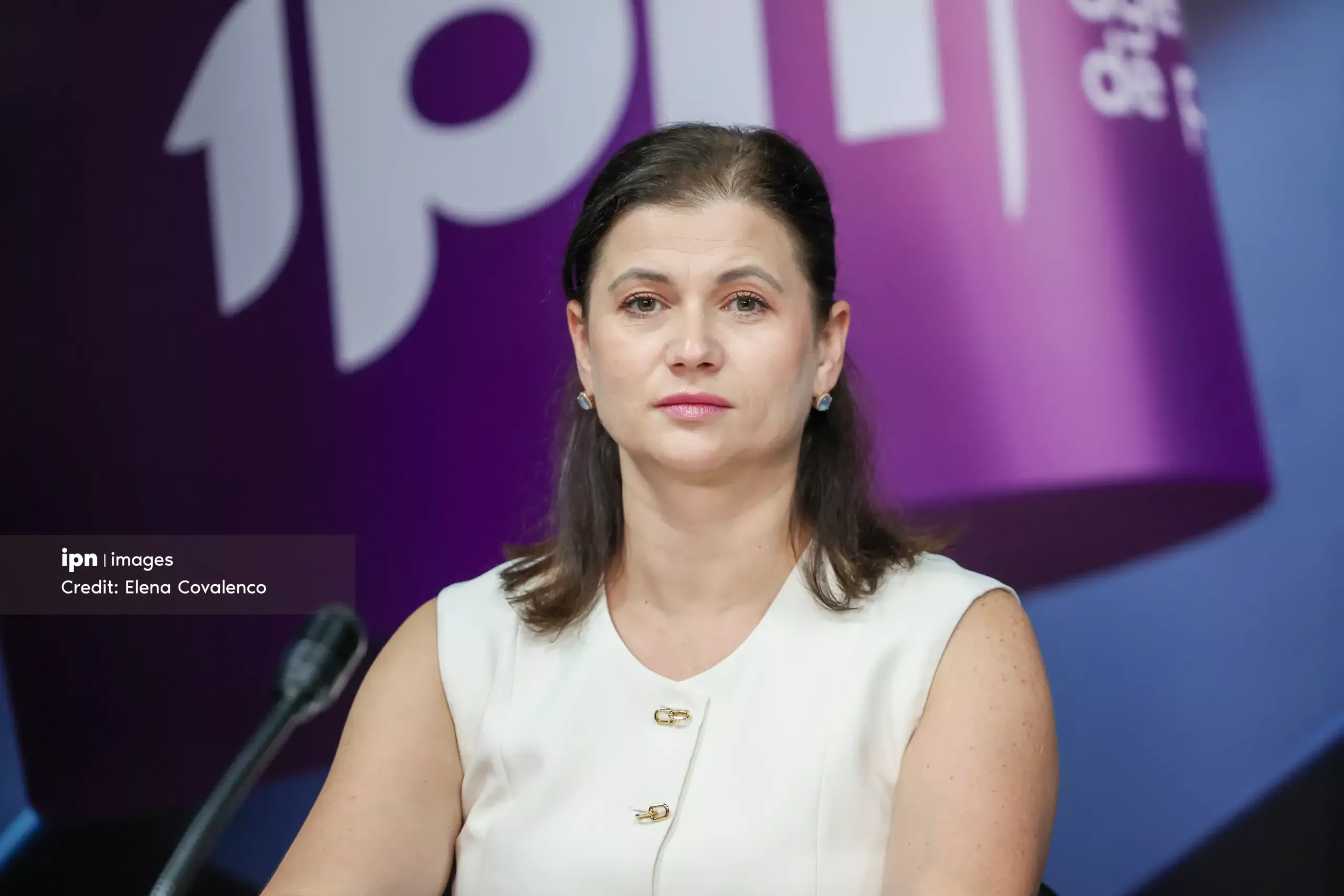
Diana Chiriac: In UTA Gagauzia, we have no decision to initiate voluntary amalgamation

Although the law on voluntary amalgamation applies nationwide, in the Gagauz Autonomous Region there are, for now, no initiatives by local authorities to initiate this process. The statement belongs to Diana Chiriac, head of the LPA Directorate within the State Chancellery, and was made at the public debate “Public administration reform in Gagauz Autonomous Region”, organized by the IPN Press Agency. According to Diana Chiriac, no decision to initiate voluntary amalgamation has been adopted in the region, even though the central authorities have presented the procedures and advantages of the reform to the mayors.

Diana Chiriac mentioned that the special status of UTA Gagauzia is protected both by the Constitution and by the Law on the legal status of autonomy, and the legal framework for voluntary amalgamation was developed taking into account these peculiarities.

“UTA Gagauzia has a special status that is not only enshrined in the special law on the status of autonomy, but also in the Constitution. On the other hand, the law on voluntary amalgamation takes into account the specifics of autonomy. But one thing is clear, the reform has been initiated throughout the territory of the Republic of Moldova, it also reflects on UTA Gagauzia”, explained Diana Chiriac.

According to her, despite the discussions held with the mayors from the region, so far no official decision has been taken to initiate the process of voluntary amalgamation.

“In UTA Gagauzia we have no decision to initiate voluntary amalgamation. There were some intentions outlined between the mayor of Comrat and the Ferapontievca town hall. We had discussions with the mayors from the autonomy, we were there at their request, to explain to them what the amalgamation procedure is and what are the opportunities. There were good discussions, but at the moment we have no decision to initiate voluntary amalgamation”, said Diana Chiriac.

At the same time, the head of the APL Directorate within the State Chancellery pointed out that the situation at the national level is different, the process of voluntary amalgamation being in full swing. “At the country level, we have 1,150 initiation decisions. This is just about intention decisions. But we can already talk about clear decisions of voluntary amalgamation and this number is increasing every week. At present, we have 42 final decisions of voluntary amalgamation. But this number changes from day to day”, said Diana Chiriac.

Disclaimer: This material was developed by the IPN Press Agency, within the project “Local Government Reform in Dialogue”, financed by the Ministry of Culture from the Media Subsidy Fund.


The opening of negotiations on cluster 6 of chapters brings the Republic of Moldova closer to European security and defense mechanisms, including participation in joint missions of the European Union. The Deputy Prime Minister and interim Foreign Minister, Mihai Popsoi, stated in an interview for IPN, that alignment with the EU’s foreign and security policy has already been achieved by 91%, and the authorities aim to reach 100% as soon as possible.

Mihai Popsoi emphasized that the opening of negotiations for chapters 30 and 31 marks a stage where the Republic of Moldova must demonstrate not only that it can harmonize its legislation with the acquis communautaire, but also that it is capable of acting as a future member state of the European Union in the field of foreign and security policy.

The head of diplomacy in Chisinau stated that in order to close chapter 31, legislative adjustments and continued alignment with the EU’s foreign and security policy are necessary, including in the field of European sanctions. In his opinion, this chapter is one of the most advanced, and the Republic of Moldova is close to achieving the set objectives.

At the same time, referring to the regional context, Minister Popsoi mentioned that the war waged by Russia against Ukraine and hybrid threats have accelerated the cooperation of the Republic of Moldova with the European Union in the field of security. He emphasized that European support has concrete results, including through strengthening defense capabilities and protecting citizens.

0 FacebookTwitterPinterestEmail


Diana Chiriac: In UTA Gagauzia, we have no decision to initiate voluntary amalgamation

Although the law on voluntary amalgamation applies nationwide, in the Gagauz Autonomous Region there are, for now, no initiatives by local authorities to initiate this process. The statement belongs to Diana Chiriac, head of the LPA Directorate within the State Chancellery, and was made at the public debate “Public administration reform in Gagauz Autonomous Region”, organized by the IPN Press Agency. According to Diana Chiriac, no decision to initiate voluntary amalgamation has been adopted in the region, even though the central authorities have presented the procedures and advantages of the reform to the mayors.

Diana Chiriac mentioned that the special status of UTA Gagauzia is protected both by the Constitution and by the Law on the legal status of autonomy, and the legal framework for voluntary amalgamation was developed taking into account these peculiarities.

“UTA Gagauzia has a special status that is not only enshrined in the special law on the status of autonomy, but also in the Constitution. On the other hand, the law on voluntary amalgamation takes into account the specifics of autonomy. But one thing is clear, the reform has been initiated throughout the territory of the Republic of Moldova, it also reflects on UTA Gagauzia”, explained Diana Chiriac.

According to her, despite the discussions held with the mayors from the region, so far no official decision has been taken to initiate the process of voluntary amalgamation.

“In UTA Gagauzia we have no decision to initiate voluntary amalgamation. There were some intentions outlined between the mayor of Comrat and the Ferapontievca town hall. We had discussions with the mayors from the autonomy, we were there at their request, to explain to them what the amalgamation procedure is and what are the opportunities. There were good discussions, but at the moment we have no decision to initiate voluntary amalgamation”, said Diana Chiriac.

At the same time, the head of the APL Directorate within the State Chancellery pointed out that the situation at the national level is different, the process of voluntary amalgamation being in full swing. “At the country level, we have 1,150 initiation decisions. This is just about intention decisions. But we can already talk about clear decisions of voluntary amalgamation and this number is increasing every week. At present, we have 42 final decisions of voluntary amalgamation. But this number changes from day to day”, said Diana Chiriac.

Disclaimer: This material was developed by the IPN Press Agency, within the project “Local Government Reform in Dialogue”, financed by the Ministry of Culture from the Media Subsidy Fund.


The President of India, Droupadi Murmu, is making an official visit to the Republic of Moldova on Monday, July 20, at the invitation of President Maia Sandu. This is the first visit of an Indian head of state to Moldova since the establishment of diplomatic relations between the two countries in 1992, reports IPN.

During the meeting, Maia Sandu and Droupadi Murmu will analyze the state of bilateral relations and will discuss the expansion of cooperation in various fields. On the discussion agenda is the facilitation of access for Moldovan products to the Indian market, attracting investments from India, as well as collaboration in the field of renewable energy and digital transformation.

After the meeting, the two heads of state will hold press statements. They will also participate in the opening of the Moldova-India Business Forum, organized by the Investment Agency. The event will bring together representatives of the business environment from both countries, including a delegation of approximately 30 businessmen from India.

The visit’s agenda also includes a meeting of the President of India with the President of the Parliament, Igor Grosu, and with members of the Parliamentary Friendship Group, as well as a meeting with members of the Indian community in the Republic of Moldova.

Diplomatic relations between the Republic of Moldova and India were established on March 20, 1992. According to the presidency, in recent years, cooperation between the two states has intensified through the resumption of bilateral political consultations, the inauguration of the Embassy of the Republic of Moldova in New Delhi, and the expansion of collaboration in areas such as trade, energy and education.

0 FacebookTwitterPinterestEmail


1 IANUARIE, 2025
1 IANUARIE, 2025