

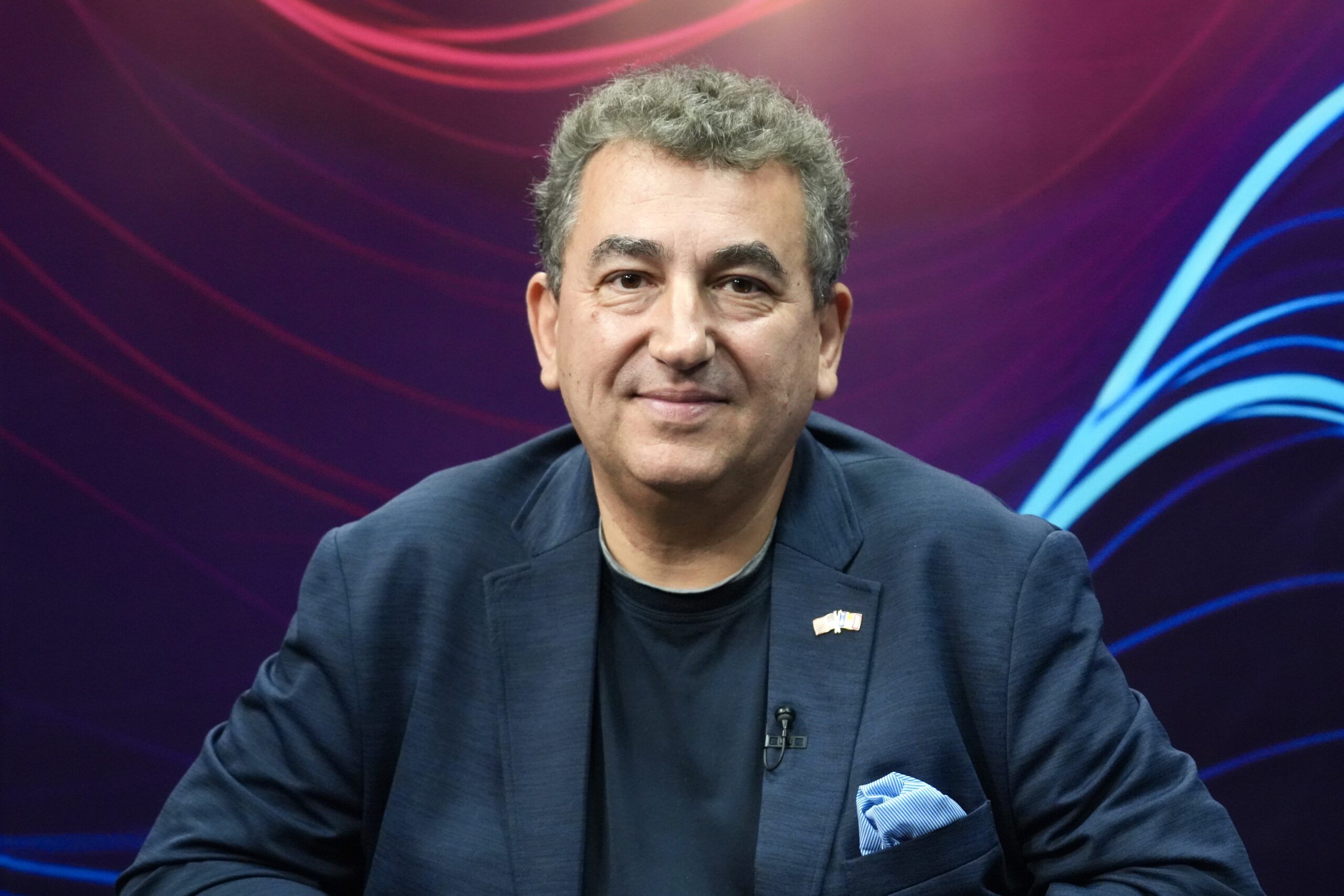
Joining the EU will mean borderless transportation for Moldova. IPN Interview with Marcel Somfelean

Eliminating barriers at the border with the European Union will significantly reduce the transport time of Moldovan goods and will create new opportunities for the economy. This is stated by the Romanian-American entrepreneur Marcel Somfelean, who has been established in the United States for over two decades. In an interview for IPN, he argues that the Republic of Moldova has significant advantages in the process of European integration and should better leverage its relationship with the diaspora and North American investors.

Ladies and Gentlemen, good day! Marcel Somfelean is a Romanian who has been living in the United States for over 25 years, where he works in the field of logistics and road transport. Three years ago, he founded Romotana. It is an association that brings together entrepreneurs and transport and logistics companies from the United States and Canada, companies of Romanian and Moldovan origin. The declared mission of the organization is to create a bridge between the Romanian and Moldovan communities in North America and to give them a common voice in the transport industry. Moreover, at the launch of the association, the embassies of Romania and the Republic of Moldova in Washington were also involved, which shows that the organization is also seen as a tool to connect the diaspora with the two states. He is with us today and I welcome him to Chisinau!

Thank you, nice to meet you!

Mr. Somfelean, you have been living and working in the United States for many years. How did your connection with Romania and especially with the Republic of Moldova form, and where did the desire to build bridges between the two banks of the Prut come from?

The connection with Romania is by birth. Why? I was born there. The connection with the Republic of Moldova is with the friends, business partners that I have made every day in Illinois, in Chicago, in the United States.

How did this idea of the Romotana association come about and what are the results after three years of activity?

I started with an idea. I noticed that we, Romanian-Americans and Moldovan-Americans, are active in the same field. I noticed that our language unites us and I contacted the two ambassadors of Romania and the Republic of Moldova in Washington at that time, I presented them the idea and from the first moment they said that they support the idea and we set off on our journey.
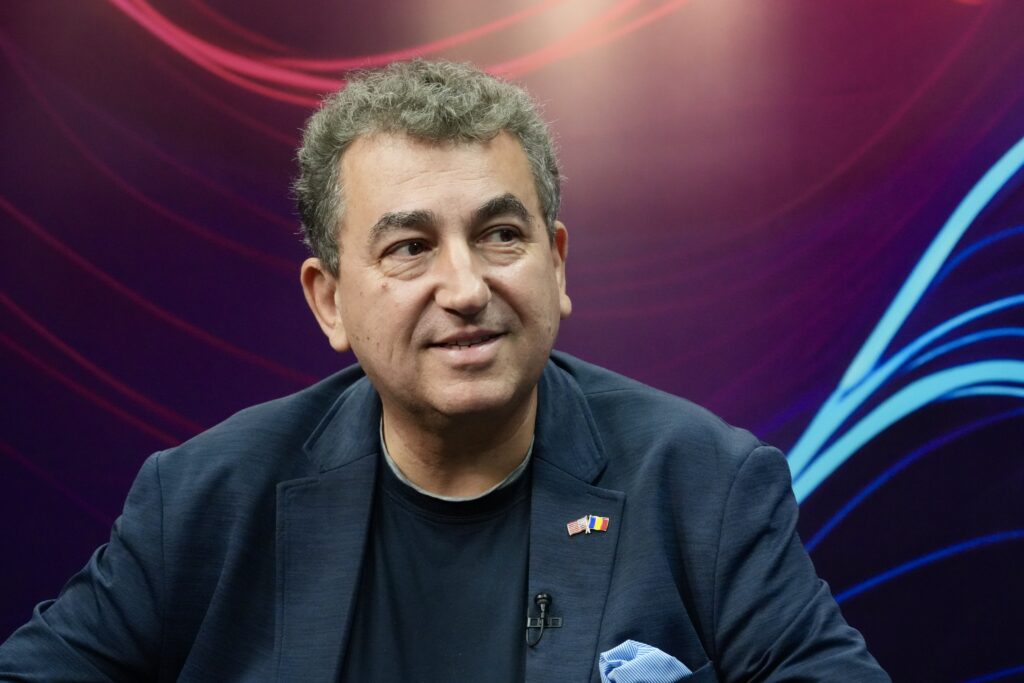
As a businessperson, how do you see the differences in mentality between businesspeople from North America and those from Eastern Europe?

The Romanians and Moldovans in North America have changed substantially, they have adapted extraordinarily quickly to the economic environment there. Especially the emigrants from the Republic of Moldova, most of them came as young students there or even after graduating, they came as educated young people eager to learn, to integrate into the American economy. And I say they have done extraordinarily good things for themselves, for their companies, they have created tens of thousands of jobs there, but they still look back at Moldova and almost all their companies in the United States have created subsidiary companies that help in the Republic of Moldova. To give you an example, I was talking this morning with a member of our organization who has a company with 220 employees in the United States and 350 employees in Chisinau, who are the back office for the company there. So the unseen back part of the company there, but which supports the company there.

Romotana is an association of transporters from the American continent, from Canada and the United States. Now I understand better the connection with Europe, but I would still like us to go into a little detail, because on June 9th you organized a summit in Brussels attended by MEPs and businessmen. And I want to ask you what this summit represents, how did this idea come to you and what were the results you achieved following the discussions in Brussels?

Indeed, we had an event in the European Parliament in Brussels, called Transport Without Borders, transport without frontiers. This idea came to us after we organized national level events for three years in a row in the United States and Canada, at the continental level. We were contacted by European carriers who originally come from Romania or the Republic of Moldova and asked us if we would like to share our experience with them. We began to contact through the embassies of the two states and through the general consulates of Moldova and Romania the carriers that we managed to identify in the European states and when we discussed with them we organized several meetings on Zoom with them. We presented our ideas, what we want to do, how we want to be an interface between them and the European officials, the European parliamentarians. I take this opportunity to thank the MEP Stefan Musoiu who was a co-organizer alongside me of the event, a member of the transport committee of the European Parliament, who brought along with us a vice-president of the European Parliament, Victor Negrescu. He brought representatives of the Council of Europe to the meeting and the idea was to pass on, to transfer, to transmit the experience we have accumulated to the carriers in Europe in collaboration with the administration, with the decision-making political factor and at the same time we transferred to them our successful idea and experience of having a back-office with lower costs in the Republic of Moldova.

The topics you discussed on June 9th were related to infrastructure, economic security, and transatlantic cooperation. I would like to ask you how you see the Republic of Moldova in this whole equation?

One of the topics that I addressed at the event was a very important issue for the Republic of Moldova, very important for everyone at the moment and in the current context of the Gulf conflict, where the price of oil has increased extraordinarily and it is a sensitive issue for the Republic of Moldova, an area where the Romanian state has always helped the Republic of Moldova. Another topic that I addressed is the creation of a logistics hub for the reconstruction of Ukraine after the war, a war in which it is very clear for everyone and us here and in Moldova, from Romania, from the United States, we know that the aggressor is Russia and we all agreed that there cannot be a logistics hub for the reconstruction of Ukraine after the war, without the involvement of the Republic of Moldova.

Given your experience as an entrepreneur in the United States, what do you believe the Republic of Moldova should do to become more attractive to investors from Canada and the United States?

So at the moment, we are on a very good path. The IT Park built here, we are already looking after a period of time in which it operates, it gives very good results, it develops, brings money, brings investors to the Republic of Moldova, creates jobs, here it is extraordinary that brains will no longer migrate abroad, they will stay here in the country for good salaries. I believe we must continue in this direction, we must see and think in advance what will be the second step, because I must tell you, it has been 10 years since the idea of the IT Park came until it materialized, we must think in advance what is the next stage of this IT Park in the context of the Republic of Moldova’s accession to the European Union. And I believe that the communication that needs to be done a little more, is, but a little better abroad, to present the Republic of Moldova and opportunities not only to the diaspora, this is very good, to the other inhabitants of the countries where communication is made. You have a wonderful country and, unfortunately, from across the ocean, Romania, Moldova we are small countries, if you put your finger on a small map you cover both, they no longer see where.

We thought there are some projects that could potentially attract tourists from the United States who, on a one-week vacation, might spend maybe three days, four days in Romania and three days in Moldova and then they would return home with unique experiences. For this purpose, we also had a meeting this morning with the president of the Chamber of Commerce and Industry of the Republic of Moldova to see how we will manage to materialize this.
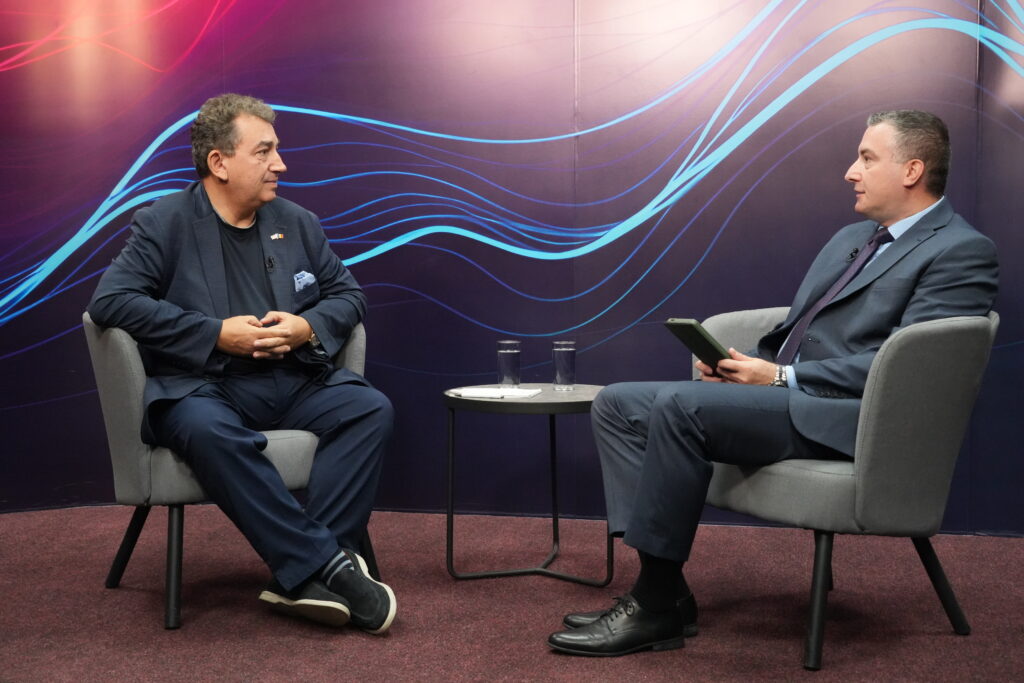
You’ve been in Chisinau for a few days now, and I want to ask you, what do you aim to achieve by the end of your visit to the Republic of Moldova?

Indeed, these have been very intense days, wonderful people, extraordinary places, we remain deeply impressed by how much Moldova has changed from the Socialist Republic integrated into the USSR, to the independent Moldova of today. I want to take this opportunity to congratulate all the inhabitants of Moldova on 35 years of independence and at the same time, let’s not forget, we must always keep history alive in our minds, remember that 85 years ago the first wave of the three deportations from the Republic of Moldova began, a wound that is not yet healed.

Today, Moldova is on the path to the European Union, making the necessary reforms to become a member country of the community bloc. I want to ask you, what will Moldova’s accession to the European Union mean for companies in the logistics and transportation sector?

We had these discussions two years ago and I said: The Republic of Moldova has a great advantage in the process of joining the European Union. All the legislation, all the documentation for pre-accession and accession to the European Union is already written in Romanian, it was written for Romania.

It is a great advantage. What will it mean? It will mean transport without borders, exactly as we also had the name of the event at the European Parliament in Brussels. Transport without borders means downtime, which now exists, will no longer exist.

One of the participants at our event in Brussels was the president of the road transport union from Romania and we discussed how many hours are lost at the border between the Republic of Moldova and Romania, thus theoretically at the border between the Republic of Moldova and the European Union. The moment this border will no longer exist, road transport from the Republic of Moldova to the European Union will be halved in time and for the products from the Republic of Moldova and we are talking here about wine, especially fruits and vegetables, exceptional quality pastry products, it will be a special thing for all to arrive fresh on the markets of the European Union. Automatically there will be an increase in transport, but this implies an increase in many segments of the economy of the Republic of Moldova.

And because your activity, Mr. Somfelean, goes beyond the professional sphere of transportation, I know that for a year now you also have an association that is active in the cultural field, United Romanians, could you give us some details about its activity and the objectives you have set?

Yes, that’s right, working together we realized that what binds us is our language, our own language, and we thought it would be good to create an organization, it’s called United Romanians, the name itself indicates the purpose of the organization, to unite all Romanians, regardless of whether they were born on one side or the other of the Prut River. And, perhaps significantly, at the first event we held last year, which was a celebration of Romania’s National Day, December 1st, a holiday that united all Romanians in 1918, December 1st, we had as one of our guests Cristofor Aldea Teodorovici, with his wonderful songs about the Romanian language, about Eminescu. Because, very importantly, when the world tells us that we are different, Romanians or Moldovans, we tell them, we ask both: who is your greatest poet? The answer comes from both sides, Eminescu. Who is one of your greatest rulers? The answer is the same, Stefan the Great. So, how are we different, if we have the same answers to questions?

Mr. Somfelean, thank you very much for this interview!

I thank you too!

Octavian Bratosin, IPN

https://www.youtube.com/watch?v=LCTr9yTt8-c


Ten ministers from the current executive will also be found in the Government proposed by the designated Prime Minister Vasile Tofan, while four portfolios will return to new members of the cabinet. At the same time, the Deputy Prime Ministers for reintegration and for European integration, Valeriu Chiveri and Cristina Gherasimov, will keep their positions, reports IPN.

For the position of Minister of Health, Alexandru Gasnas, presidential advisor, is appointed. Radu Musteata, the director of the National Agency for Food Safety, is proposed for the leadership of the Ministry of Agriculture and Food Industry, and for the position of Minister of Finance, Victoria Belous, a PAS deputy, who previously held the position of minister, is put forward.

Dan Suruceanu, a cultural manager and administrator, particularly known as the executive director of the Chisinau Arena multimedia and sports complex, is proposed to lead the Ministry of Culture.

Vasile Tofan announced that he has completed consultations with parliamentary factions, as well as with representatives of associations and organizations, and the government’s work program is in the finalization stage. “On July 21, I will go to Parliament with a team of good professionals, who will give all government institutions a fast pace of work and move things forward,” declared the designated candidate.

Vasile Tofan has been nominated for the position of Prime Minister by President Maia Sandu, at the proposal of the Action and Solidarity Party, following the resignation of Alexandru Munteanu. The government’s swearing-in session is scheduled for July 21.

0 FacebookTwitterPinterestEmail


Joining the EU will mean borderless transportation for Moldova. IPN Interview with Marcel Somfelean

Eliminating barriers at the border with the European Union will significantly reduce the transport time of Moldovan goods and will create new opportunities for the economy. This is stated by the Romanian-American entrepreneur Marcel Somfelean, who has been established in the United States for over two decades. In an interview for IPN, he argues that the Republic of Moldova has significant advantages in the process of European integration and should better leverage its relationship with the diaspora and North American investors.

Ladies and Gentlemen, good day! Marcel Somfelean is a Romanian who has been living in the United States for over 25 years, where he works in the field of logistics and road transport. Three years ago, he founded Romotana. It is an association that brings together entrepreneurs and transport and logistics companies from the United States and Canada, companies of Romanian and Moldovan origin. The declared mission of the organization is to create a bridge between the Romanian and Moldovan communities in North America and to give them a common voice in the transport industry. Moreover, at the launch of the association, the embassies of Romania and the Republic of Moldova in Washington were also involved, which shows that the organization is also seen as a tool to connect the diaspora with the two states. He is with us today and I welcome him to Chisinau!

Thank you, nice to meet you!

Mr. Somfelean, you have been living and working in the United States for many years. How did your connection with Romania and especially with the Republic of Moldova form, and where did the desire to build bridges between the two banks of the Prut come from?

The connection with Romania is by birth. Why? I was born there. The connection with the Republic of Moldova is with the friends, business partners that I have made every day in Illinois, in Chicago, in the United States.

How did this idea of the Romotana association come about and what are the results after three years of activity?

I started with an idea. I noticed that we, Romanian-Americans and Moldovan-Americans, are active in the same field. I noticed that our language unites us and I contacted the two ambassadors of Romania and the Republic of Moldova in Washington at that time, I presented them the idea and from the first moment they said that they support the idea and we set off on our journey.

As a businessperson, how do you see the differences in mentality between businesspeople from North America and those from Eastern Europe?

The Romanians and Moldovans in North America have changed substantially, they have adapted extraordinarily quickly to the economic environment there. Especially the emigrants from the Republic of Moldova, most of them came as young students there or even after graduating, they came as educated young people eager to learn, to integrate into the American economy. And I say they have done extraordinarily good things for themselves, for their companies, they have created tens of thousands of jobs there, but they still look back at Moldova and almost all their companies in the United States have created subsidiary companies that help in the Republic of Moldova. To give you an example, I was talking this morning with a member of our organization who has a company with 220 employees in the United States and 350 employees in Chisinau, who are the back office for the company there. So the unseen back part of the company there, but which supports the company there.

Romotana is an association of transporters from the American continent, from Canada and the United States. Now I understand better the connection with Europe, but I would still like us to go into a little detail, because on June 9th you organized a summit in Brussels attended by MEPs and businessmen. And I want to ask you what this summit represents, how did this idea come to you and what were the results you achieved following the discussions in Brussels?

Indeed, we had an event in the European Parliament in Brussels, called Transport Without Borders, transport without frontiers. This idea came to us after we organized national level events for three years in a row in the United States and Canada, at the continental level. We were contacted by European carriers who originally come from Romania or the Republic of Moldova and asked us if we would like to share our experience with them. We began to contact through the embassies of the two states and through the general consulates of Moldova and Romania the carriers that we managed to identify in the European states and when we discussed with them we organized several meetings on Zoom with them. We presented our ideas, what we want to do, how we want to be an interface between them and the European officials, the European parliamentarians. I take this opportunity to thank the MEP Stefan Musoiu who was a co-organizer alongside me of the event, a member of the transport committee of the European Parliament, who brought along with us a vice-president of the European Parliament, Victor Negrescu. He brought representatives of the Council of Europe to the meeting and the idea was to pass on, to transfer, to transmit the experience we have accumulated to the carriers in Europe in collaboration with the administration, with the decision-making political factor and at the same time we transferred to them our successful idea and experience of having a back-office with lower costs in the Republic of Moldova.

The topics you discussed on June 9th were related to infrastructure, economic security, and transatlantic cooperation. I would like to ask you how you see the Republic of Moldova in this whole equation?

One of the topics that I addressed at the event was a very important issue for the Republic of Moldova, very important for everyone at the moment and in the current context of the Gulf conflict, where the price of oil has increased extraordinarily and it is a sensitive issue for the Republic of Moldova, an area where the Romanian state has always helped the Republic of Moldova. Another topic that I addressed is the creation of a logistics hub for the reconstruction of Ukraine after the war, a war in which it is very clear for everyone and us here and in Moldova, from Romania, from the United States, we know that the aggressor is Russia and we all agreed that there cannot be a logistics hub for the reconstruction of Ukraine after the war, without the involvement of the Republic of Moldova.

Given your experience as an entrepreneur in the United States, what do you believe the Republic of Moldova should do to become more attractive to investors from Canada and the United States?

So at the moment, we are on a very good path. The IT Park built here, we are already looking after a period of time in which it operates, it gives very good results, it develops, brings money, brings investors to the Republic of Moldova, creates jobs, here it is extraordinary that brains will no longer migrate abroad, they will stay here in the country for good salaries. I believe we must continue in this direction, we must see and think in advance what will be the second step, because I must tell you, it has been 10 years since the idea of the IT Park came until it materialized, we must think in advance what is the next stage of this IT Park in the context of the Republic of Moldova’s accession to the European Union. And I believe that the communication that needs to be done a little more, is, but a little better abroad, to present the Republic of Moldova and opportunities not only to the diaspora, this is very good, to the other inhabitants of the countries where communication is made. You have a wonderful country and, unfortunately, from across the ocean, Romania, Moldova we are small countries, if you put your finger on a small map you cover both, they no longer see where.

We thought there are some projects that could potentially attract tourists from the United States who, on a one-week vacation, might spend maybe three days, four days in Romania and three days in Moldova and then they would return home with unique experiences. For this purpose, we also had a meeting this morning with the president of the Chamber of Commerce and Industry of the Republic of Moldova to see how we will manage to materialize this.

You’ve been in Chisinau for a few days now, and I want to ask you, what do you aim to achieve by the end of your visit to the Republic of Moldova?

Indeed, these have been very intense days, wonderful people, extraordinary places, we remain deeply impressed by how much Moldova has changed from the Socialist Republic integrated into the USSR, to the independent Moldova of today. I want to take this opportunity to congratulate all the inhabitants of Moldova on 35 years of independence and at the same time, let’s not forget, we must always keep history alive in our minds, remember that 85 years ago the first wave of the three deportations from the Republic of Moldova began, a wound that is not yet healed.

Today, Moldova is on the path to the European Union, making the necessary reforms to become a member country of the community bloc. I want to ask you, what will Moldova’s accession to the European Union mean for companies in the logistics and transportation sector?

We had these discussions two years ago and I said: The Republic of Moldova has a great advantage in the process of joining the European Union. All the legislation, all the documentation for pre-accession and accession to the European Union is already written in Romanian, it was written for Romania.

It is a great advantage. What will it mean? It will mean transport without borders, exactly as we also had the name of the event at the European Parliament in Brussels. Transport without borders means downtime, which now exists, will no longer exist.

One of the participants at our event in Brussels was the president of the road transport union from Romania and we discussed how many hours are lost at the border between the Republic of Moldova and Romania, thus theoretically at the border between the Republic of Moldova and the European Union. The moment this border will no longer exist, road transport from the Republic of Moldova to the European Union will be halved in time and for the products from the Republic of Moldova and we are talking here about wine, especially fruits and vegetables, exceptional quality pastry products, it will be a special thing for all to arrive fresh on the markets of the European Union. Automatically there will be an increase in transport, but this implies an increase in many segments of the economy of the Republic of Moldova.

And because your activity, Mr. Somfelean, goes beyond the professional sphere of transportation, I know that for a year now you also have an association that is active in the cultural field, United Romanians, could you give us some details about its activity and the objectives you have set?

Yes, that’s right, working together we realized that what binds us is our language, our own language, and we thought it would be good to create an organization, it’s called United Romanians, the name itself indicates the purpose of the organization, to unite all Romanians, regardless of whether they were born on one side or the other of the Prut River. And, perhaps significantly, at the first event we held last year, which was a celebration of Romania’s National Day, December 1st, a holiday that united all Romanians in 1918, December 1st, we had as one of our guests Cristofor Aldea Teodorovici, with his wonderful songs about the Romanian language, about Eminescu. Because, very importantly, when the world tells us that we are different, Romanians or Moldovans, we tell them, we ask both: who is your greatest poet? The answer comes from both sides, Eminescu. Who is one of your greatest rulers? The answer is the same, Stefan the Great. So, how are we different, if we have the same answers to questions?

Mr. Somfelean, thank you very much for this interview!

I thank you too!

Octavian Bratosin, IPN

https://www.youtube.com/watch?v=LCTr9yTt8-c


The yellow fire hazard code has been extended until July 22. Meteorologists warn that the lack of precipitation and high temperatures will maintain an exceptional risk of vegetation fires, reports IPN.

The warning mainly targets the central area, but the municipality of Bălți and the northern districts of Glodeni and Soroca are also affected. In the southern area, the yellow code is valid until Cimislia, Basarabeasca and Taraclia.

In the context of maintaining an increased risk of fires, authorities urge the population to demonstrate maximum responsibility and to respect fire prevention rules. Rescuers recommend avoiding the use of open fire near forests, agricultural lands, and dry vegetation, prohibiting the burning of plant residues, garbage, and stubble, as well as avoiding the random throwing of cigarette butts or other lit objects. Any fire outbreak must be immediately reported to Service 112.

0 FacebookTwitterPinterestEmail


1 IANUARIE, 2025
1 IANUARIE, 2025