

44% of the country’s citizens would vote for unification with Romania. In the diaspora, the support is greater

If a referendum on the unification of the Republic of Moldova with Romania were to take place next Sunday, 44% of the citizens on the country’s territory would vote “for”, while 39.2% would pronounce “against”. In the diaspora, support for unification is higher: almost 61% would vote “for”, and just over 24% would oppose. The data is contained in a sociological study conducted by the ATES research group.

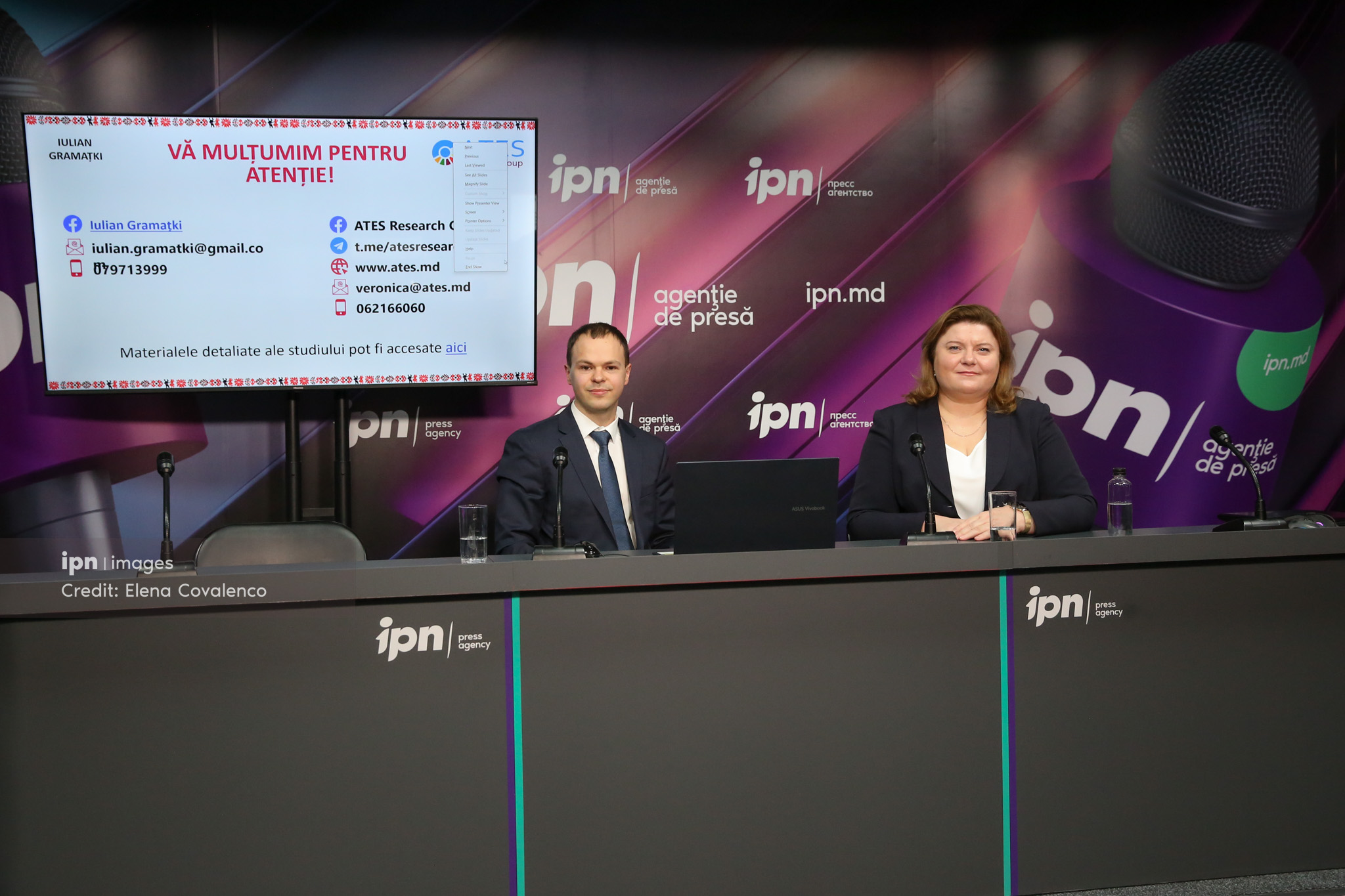
In a press conference at IPN, Iulian Gramatki, an independent socio-economic researcher and initiator of the study, stated that the results contradict the common perception that the population would not support the idea of unification. “We see a relative majority of those who would vote in favor of unification. Countering these perceptions by providing such data is one of the basic purposes of this study,” the researcher affirms.

The respondents were also asked whether the unification of the Republic of Moldova with Romania would bring more advantages or disadvantages. In the Republic of Moldova, 37% believe that there would be more advantages, while 33.3% think that the disadvantages would prevail. In the diaspora, an absolute majority of over 52% indicated that the unification would bring benefits. Among the most frequently mentioned advantages are wage and pension increases, access to jobs, and economic development.

In terms of potential risks, the most frequently cited disadvantage is the loss of sovereignty and independence, followed by possible interethnic tensions and the deterioration of economic relations with Russia and the CIS states. These concerns were mentioned by respondents both in the country and in the diaspora.

The study data shows that the majority of respondents believe that the union should be decided by referendum. Approximately 44% of participants from the country indicated this option, while less than 10% believe that such a decision should be made by parliamentary resolution.

The respondents were asked when they believe the union with Romania could be achieved. The majority estimate 2-4 years, followed by 5-9 years, and some believe that the union will never happen. The study shows that the decisive role would fall to the citizens and the political class in Chisinau, but the main obstacles are the perception that the population does not want the union, the Transnistrian conflict, and Russia’s influence.

The sociological study “Union and National Identity” was conducted between March 12-23 on a sample of 1,078 respondents from Moldova and 235 respondents from the diaspora. The margin of error is ±3% for the domestic sample and ±6.4% for the diaspora. The data were collected through telephone interviews, face-to-face and online, in 320 localities in Moldova and in 106 localities in 12 other countries.

Note: The IPN Agency offers the right of reply to those who consider themselves targeted in the news made from the statements of the organizers of this press conference, including by facilitating the organization of another press conference under similar conditions.


Meteorologists have issued a yellow code warning for atmospheric instability across the entire country. The warning is valid from Sunday, 04:00 PM, until Monday, 02:00 AM, during which time rain, lightning, hail, and strong wind are expected, reports IPN.

According to the Authority of Meteorology and Environmental Monitoring, widespread short-duration rains accompanied by electrical discharges will occur. Isolated, there will be recorded heavy showers, and the water quantities can reach 15-35 liters per square meter.

Also, hail falls and storms are forecasted, with wind gusts between 54-72 kilometers per hour.

Meteorologists specify that the forecast can be updated depending on the evolution and intensity of weather phenomena.

0 FacebookTwitterPinterestEmail


44% of the country’s citizens would vote for unification with Romania. In the diaspora, the support is greater

If a referendum on the unification of the Republic of Moldova with Romania were to take place next Sunday, 44% of the citizens on the country’s territory would vote “for”, while 39.2% would pronounce “against”. In the diaspora, support for unification is higher: almost 61% would vote “for”, and just over 24% would oppose. The data is contained in a sociological study conducted by the ATES research group.

In a press conference at IPN, Iulian Gramatki, an independent socio-economic researcher and initiator of the study, stated that the results contradict the common perception that the population would not support the idea of unification. “We see a relative majority of those who would vote in favor of unification. Countering these perceptions by providing such data is one of the basic purposes of this study,” the researcher affirms.

The respondents were also asked whether the unification of the Republic of Moldova with Romania would bring more advantages or disadvantages. In the Republic of Moldova, 37% believe that there would be more advantages, while 33.3% think that the disadvantages would prevail. In the diaspora, an absolute majority of over 52% indicated that the unification would bring benefits. Among the most frequently mentioned advantages are wage and pension increases, access to jobs, and economic development.

In terms of potential risks, the most frequently cited disadvantage is the loss of sovereignty and independence, followed by possible interethnic tensions and the deterioration of economic relations with Russia and the CIS states. These concerns were mentioned by respondents both in the country and in the diaspora.

The study data shows that the majority of respondents believe that the union should be decided by referendum. Approximately 44% of participants from the country indicated this option, while less than 10% believe that such a decision should be made by parliamentary resolution.

The respondents were asked when they believe the union with Romania could be achieved. The majority estimate 2-4 years, followed by 5-9 years, and some believe that the union will never happen. The study shows that the decisive role would fall to the citizens and the political class in Chisinau, but the main obstacles are the perception that the population does not want the union, the Transnistrian conflict, and Russia’s influence.

The sociological study “Union and National Identity” was conducted between March 12-23 on a sample of 1,078 respondents from Moldova and 235 respondents from the diaspora. The margin of error is ±3% for the domestic sample and ±6.4% for the diaspora. The data were collected through telephone interviews, face-to-face and online, in 320 localities in Moldova and in 106 localities in 12 other countries.

Note: The IPN Agency offers the right of reply to those who consider themselves targeted in the news made from the statements of the organizers of this press conference, including by facilitating the organization of another press conference under similar conditions.


In the last five years, in the Republic of Moldova, there has not been a single case of poisoning caused solely by the consumption of watermelon or melon. In the context of the melon selling season, the National Agency for Food Safety clarifies that nausea or other digestive disorders appearing after their consumption does not automatically mean that the fruits contain a dangerous level of nitrates, reports IPN.

According to the data from the National Agency for Public Health, the 25 cases of nitrate poisoning recorded during the period 2021-2025 were mainly caused by the consumption of water from wells with a high nitrate content, and not by the consumption of green or yellow watermelons.

Specialists explain that the malaise that occurs after consuming watermelons can have other causes. Among these are the consumption of a large quantity in a short time, the digestive sensitivity of some people, non-compliance with hygiene rules before consumption, contamination of the fruit during handling, or storing the cut watermelon at inappropriate temperatures.

ANSA also refers to the conclusions of the European Food Safety Authority, according to which illnesses associated with watermelon consumption are usually caused by microbiological contamination, including bacteria such as Salmonella or E. coli, and not by nitrate content.

To mitigate risks, ANSA recommends purchasing watermelons only from authorized locations, washing the rind before cutting, and storing the cut fruit in the refrigerator. The institution emphasizes that nitrate poisoning cannot be determined solely based on digestive symptoms, but requires medical and laboratory confirmation.

0 FacebookTwitterPinterestEmail


1 IANUARIE, 2025
1 IANUARIE, 2025