

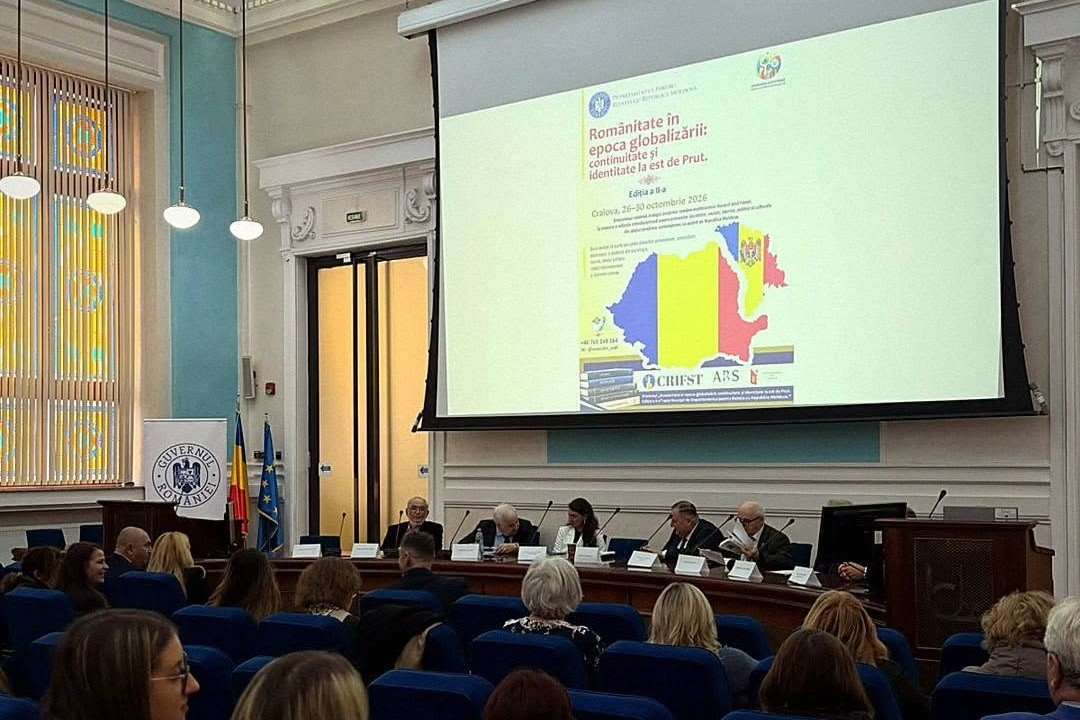
Preserving the Romanian language and cultural identity: a discussion among representatives of academia and the cultural sector

Photo credit: DRRM

Preserving the Romanian language, passing on historical memory and safeguarding a shared cultural heritage in the context of globalization were the main themes of the second international conference, “Romanian Identity in the Age of Globalization: Continuity and Identity East of the Prut.” The event brought together experts from Romania and the Republic of Moldova, who explored cultural identity from historical, sociological, political and educational perspectives, IPN reports.

Constantin Valentin Raducanu, Director General of the Department for Relations with the Republic of Moldova, emphasized the importance of such events in strengthening ties between the two countries and fostering dialogue among experts.

DRRM notes that holding the conference for a second year creates opportunities for collaboration among researchers, academics, writers, and institutions from the two countries to promote their shared cultural values.

The conference was organized by Romania’s Cultural Association for Diversity and Inclusion, with financial support from DRRM through its “Culture” programme. DRRM notes that the programme supports projects dedicated to promoting the Romanian language, historical memory and shared cultural heritage, and encourages new applications.

Disclaimer: This material was produced by the IPN News Agency. The project “Europe Close to Home: Information, Dialogue and Cooperation” is funded by the Department for Relations with the Republic of Moldova and implemented by the IPN News Agency. The content of this material does not reflect the official position of the Department for Relations with the Republic of Moldova.


Energocom has purchased its first two million cubic metres of gas on the Ukrainian market at a price below the TTF spot rate and resold previously contracted volumes at a profit. Prime Minister Vasile Tofan announced that the transaction took place after Energocom gained access to Ukraine’s gas exchange and that the authorities intend to purchase larger volumes, IPN reports.

“The volumes are small—two million cubic metres—but we wanted to test the mechanism, to see whether we could buy cheaper gas from Ukraine and get out of our existing contracts,” Vasile Tofan said.

The prime minister noted that Energocom has already secured around 90% of the gas needed for this winter. The company aims to increase purchases on the Ukrainian market and secure larger volumes of gas at competitive prices, which could pave the way for lower tariffs.

Vasile Tofan noted that Ukraine produced nearly 17 billion cubic metres of gas in 2025 and that private producers had recently been granted permission to resume exports under controlled conditions. Until November 30, they may export up to 15% of the volume of gas they supplied to the transmission system in the previous month.

0 FacebookTwitterPinterestEmail


Preserving the Romanian language and cultural identity: a discussion among representatives of academia and the cultural sector

Photo credit: DRRM

Preserving the Romanian language, passing on historical memory and safeguarding a shared cultural heritage in the context of globalization were the main themes of the second international conference, “Romanian Identity in the Age of Globalization: Continuity and Identity East of the Prut.” The event brought together experts from Romania and the Republic of Moldova, who explored cultural identity from historical, sociological, political and educational perspectives, IPN reports.

Constantin Valentin Raducanu, Director General of the Department for Relations with the Republic of Moldova, emphasized the importance of such events in strengthening ties between the two countries and fostering dialogue among experts.

DRRM notes that holding the conference for a second year creates opportunities for collaboration among researchers, academics, writers, and institutions from the two countries to promote their shared cultural values.

The conference was organized by Romania’s Cultural Association for Diversity and Inclusion, with financial support from DRRM through its “Culture” programme. DRRM notes that the programme supports projects dedicated to promoting the Romanian language, historical memory and shared cultural heritage, and encourages new applications.

Disclaimer: This material was produced by the IPN News Agency. The project “Europe Close to Home: Information, Dialogue and Cooperation” is funded by the Department for Relations with the Republic of Moldova and implemented by the IPN News Agency. The content of this material does not reflect the official position of the Department for Relations with the Republic of Moldova.


European Central Bank (ECB) President Christine Lagarde will step down on February 7, 2027, approximately nine months before her term expires. The European institution made the announcement on Thursday, October 29, in a press release, IPN reports.

The early departure opens the race to appoint a new president. Potential candidates include former Dutch central bank governor Klaas Knot, Spanish banker Pablo Hernández de Cos, Bundesbank president Joachim Nagel, and European Investment Bank chief Nadia Calviño, according to The Guardian. The decision will be made by the European Council.

Christine Lagarde’s resignation comes at a difficult time for the eurozone economy, marked by weak growth and inflation above the European Central Bank’s target. On Thursday, the ECB kept interest rates unchanged, warning that rising energy prices could fuel inflation while also weighing on the outlook for economic growth.

Christine Lagarde took the helm of the ECB in late 2019 and steered euro area monetary policy through the COVID-19 pandemic, the economic fallout from Russia’s war against Ukraine, and international trade tensions. So far, the ECB has given no official reason for its president’s departure before the end of her term.

0 FacebookTwitterPinterestEmail


1 IANUARIE, 2025
1 IANUARIE, 2025