

Overpass and truck parking: Industriala Street in the capital to be rebuilt

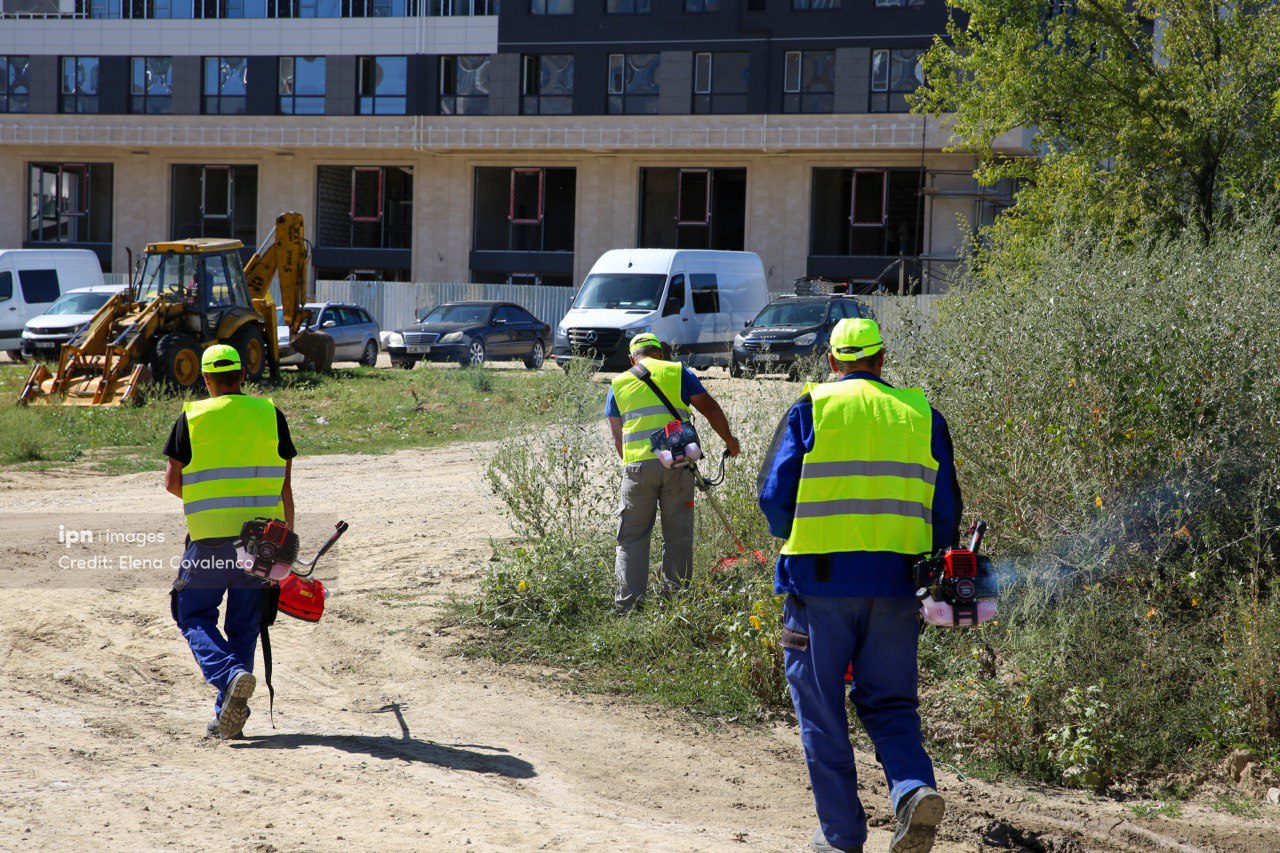
Illustrative image

Industriala Street in Chisinau will be completely rebuilt, with four traffic lanes, sidewalks, cycle paths and an overpass across the railway. The construction contract, worth €34.7 million, is due to be signed by November 15, with work scheduled to take two years. The project was presented by municipal authorities at an event in Chisinau, IPN reports.

Mayor Ion Ceban announced that the selection process for the winning bidders in an international tender conducted under the rules of the European Bank for Reconstruction and Development had been completed. The work will be carried out by a company from Azerbaijan in partnership with local subcontractors.

The mayor said that the reconstruction of Industriala Street is the second major infrastructure project recently launched by the municipality, following work to extend Mircea cel Batran Boulevard. According to the mayor, upgrading Industriala Street will also help drive economic development in the area, which is home to numerous industrial enterprises.

According to Valentina Flueras, chief engineer at the „Chișinăuproiect” Municipal Design Institute, Industriala Street will serve as a bypass for the capital, improving connections between the Botanica district and the Ciocana area. The road will allow traffic to avoid congested areas, including Uzinelor Street.

The project includes the construction of roundabouts and the installation of modern street lighting and traffic signals. A key component is a railway overpass linking Industrială Street with Sargidava and Transnistriei streets. Underground utilities, including stormwater drainage and gas networks, will also be upgraded. The project also provides for a truck parking area with restroom facilities for drivers, as well as public transport stops.


Friday is the last day for young farmers to apply for financial support to set up and develop agricultural businesses under the DR-09 programme. According to the Agency for Intervention and Payments in Agriculture, funding can cover up to 70% of eligible costs, capped at 3 million lei, depending on the agricultural sector, IPN reports.

AIPA notes that the financial support can be used to establish and develop vineyards, livestock farms and crop farms. Investments in farm development and facilities, the purchase of agricultural equipment and the installation of irrigation systems are also eligible.

Applications must be submitted to AIPA’s regional offices. The agency notes that registration in the Farmers’ Register is mandatory to qualify for financial support.

The DR-09 intervention is aimed at young and new farmers who have registered an agricultural business in a rural area for the first time and have not previously received funding from the National Fund for the Development of Agriculture and the Rural Environment. Applicants must submit an investment project with an implementation period of no more than 36 months, demonstrate their capacity to provide co-financing, and possess professional skills in the relevant field.

0 FacebookTwitterPinterestEmail


Overpass and truck parking: Industriala Street in the capital to be rebuilt

Illustrative image

Industriala Street in Chisinau will be completely rebuilt, with four traffic lanes, sidewalks, cycle paths and an overpass across the railway. The construction contract, worth €34.7 million, is due to be signed by November 15, with work scheduled to take two years. The project was presented by municipal authorities at an event in Chisinau, IPN reports.

Mayor Ion Ceban announced that the selection process for the winning bidders in an international tender conducted under the rules of the European Bank for Reconstruction and Development had been completed. The work will be carried out by a company from Azerbaijan in partnership with local subcontractors.

The mayor said that the reconstruction of Industriala Street is the second major infrastructure project recently launched by the municipality, following work to extend Mircea cel Batran Boulevard. According to the mayor, upgrading Industriala Street will also help drive economic development in the area, which is home to numerous industrial enterprises.

According to Valentina Flueras, chief engineer at the „Chișinăuproiect” Municipal Design Institute, Industriala Street will serve as a bypass for the capital, improving connections between the Botanica district and the Ciocana area. The road will allow traffic to avoid congested areas, including Uzinelor Street.

The project includes the construction of roundabouts and the installation of modern street lighting and traffic signals. A key component is a railway overpass linking Industrială Street with Sargidava and Transnistriei streets. Underground utilities, including stormwater drainage and gas networks, will also be upgraded. The project also provides for a truck parking area with restroom facilities for drivers, as well as public transport stops.


Parliament has passed a bill in two readings extending the licensing requirement for imports of grains and oilseeds until 31 December. The bill also allows the Government to extend the measure for up to 12 months, depending on domestic market conditions and the need to protect local farmers, IPN reports.

The bill passed both readings during the same parliamentary session, receiving the support of 82 MPs at its second reading. The bill’s author, Our Party MP Serghei Ivanov, said the mechanism was needed to protect Moldovan farmers from imports sold at dumping prices. He noted that the war in Ukraine, logistical difficulties and rising transport costs had disrupted the agricultural market.

The MP also cited the Ministry of Agriculture’s analysis, which found that the licensing mechanism in place until October 31 has no adverse impact on businesses. By contrast, lifting the measure could allow very low-priced products to enter the market, harming domestic producers.

According to the document, wheat, maize and sunflower seeds may only be imported under licences issued by the Ministry of Agriculture and Food Industry. The licences will be issued free of charge, and applicants must operate in sectors such as livestock farming, the manufacture of oils and fats, grain milling or the production of feed for farm animals.

The current licensing system will remain in effect until October 31.

Meanwhile, farmers from several districts staged protests, calling for an extension of the licensing scheme for grain and oilseed imports. They also demanded action on other issues facing the sector, including refunds of excise duty on diesel and the introduction of direct payments for certain categories of agricultural producers.

0 FacebookTwitterPinterestEmail


1 IANUARIE, 2025
1 IANUARIE, 2025