



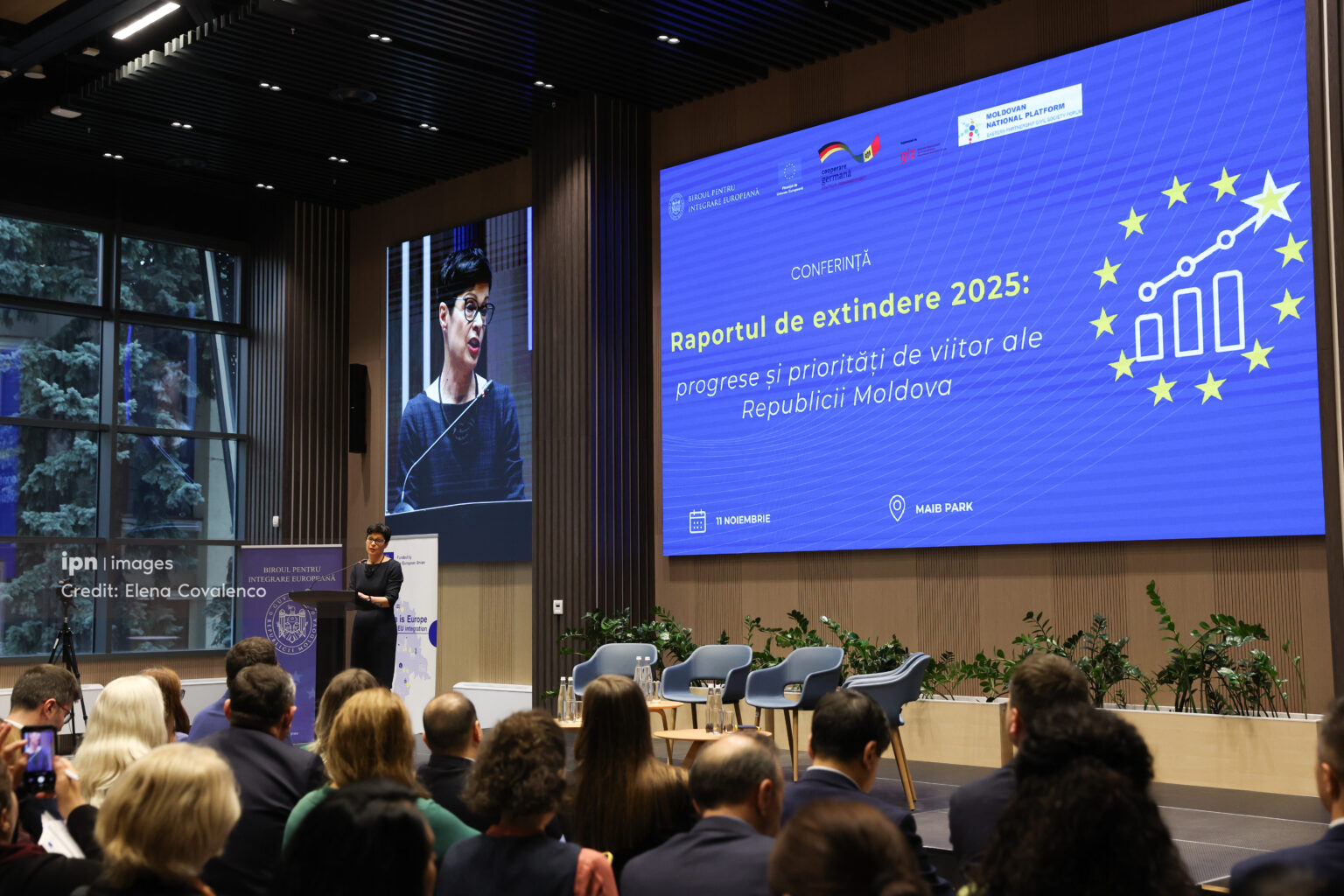
The Republic of Moldova will host the annual European Union enlargement conference, “2026 Enlargement Package,” on 9–10 November. Discussions will focus on progress in the accession process, the reforms needed and priorities for the negotiations. The event will take place after the European Commission presents its 2026 Enlargement Package on 4 November. Moldova, Ukraine and Albania will also receive their roadmaps on that date. These were originally due to be presented on 28 October, but their release was postponed, IPN reports.
European Commissioner for Enlargement Marta Kos, who has announced a visit to the Republic of Moldova during that period, is also expected to attend the conference.
The conference in Chisinau will bring together representatives of public institutions, civil society, the business community and the media to examine the stages of the accession process and how reforms can deliver tangible improvements for citizens. The first day of the conference will focus on presenting the findings of the Enlargement Package for the Republic of Moldova and assessing progress across the clusters of negotiating chapters.
The agenda includes sessions on justice reform and the fight against corruption, local government reform, preparing the economy for access to the European Single Market, the green transition, security, social protection, and agriculture. The second day will take the form of the European Integration Forum, now in its 12th edition. Discussions will focus on Parliament’s role in advancing accession negotiations, the functioning of democratic institutions, and the contribution of civil society and the media to promoting reforms, transparency, and social cohesion.
According to the organizers, the conference aims to bring together representatives of public institutions, civil society, the business community, trade unions, and the media to discuss how to translate accession commitments into reforms that deliver tangible benefits for citizens. The conference is organized by the Bureau for European Integration, the Institute for European Policies and Reforms, and the Friedrich Ebert Foundation.
