

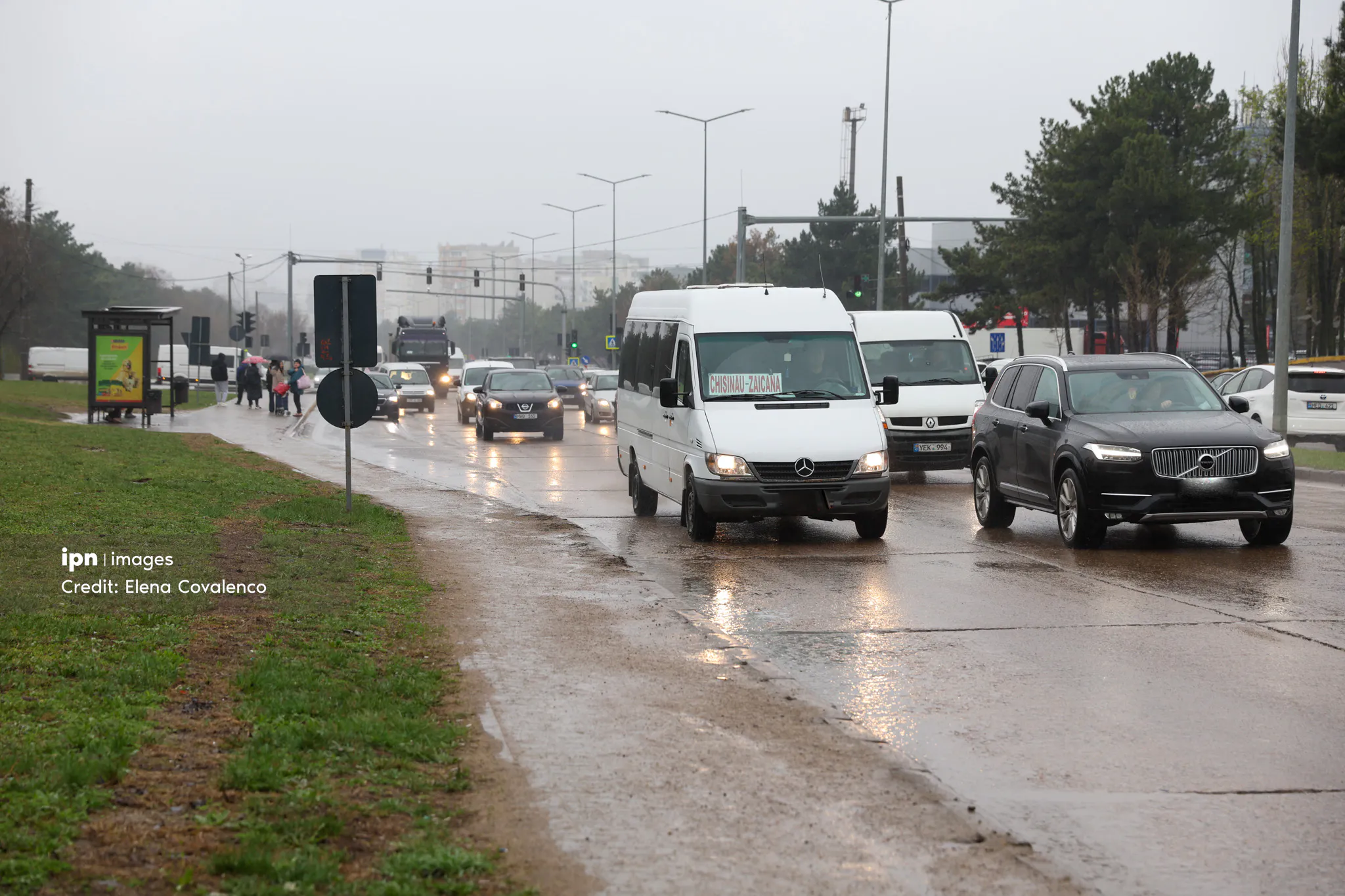
Interrail journeys are getting cheaper: ANTA reduces the fare to 1.17 lei per kilometer

Traveling by interregional transport becomes cheaper after a period of price increases. The National Auto Transport Agency has set, starting from Friday, a provisional ceiling rate of 1.17 lei per kilometer, 2 bani less than the previous rate, reports IPN.

ANTA states that the new fare for regular road passenger transport services in inter-regional traffic is calculated based on the average price of diesel fuel from the last week. During the period of October 2-8, the average price was 35.57 lei per liter, 1.05 lei lower than the previous week.

Thus, compared to the previous rate of 1.19 lei/km, the new rate of 1.17 lei/km will lead to a reduction in the cost of a trip from Chișinău to Orhei, a distance of about 50 kilometers, by approximately 1 lei, and to Rezina, a distance of about 90 kilometers – by 1.8 lei. For a trip to Cahul, about 160 kilometers, the reduction will be 3.2 lei, and to Briceni, about 250 kilometers – 5 lei.

The cheapening of transportation takes place against the backdrop of mixed developments in fuel prices on the international market and the decrease in pump prices in the Republic of Moldova.
A 26-year-old Turkish citizen, internationally wanted since March, has been extradited from the Republic of Moldova and handed over to the authorities in Turkey. According to the General Inspectorate of Police, the man was targeted in a criminal case in his home country, where he was sentenced to five years in prison, reports IPN.

Law enforcement officials mention that the man was put on INTERPOL’s wanted list, with the aim of arresting and extraditing him. Following the judicial procedures carried out in the Republic of Moldova, the court approved the extradition request.

The operation was organized by the IGP, through the National Central Bureau INTERPOL, in collaboration with the General Inspectorate for Migration. The handover of the man to the Turkish authorities took place at the Chisinau International Airport – “Eugen Doga”.

The IGP mentions that the authorities in Moldova will continue cooperation with international partners in order to prevent and combat cross-border crime and ensure the application of legal procedures regarding individuals sought at an international level.

0 FacebookTwitterPinterestEmail


Interrail journeys are getting cheaper: ANTA reduces the fare to 1.17 lei per kilometer

Traveling by interregional transport becomes cheaper after a period of price increases. The National Auto Transport Agency has set, starting from Friday, a provisional ceiling rate of 1.17 lei per kilometer, 2 bani less than the previous rate, reports IPN.

ANTA states that the new fare for regular road passenger transport services in inter-regional traffic is calculated based on the average price of diesel fuel from the last week. During the period of October 2-8, the average price was 35.57 lei per liter, 1.05 lei lower than the previous week.

Thus, compared to the previous rate of 1.19 lei/km, the new rate of 1.17 lei/km will lead to a reduction in the cost of a trip from Chișinău to Orhei, a distance of about 50 kilometers, by approximately 1 lei, and to Rezina, a distance of about 90 kilometers – by 1.8 lei. For a trip to Cahul, about 160 kilometers, the reduction will be 3.2 lei, and to Briceni, about 250 kilometers – 5 lei.

The cheapening of transportation takes place against the backdrop of mixed developments in fuel prices on the international market and the decrease in pump prices in the Republic of Moldova.


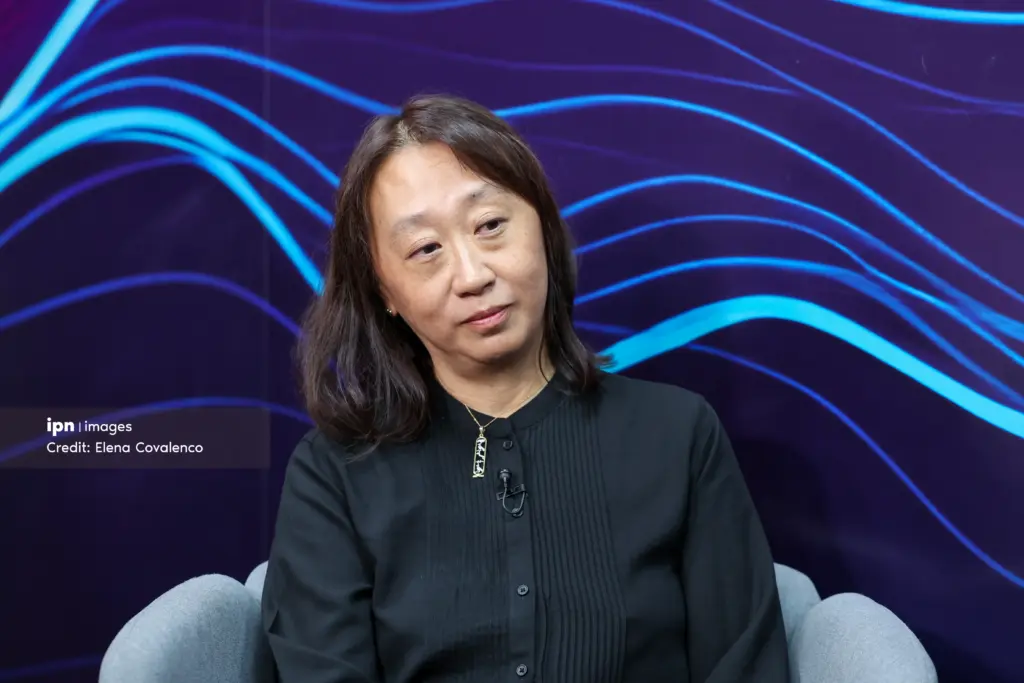
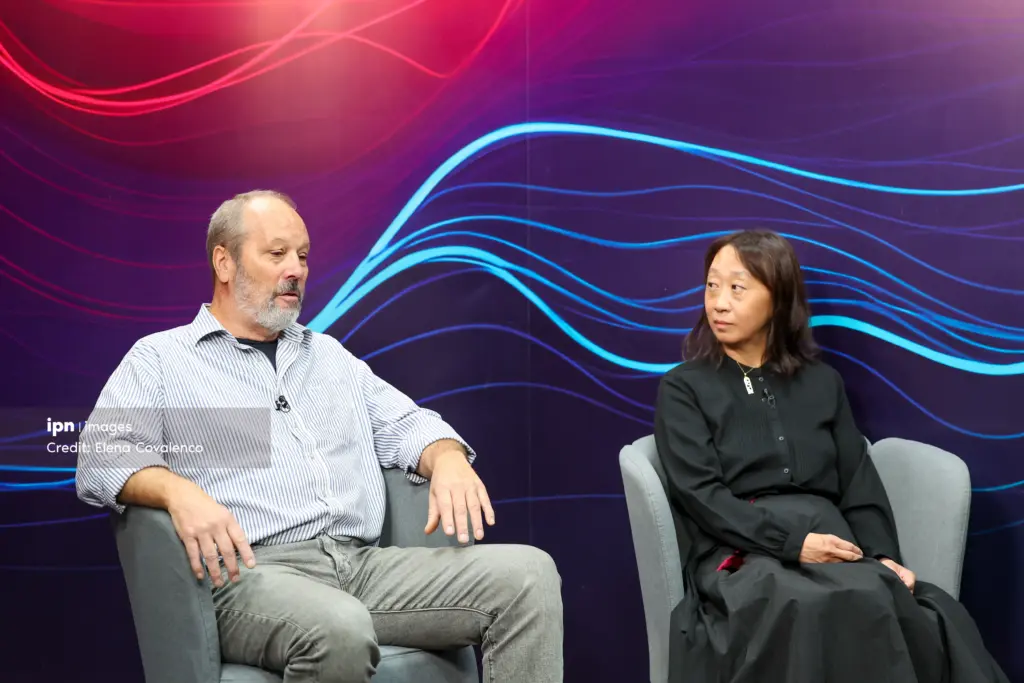
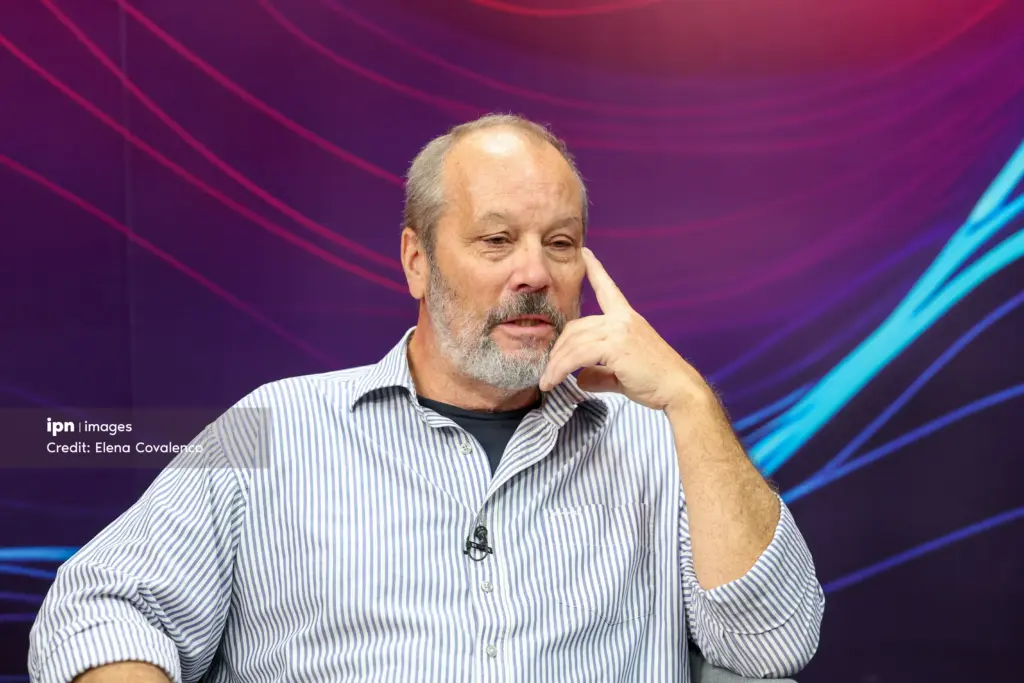
The Republic of Moldova is not the first country investors think of when looking for business opportunities, but it has the potential to become a more attractive destination for companies and entrepreneurs from Sweden. However, for this to happen, political structures, legal framework and financial system must be stable and predictable. In an interview for IPN, Kajsa Johansson, honorary consul of the Republic of Moldova in southern Sweden, and the Swedish entrepreneur and consultant Per-Anders Hjort explained what the areas of interest are for Swedish businessmen and what Sweden’s contribution could be to the development of the Republic of Moldova.

The Republic of Moldova and Sweden have an increasing number of common interests – from investments and circular economy to environmental protection and institutional cooperation. We discuss the opportunities for collaboration, as well as what they have seen in Moldova during their visit, with Kajsa Johansson, honorary consul of the Republic of Moldova in southern Sweden, and with Per-Anders Hjort, a Swedish entrepreneur and consultant. Welcome to IPN and thank you for accepting our invitation.

Kajsa Johansson: Thank you. It’s a pleasure to be here.

You have spent a few days in the Republic of Moldova and you have met with representatives of public institutions, the business environment, universities, and civil society. Where do you see the greatest potential for the development of economic cooperation between the Republic of Moldova and Sweden?

Kajsa Johansson: This is my third visit to Moldova, but it’s the first time I’ve met with so many different companies and organizations. So, I’m not an expert on Moldova, but I must say that I’m very, very impressed by all the people I’ve met. There’s an energy here, an entrepreneurial spirit that I’ve rarely encountered before in such a concentrated form.

I believe that there are, in fact, several fields that we could explore and there is a lot of energy for this. But I think the most important thing is to find the right connections, the right people. And if you manage to connect the right people with each other, business opportunities will arise, regardless of the field.

You have extensive experience in the European business environment. Following the meetings you had in the Republic of Moldova, how do you evaluate our country as a potential destination for Swedish companies and investors?

Per-Anders Hjort: I don’t believe that Moldova is the first country people think of when they analyze potential investment opportunities. This is probably due to a lack of information about Moldova. However, in recent years, there has been increasing talk about Moldova, and the country has become more present in the news and public discussions. Therefore, I believe that Moldova is still relatively unknown in Sweden. But, at the same time, there are many opportunities that, I believe, can be developed.

Everyone we’ve met so far has talked about energy supply and the issues in the energy sector, given the rising costs against the backdrop of the international situation we are facing in Ukraine and other regions, not least in the Middle East.

There are many possibilities. But I believe that, first and foremost, as Kajsa also pointed out, before people start to know and recognize Moldova, we need to provide more information about it and get to know this country better ourselves. It’s interesting to see how many countries are represented here. In recent days, I’ve heard many different languages. Just this morning, we met representatives of the Swedish tax authorities at the hotel. So there’s a lot of interaction.

I believe this is part of the development potential. We need to know each other better. We need to know more about each other. And there will be many opportunities. But it is a small market and it has its own problems. Probably, we will need to focus more on identifying and developing those businesses in Moldova that have the ability to export to other markets.

As the honorary consul of the Republic of Moldova in southern Sweden, what can you do to bring Swedish companies and investors closer to the Republic of Moldova?

Kajsa Johansson: I see my role as the Honorary Consul of Moldova in southern Sweden as a liaison, I can be the connection between Moldova and Sweden. As Per Anders also mentioned, Moldova is not very well known in Sweden. I believe, moreover, that people may have certain prejudices or preconceived ideas about what Moldova is actually like and how things work here.

I can be that liaison who not only presents Moldova as a country, but also explains both its potential and the challenges it still faces. I believe this is very, very important – to open the doors for the first time, to make people come here and see things with their own eyes. It is very important. One thing is what you read in newspapers or what you hear from someone else, and something completely different is to come here and see with your own eyes.

I believe this is my role and I am already putting a lot of effort in this direction. Of course, it’s about several fields. I am referring, for example, to investments, but sometimes everything starts with a simple touristic visit. You come here, look around, realize that this country is developing and that there is so much potential. And most people already have a job and a professional activity in their country. Therefore, things can start at a certain point and then lead to something else. And I see myself in the role of this person who makes the connection.

Starting from your response and considering that you have been here several times, I want to ask you about the contacts and projects you have been involved in this week. These did not appear out of nowhere. How did this cooperation between Moldova and Sweden begin and who laid its foundations?

Kajsa Johansson: It started a few years ago and began exactly as I tried to explain: usually, everything starts with the meeting of one, two, or three people. I had the opportunity to meet the former ambassador of the Republic of Moldova to Sweden, Liliana Gotan, and we formed a very close friendship. That’s where it all began.

So, such meetings are the ones that set things in motion. We discovered that we have a common interest: we want to develop things, to contribute to the development and prosperity of society. We found many common points and then decided to try to do something in this direction. How can we develop cooperation between Sweden and Moldova? And it’s not just about Sweden contributing to the development of Moldova. It is, absolutely, a process that works in reverse as well. Both countries contribute together.

You have spoken a lot about Moldova’s potential, but investors also analyze the risks. What are the issues that Moldova needs to solve to become more attractive to Swedish investors?

Per-Anders Hjort: It’s probably still too early for me to make a statement. I’ve only been here for four days. But, if we look at things from a business perspective as usual, companies need stability. You need predictability, you need stability, you need to have confidence in public institutions and in all these things.

Of course, you can come here and you can have the ambition to do short-term business and make a profit. But, if you want to invest and have long-term stability, then the political structures, the legal framework, the financial system – all of these need to be stable, because the business environment does not tolerate unpredictability.

From the numerous discussions I’ve had, I’ve understood that there is a lot of activity in this regard. In recent years, many changes have been made. And I believe that, with the arrival of companies from abroad, they can also contribute by stating what exactly needs to be done for the business environment to work better. The Stock Exchange was recently opened, which is a way to make the way things work more transparent and so on. There are many things that are developing and we are just at the beginning. But I would say very simply: stability, political stability, and predictability. This is what companies need when they intend to make long-term investments.

Sweden has solid experience in the fields of sustainability, innovation, and circular economy. Which of these areas could become concrete platforms for economic cooperation between Moldova and Sweden?

Kajsa Johansson: I believe that all three are very important. All three are areas in which, as you mentioned, Sweden has a long-standing experience. And I believe that all three are very, very important for the future of Moldova as well. But, when you look at things and start from the beginning, you have to take into account that Sweden has been working in these areas for about 100 years. Therefore, there are differences.

And it is very important that, when you start working in these fields, you can draw inspiration from the way Sweden approaches the circular economy or sustainability. But we also made mistakes. And it is equally important that the solutions are adapted to Moldovan society. You cannot simply take the Swedish model and apply it in Moldova, because it will never work that way.

I believe it is very important to find forms of cooperation – and I am sure we can find them – in these areas. We can capitalize on all the experience that Sweden has, but we must, at the same time, adapt it to the way of thinking and living in Moldova. And I believe there is a huge potential in this regard. And, if we want to be honest, it is about the future of our children. If we don’t think about these things, we have nothing else to leave them.

During your visit to Moldova, waste management and resource efficiency were discussed in several meetings, from industry representatives to sports clubs. As an entrepreneur, do you see real business opportunities for Swedish companies in these fields in the Republic of Moldova?

Per-Anders Hjort: Definitely. But this time we didn’t discuss waste management as much. The topic that almost everyone was talking about, in one form or another, was energy security. And I believe that not only Moldova, but most countries need to make efforts to become as energy independent as possible.

It was pleasing to see that, this time, so many projects are underway, especially solar projects. And, as Kajsa also mentioned, we have a long-standing experience in this field. I firmly believe that Sweden has many skills in the energy sector that could support and help Moldova. But this must be done together with the actors and partners in the country. And, as I said earlier, if the situation is stable, if the political system works properly, if the legal system is functional, and the financial system is trustworthy, then I see nothing that could prevent companies from getting involved in these areas.

This time we didn’t talk too much about waste management, but, in fact, we studied the waste management system in Moldova some time ago. At the European level, in Sweden and other countries, we also made mistakes. And I believe that, starting from the lessons we learned from our own mistakes, we can certainly offer you useful advice on what should be avoided.

I am thinking, for example, about the discussions on transforming waste into energy. However, we must not forget that energy production from waste generates significant CO2 emissions and that, in view of the evolution of European legislation, this solution will become quite costly. It is possible that this may not be the best solution to choose for the future of waste management.

There might be much better approaches, which could cost less and have a lesser impact on the environment. We can offer you support, we can share knowledge and experience, but we must work together with our partners from Moldova.

During this visit, you also met with individuals involved in education, crisis management, and social projects. How important is cooperation beyond the business realm for building stronger economic relationships between the two countries?

Kajsa Johansson: I believe it is extremely important, because when you build trust, you have to start somewhere. And, very often, everything starts with such projects, which later develop and transform into something else. If we think about how projects usually start, very often they start from two people, not from huge project plans or elaborate ideas from governments. Most of the time, it starts with two or three people who trust each other and want to do something together.

It could be about education, it could be about shelters for women. But often, such initiatives can develop and give rise to different types of businesses. I’ve seen this in Sweden: charitable organizations that started simply out of the desire to help, and later developed into different types of businesses – perhaps not very large companies, but small enterprises, capable of supporting a small group of people. Therefore, I think it is extremely important. I do not see these things as two different sides. In fact, I see them as a unified whole. Everything starts from building trust and then continues from there.

What should Moldova do next to turn such cooperation and contacts, like those during this visit, into concrete investments, long-term business relationships, and economic projects with Sweden?

Per-Anders Hjort: They should continue on the path they are currently on. I believe there are already many exchanges and contacts, as Kajsa also mentioned. Personally, I participated some time ago in a significant seminar in Stockholm, where a delegation from Moldova was present and numerous Swedish companies participated. I think you need to start by making the country more visible. And, as Kajsa said, business starts with nothing else but people. You need to start meeting. You need to start discussing the challenges you have.

I believe the direction you’re heading in is a good one and it will take some time, but it’s like when you keep moving forward: if you go further, a lot of things will happen. By the way, I also said that I didn’t know what to expect when I came to Moldova, but I am pleasantly surprised. I met a lot of extraordinary people. A lot of people with ideas, as Kajsa also said. I met people who want to develop things, people who have a lot of energy and determination.

I believe it is very inspirational, and this will in turn be a factor of inspiration when you start collaborating with others. What we can do is start discussing with the partners we know and who might be interested in engaging in dialogue with companies from Moldova. This is also our intention.

As you know, Moldova is progressing on the path of European integration. Does this process create new opportunities for Swedish companies interested in the Moldovan market?

Kajsa Johansson: Definitely. I believe this will increase Moldova’s visibility. The fact that Moldova is in this process puts it on the map of Europe. But I think it’s important to also remember the beginnings of the European Union. If we go back in time, it was, above all, a project of peace. And why? Well, we all know what World War II meant, and trust had disappeared from the European continent. So, it is also a project based on trust.

Returning to this aspect, I believe that there will be many opportunities, because the European Union already has extensive experience. There are many normative acts and rules. Currently, everyone knows how business activities are conducted within the European Union. And, as Per-Anders also said, it’s important that everyone knows the rules. It’s a stable system. Therefore, of course, this process will increase Moldova’s visibility. And I believe it will also enhance the possibilities for closer cooperation. But, having said that, I believe that the mere fact that you are on this path and that you are making efforts to join the European Union means that you have already covered more than half of the journey.

Thank you very much for this interview and I wish you great success in everything you do.

Thank you.

Octavian Bratosin, IPN


0 FacebookTwitterPinterestEmail


1 IANUARIE, 2025
1 IANUARIE, 2025