

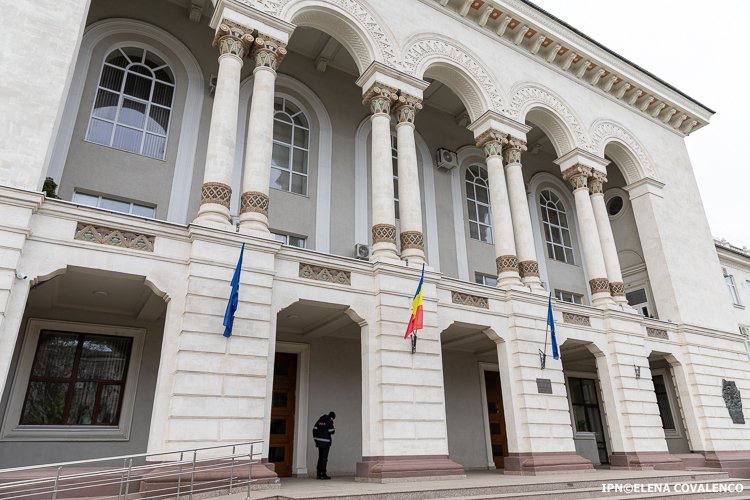
The specialized prosecutors could challenge the directives of the attorney general at the court of appeal

Prosecutors from specialized prosecutor’s offices could have the right to challenge the instructions of the Attorney General, the annulment of procedural acts or the redistribution of cases at the court of appeal. These provisions can be found in a draft law on strengthening the procedural independence of prosecutors, voted by Parliament in the first reading, reports IPN.

The initiative was drafted by the PAS deputy Igor Chiriac. According to the project, before giving instructions to a prosecutor from a specialized prosecution office, cancelling a procedural act, or redistributing a case, the general prosecutor will need to request the opinion of the chief prosecutor of the specialized prosecution office. The opinion will be consultative, and any violation of the procedure can be appealed to the court of appeal, by a panel formed of three judges, within three working days.

The project also establishes the cases in which the prosecutor general can transfer a case to another criminal investigation body: to accelerate the investigation, balance the workload, in the case of complex causes or serious violations of the law and the rights of the participants in the process.

The decision will belong exclusively to the attorney general, after consulting the chief prosecutor, and may be appealed to the court of appeal. Jurisdictional conflicts between specialized prosecutors will also be resolved by the attorney general, through a motivated ordinance.

At the same time, the project proposes that the Minister of Justice should not participate in the examination of disciplinary cases and in decisions regarding the selection and career of prosecutors within the Superior Council of Prosecutors, except for external evaluation procedures.

According to the explanatory note, the amendments aim to strengthen the autonomy of specialized prosecutors’ offices and align the legislation with European standards regarding the independence of the justice system.

The amendments to the Criminal Procedure Code are expected to come into effect on April 30, 2027, and the provision concerning the Minister of Justice – within a month of the law being published in the Official Gazette.


The United Kingdom has imposed sanctions against 38 individuals and entities supporting Russia in the war against Ukraine. Among the targeted entities are payment platforms and cryptocurrency exchanges, two of which are allegedly linked to the A7 network, led by the fugitive oligarch Ilan Sor, which assists Moscow in evading international sanctions, reports IPN.

This is about three cryptocurrency scholarships and two payment platforms. Three of them have ties to Kyrgyzstan, and two have processed transactions for A7, a network that claims to have transacted over 90 billion dollars last year, equivalent to about half of Russia’s annual military spending.

The financial restrictions imposed by the United Kingdom also include two Russian oil companies, and the London executive claims that its sanctions now cover over 90% of Russia’s oil production capacity. Also included on the list are another 12 oil tankers that are part of Moscow’s shadow fleet, which brings the total number of vessels sanctioned by Great Britain to over 600.

Another 17 individuals and entities included in the new list, according to London, supply the Russian military industry with essential goods for war, such as electronic components and materials for the production of ballistic missiles and drones.

The USA has recently designated the A7 network as a significant transnational criminal organization, accusing it of facilitating the evasion of sanctions by Russia and Iran. The A7 company, along with related firms A71 and A7-AGENT, are already on the international sanctions list of the USA, the United Kingdom, and the European Union. Previously, IPN reported on how these entities help Russia circumvent the restrictive measures imposed by the West by camouflaging the real money flows to allow Moscow’s financial transfers.

0 FacebookTwitterPinterestEmail


The specialized prosecutors could challenge the directives of the attorney general at the court of appeal

Prosecutors from specialized prosecutor’s offices could have the right to challenge the instructions of the Attorney General, the annulment of procedural acts or the redistribution of cases at the court of appeal. These provisions can be found in a draft law on strengthening the procedural independence of prosecutors, voted by Parliament in the first reading, reports IPN.

The initiative was drafted by the PAS deputy Igor Chiriac. According to the project, before giving instructions to a prosecutor from a specialized prosecution office, cancelling a procedural act, or redistributing a case, the general prosecutor will need to request the opinion of the chief prosecutor of the specialized prosecution office. The opinion will be consultative, and any violation of the procedure can be appealed to the court of appeal, by a panel formed of three judges, within three working days.

The project also establishes the cases in which the prosecutor general can transfer a case to another criminal investigation body: to accelerate the investigation, balance the workload, in the case of complex causes or serious violations of the law and the rights of the participants in the process.

The decision will belong exclusively to the attorney general, after consulting the chief prosecutor, and may be appealed to the court of appeal. Jurisdictional conflicts between specialized prosecutors will also be resolved by the attorney general, through a motivated ordinance.

At the same time, the project proposes that the Minister of Justice should not participate in the examination of disciplinary cases and in decisions regarding the selection and career of prosecutors within the Superior Council of Prosecutors, except for external evaluation procedures.

According to the explanatory note, the amendments aim to strengthen the autonomy of specialized prosecutors’ offices and align the legislation with European standards regarding the independence of the justice system.

The amendments to the Criminal Procedure Code are expected to come into effect on April 30, 2027, and the provision concerning the Minister of Justice – within a month of the law being published in the Official Gazette.


The Council of the European Union has extended for one year, until October 9, 2027, sanctions against those responsible for Russia’s destabilizing actions abroad. The measures target 80 individuals and 20 entities, including five citizens of the Republic of Moldova, among them activist Veaceslav Valico and journalist Dmitri Buimistru, reports IPN.

According to the document, Veaceslav Valico was involved in a destabilization operation organized by Russia. He participated in drawing Stars of David on the streets of Paris, shortly after the Hamas attack on Israel on October 7, 2023. The EU document states that the action was organized in exchange for a financial reward and aimed to provoke tensions in French society. Moreover, Valico is involved in the systematic spread of disinformation in the Republic of Moldova and Ukraine, as part of Russia’s hybrid actions.

At the same time, Dmitri Buimistru is considered the main propagandist of the online television station MD24, created by the fugitive oligarch Ilan Șor after the withdrawal of his media institutions’ licenses. Buimistru is accused of spreading pro-Kremlin disinformation and undermining the sovereignty of the Republic of Moldova.

In addition to the two, the list also includes businessman Anatoli Prizenko, accused of coordinating the destabilization operation in Paris, from October 2023. Prizenko publicly assumed responsibility for this action.

Restrictive measures are also targeting Moldovan citizens Iurie Neculiti and Ivan Neculiti, the executive director and owner of a company registered in the United Kingdom, which provides hosting on servers around the world and would allow Russia-sponsored actors to carry out destabilizing activities, including information manipulation, interference, and cyber attacks against the EU and some third countries.

0 FacebookTwitterPinterestEmail


1 IANUARIE, 2025
1 IANUARIE, 2025