

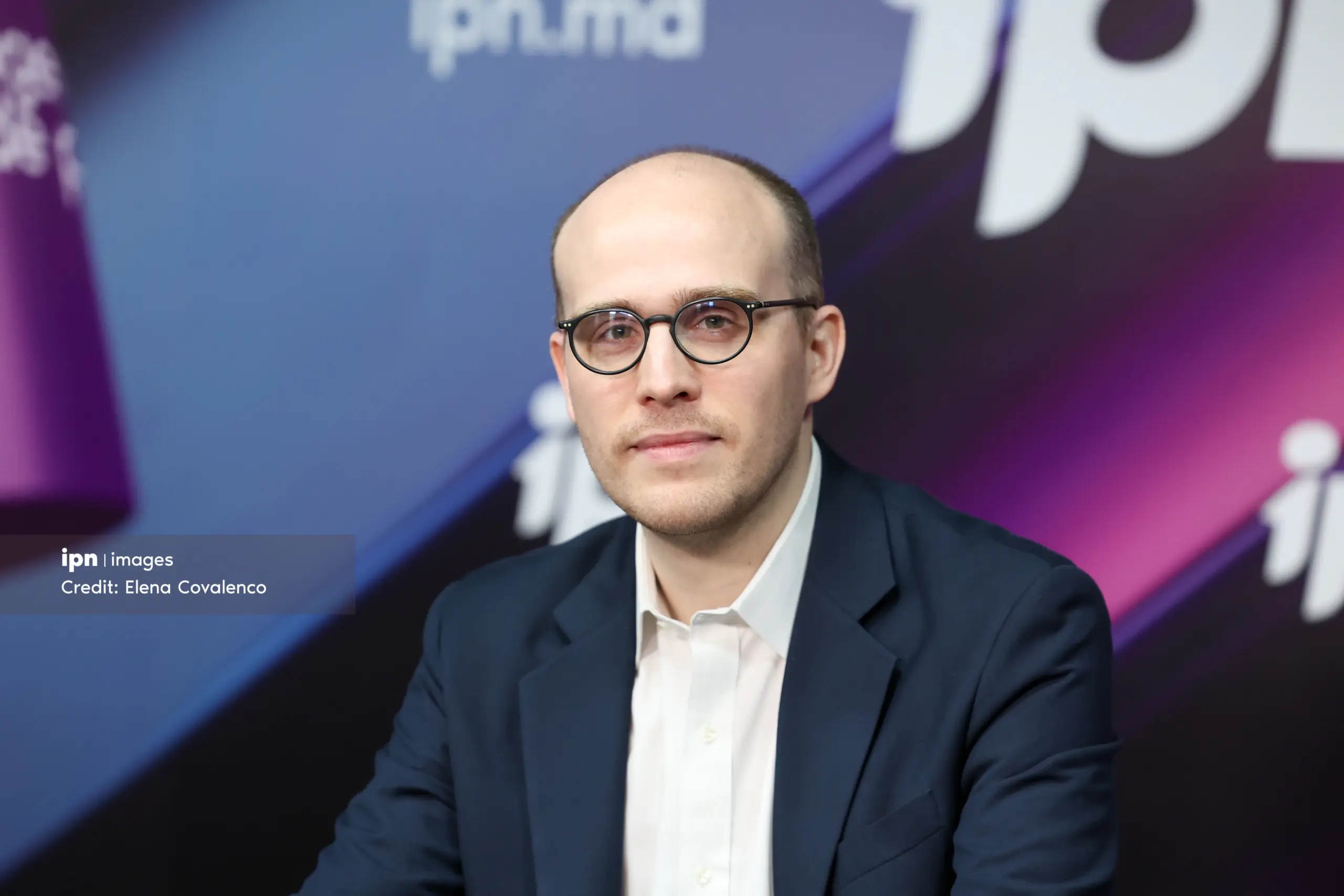
Informational Warfare: Why the Republic of Moldova is a target and how it can defend itself. An IPN Interview with Etienne Soula

In a context marked by the war in Ukraine and the intensification of disinformation campaigns, foreign informational manipulation and interference (FIMI) represents a major challenge for Europe and the Republic of Moldova. In an interview for IPN, Etienne Soula, an associate researcher at the German Marshall Fund, explains the methods used by Russia to influence public opinion, the risks for Moldova’s European path, and the solutions through which democratic societies can strengthen their resilience in the face of these threats.

As the European Union and countries like the Republic of Moldova face an unprecedented wave of disinformation and FIMI (foreign informational manipulation and interference), understanding how these influence operations work has become a matter of democratic resilience and national security. To discuss the ever-evolving threat represented by FIMI, the methods used by Russia, and how societies can more effectively identify and counteract manipulation, we are joined by Etienne Soula, an associate researcher for Southern Europe and Extended Europe at the German Marshall Fund.

Welcome and thank you for accepting the invitation from the IPN press agency!

Thank you for the invitation. I am very pleased to be here.

Mr. Soula, the concept of manipulation and foreign informational interference (FIMI) has attracted increasing attention in recent years. How would you define FIMI and how does it differ from traditional disinformation and propaganda?

FIMI is a concept broader than mere disinformation and propaganda. The entire acronym stands for “foreign informational manipulation and interference”. The information manipulation component represents only a small part of the destabilization methods that authoritarian countries like Russia use to destabilize democracies, including the Republic of Moldova. Other methods include corruption, malign financing, economic coercion, cyber operations, etc. Together with information manipulation, all these form what we call FIMI.
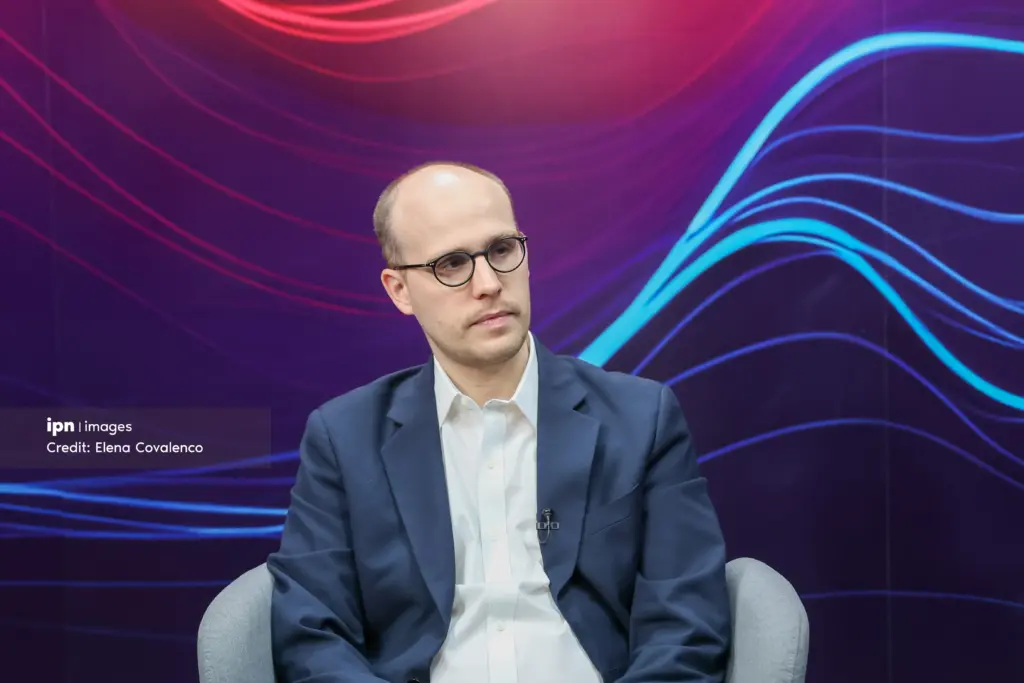
The European Union and the Republic of Moldova have become targets of sophisticated information manipulation campaigns. Why are these entities particularly vulnerable and what are the main narratives promoted against them?

I am convinced that many of your viewers know that, from 2022, Russia is engaged in a war of aggression against Ukraine. This has now become an existential struggle for the regime in Moscow. Since the European Union is one of the main supporters of Kiev in this war, Moscow has tried everything to stop this support and to affect the morale of the European Union and its partners.

In recent years, we have seen that the Republic of Moldova and the European Union have grown closer. Considering the history and geographical position of Moldova, it has become a kind of front-line state in this confrontation between Moscow, Ukraine, and the European Union.

Russia has been accused of using informational operations as a strategic instrument of foreign policy. What are the most common methods and techniques used by Russian actors to influence public opinion in the European Union?

As you mentioned, the technique that attracts the most attention is information manipulation, which part of the public knows under the names of disinformation, fake news, or propaganda. I intentionally use the term “information manipulation” because it is broader and covers all the ways in which authoritarian regimes use information that can sometimes be true or partially true, manipulate it, and disseminate it, especially through modern tools such as social networks and, increasingly, through artificial intelligence tools.

These pieces of information are disseminated in a way intended to shape or manipulate public opinion and create division and discord in the targeted societies.

Informational manipulation is supported by other tools that Russia uses. As previously mentioned, there are cyber operations, used to affect critical infrastructure and to create an impression of chaos in society, leaving the impression that the government cannot provide adequate services to the population when a service is affected by a cyber attack.

There is also malignant financing and corruption, through which Moscow and its intermediaries or allies in the region direct funds towards individuals and organizations that repeat its narratives and messages, without Russia being visibly directly involved.

There is also the economic constraint. In the case of Russia, this has largely manifested itself in the energy sector, with Russia using its gas exports and other energy resources to blackmail countries dependent on these resources and to force governments to do what Moscow wants.

All of these, together, create a “manual of action” FIMI that destabilizes democracies in Europe and its vicinity.
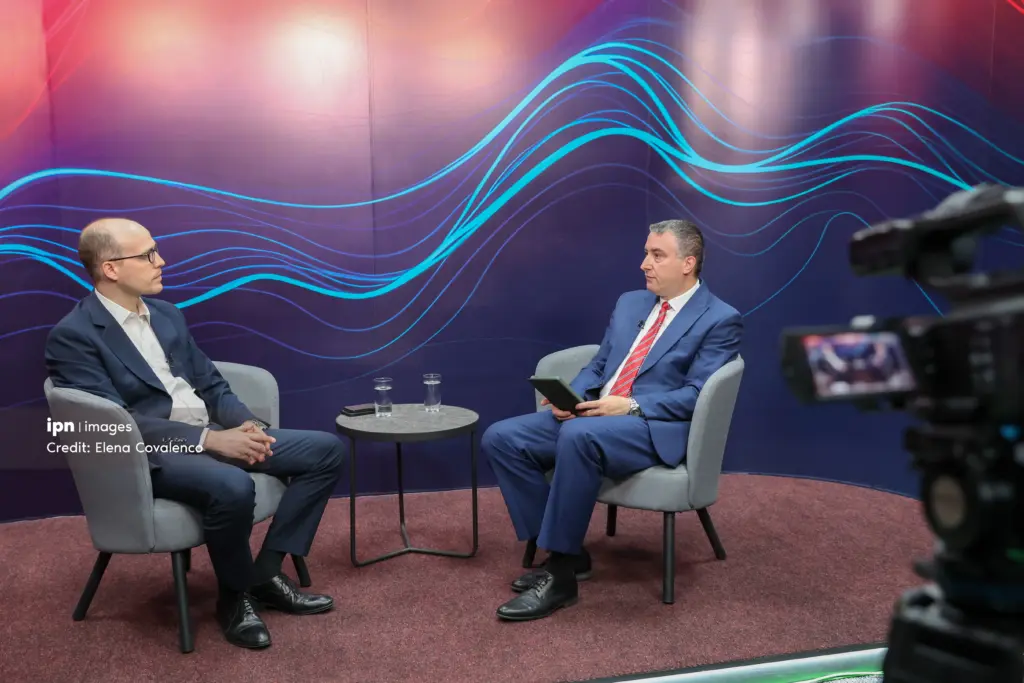
How have Russia’s disinformation tactics evolved since the large-scale invasion of Ukraine and what new trends are you observing today in the information space?

Since the widespread invasion in 2022, Russia has become more desperate. What were once lower-intensity efforts to destabilize democracies has turned into a much more aggressive approach.

At the same time, some of the main tools that Russia successfully used in Europe were deactivated. I am referring in particular to state-controlled television channels, such as Russia Today (RT) and Sputnik, which were present in many countries of the European Union and had a large audience. They focused on certain controversial issues in EU member states and immediately after the invasion of Ukraine, these media institutions were banned in the European Union. As a result, Russia was forced to diversify its efforts and create less visible sources and dissemination channels.

For instance, the so-called “Operation Doppelganger” was identified, through which Russia copied very well-known Western websites, such as the French newspaper Le Monde or the German publication Der Spiegel, creating copies of these in which it published its own messages in a format very similar to that of credible sources.

Another significant aspect of recent developments is the increasingly intensive use of artificial intelligence. AI can be used to create more content and more accurate content, including by translating from Russian into various European languages, while respecting cultural nuances. It also allows for the creation of websites at much lower costs and on a much larger scale.

For ordinary citizens, it can be difficult to distinguish between legitimate information, misinformation, and coordinated manipulation. What are the main indications that certain content might be part of a FIMI campaign?

It’s difficult to provide absolute rules. I believe it’s important for people to use their critical thinking. A common element of content created to have a manipulative effect is the appeal to emotions. It tries to make you very angry or very scared.

For example, ahead of last year’s elections in the Republic of Moldova and the previous year, many messages circulated suggesting that a vote in a certain direction would lead to war and push Moldova down the same path as Ukraine. These messages were clearly designed to scare people and to use their fear so that they would no longer analyze the decision they need to make rationally. So, yes, I believe that here people could use their critical thinking when looking at certain content and ask themselves whether it provides them with information or is just trying to provoke a very strong emotion.

The Republic of Moldova is preparing for significant political and geopolitical decisions in its process of joining the European Union. How great is the threat posed by informational manipulation in shaping public perceptions of European integration?

It’s a very serious concern for the European Union. As I mentioned, starting from 2022, the EU member states themselves have become much more intense targets of Russian informational operations.

There is a fear that in a country like Moldova, where there is now a real momentum for joining the European Union, for the first time in many years, Russia, having lost the rational battle in a way, will try to use these covert methods to manipulate public opinion and spread lies about the fact that EU membership would not be beneficial for Moldova.

Countering disinformation is not just a matter of governmental policies, but also of societal resilience. What practical measures should governments, media organizations, and citizens take to identify, expose, and effectively combat manipulation and foreign informational interference?

It is absolutely true. I believe that a country can only be resistant to informational manipulation to the extent that its citizens are resistant. It is very important for each person to feel that they have a role to play to ensure they are not manipulated by lies originating from dictatorships.

The government obviously plays a significant role in creating suitable institutions and structures, but this effort must be supported by media organizations, which need to verify the information and ensure that they do not amplify narratives fabricated from outside.

Equally important are the civil society organizations – NGOs, think tanks, and other organizations that exist in society and play an essential role, especially in rural areas, further away from the capital, where they can function as a transmission belt between the government’s message and the people who trust them.

In the end, each person, in front of their own smartphone, must use their judgement and try to determine if what they are reading is true or if it is an attempt at manipulation, exercising their critical thinking to resist attempts at manipulation.
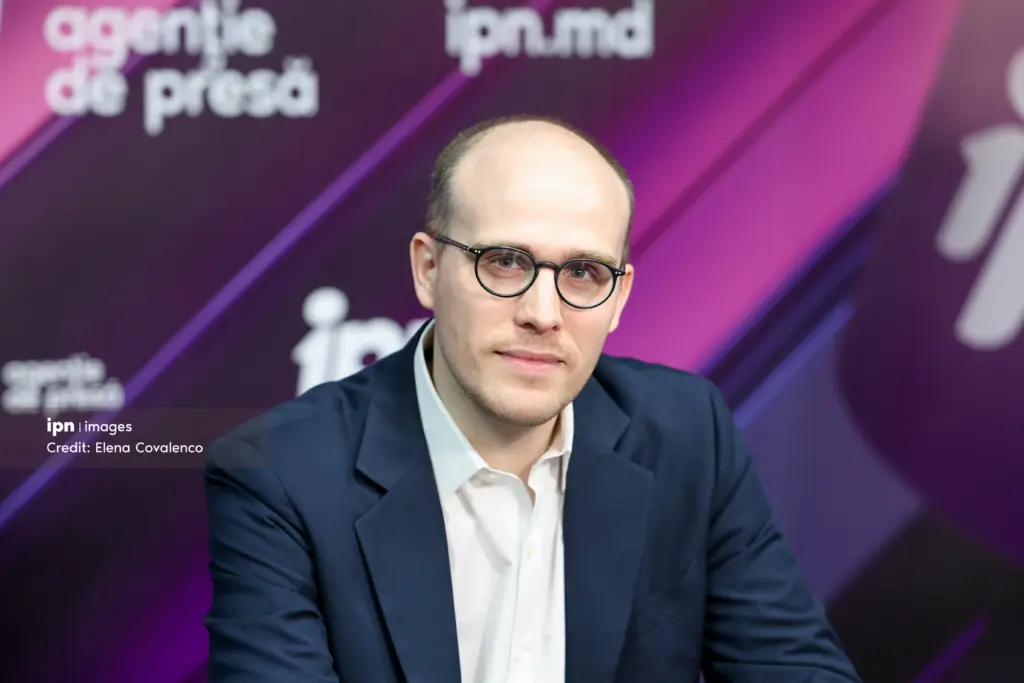
Looking towards the future, do you believe that democracies are better prepared to face IMIs or do informational manipulators adapt faster than our ability to counteract them?

This is a difficult question, a kind of “glass half full or half empty” dilemma. Depending on how optimistic or pessimistic you are, you can reach different conclusions.

Taking again the example of the Republic of Moldova, in the last electoral cycles there has been a real effort on the part of the entire society – government, institutions, media, NGOs, and citizens – to understand that the country is the target of manipulation attempts, and at the same time, to construct a positive narrative about the Republic of Moldova and its uniqueness, to have a positive message and not just to remain in a defensive position.

For this reason, the Republic of Moldova is often viewed in Brussels and other parts of Europe as a positive model and an example that can be followed.

If I stay here, in Chisinau, I want to be optimistic about the future and believe that, although there is a constant race between those who try to manipulate us and those who try to strengthen democracy, the glass is rather half full.

Mr. Soula, we thank you very much for this interview and for your optimism.

Thank you very much for the invitation.

Octavian Bratosin, IPN


The governance program proposed by the appointed Prime Minister Vasile Tofan envisages the gradual approach of the Transnistrian region to the constitutional space and the extension of national rules across the entire territory of the country. The document aims at the “peaceful and irreversible advancement of the country’s reintegration”, through the consolidation of sovereignty and territorial integrity, reports IPN.

The document includes the operationalization, from January 1, 2027, of the Convergence Fund, intended for the financing of projects in areas such as education, health, local infrastructure, water and sanitation, social services, culture and connectivity.

The program also envisages extending the access of the inhabitants of the Transnistrian region to documents issued by constitutional authorities, medical services, social benefits, employment programs, and other public services. At the same time, measures are included to protect fundamental rights, including freedom of movement, the right to property, education in the Romanian language, and freedom of expression.

In the field of security, the program provides for the maintenance of dialogue to solve citizens’ problems and the constant monitoring of the situation in the Security Zone. The document also proposes transforming the current peacekeeping mission into an international civilian mission and continuing efforts to withdraw Russian Federation troops and ammunition from the territory of the Republic of Moldova.

According to the document, European integration will be the main instrument for modernization and bringing the entire territory of the country closer to the standards of the European Union, including through the preparation of the application of European legislation in the Transnistrian region.

Vasile Tofan will present on Tuesday in Parliament the activity program and the composition of the governmental team, requesting the vote of confidence from the deputies. According to the Constitution, the Government can be invested with the vote of the majority of elected deputies.

0 FacebookTwitterPinterestEmail


Informational Warfare: Why the Republic of Moldova is a target and how it can defend itself. An IPN Interview with Etienne Soula

In a context marked by the war in Ukraine and the intensification of disinformation campaigns, foreign informational manipulation and interference (FIMI) represents a major challenge for Europe and the Republic of Moldova. In an interview for IPN, Etienne Soula, an associate researcher at the German Marshall Fund, explains the methods used by Russia to influence public opinion, the risks for Moldova’s European path, and the solutions through which democratic societies can strengthen their resilience in the face of these threats.

As the European Union and countries like the Republic of Moldova face an unprecedented wave of disinformation and FIMI (foreign informational manipulation and interference), understanding how these influence operations work has become a matter of democratic resilience and national security. To discuss the ever-evolving threat represented by FIMI, the methods used by Russia, and how societies can more effectively identify and counteract manipulation, we are joined by Etienne Soula, an associate researcher for Southern Europe and Extended Europe at the German Marshall Fund.

Welcome and thank you for accepting the invitation from the IPN press agency!

Thank you for the invitation. I am very pleased to be here.

Mr. Soula, the concept of manipulation and foreign informational interference (FIMI) has attracted increasing attention in recent years. How would you define FIMI and how does it differ from traditional disinformation and propaganda?

FIMI is a concept broader than mere disinformation and propaganda. The entire acronym stands for “foreign informational manipulation and interference”. The information manipulation component represents only a small part of the destabilization methods that authoritarian countries like Russia use to destabilize democracies, including the Republic of Moldova. Other methods include corruption, malign financing, economic coercion, cyber operations, etc. Together with information manipulation, all these form what we call FIMI.

The European Union and the Republic of Moldova have become targets of sophisticated information manipulation campaigns. Why are these entities particularly vulnerable and what are the main narratives promoted against them?

I am convinced that many of your viewers know that, from 2022, Russia is engaged in a war of aggression against Ukraine. This has now become an existential struggle for the regime in Moscow. Since the European Union is one of the main supporters of Kiev in this war, Moscow has tried everything to stop this support and to affect the morale of the European Union and its partners.

In recent years, we have seen that the Republic of Moldova and the European Union have grown closer. Considering the history and geographical position of Moldova, it has become a kind of front-line state in this confrontation between Moscow, Ukraine, and the European Union.

Russia has been accused of using informational operations as a strategic instrument of foreign policy. What are the most common methods and techniques used by Russian actors to influence public opinion in the European Union?

As you mentioned, the technique that attracts the most attention is information manipulation, which part of the public knows under the names of disinformation, fake news, or propaganda. I intentionally use the term “information manipulation” because it is broader and covers all the ways in which authoritarian regimes use information that can sometimes be true or partially true, manipulate it, and disseminate it, especially through modern tools such as social networks and, increasingly, through artificial intelligence tools.

These pieces of information are disseminated in a way intended to shape or manipulate public opinion and create division and discord in the targeted societies.

Informational manipulation is supported by other tools that Russia uses. As previously mentioned, there are cyber operations, used to affect critical infrastructure and to create an impression of chaos in society, leaving the impression that the government cannot provide adequate services to the population when a service is affected by a cyber attack.

There is also malignant financing and corruption, through which Moscow and its intermediaries or allies in the region direct funds towards individuals and organizations that repeat its narratives and messages, without Russia being visibly directly involved.

There is also the economic constraint. In the case of Russia, this has largely manifested itself in the energy sector, with Russia using its gas exports and other energy resources to blackmail countries dependent on these resources and to force governments to do what Moscow wants.

All of these, together, create a “manual of action” FIMI that destabilizes democracies in Europe and its vicinity.

How have Russia’s disinformation tactics evolved since the large-scale invasion of Ukraine and what new trends are you observing today in the information space?

Since the widespread invasion in 2022, Russia has become more desperate. What were once lower-intensity efforts to destabilize democracies has turned into a much more aggressive approach.

At the same time, some of the main tools that Russia successfully used in Europe were deactivated. I am referring in particular to state-controlled television channels, such as Russia Today (RT) and Sputnik, which were present in many countries of the European Union and had a large audience. They focused on certain controversial issues in EU member states and immediately after the invasion of Ukraine, these media institutions were banned in the European Union. As a result, Russia was forced to diversify its efforts and create less visible sources and dissemination channels.

For instance, the so-called “Operation Doppelganger” was identified, through which Russia copied very well-known Western websites, such as the French newspaper Le Monde or the German publication Der Spiegel, creating copies of these in which it published its own messages in a format very similar to that of credible sources.

Another significant aspect of recent developments is the increasingly intensive use of artificial intelligence. AI can be used to create more content and more accurate content, including by translating from Russian into various European languages, while respecting cultural nuances. It also allows for the creation of websites at much lower costs and on a much larger scale.

For ordinary citizens, it can be difficult to distinguish between legitimate information, misinformation, and coordinated manipulation. What are the main indications that certain content might be part of a FIMI campaign?

It’s difficult to provide absolute rules. I believe it’s important for people to use their critical thinking. A common element of content created to have a manipulative effect is the appeal to emotions. It tries to make you very angry or very scared.

For example, ahead of last year’s elections in the Republic of Moldova and the previous year, many messages circulated suggesting that a vote in a certain direction would lead to war and push Moldova down the same path as Ukraine. These messages were clearly designed to scare people and to use their fear so that they would no longer analyze the decision they need to make rationally. So, yes, I believe that here people could use their critical thinking when looking at certain content and ask themselves whether it provides them with information or is just trying to provoke a very strong emotion.

The Republic of Moldova is preparing for significant political and geopolitical decisions in its process of joining the European Union. How great is the threat posed by informational manipulation in shaping public perceptions of European integration?

It’s a very serious concern for the European Union. As I mentioned, starting from 2022, the EU member states themselves have become much more intense targets of Russian informational operations.

There is a fear that in a country like Moldova, where there is now a real momentum for joining the European Union, for the first time in many years, Russia, having lost the rational battle in a way, will try to use these covert methods to manipulate public opinion and spread lies about the fact that EU membership would not be beneficial for Moldova.

Countering disinformation is not just a matter of governmental policies, but also of societal resilience. What practical measures should governments, media organizations, and citizens take to identify, expose, and effectively combat manipulation and foreign informational interference?

It is absolutely true. I believe that a country can only be resistant to informational manipulation to the extent that its citizens are resistant. It is very important for each person to feel that they have a role to play to ensure they are not manipulated by lies originating from dictatorships.

The government obviously plays a significant role in creating suitable institutions and structures, but this effort must be supported by media organizations, which need to verify the information and ensure that they do not amplify narratives fabricated from outside.

Equally important are the civil society organizations – NGOs, think tanks, and other organizations that exist in society and play an essential role, especially in rural areas, further away from the capital, where they can function as a transmission belt between the government’s message and the people who trust them.

In the end, each person, in front of their own smartphone, must use their judgement and try to determine if what they are reading is true or if it is an attempt at manipulation, exercising their critical thinking to resist attempts at manipulation.

Looking towards the future, do you believe that democracies are better prepared to face IMIs or do informational manipulators adapt faster than our ability to counteract them?

This is a difficult question, a kind of “glass half full or half empty” dilemma. Depending on how optimistic or pessimistic you are, you can reach different conclusions.

Taking again the example of the Republic of Moldova, in the last electoral cycles there has been a real effort on the part of the entire society – government, institutions, media, NGOs, and citizens – to understand that the country is the target of manipulation attempts, and at the same time, to construct a positive narrative about the Republic of Moldova and its uniqueness, to have a positive message and not just to remain in a defensive position.

For this reason, the Republic of Moldova is often viewed in Brussels and other parts of Europe as a positive model and an example that can be followed.

If I stay here, in Chisinau, I want to be optimistic about the future and believe that, although there is a constant race between those who try to manipulate us and those who try to strengthen democracy, the glass is rather half full.

Mr. Soula, we thank you very much for this interview and for your optimism.

Thank you very much for the invitation.

Octavian Bratosin, IPN


The Republic of Moldova and India aim to strengthen cooperation in various fields such as trade, investment, renewable energy, and education. The announcement was made by President Maia Sandu and the President of India, Droupadi Murmu, following the official meeting in Chisinau, reports IPN.

Maia Sandu stated that the discussions focused on deepening bilateral relations and achieving concrete results for the citizens of both states. “We want this relationship to bring concrete results for our people in trade, investment, energy, education and health. We wish for more and more Moldovan agri-food products to reach the Indian market”, affirmed the head of state.

The head of state also mentioned collaboration in the field of education, specifying that approximately 1,400 Indian students are currently studying at universities in the Republic of Moldova, most of them at USMF. Moreover, negotiations regarding a new cooperation agreement in higher education have been concluded, and it is due to be signed.

In turn, the President of India, Droupadi Murmu, described the visit as a “historic moment” in the relations between the two states and affirmed that it reflects the strengthening of mutual trust. According to the Indian official, the two delegations agreed to intensify cooperation. Droupadi Murmu also announced that India will double the number of training courses and scholarships offered to professionals from the Republic of Moldova.

During the discussions, India invited the Republic of Moldova to join the Coalition for Infrastructure Resilience and the Global Alliance for Biofuel, international initiatives promoted by New Delhi.

Droupadi Murmu’s visit is the first official visit to the Republic of Moldova by an Indian president since the establishment of diplomatic relations between the two countries in 1992.

0 FacebookTwitterPinterestEmail


1 IANUARIE, 2025
1 IANUARIE, 2025