




Swiss investment and support for the development of healthcare services in Moldova over the past 20 years have helped raise standards and save lives. Higher survival rates among low-birth-weight newborns and expanded youth-friendly healthcare services are just two of the achievements highlighted at an event marking 20 years of cooperation with the Swiss Tropical and Public Health Institute (Swiss TPH) in the Republic of Moldova, IPN reports.
Alexander Schulze, Head of Department at Swiss TPH, said that investment in health contributes to socioeconomic development, while cooperation between institutions enables more efficient use of public resources. In his view, improving quality of life requires collaboration across sectors, as health is affected by challenges such as poverty, malnutrition, social isolation and discrimination.
Adriane Martin Hilber, a senior adviser at Swiss TPH, noted that one of the partnership’s most significant achievements was the increase in the survival rate of babies born weighing less than 1,000 grams, from 5.4% in 2005 to 47% in 2013. In addition, the “Healthy Generations” project, implemented between 2011 and 2014, expanded healthcare services tailored to young people’s needs nationwide.
Richard Kohli, Director of the Swiss Cooperation Office in Moldova, noted that over the course of their 20-year partnership, Swiss TPH has helped improve the country’s public health services through projects supporting the development of primary healthcare. He stressed that health is closely linked to education, social protection and the quality of public services, and that investing in strong public institutions is all the more important as the country advances towards European integration.
Vasile Cusca, State Secretary at the Ministry of Labour and Social Protection, stressed that over 20 years of implementing projects, Swiss TPH has invested not only in services and treatment but also in professional development. He highlighted the importance of involving professionals from various fields in delivering integrated social services, noting the value of the experience gained through applying this model.
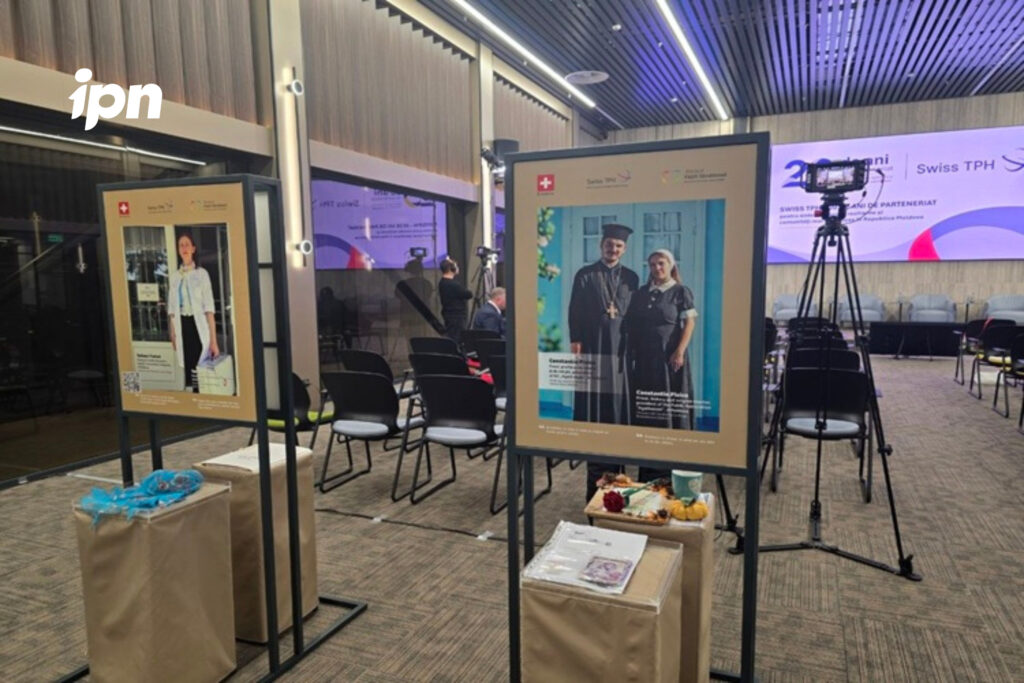
The event also featured portraits of six people whose work has helped support patients with chronic conditions. The portraits are part of a larger exhibition featuring around 30 people from several European countries where projects to prevent noncommunicable diseases are being implemented.
