

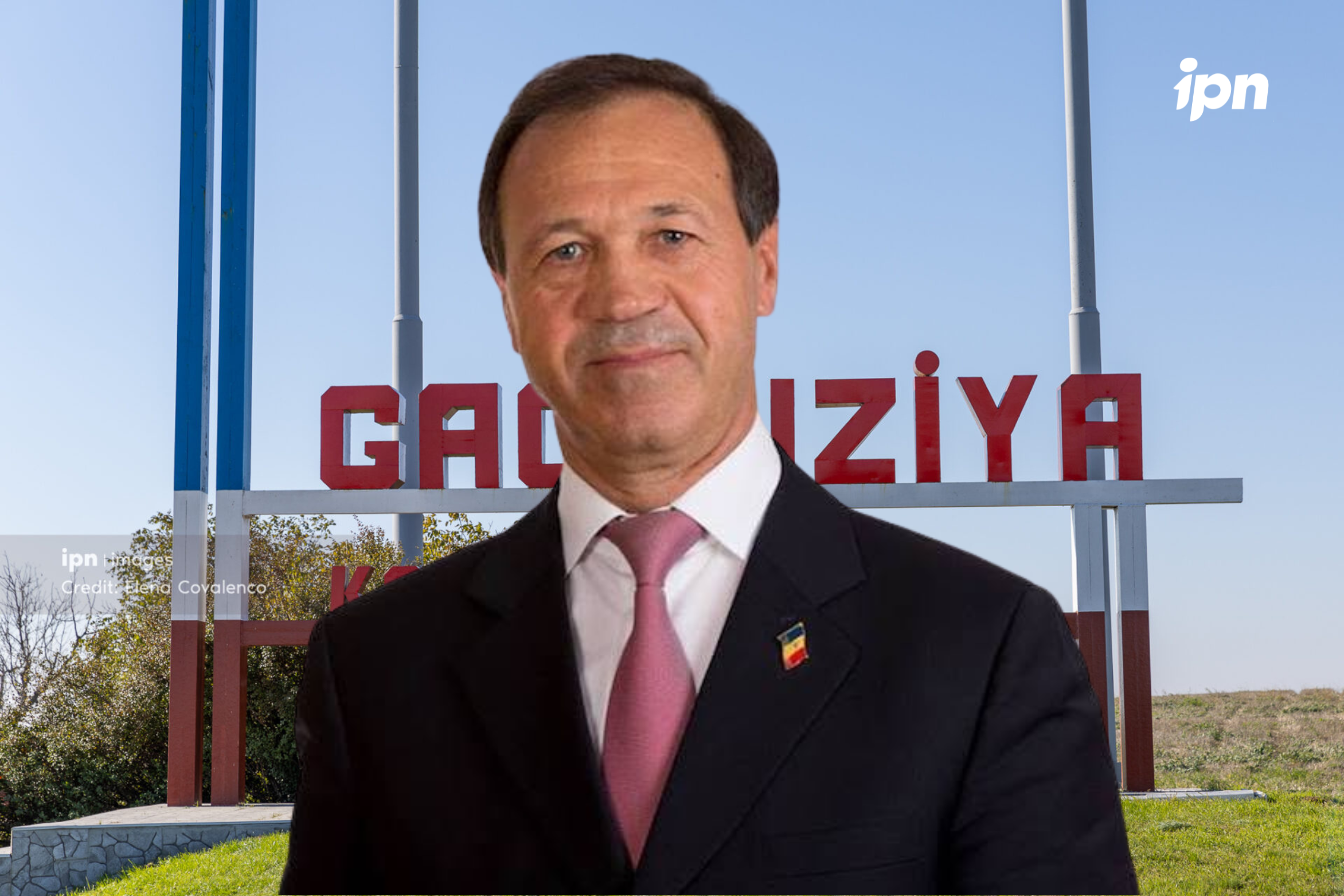
Candidate profile: Who is Fiodor Gagauz, aspiring to the position of Bashkan of Gagauzia

Collage

Fiodor Gagauz is running for the position of Bashkan of Gagauzia in the elections on November 15 on behalf of the Socialist Party. With experience in domestic business structures and parliamentary activity, he aims to promote the interests of the region, support the preservation of the Gagauz language and traditions, and contribute to improving living conditions.

This article is part of a series in which IPN presents biographical details, information on income and assets, and the professional experience of the candidates for the post of Bashkan of Gagauzia.

Fiodor Gagauz was born on October 23, 1958, in the village of Gaidar in Gagauzia. He has higher education in law, studied in Kiev during the period 1986-1991, and a master’s degree in public administration, obtained in 1998. For 20 years, he worked in the internal affairs bodies, where he also held leadership positions. Between 1999 and 2001, he led the Department of Internal Affairs of Gagauzia.

In 2012, he became a deputy in the Gagauz People’s Assembly, where he served until 2014. Subsequently, he was a deputy in Parliament, after running in the parliamentary elections of 2014 and 2019 on the lists of the Socialist Party, and in the early elections of 2021 – on the lists of the Communist and Socialist Block.

The candidate is married and has two children.

According to the wealth declaration for the period 1 January-31 December 2025, Fiodor Gagauz reported earnings of over 668 thousand lei. Of these, nearly 289 thousand lei represent the deputy salary, and over 244 thousand lei – allowances and compensations. He also declared a pension of over 97 thousand lei, while his wife reported pension income of over 37 thousand lei.

In the chapter of real estate, the family owns three apartments, with areas of 45.31, 101.2 and 133.3 square meters, a house of 136.9 square meters and two garages. The candidate does not own a car, however, according to the wealth declaration, he uses an Audi Q7, manufactured in 2019, which belongs to his son, free of charge.

According to an investigation by RISE Moldova, during his time as a deputy, Fiodor Gagauz requested funding from Moscow structures for churches in Gagauzia. In 2018, a few months before the 2019 parliamentary elections, he offered a church in Vulcanesti a certificate worth 500 thousand Russian rubles, presented as a gift from the Moscow authorities.

In the electoral campaign, the candidate advocates for a strong Gagauzia, preserving the Gagauz language, faith and traditions, and ensuring decent living conditions for the inhabitants. The central message of the campaign is: “For Moldova to remain an independent state, Gagauzia must be strong”. Fiodor Gagauz is listed first on the ballot.

The elections for the post of Bashkan, in which eight candidates are standing, will take place on 15 November, on the same day as the elections for the People’s Assembly of Gagauzia.


For Chisinau, the 2027 French election represents more than just a change of president in a friendly country. It could alter the political circumstances under which the Republic of Moldova negotiates its European future. And a vulnerable state must prepare its options before external developments restrict its freedom of choice.

The setback on October 20 in the progress of the Republic of Moldova and Ukraine’s accession to the European Union offers Chisinau an uncomfortable lesson. According to media reports citing European diplomatic sources, Hungary opposed a new procedural step, even after previous requests had been met. This episode does not mean the end of the European perspective, but it shows how easily a process—sometimes presented to the public as a predictable series of reforms and evaluations—can be slowed down.

For the Republic of Moldova, the conclusion is crucial: reforms are indispensable, but they do not eliminate the risk of a political veto. The admission of a new member requires the unanimous consent of the member states and the ratification of the accession treaty in accordance with each country’s constitutional procedures. Chisinau can fulfill its obligations without being able to control the outcome of elections or the political calculations of governments in European capitals.

A responsible foreign policy also takes into account adverse scenarios

The 2027 French presidential election must be viewed in this context. For a country on the brink of war and under pressure from Russia, the race for the Élysée Palace is not merely a distant political spectacle. It concerns Europe’s ability to support Ukraine, its willingness to expand, and the continuity of its commitments to the Republic of Moldova.

Polls published in France indicate that Marine Le Pen holds a strong position, while her opponents are vying for a spot in the second round. A poll presented by Public Sénat shows far-left candidate Jean-Luc Mélenchon and centrist Édouard Philippe tied behind the leader of the nationalist right. These results reflect the balance of power at the time of the poll, not the anticipated outcome of the election. The campaign, voter mobilization, and the final lineup of candidates can substantially change the outcome.

It would therefore be unwise to declare Marine Le Pen’s victory inevitable. It would be equally unwise for Moldovan authorities to base their strategy on the assumption that she cannot win. A responsible foreign policy takes into account adverse scenarios as well, especially when their consequences could affect the country’s security and development for decades to come.

The stakes for France go beyond any single candidate. They concern the rise of a political ideology that pits national priorities against commitments to European solidarity. When applied to enlargement policy, such an orientation could turn support for candidate countries into a politically contentious issue. When applied to relations with Ukraine, it could encourage a reduction in aid and the pursuit of an agreement with Moscow in which the interests of smaller states carry little weight.

This is the risk that Chisinau must assess. We have no basis for presenting a potential French veto on the Republic of Moldova’s accession as a decision that has already been made. However, we have sufficient reason to consider what would happen if, in a capital city that plays a decisive role in European politics, support for enlargement were to be replaced by additional conditions or opposition.

The date of accession does not depend solely on Chisinau

France is no ordinary player in this equation. Its political, military, and economic clout allows it to influence the priorities of the entire Union. Emmanuel Macron has advocated for strengthening European defense and has opened the debate on the role of French nuclear deterrence in protecting its continental allies. These initiatives indicate the extent of the responsibility that Paris can assume for Europe’s security.

A shift in policy at the Élysée would not automatically undermine European solidarity. The Union has institutions, other centers of power, and shared interests that do not disappear after an election. But a less-committed France could slow down decision-making, make compromises more costly, and render support for the Eastern Neighborhood less reliable. For the Republic of Moldova, even this reduction in Europe’s capacity for action would have serious consequences.

The first is security. Ukraine’s ability to resist Russian aggression is a key factor in the security of the Republic of Moldova. A Europe that reduces its support for Kyiv would increase Chisinau’s vulnerability. The neutrality enshrined in the Constitution cannot replace a stable regional environment, nor can it compel Russia to respect the Moldovan state’s freedom of choice.

The second consequence would be political and economic. The prospect of accession bolsters reforms, investor confidence, and citizens’ hope that the sacrifices of the present will ultimately pay off. Repeated postponement of this prospect would fuel disappointment. Pro-Moscow forces would immediately exploit the gap between European promises and concrete results, presenting the deadlocks as proof that the Republic of Moldova is not wanted in the Union.

That is why the government must communicate honestly: the process of rapprochement with the EU can be accelerated through reforms, but the date of accession does not depend solely on Chisinau. Turning a political goal into a fixed timeline exposes society to a disappointment that can be avoided. Citizens need a mature explanation of the obstacles and a credible answer to the question of what will happen if these obstacles persist.

The immediate response must include accelerating reforms and pursuing a much more active diplomatic strategy. It is in the Republic of Moldova’s interest to build lasting support within the parliaments, political parties, and societies of member states, beyond its relations with leaders who are temporarily in power. In France, the Moldovan cause must be explained in terms of its contribution to European security, the manageable scope of its integration, and the concrete results of its internal transformation.

At the same time, Chisinau must insist on having its own progress assessed. Solidarity with Ukraine remains essential, but linking the two issues politically should not mean automatically transferring all disputes concerning Ukraine’s accession to the Republic of Moldova. Supporting Kyiv and defending Moldovan interests are compatible objectives.

It is precisely the complexity of the project that requires planning well in advance

There is, however, one question that the political class in Chisinau all too often avoids examining seriously: what alternative do we have if the willingness to expand diminishes for an extended period? Waiting for circumstances to change cannot be the only strategy for a state affected by depopulation, economic vulnerability, and regional insecurity.

In relation to Romania, the Republic of Moldova has a distinct historical and political option: reunification. The shared language, culture, and history provide this possibility with a foundation that the other candidate countries do not have in the same form. Romania is already a member of the European Union and NATO. From Moldova’s perspective, discussing reunification means exploring a possible form of lasting integration into the European and Euro-Atlantic spheres.

This prospect must be treated with the utmost seriousness. Unification cannot be presented as an automatic process that would, by mere proclamation, remove all European obstacles. It would require democratic will on both sides of the Prut River, constitutional solutions, institutional negotiations, and clarification of the implications for the EU and NATO. The Transnistrian issue, economic integration, and guarantees for all citizens would require explicit answers.

It is precisely the complexity of the project that requires advance preparation. Studies would be needed on administrative harmonization, fiscal sustainability, pensions, public services, and regional development. Citizens must be able to evaluate such an option with a full understanding of its benefits, costs, and stages. A credible debate requires respect for those who have doubts, as well as clear safeguards for minorities, property, and rights.

Progress on this option can move forward in tandem with European integration. Judicial reform, shared infrastructure with Romania, energy interconnections, and institutional alignment are beneficial from both perspectives. They enhance the Republic of Moldova’s freedom of choice and reduce the cost of the dependencies that make it vulnerable.

The future of the citizens living between the Prut and Nistru rivers is too important to depend solely on the outcome of an election

The 2027 French elections may confirm continued European support or usher in a more challenging period. Neither outcome is a foregone conclusion. But it is in the Republic of Moldova’s interest for the authorities to be prepared for both. The Hungarian deadlock shows just how fragile the accession timeline can become; a potential shift in policy in Paris could amplify this fragility.

The Republic of Moldova must pursue EU accession with full determination and, at the same time, seriously prepare for the prospect of reunification with Romania. Such an approach would transform a historical aspiration into a political option that can be democratically evaluated. The future of the citizens living between the Prut and Nistru rivers is too important to depend solely on the outcome of elections over which they have no influence.

Disclaimer: This article was produced by the IPN News Agency. The project—“Europe Up Close: Information, Dialogue, and Cooperation”—is funded by the Department for Relations with the Republic of Moldova and implemented by the IPN News Agency. The content of this article does not represent the official position of the Department for Relations with the Republic of Moldova.

0 FacebookTwitterPinterestEmail


Candidate profile: Who is Fiodor Gagauz, aspiring to the position of Bashkan of Gagauzia

Collage

Fiodor Gagauz is running for the position of Bashkan of Gagauzia in the elections on November 15 on behalf of the Socialist Party. With experience in domestic business structures and parliamentary activity, he aims to promote the interests of the region, support the preservation of the Gagauz language and traditions, and contribute to improving living conditions.

This article is part of a series in which IPN presents biographical details, information on income and assets, and the professional experience of the candidates for the post of Bashkan of Gagauzia.

Fiodor Gagauz was born on October 23, 1958, in the village of Gaidar in Gagauzia. He has higher education in law, studied in Kiev during the period 1986-1991, and a master’s degree in public administration, obtained in 1998. For 20 years, he worked in the internal affairs bodies, where he also held leadership positions. Between 1999 and 2001, he led the Department of Internal Affairs of Gagauzia.

In 2012, he became a deputy in the Gagauz People’s Assembly, where he served until 2014. Subsequently, he was a deputy in Parliament, after running in the parliamentary elections of 2014 and 2019 on the lists of the Socialist Party, and in the early elections of 2021 – on the lists of the Communist and Socialist Block.

The candidate is married and has two children.

According to the wealth declaration for the period 1 January-31 December 2025, Fiodor Gagauz reported earnings of over 668 thousand lei. Of these, nearly 289 thousand lei represent the deputy salary, and over 244 thousand lei – allowances and compensations. He also declared a pension of over 97 thousand lei, while his wife reported pension income of over 37 thousand lei.

In the chapter of real estate, the family owns three apartments, with areas of 45.31, 101.2 and 133.3 square meters, a house of 136.9 square meters and two garages. The candidate does not own a car, however, according to the wealth declaration, he uses an Audi Q7, manufactured in 2019, which belongs to his son, free of charge.

According to an investigation by RISE Moldova, during his time as a deputy, Fiodor Gagauz requested funding from Moscow structures for churches in Gagauzia. In 2018, a few months before the 2019 parliamentary elections, he offered a church in Vulcanesti a certificate worth 500 thousand Russian rubles, presented as a gift from the Moscow authorities.

In the electoral campaign, the candidate advocates for a strong Gagauzia, preserving the Gagauz language, faith and traditions, and ensuring decent living conditions for the inhabitants. The central message of the campaign is: “For Moldova to remain an independent state, Gagauzia must be strong”. Fiodor Gagauz is listed first on the ballot.

The elections for the post of Bashkan, in which eight candidates are standing, will take place on 15 November, on the same day as the elections for the People’s Assembly of Gagauzia.


Approximately 1,000 people were detained in France following large-scale protests on Saturday. According to authorities in Paris, the demonstrations drew more than 400,000 participants. Protests also took place in Italy, where nine people were detained and another 370 or so were taken to police stations for questioning, IPN reports.

In France, the protests were accompanied by clashes between demonstrators and law enforcement. Interior Minister Laurent Nuñez announced nearly 1,000 arrests nationwide. In Paris, police used tear gas and water cannons after some protesters threw objects at law enforcement officers. Incidents were also reported in Lyon, Marseille, and Strasbourg.

The protests were fueled by discontent over the rising cost of living, wage levels, conditions in schools, and the functioning of public services. Against this backdrop, the General Confederation of Labor, one of France’s leading labor organizations, announced a new day of strikes and demonstrations for November 5.

In Italy, in addition to the nine people arrested, another 87 were reported to judicial authorities, and 371 people—including 110 minors—were taken to police stations for questioning. Clashes between protesters and police were reported in Rome, Turin, and Bologna, where law enforcement intervened to disperse violent groups. Property was damaged during the incidents, and in Rome, a group of protesters entered the Colosseum area.

The protests in Italy were organized amid discontent over rising prices, military spending, and international conflicts. Tens of thousands of people took to the streets in several cities, including Rome, Milan, Turin, Bologna, and Florence.

0 FacebookTwitterPinterestEmail


1 IANUARIE, 2025
1 IANUARIE, 2025