




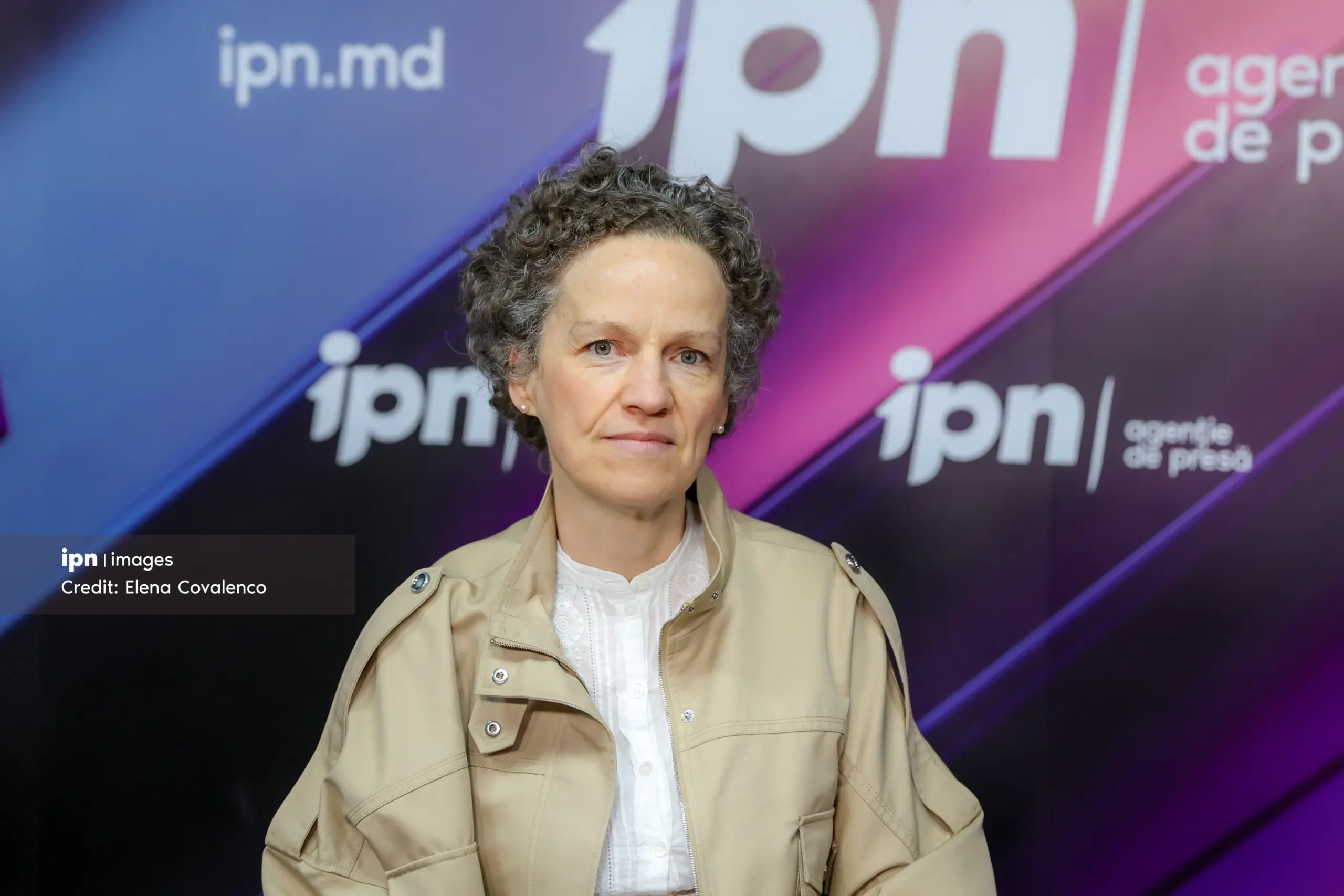
France strongly supports the European path of the Republic of Moldova and the accelerated reforms from Chisinau are appreciated at the European level, states the French Ambassador in the Republic of Moldova, Dominique Waag. In an interview for IPN, the diplomat spoke about the French support for reforms, energy security and combating hybrid threats, emphasizing that European integration means stability and a better life for Moldovan citizens.
Ladies and gentlemen, good day! France remains one of the European players actively supporting the European path of the Republic of Moldova, both politically and through concrete cooperation and assistance projects. In recent years, relations between Chisinau and Paris have intensified, especially in the context of the European Union accession process, democratic reforms and regional security challenges. France supports the Republic of Moldova in areas such as strengthening the rule of law, economic development, energy security and institutional resilience. Today, we discuss this partnership, French support and the European future of the Republic of Moldova with the French Ambassador to Chisinau, Dominique Waag.
Madam Ambassador, we thank you for accepting the invitation from the IPN press agency!
Good day and thank you IPN for the invitation!
Madam Ambassador, how does France assess the progress made by the Republic of Moldova on the path of European integration today?
The progress of the Republic of Moldova is very significant, very rapid. This has been noted in various reports of the European Commission and recently by Kaja Kallas during her visit to Chisinau. The progress is truly rapid and impressive in the adoption of the acquis communautaire in all areas and I believe that the government led by Alexandru Munteanu will be able to maintain this momentum. What needs to be done now is to maintain the pace of the reforms adopted in Parliament and, of course, their implementation.
I believe that the speed of reforms and the depth of the transformations undertaken are also due to the existing social consensus in Moldova regarding this path that Moldovans wish to traverse towards the European Union. And it is precisely this social consensus that Russia is trying to unravel.
I would like to add that Moldova’s European path represents a considerable advantage for Moldovan citizens and a plan to live better in this country. I believe it is important for Moldovan citizens to understand that this project is, above all, a project of prosperity and development for a better life in Moldova. It should not be seen as a constraint at all. It is a positive project that will bring benefits to all citizens.
In your opinion, what are the most important reforms that Moldova still needs to implement in order to advance towards joining the European Union?
It is often said – and it is true – that the path to accession, there are several candidate states, as you know, is based on the merit of each country. Often, the most difficult reforms are in the field of justice and I believe this is also the case for Moldova. Here too, a good course has been chosen, especially through the ongoing vetting process in the Moldovan judicial system.
We already see that this vetting produces results. What will be important for the member states of the European Union is to ensure that improvements in the rule of law and the reform of the judicial system are solid and I would say, even irreversible. For this, it is necessary for judicial decisions to become definitive, thus creating a jurisprudence and, implicitly, a stronger rule of law, especially in the fight against corruption.
And here I would like to emphasize, for the judicial system, that this requirement comes directly from the Moldovan citizens, because it is the citizens themselves who ask the justice system to truly fulfill its social role – that is, to treat everyone equally and to provide confidence to investors, whether they are Moldovan or foreign.
Therefore, the reform of the judicial system is evidently essential, but it is already underway.
I also believe that the Moldovan economy needs to be strengthened so that this country can fully benefit from the European market. This is one of the objectives of the European Growth Plan: financing infrastructure, supporting the improvement of public policies in various areas, energy, transport and improving the functioning of the economy as a whole. This is one of the main objectives of the Growth Plan and, as I mentioned earlier, the plan also aims to provide confidence to foreign investors, which will lead to the strengthening of the economy.
And perhaps the third important point, I believe, is the overall administrative reform. And this will have an impact on the economy, because an administration that operates efficiently, transparently, and with predictable regulation inspires investor confidence and has a positive effect on the economy. And I would add that local administrative reform is also important, so that it can work more on the basis of development projects that the European Union will financially support.
France is currently supporting several projects in Moldova. What are the priority areas of Franco-Moldovan cooperation?
It is difficult to talk about priority areas, because, in fact, our cooperation is very broad and covers many fields. If I have to mention a few, I will try to choose the most important ones.
Firstly, I would like to remind, although I believe people already know, that the French Agency for Development has been present in Moldova for several years and is actively involved in the energy and agriculture sectors. We will probably talk more about this later. It has already launched projects worth 310 million euros in Moldova and, as you know, it offers loans with very low and preferential interest rates, which allows Moldova to already invest in its economic development.
France also offers expertise for projects funded by the European Union, particularly in the field of combating corruption, fighting organized crime and supporting Moldovan innovation and start-ups.
We also have an active economic cooperation. The embassy invited a delegation of French company directors to Moldova in March and we are probably expecting a delegation from large French companies in June.
We also have a rich cooperation in the field of education and the French language, which even allows us to conduct this interview in French. In 2024, France launched a project to teach the French language in lower grades – in kindergartens and primary schools – to prepare students for Francophone bilingual classes. I want to say that these Francophone bilingual classes truly represent a project of excellence in the Moldovan educational system.
I have personally noticed, during my travels, that the students of these classes are exceptional and I must thank the teachers for this, especially the French teachers from the bilingual classes but also from the others, because I know their dedication well and I truly want to express my entire gratitude for their involvement in the service of teaching the French language, because this French language is indeed what creates and bridges between our countries.
This is just a small part of French cooperation, which in reality is much broader and covers other areas as well.
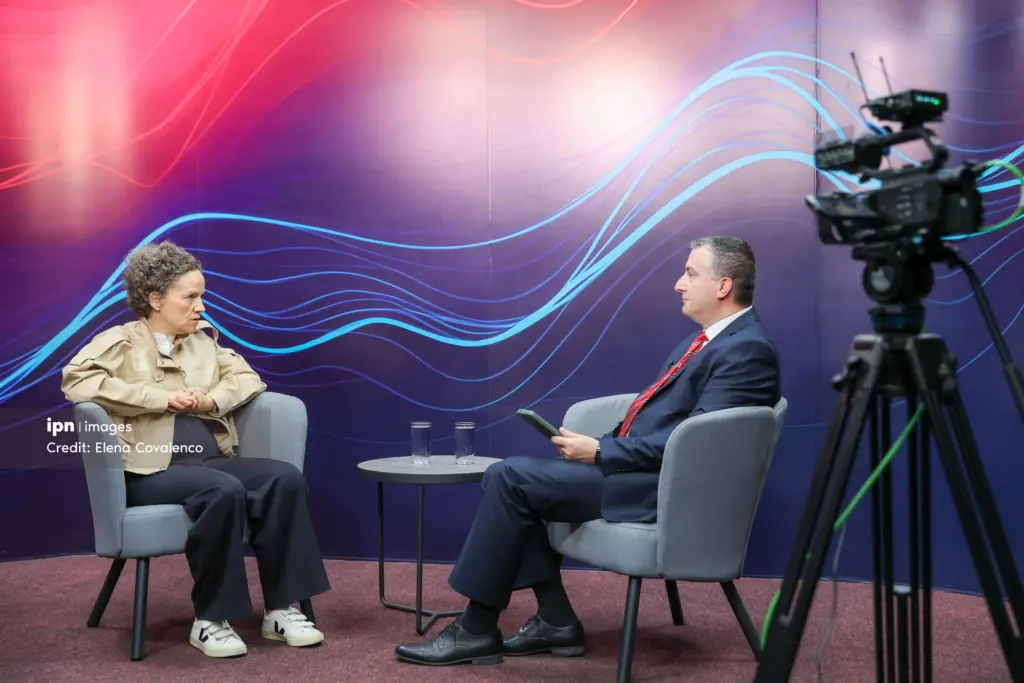
In the current regional context, marked by security challenges and hybrid threats, how does France support Moldova in strengthening its resilience?
We are fully aware in France of these hybrid threats and this parallel hybrid war waged by Russia in Ukraine, because we also feel it in France. There is a very close cooperation and exchange between our administrations in the field of cyber security and security in general. We were present during the elections in Moldova and were able to concretely support the Moldovan administration in this field.
I admire the way Moldova has defended its democracy during electoral processes, as the hybrid war is very intense. Perhaps citizens do not always realize it, but this is also manifested through a lot of misinformation, through what we see on social networks and on a certain number of channels, unfortunately, daily; it is also manifested through thousands, even millions of cyber attacks. This hybrid war is complex and takes different forms.
But also – I have not yet mentioned this aspect – we have cooperation in the field of defense, with annual strategic consultations, exchange of analyses and, also, training programs in France or in Moldova for Moldovan military personnel. We support Moldova also in monitoring its airspace, which is very important for its sovereignty. In any case, Moldova has European and French partners in this field. We are fully aware of the external pressures exerted on this country and we are here to help you cope with them.
Energy security has become a strategic priority for Moldova. What role can France play in this field?
And here the French Agency for Development is involved, providing expertise to the Ministry of Energy of Moldova, which already has a very solid internal expertise. The AFD provides loans for the implementation of the INSPIREE project, co-financed with a major German financier. This project will allow the renovation of 30 public buildings throughout Moldova, especially hospitals and university dormitories, which will improve user comfort and reduce the country’s energy bill. Fundamentally, if you will, what is important for Moldova in the energy sector is to ensure its independence, so that it is no longer vulnerable to external pressures or blackmail.
In addition, almost all countries in the world are engaged in an energy transition. We see even today, in the context of the blockade of the Strait of Hormuz, how important it is to ensure your energy independence, to diversify your supply sources, to modernize the energy sector and infrastructure, and to firmly orient towards renewable energies – which Moldova is already doing. French companies are already exploring the Moldovan market, as they have solid expertise in the field of renewable energies.
Returning to the role of AFD, it is also important to focus on the energy efficiency of buildings – to insulate them better, to consume less energy and to reduce the bills of Moldovan citizens – this is also an objective of our cooperation. This has been an objective of our cooperation for several years, because at the launch of the partnership platform with Moldova, France took over the presidency of the working group in the energy field. Therefore, it is indeed a sector where we have particularly close cooperation.
European integration also involves strong support from society. What message would you like to convey to Moldovan citizens regarding their European future?
Firstly, as the ambassador of France, I convey a message of friendship from France and the French people. I would like the citizens of Moldova to truly have confidence in their European future. Discussing with them and traveling through this country, I notice how much Moldovans already feel part of the European family, and rightly so. The adoption of the European acquis and the implementation of necessary reforms require effort and work. It is a process that takes time, of course.
But I am convinced that Moldovans will maintain their cohesion around this objective, because here, more than anywhere, it is understood that the European Union is a project of peace. See for yourselves: since the European states united in the European Union, there are no more conflicts between us. There is a much closer approach, much better relations, a much clearer understanding of mutual interests, of the compromises we can make to reach an agreement, to move forward together and for our common prosperity.
Every country that has joined the European Union has obtained direct benefits for its population and society, but has also made a contribution to the European Union, even through the expansion of the European market, as well as through participation in decisions and the democratic functioning of the Union.
And, finally, how do you see the relations between France and Moldova in the coming years?
I believe that these relations will continue at the same pace, certainly at the political level, as France’s support is deeply anchored in our diplomacy and will continue. But I also believe that our societies will come even closer and get to know each other better precisely in the context of this closeness to the European Union, because all societies and all peoples who have joined the European Union have learned to know each other better.
It is completely false to believe that the European Union intervenes in matters of culture or identity. I want to be clear and firm on this matter. Those who claim that there is a European influence on identities are lying. On the contrary, European peoples get to know each other much better. We travel more to each other, but we also study more together. And European students participate in alternative programs and go through semesters at European universities more easily. There is indeed an improvement in mutual knowledge and friendship among European peoples. We continue to live differently in Barcelona, Thessaloniki and Stockholm, but we know each other much better and we are also much more supportive of each other.
My message to the people of the Republic of Moldova is a message of friendship and trust in the European future, from the French.
Madam Ambassador, thank you very much for this interview!
And I thank you too!
Octavian Bratosin, IPN
