
The EGTCs or European Groupings of Territorial Cooperation were established with the aim of facilitating cross-border, transnational and interregional cooperation between the member states or regional and local authorities within them. The aim is to contribute to economic and social cohesion and to promote multi-level governance mechanisms.
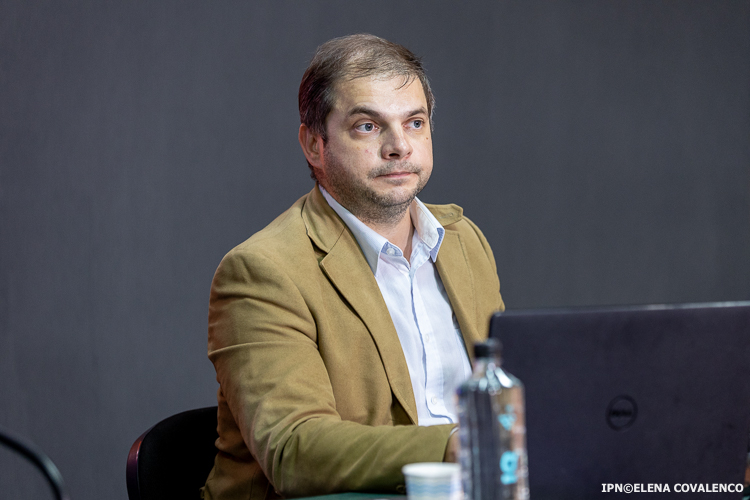
In a news conference hosted by IPN, Iurie Calestru, director of the Institute for Project Development and Expertise of the Republic of Moldova, explained that EGTCs allow partners from different member states to unite and provide, within the limits of their competences, joint services or to manage joint investments and infrastructure, without the need for a prior international agreement to be signed and ratified by the national authorities.
Currently, there are 88 European Groupings of Territorial Cooperation in the European Union, located in 13 member states. They function as legal entities that aim to facilitate cooperation between local and regional authorities in different member countries so as to carry out joint, cross-border, transnational or interregional projects. Romania participates in six of these EGTCs, four of which are based in Hungary, but does not host any EGTCs on its territory.
Among the countries with the most EGTCs are France, Spain, Italy, Germany, Poland, and Austria. The constituted group can access large amounts directly from the European Commission or through various European Union programs.
According to Iurie Calestru, only through the financial-budgetary year 2021-2027 alone, about €9 billion was allocated for the 88 territorial groupings existing in the EU. EGTCs are entities with legal personality and can be set up at different levels: between member states, including third countries such as the Republic of Moldova or Ukraine, between institutions, central public authorities, including between public enterprises or bodies governed by public law, etc.
The opportunity to create EGTCs was debated in the Romanian Parliament a year ago. Subsequently, there were held a number of meetings with decision-makers and the legislation stipulated support for the creation of such groupings.
Iurie Calestru noted that the Ministry of Finance opened official discussions with European partners, asking through official channels what steps the Republic of Moldova should follow for a contact point to exist so as to move from the stage of discussions to the actual establishment of the first EGTC in the Republic of Moldova.
Note: The press conference was held within the project “Double integration through cooperation and information. Continuity”, funded by the Department for Relations with the Republic of Moldova of the Government of Romania. The content of this conference does not represent the official position of the Department for Relations with the Republic of Moldova.
- Largest donation of Romanian books for 300 libraries
- EGTCs can bring important European funds to Moldova, Euronest director
- Calamity in Romania. Forecasts do not indicate risks for Moldova
- Contract for construction of new bridge over Prut signed in Ungheni
- Metropolitan Church of Bessarabia condemns the clergy’s involvement in election campaign
- Criminal group “Shor” continues recruitment of citizens for subversive purposes
- Klaus Iohannis at UN: We will continue unwavering support to consolidate Moldova’s resilience
- Documentary “Martyr of the Union” to be released in Chisinau Friday
- Romanian Film Days in 10 Moldovan cities
- State-of-the-art equipment for seven laboratories of UTM
- Moldovan-Romanian partnership for an equal chance to early education offered to all children
- Priests of Metropolitan Church of Moldova campaign against EU and government, Nord News investigation
- Chisinau airport more crowded than Iasi airport
- Union Highway to be completed by 2030, says Romanian state secretary
- Debut Film Festival is open to young filmmakers from Romania as well
- Union of Filmmakers of Moldova announces organization of Debut Film Festival
- Preconditions for strengthening Strategic Partnership between Romania and Moldova
- USM to host polling stations for Romania elections
- Energocom reserves for first time energy quotas to be purchased from Nuclearelectrica
- Producers of aromatic and medicinal plants ask for more support from authorities
- ECO-BUS WEEKLY DIGEST September 09 – 15. Most important Economy & Business news by IPN
- Universities from both banks of the Prut support Moldova’s European path
- Cluj-Napoca donates three minibuses to public cultural institutions of Ungheni
- “Literature Train” to set off this month from Iasi to Chisinau
- Researchers from Moldova and Romania can obtain grants for joint projects
- Teachers from Bucharest teach Romanian to students of Olimp High School in Sângerei
- Diversification of gas sources and routes, an imperative of the time
- Strategic Partnership with Moldova on Romanian Supreme Council of Defense’s agenda
- Reunion of Romanian National Theatres to be inaugurated tonight in Chisinau
- Contingent of Moldovan servicemen to take part in EUFOR ALTHEA
- Teenager transported by SMURD to Romania to undergo surgery
- Ministry of Agriculture proposes special regime in agriculture. Vladimir Bolea: We rely on Romanian model
- Romanian mayors urge Moldovan counterpart as to access pre-accession funds
- ECO-BUS WEEKLY DIGEST September 02 – 08. Most important Economy & Business news by IPN
- CES allots 100m lei for farmers affected by drought
- Geoană stepping down as NATO deputy secretary general
- DRRM offers books and school supplies for 20,000 preschoolers and students of Moldova
- Romania is among most attractive countries for investment
- Presidents Iohannis and Sandu sign declaration to strengthen Moldova’s resilience
- Klaus Iohannis welcomed in Chisinau
- EU ambassador: Cultural and linguistic identity is a precious gift
- ‘Pilgrimages’ continue as another 64 clerics expected to fly to Moscow next week
- National Congress of Romanian Historians adopts declaration in support of Moldova’s EU integration
- Klaus Iohannis to visit Moldova on Romanian Language Day
- First 40 school minibuses bought with Romania’s support distributed across Moldova
- Moldova and Italy are Romania’s leading wine importers
- Romanian government starts talks to buy EBRD’s stake in Giurgiulesti Free Port
- Romanian prime minister: We wish for Moldova a future in the middle of the European family
- Klaus Iohannis on Moldova’s Independence Day: ‘You are part of the great European family’
- Prospects of cooperation in tourism discussed by Romanian mayors with PM Recean
- National Congress of Romanian Historians to be held in Chisinau and Suceava
- Children from Romania and Moldova are expected at Youth Sports Festival in Iasi
- Romania is determined to continue political and practical support for Ukraine and Moldova, says minister
- At least six priests swiftly return from Moscow ‘pilgrimage’
- Romanian history in 100 portraits at History Museum of Moldova
- Bookfest returns to Chisinau on August 28 with book launches and public debates
- Priests being sent on ‘pilgrimages’ to Moscow for instruction and MIR cards
- 69 new school buses to reach Moldovan districts by September 1
- Comrat marks 235 years since its founding. Akcent band to give concert
- Call to legalize industrial hemp
- One more delay in starting Union Highway
- Artists from Moldova to take part in “Doina Covurluiului” Folklore Festival in Galati
- Ștefan Purici: National Congress of Romanian Historians in 2024 will help to better know our past
- Gina Necula: “Lower Danube” University has a varied educational offer this year
- Silvia Corlăteanu-Granciuc: In recent years, historians got rid of political involvement
- Igor Sharov: USM is part of university consortium that consists of nine large universities
- National Congress of Romanian Historians, fourth edition, Chisinau-Suceava. IPN debate
- Elections in Romania and Moldovan voter. Op-Ed by Anatol Țăranu
- Nicolai Mîndra: Union Highway should be ready by 2035
- Construction of Union Highway could be delayed for two years, secretary of state
- Iurie Calestru: Road to EU means connectivity improved through modern infrastructure
- Union Highway, interconnection of road infrastructure in Romania and Moldova. IPN debate
- A8 motorway will intersect with A7 and will cross the Prut River
- League of Students of Bessarabia urges to assume Romanian identity
- League of Students of Bessarabia stages event to promote Romanian identity tonight
- Dumitru Galupa: Objective to increase forested area by 145,000 hectares is very ambitious
- Ovidiu Badea: Romania’s territory is 29% covered by forests
- Moldovan-Romanian cooperation in forestry. IPN debate
- Head of Moldsilva: In 2024 we aim to afforest 7,400 hectares
- Transport in Moldova, Romania and Ukraine: interconnection and European integration. IPN Debate
- Railway expert: We cannot have one railway company that belongs only to state
- Acting head of CFM: Rail infrastructure and rail transport services must be separated
- Mircea Păscăluță: Coordinated control point will be set up at Giurgiulesti-Galati border crossing point
- HiSky to operate flights to Paris and other destinations
- Lucian Liviusz Olteanu: Young people should be attracted to education system as soon as possible
- Mariana Marin: We need to invest a lot in young people who opt for a teaching career
- Viorel Dolha: Young people should be motivated so as to attract them from faculty to teaching
- Educational bridges between Romania and Republic of Moldova. IPN debate
- Romania and Republic of Moldova between sovereignty and Union. Op-Ed by Anatol Țăranu
- Luminita Odobescu: Romania remains committed to providing support for European integration
- Romanian Premier: Romania would not be complete without Romanians who are abroad
- After Eiffel, NESS PROIECT EUROPE will build bridges over the Prut River
- Romanian Premier: Immediate action is needed to support Moldova
- Competition Council will benefit from assistance project coordinated by counterparts from Romania
- Romania will continue to work with Ukraine and Moldova to enhance energy interconnection, minister
- Itinerant exhibition “Caravan of Gulag Memories” arrived in Chisinau
- Romania, Moldova to support each other in peacekeeping missions
- Romanian actors conquer audience in Ialoveni at start of comedy tour financed by DRRM
- Constantin Poiană: A hospital that gets involved in attracting European funds is one that has a future
- Technical projects must be designed and submitted at right time, jointly with Romanian partners, statement
- Andrei Uncuța: National Hospital has cooperation agreements with hospitals of Timisoara and Iasi
- Oleg Canațui: Romania can help Moldova shorten path to European funds
- Cooperation in healthcare between entities from both banks of the Prut River for absorption of European funds. IPN debate
- Three Bessarabians canonized by Holy Synod of Romanian Orthodox Church
- Valentin Naumescu: Return to world of spheres of influence is unacceptable
- Poland and Ukraine signed a defense agreement
- National Art Museum hosts Theodorescu-Sion exhibition
- Mircea Geoană: NATO support is additional guarantee that Ukraine and Moldova can fulfill their European path
- Cristina Cambur: Cooperation among teachers, schools, universities creates benefits for educational system
- Romanian Commodities Exchange expands to Moldova
- Viorica Andritski: Teachers are interested in teaching in Romanian in schools intended for nonnative speakers
- Corina Lungu: Professional partnerships determine quality of educational process
- Moldovan-Romanian partnership in continuous training of teachers. IPN debate
- Second group of teachers from Moldova goes to Iasi for Romanian language courses
- Izabela Moroz: Mental health reform brought a lot of value to beneficiaries
- European partnership in reforming mental health system of Moldova. IPN debate
- Significant increase in Romania – Moldova roaming services
- Romania’s expertise will help us move quickly in negotiation process, statement
- Vatra Dornei hosts 18th Moldova Regional Economic Forum
- ‘Partnership, solidarity and brotherhood’, PM Recean greets Romanian foreign minister
- Foreign ministers of Moldova, Romania and Ukraine sign joint statement in Chisinau
- Romanian Bessarabia deported to Siberia. Op-Ed by Anatol Țăranu
- Direct Pharma Logistics comes to Moldova and Bulgaria
- Mircea Geoană ranks first in voting intentions for Romania presidential election, poll
- Russia does not want Moldovans to say “yes” to European Union
- USM launches “Bessarabian Academy” interdisciplinary program
- Camelia Mihalcea: Thanks to EURES, migration for work purposes becomes a legal process
- Raisa Dogaru: By joining European EURES network, Moldova will make better use of capacities of workforce
- Romania – Republic of Moldova, joint efforts in reforming labor market. IPN debate
- Felicia Bechtoldt: We encourage creation of jobs in rural areas to reduce internal migration
- Romania can be a good generator of expertise in organic agriculture, experts
- Biotechnologies could save soil and water, expert
- USM community celebrates Folk Costume
- Romanian Children’s Animation Festival begins June 30
- Fourth edition of TIFF starts today in Chisinau
- Laurențiu Pleșca: After eventual success of Russia in Ukraine, Moldova will be next victim
- Pavel Horea: Frozen conflict on Moldova’s territory turns us into source of instability
- Romania- Republic of Moldova, extension of cooperation in military field. IPN Debate
- Problems related to Union Highway – far from Ungheni, Chisinau and Odessa
- Romania and Republic of Moldova in light of June 28, 1940 precedent. Op-Ed by Anatol Țăranu
- Over 5,000 books to be donated to Moldovan kindergartens thanks to partnership with Romania
- Speaking of peace in Ukraine, the Kremlin wants territories up to the west of the west, article
- Romania reduces tax on electricity imports and exports to Moldova and Ukraine
- Romania will provide support for participation in peacekeeping operations and missions
- Orhei to host Assembly of Orthodox Youth from Bessarabia and Romania
- Chief of Romanian Defense Staff on a visit to Chisinau
- Alina Popa: EGTC is an extremely flexible instrument and each state can use it
- Ina Coșeru: European cooperation projects for comfort of citizens at local level
- Romania-Republic of Moldova, creation of European Grouping of Territorial Cooperation. IPN debate
- Iurie Calestru: European Grouping of Territorial Cooperation between Moldova and Romania can help unlock a solid range of funding opportunities
- Romanian-Moldo-German Cultural Center sets world record for longest and heaviest Romanian folk belt
- Romania assumes decisive role in Moldova’s energy security
- Vladimir Bolea: Bill concerning industrial hemp cultivation is almost ready
- Romania-Republic of Moldova, strengthening partnership in intellectual property. IPN debate
- Ion Țigănaș: Collective management organizations are obliged to maintain transparency
- Andrei Simion Ijac: Many artists from Moldova are members of collective management organizations of Romania
- Eugeniu Rusu: Intellectual property rights are private rights
- International conference on Moldova’s role in Ukraine reconstruction
- Nicolae Ciucă: Romania provides Chisinau with all support needed to join EU
- Alexandru Constantin: Romania and Moldova will have joint packages for medical tourism
- Andrei Revenco: Infrastructure is most important challenge for tourism, including medical tourism
- Moldovan-Romanian partnership in tourism sector, joint development strategies. IPN debate
- Andrei Chistol: Medical tourism has extremely high potential in Moldova
- Mihai Isac: Romanian citizens in Moldova did not fall into trap of populist promises of parties of Romania
- Conflicting information about canceled Chisinau-Yerevan-Chisinau flight
- STOP-FALS: Romanian F-16s do NOT fly in direction of Odessa
- 57 teachers leave for Romania for intensive vocational training course
- Priest Paul Mihail to be honored at scientific symposium hosted by National Library
- Logistics projects in Moldova for transit of goods in Romania and throughout the EU
- Innovations for competitive agriculture in Moldova in cooperation with Romanian partners
- Klaus Iohannis at B9 Summit: Moldova must receive assistance to build resilience
- Tudor Braniște: Problem of young people doing research is quite acute and will become more acute over time
- Moldova and Ukraine in trilateral cooperation with Romania
- Bogdan Simionescu: It is not right to believe that we can develop only with jurists and economists
- Ion Tighineanu: Funding for science in Moldova is very modest
- Romanian Academy and ASM: Partnership for development of research and innovation in European context. IPN debate
- List of Romanian MEPs who will enter European Parliament
- European Parliament elections in Moldova. Partial results
- Igor Grosu: Through yesterday’s vote, Moldova enters electoral map of Europe and Romania
- Siegfried Mureșan: Your vote makes me ambitious to work even more for Moldova’s European integration
- Works on first highway in Moldova closer to initiation
- Adrian Dupu: Exemplary mobilization proves that citizens on left side of the Prut really care about Moldova
- Moldova will have its people in Brussels
- Flight Chisinau-New York via Bucharest already on the wing
- Transylvania International Film Festival comes to Chisinau
- Bucharest and Chisinau in dilemma of national unity. Op-Ed by Anatol Țăranu
- Romanian ambassador discusses potential projects with mayor of Ceadâr-Lunga
- LOC supports PNL in June 9 European Parliament elections
- “Hecenii” ensemble ranked third in Romania’s Got Talent
- CineMaraton TV is coming to Moldova!
- Students of school of Galati municipality to take part in summer camp in Moldova
- Moldova and Romania will host EHEA ministerial conference in 2027
- Snagov Pact in Moldova between intention and reality. Op-Ed by Anatol Țăranu
- Romanian prosecutors annihilate trafficking network in cooperation with Moldovan authorities
- Viorica Mămăligă: From our Romanian colleagues we learned how to access funds and prioritize our development ideas
- PSDE urges Moldovans with Romanian citizenship to support PSD-PNL Alliance on June 9
- Alina Baba: LAGs in Moldova should benefit as soon as possible from pre-accession funds
- Marina Albu: Local Action Groups cover 50% of Moldova’s territory
- LEADER approach in Romania and Moldova, exchange of experience, transfer of good practices. IPN debate
- Gheorghe Lăcătușu: It’s good to explain to farmers, through agricultural consultancy, why they need to unite
- Ina Butucel: There will be no state interference in work of agricultural chambers
- Agricultural chambers in EU, models for Moldova, IPN debate
- Vladimir Bolea: Tens of thousands of farmers will benefit from agricultural chambers
- Adrian Dupu: 20,000 pupils from Moldova will get school supplies from Romania
- Traian Băsescu: Future president of Romania could be a Union president
- Platform “Friends of Teleradio-Moldova” launched
- Pact for Europe, signed with thought of national consensus
- Moldovan researchers win collaborative projects with Romania
- International Poetry Festival “Grigore Vieru” to be held in Chisinau, Singerei and Iasi
- Mihai Popșoi: Relations between Moldova and Romania are closer than ever
- Moldovan and Romanian armies will be able to participate in joint multinational missions
- Opportunities of Moldova’s capital market discussed with Romanian Investors Association
- Romanian citizen accused of treason, Russian diplomat expelled
- Moldova in the context of Black Sea and Balkans security
- Romanian citizens on June 9 will elect 33 Romanian members of European Parliament
- European Parliament elections and Romanian Republic of Moldova. Op-Ed by Anatol Țăranu
- Igor Grosu in Bucharest: We are more and more determined to advance European integration process
- Moldova will be guest of honor at 17th edition of Bookfest
- Nicolae Ciucă: Romania openly supports Moldova and Ukraine in their European aspirations
- New aid package for Moldova. Romanian Premier: We continue energy exports
- Universities from both banks of the Prut, common goals
- Young people must assume their Romanian identity, especially amides hybrid war, statements
- Identity March to be staged in Chisinau in connection with Days of Romanians Everywhere
- Crown Princess Margareta advocates supporting Moldova in European integration process in Luxemburg
- Deputy Premier Popșoi to attend Black Sea and Balkans Security Forum
- Anca Dragu in Bucharest: We are seeing more interest in investments in Moldova
- Russia’s hybrid warfare in space of GPS waves along the Prut River
- Priest Constantin Necula returns to Moldova
- Motorway crosses the Prut River at Ungheni (RO) and Ungheni (MD)
- Romanian Traditions Festival starts in Chisinau
- Exchange of experience in education between Moldova and Romania
- ROMGAZ opens branch in Moldova
- 212 years of Russian occupation of Bessarabia is marked today
- “Republic of Moldova presents” exhibition to be mounted in Brasov June 28-30
- Cooperation agreement with National Agency for Sport of Romania
- Maia Sandu is only European and democratic solution for Moldova, Romanian PM
- Clever Group of Romania to launch two TV channels in Moldova
- Victor Botnaru: Our traditional music is still of interest today
- Victor Gilash: Cobza is an identity element that represents us
- Andrei Prohin: For UNESCO it is important that actions to safeguard intangible cultural heritage start from people
- Renewable energy market in Moldova has extremely high potential, Romanian company
- Sasha-Liviu Stoianovici: There are few places where cobza has closest life to tradition of existence
- Cobza could be included in UNESCO Heritage List. Ioana Baskerville: There must be cooperation between sides of the Prut
- UNESCO file “Cobza”. Moldovan-Romanian cooperation in promotion of intangible cultural heritage. IPN debate
- Chisinau hosts Romanian Literature Days
- Siegfried Mureșan: Moldova managed to take steps that nobody thought possible two years ago
- On Day of Myrrh-bearing Women, Balti will host “Feast of humble and loving hearts” show
- 52 polling stations to be opened in Moldova for electing MEPs for Romania
- Romania is Moldova’s main trade and investment partner
- Dorin Recean: We aim to be most business-friendly state in EU by 2030
- Romania and Moldova in case of expansion of Russian aggression. Op-Ed by Anatol Taranu
- Romanian Academy of Sciences and Moldovan Academy of Sciences consolidating partnership
- Moldovan-Romanian cooperation in accessing European funds. IPN debate
- Premier Energy to develop renewable energy assets in Moldova
- Iurie Calestru: To facilitate absorption of European funds, we need to have trained specialists
- Dionisie Ternovschi: In recent years we have seen concrete rapprochement between Moldova and Brussels
- Tana Alexandra Foarfă: Pre-accession funds are linked to achieved progress
- In Chisinau, Bucharest has many things to analyze coldly, opinion
- HE Petru: Holy joy fills our heart during Feast of Lord’s Resurrection
- Mihai Tîrșu: Moldova must develop capacity of internal electrical infrastructure
- Moldovan-Romanian cooperation in energy sector. IPN debate
- Pavel-Casian Nițulescu: Our objective is to ensure Moldova’s energy security
- Constantin Borosan: Romania is pillar of Moldova’s energy security
- Third Moldova-Romania interconnection power line to be built
- Eugen Tomac: Security situation requires special treatment for Moldova
- Festival of Romanian Traditions returns to Chisinau
- Diaconia charity organizes national food collection
- “Adventure without border. Education through theatre and film” project comes to Chisinau
- Romanianism declared Moscow’s enemy in Moldova. Op-Ed by Anatol Țăranu
- Mihai Popșoi about searches at MFA: Person was summoned to Prosecutor’s Office, but no restrictions were imposed on him
- Common heritage on both banks of the Prut River is inseparable from European destiny, conference
- “Orthodox Philanthropy” Association of Huși, with gifts for children and elderly from this bank of the Prut
- Moldovagaz will buy gas from tender contest winner Energocom in May as well
- “The Adventures of the Enchanted Hat” on visit to children in Leova, Rezina, Cimislia and Ungheni
- Colors of postwar Bessarabia cross the Prut River
- First Europeanization project or how Bessarabia became Romania. Op-Ed by Anatol Țăranu
- Brussels hosted 13th edition of conference aimed at boosting absorption of European funds
- After Gazprom, Inter RAO can also lose positions in Moldova
- CSAT Romania: A pro-European government in Chisinau after 2025 is essential
- Ion Chicu: We will sign Pact for Europe, provided “Euro-Atlantic space” is excluded
- Iulian Chifu: Informational component is part of hybrid war waged by Russia against Moldova
- Establishment of political bloc “Together” completed
- Subjects of international restrictions risk remaining without Moldovan nationality
- CET-Nord purchased natural gas on stock exchange for first time
- Premier Recean in Vilnius: We continue to strengthen our relations with strategic partners
- Reintegration process depends on country’s movement in European direction, Deputy Premier
- Anca Dragu: Soon we will be able to see Stock Exchange in Chisinau functional
- Government to allocate 1.3m lei for repairing rehearsal space of “Hecenii”
- Transit of Ukrainian agricultural production on Moldovan roads to diminish
- Diesel fuel from Romania reached its destination. Vladimir Bolea: Bureaucracy slowed down process
- Successful performance of dance ensemble attracts President Sandu’s attention
- Siegfried Muresan to run for a new seat of MEP, will further support Moldova’s integration
- Romania to approve second tranche of 100m non-reimbursable aid€ offered to Moldova
- Moldova will have access to Interreg Europe program
- First three districts to get Romanian diesel fuel that arrived in Moldova
- Moldovan Government closely following Romania’s bill enabling military interventions abroad
- Moldova must be integrated into Ukraine’s reconstruction plan, opinions
- Ordeal of Romanian women victims of communism illustrated in exhibition at Moldovan Museum of History
- Possibility of introducing concept of well-being in schools discussed with Romanian expert
- Gas in spring, like sled in summer