

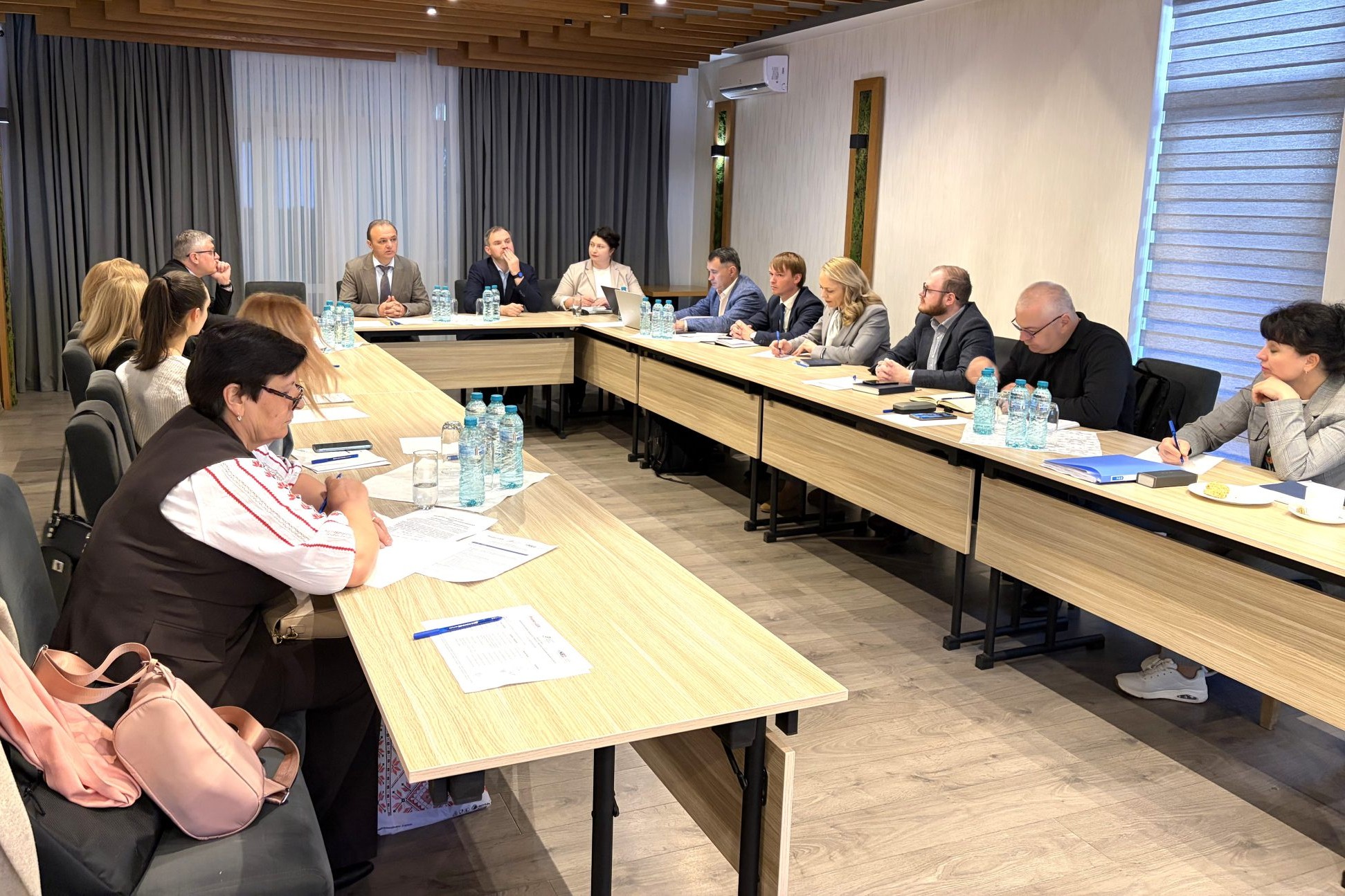
The status of the victims of the Tiraspol regime must be officially recognized, Promo-LEX

Photo source: Promo-LEX

The Republic of Moldova does not yet have a clear regulatory framework for regulating the status of victims of the Tiraspol regime and internally displaced persons. At a round table organized by the Promo-LEX Association, participants called for a functional mechanism for recognizing victim status and automatic access to medical and rehabilitation services for people subjected to torture or inhumane treatment, reports IPN.

The event brought together representatives of public institutions, human rights experts and members of civil society. The discussions focused on the difficulties faced by individuals affected by abuses committed in the Transnistrian region.

The Promo-LEX experts have highlighted several systemic gaps: the lack of an official mechanism for recognizing victim status, limited access to social and medical services, and poor coordination between institutions. Also, delays in promoting legislative changes in the field of social protection were mentioned.

During the discussions, the need to align national legislation with European standards on the protection of crime victims was highlighted, in the context of the European integration of the Republic of Moldova. Participants emphasized the importance of inter-institutional cooperation and the involvement of civil society in the development of public policies.

The round table entitled “Support for the victims of the Tiraspol regime: from legal void to a functional protection mechanism” was organized with the financial support of the Soros Foundation Moldova and the National Endowment for Democracy.


The designated Prime Minister, Vasile Tofan, will request the Parliament’s vote of confidence for the cabinet of ministers and the government program today. The plenary session in which the deputies will examine the request is scheduled for 11:00 AM, reports IPN.

In accordance with the legislation, the Parliament gives the vote of confidence to the Government with the vote of the majority of elected deputies. Based on the vote of confidence granted by the Parliament, the President of the Republic of Moldova appoints the Government.

In the Government proposed by the designated Prime Minister Vasile Tofan, ten ministers from the current executive will be found, and four portfolios will go to new members of the cabinet. At the same time, the deputy prime ministers for reintegration and for European integration, Valeriu Chiveri and Cristina Gherasimov, will retain their positions.

Alexandru Gasnaș, presidential advisor, is designated for the position of Minister of Health. Radu Musteața, the director of the National Agency for Food Safety, is proposed for the leadership of the Ministry of Agriculture and Food Industry, while Victoria Belous, PAS deputy, who previously held the same portfolio, is put forward for the position of Minister of Finance. Dan Suruceanu, the current vice-administrator of the multimedia and sports complex Chisinau Arena, is proposed for the leadership of the Ministry of Culture.

Vasile Tofan has been appointed as the prime ministerial candidate by President Maia Sandu, at the proposal of the Action and Solidarity Party, following the resignation of Alexandru Munteanu.

0 FacebookTwitterPinterestEmail


The status of the victims of the Tiraspol regime must be officially recognized, Promo-LEX

Photo source: Promo-LEX

The Republic of Moldova does not yet have a clear regulatory framework for regulating the status of victims of the Tiraspol regime and internally displaced persons. At a round table organized by the Promo-LEX Association, participants called for a functional mechanism for recognizing victim status and automatic access to medical and rehabilitation services for people subjected to torture or inhumane treatment, reports IPN.

The event brought together representatives of public institutions, human rights experts and members of civil society. The discussions focused on the difficulties faced by individuals affected by abuses committed in the Transnistrian region.

The Promo-LEX experts have highlighted several systemic gaps: the lack of an official mechanism for recognizing victim status, limited access to social and medical services, and poor coordination between institutions. Also, delays in promoting legislative changes in the field of social protection were mentioned.

During the discussions, the need to align national legislation with European standards on the protection of crime victims was highlighted, in the context of the European integration of the Republic of Moldova. Participants emphasized the importance of inter-institutional cooperation and the involvement of civil society in the development of public policies.

The round table entitled “Support for the victims of the Tiraspol regime: from legal void to a functional protection mechanism” was organized with the financial support of the Soros Foundation Moldova and the National Endowment for Democracy.


The European Union has fined the online marketplace AliExpress 550 million euros for a serious violation of the Digital Services Act. The decision was made because the platform did not take sufficient measures to prevent the sale of unsafe and counterfeit products, according to IPN.

The fine is the latest development in the formal proceedings launched in 2024 regarding a possible violation of the EU Digital Services Act. The European Commission stated that AliExpress had failed to implement an effective system for identifying and removing illegal products and had underestimated the resources needed for content moderation.

According to the European Commission, the mechanisms for verifying product compliance could be easily circumvented, with unscrupulous sellers misclassifying products to avoid stricter requirements. European authorities also argue that the platform does not have enough staff to verify suspicious products.

At the same time, the European Commission found that a large number of illegal products, including unsafe toys and hazardous cosmetics, continued to be sold through AliExpress. In some cases, these products remained available on the platform for weeks after being reported. Furthermore, the Commission found that AliExpress had not properly enforced its own penalty policy and had allegedly allowed sellers of illegal products to remain active even after they had been penalized.

AliExpress now has until October 20 to submit an action plan outlining how it will address the issues raised by the European Commission. The Commission will then decide, within two months of receiving the plan, whether additional measures are necessary.

The sanction comes after the EU introduced a three-euro fee in early July for packages valued at up to 150 euros originating from outside the EU. The measure could significantly impact the business models of the Chinese e-commerce platforms AliExpress, Temu, and Shein.

0 FacebookTwitterPinterestEmail


1 IANUARIE, 2025
1 IANUARIE, 2025