




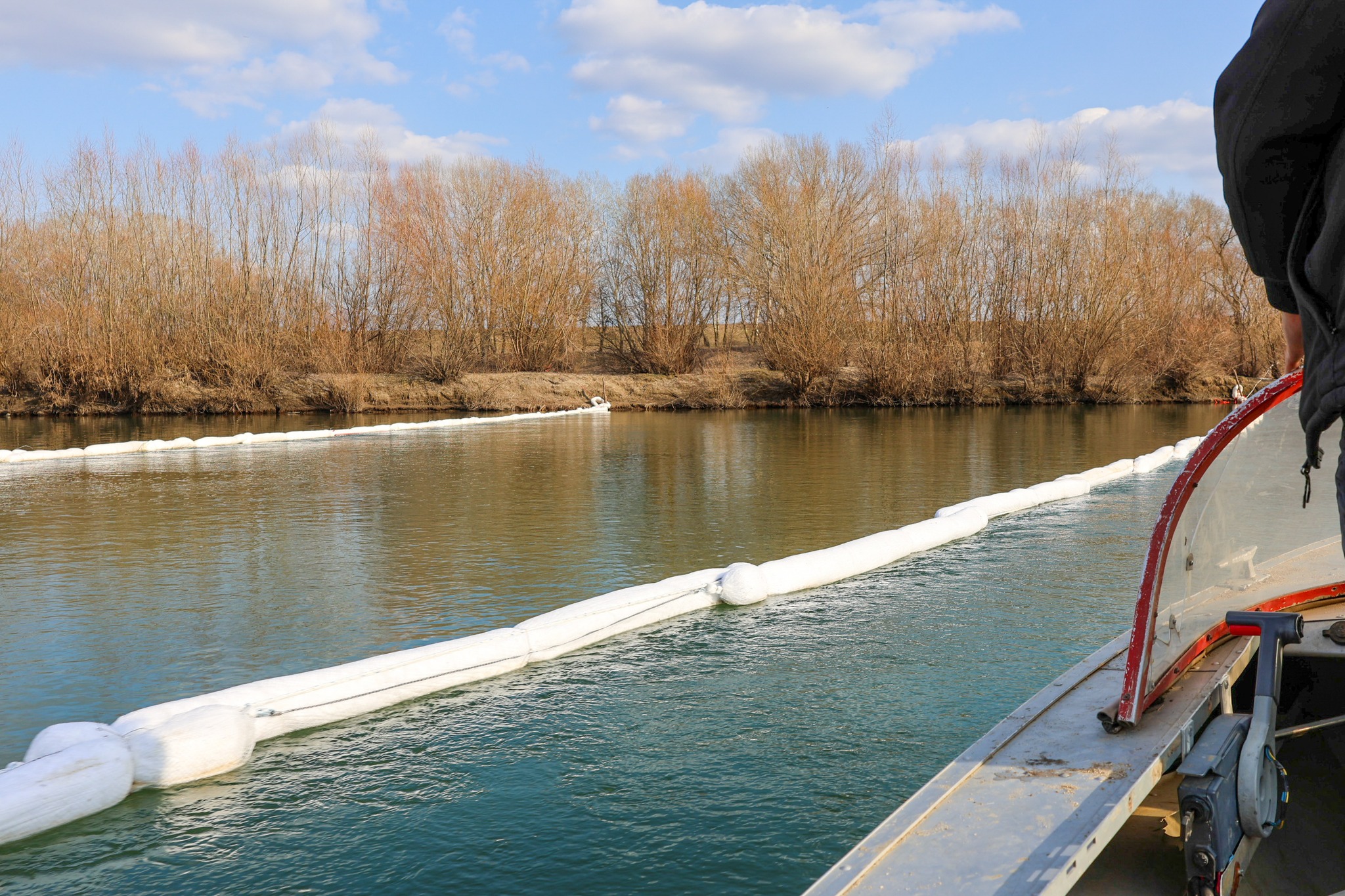
The pumping of water from the Dniester in areas where it was stopped could only be resumed after the water quality returns to safe parameters, and the concentration of petroleum products drops below the allowed limits, said the Minister of Environment, Gheorghe Hajder. He emphasized that the results of the most recent analyses indicate exceedances of petroleum concentration in several monitoring points, which poses a risk to the population’s health, reports IPN.
According to the official, the maximum permissible limit is 0.1 mg/l, but in several points the values are exceeded. In Naslavcea and Cosauti, the concentration is 0.2 mg/l, while in Rezina it reaches 0.3 mg/l. The situation remains concerning in Cosauti, an important source for the supply of the city of Balti. In Oxentea, the level has dropped to the permissible limit, after the installation of filters. In Molovata and Vadul lui Voda, the values are below the limit, indicating safe water.
“Under these circumstances, we cannot pump water into the system. If we were to do this, we would introduce into the consumer network water contaminated with substances such as toluene and benzene, which is unacceptable,” declared the minister. According to him, cleaning the network after a possible contamination could take between one and two months.
In the meantime, the authorities are providing the population with water from alternative sources. The National Crisis Management Center announced that about 15 tank trucks and 8 trailers are deployed in Balti, supplied from nearby districts, including from wells and private operators. The existing stocks are considered sufficient to cover the need.
And in the Soroca district, where water intake from the Nistru remains suspended, the authorities have activated alternative sources, including artesian wells.
An environmental alert has been issued for the Dniester basin for 15 days, following the pollution caused by the bombing of the Novodnestrovsk hydroelectric power station. The Minister of Environment recently announced that the oil spill has decreased and the situation is gradually improving, however, several northern localities remain without drinking water.
