

The Life and Work of Emil Loteanu Celebrated in an Exhibition at the Chisinau City History Museum

Photo credit: National Library of the Republic of Moldova

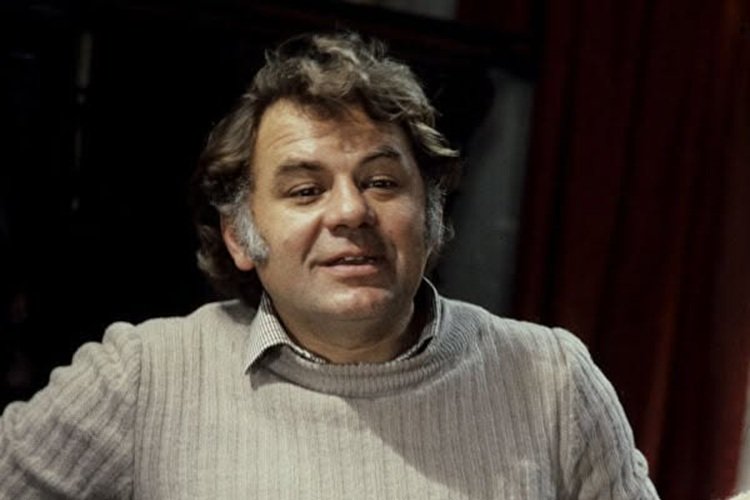
An exhibition of documentary photographs capturing moments from the life and career of director Emil Loteanu has opened at the Chisinau City History Museum. The opening was accompanied by a roundtable discussion at which former colleagues and cultural figures reflected on the filmmaker’s life and work. Loteanu would have turned 90 on November 6, IPN reports.

Actress and educator Zinaida Timofti described Emil Loteanu as a legend of national and international cinema. She noted that the director had discovered and launched the careers of hundreds of actors, helping them gain recognition.

For his part, poet and journalist Alexandru Corduneanu highlighted Emil Loteanu’s role in bringing the generation of the 1960s to prominence—a generation that helped revive Romanian culture in Bessarabia at a time when it was deeply affected by Soviet ideology. According to Corduneanu, Loteanu’s films brought characters and images from a once-marginalized world back to the screen.

Director Valentina Plugaru, who spent nearly two years working on the film “Lăutarii,” recalled the director’s discipline and exacting standards, as well as the dedication of the entire crew. She noted that filming required meticulous preparation, and that crew members had to learn on the job, as many had no prior experience in filmmaking.

Participants also highlighted the need to raise awareness of national cinema among the younger generation. One proposal put forward during the discussions was to produce regular television programmes devoted to directors, actors and other cultural figures, featuring excerpts from their work accompanied by commentary.

Emil Loteanu was born on November 6, 1936, in the village of Clocușna, then in Hotin County and now part of Ocnița District. He became known for films such as “Red Meadows,” “The Fiddlers,” and “Queen of the Gypsies.” The director passed away on April 18, 2003.


Electricity prices could rise by around 30% for households served by Premier Energy. The supplier is requesting a tariff increase from 3.56 to 4.64 lei per kilowatt-hour, a rise of 1.08 lei. The request has been submitted to the National Agency for Energy Regulation, IPN reports.

The company says the increase is necessary because the cost of purchasing electricity has risen. While the current tariff is based on an average price of 2.62 lei/kWh, figures for the first nine months of the year and estimates for the final quarter put the average cost at 2.89 lei/kWh. This represents a difference of 27 bani, or 10%.

Premier Energy also cites tariff deviations amounting to 7.7% of the regulated revenue used to calculate the current approved prices. The supplier is seeking to recover these deviations in full by the end of the year.

For other consumers, depending on the voltage level at which they are connected, the company is requesting a rate of 4.10 lei/kWh for medium-voltage networks and 3.91 lei/kWh for high-voltage networks. For electricity supplied at transmission network exit points, the requested rate is 3.88 lei/kWh.

In its calculations, Premier Energy took into account the cost of purchasing electricity from Energocom, the Central Electricity Supplier, and the day-ahead and intraday markets, as well as transmission, distribution, and supply costs.

0 FacebookTwitterPinterestEmail


The Life and Work of Emil Loteanu Celebrated in an Exhibition at the Chisinau City History Museum

Photo credit: National Library of the Republic of Moldova

An exhibition of documentary photographs capturing moments from the life and career of director Emil Loteanu has opened at the Chisinau City History Museum. The opening was accompanied by a roundtable discussion at which former colleagues and cultural figures reflected on the filmmaker’s life and work. Loteanu would have turned 90 on November 6, IPN reports.

Actress and educator Zinaida Timofti described Emil Loteanu as a legend of national and international cinema. She noted that the director had discovered and launched the careers of hundreds of actors, helping them gain recognition.

For his part, poet and journalist Alexandru Corduneanu highlighted Emil Loteanu’s role in bringing the generation of the 1960s to prominence—a generation that helped revive Romanian culture in Bessarabia at a time when it was deeply affected by Soviet ideology. According to Corduneanu, Loteanu’s films brought characters and images from a once-marginalized world back to the screen.

Director Valentina Plugaru, who spent nearly two years working on the film “Lăutarii,” recalled the director’s discipline and exacting standards, as well as the dedication of the entire crew. She noted that filming required meticulous preparation, and that crew members had to learn on the job, as many had no prior experience in filmmaking.

Participants also highlighted the need to raise awareness of national cinema among the younger generation. One proposal put forward during the discussions was to produce regular television programmes devoted to directors, actors and other cultural figures, featuring excerpts from their work accompanied by commentary.

Emil Loteanu was born on November 6, 1936, in the village of Clocușna, then in Hotin County and now part of Ocnița District. He became known for films such as “Red Meadows,” “The Fiddlers,” and “Queen of the Gypsies.” The director passed away on April 18, 2003.


Russian oil facilities have come under drone attack for the fifth consecutive night. According to Yaroslavl Region Governor Mikhail Yevrayev, drones struck the region’s Slavneft refinery last night. The governor said on social media that a fire had broken out at the industrial complex and that the refinery’s infrastructure had been damaged, IPN reports.

The governor said Russian forces had intercepted 124 drones targeting the refinery and that two employees had been injured. Overnight, he issued a drone attack alert, followed by a missile attack alert, both of which were later lifted. He added that road traffic had been temporarily suspended on a stretch of the highway linking Yaroslavl and Moscow as a result.

The Slavneft refinery, which can process 15 million tonnes of oil a year, was previously targeted in a drone attack in September. The facility supplies fuel to central and northwestern Russia, as well as Moscow. The September attack damaged a unit accounting for roughly 40% of the refinery’s production capacity, forcing the facility to suspend operations.

According to monitoring channels on Telegram, successive attacks have been reported on several oil industry facilities in Russia since the night of October 29, a refinery in the Samara region that produces kerosene, a refinery in Bashkiria, the Lukoil facility in Kstovo, the Prosvet oil pumping and distribution station in the Samara region, and the Slavneft refinery in Yaroslavl. Ukrainian authorities have yet to comment on the attacks. Earlier, Ukrainian President Volodymyr Zelensky said that Ukraine could halt its attacks on Russian refineries at the request of US President Donald Trump in exchange for US supplies of Patriot interceptor missiles.

0 FacebookTwitterPinterestEmail


1 IANUARIE, 2025
1 IANUARIE, 2025