




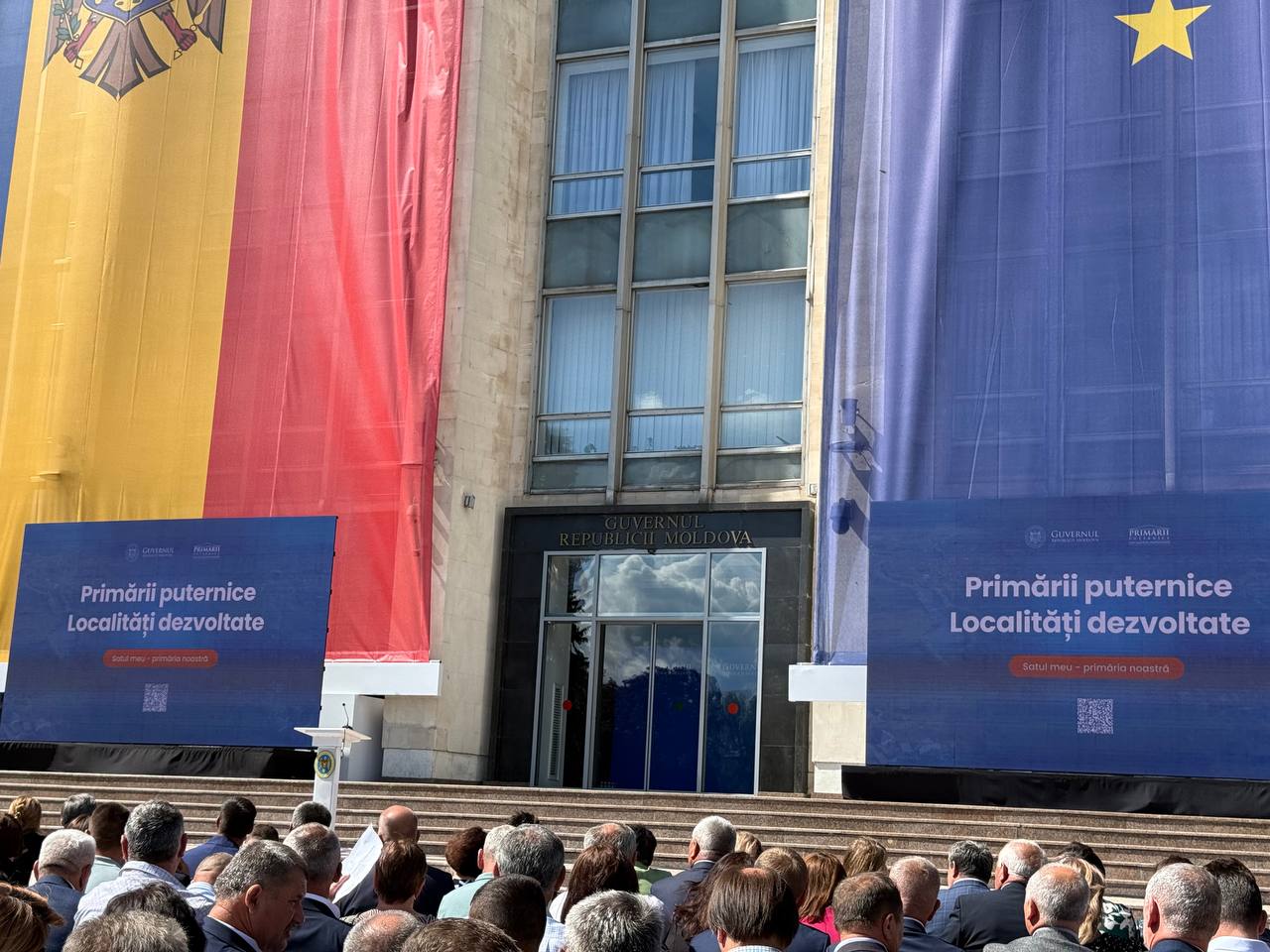
Small localities cannot cope with the costs of infrastructure and the provision of modern public services – this was the message conveyed by several mayors, who called for the local public administration reform to be accelerated and for the voluntary amalgamation process to continue. The statements were made during the event “Strong Mayoralties. Developed Localities”, IPN reports.
Ungheni Mayor Vitalie Vrabie said that Ungheni municipality and nine other mayoralties, bringing together a total of 21 localities, have initiated steps towards voluntary amalgamation, forming one of the largest administrative clusters in the country. “I personally believe in this reform and I believe that the Republic of Moldova must move forward with it. Of course, there are no perfect solutions, but the good, useful and necessary part of this reform is much greater than the fears we have today,” the mayor said. He stressed that local administrations can no longer afford to remain fragmented and that modern infrastructure and quality public services can no longer be supported by small and poorly funded mayoralties.
For his part, Vladimir Cucereavii, mayor of Taraclia village, Causeni district, said that the experience of cooperation between localities had already demonstrated the benefits of jointly managed public services. The mayor gave the example of a regional sewerage project worth 42 million lei, carried out together with neighbouring localities. “When several localities unite, there will also be quality services. We want to leave better conditions and developed communities to our descendants,” he said.
Rodica Rusu, mayor of Telita village, Anenii Noi district, who is serving her third term, spoke about the challenges faced by small localities. “The main problem today is no longer finding money for infrastructure. The real problems arise after implementation: how we cover maintenance costs and how we keep the services created functional,” Rodica Rusu said. The mayor stressed that the local public administration reform gives local authorities the freedom to decide with whom they associate and how they organise their future administration.
Participants in the event stressed that local public administration reform should be viewed as a project for the future of communities, and not through the lens of political interests or administrative positions.
Disclaimer: This material was prepared by the IPN Press Agency, within the project “Local Public Administration Reform in Dialogue”, funded by the Ministry of Culture from the Media Subsidy Fund.
