

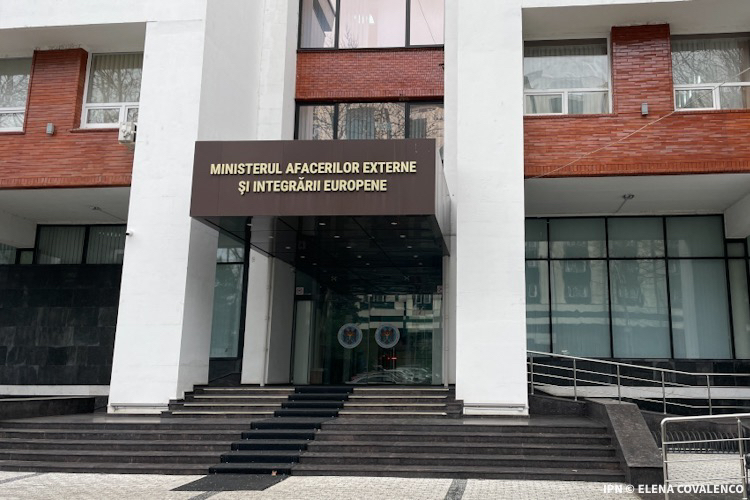
Russian authorities’ statements about deportations are fully unacceptable, MFAEI

The Ministry of Foreign Affair and European Integration (MFAEI) describes Russian authorities’ statements about the deportations from the then territory of the Republic of Moldova as fully unacceptable, saying that they represent an attempt to distort the tragic historical events experienced by our country, IPN reports.

In a press release, the Ministry insistently asks that the Russian authorities should refrain from comments or from interference in the internal affairs of the Republic of Moldova, including in church problems and in the country’s history.

According to the MFAEI, the actions of those times caused prolonged suffering to the people. The Ministry invited representatives of the Embassy of Russia to visit the wagons set up in the central square of Chisinau so as to discuss with historians, to see images, to learn the truth about the famine caused by the Soviets and about the massive deportations to the Gulag.

The Ministry also said that the Russian authorities made controversial statements, including about the Stalinist deportations and the role of the church in society. In this connection, it noted that the church must promote the Christian values of peace and unity in society, not war and aggression.

On its Telegram channel, the Embassy of Russia in Moldova wrote that the month of russophobia disguised as the fight against totalitarianism started in Moldova on July 6. For her part, the spokeswoman for the Russian Ministry of Foreign Affairs Maria Zakharova accused the Moldovan authorities of allowing interference in the affairs of confessions, in breach of the provisions of the Constitution, making reference to the transfer of the historical building of the National Library to the Metropolitan Church of Bessarabia.


Official documents issued in the Republic of Moldova and Germany may now be used in each other’s countries with only an apostille, without the need for the legalization procedure. The measure enters into force following the Federal Republic of Germany’s withdrawal of the reservation it made in 2007 when the Republic of Moldova acceded to the Hague Apostille Convention, IPN reports.

The Ministry of Foreign Affairs states that the decision was made following steps taken by Deputy Prime Minister Mihai Popsoi, Minister of Foreign Affairs, during his May 18–19 meeting with his German counterpart, Johann David Wadephul.

The ministry emphasizes that the new system will eliminate the need to visit multiple institutions or diplomatic missions to have documents legalized, which will reduce both the time required and the costs incurred by citizens. The simplified procedure will apply to official documents such as birth, marriage, divorce, and death certificates, criminal records, academic diplomas, and diploma supplements.

The Hague Convention on the Apostille entered into force for the Republic of Moldova on March 16, 2007. With its implementation in relations with Germany, the Republic of Moldova will benefit from the same simplified procedure for the recognition of official documents as it does with all 130 states and entities that are parties to the convention.

0 FacebookTwitterPinterestEmail


Russian authorities’ statements about deportations are fully unacceptable, MFAEI

The Ministry of Foreign Affair and European Integration (MFAEI) describes Russian authorities’ statements about the deportations from the then territory of the Republic of Moldova as fully unacceptable, saying that they represent an attempt to distort the tragic historical events experienced by our country, IPN reports.

In a press release, the Ministry insistently asks that the Russian authorities should refrain from comments or from interference in the internal affairs of the Republic of Moldova, including in church problems and in the country’s history.

According to the MFAEI, the actions of those times caused prolonged suffering to the people. The Ministry invited representatives of the Embassy of Russia to visit the wagons set up in the central square of Chisinau so as to discuss with historians, to see images, to learn the truth about the famine caused by the Soviets and about the massive deportations to the Gulag.

The Ministry also said that the Russian authorities made controversial statements, including about the Stalinist deportations and the role of the church in society. In this connection, it noted that the church must promote the Christian values of peace and unity in society, not war and aggression.

On its Telegram channel, the Embassy of Russia in Moldova wrote that the month of russophobia disguised as the fight against totalitarianism started in Moldova on July 6. For her part, the spokeswoman for the Russian Ministry of Foreign Affairs Maria Zakharova accused the Moldovan authorities of allowing interference in the affairs of confessions, in breach of the provisions of the Constitution, making reference to the transfer of the historical building of the National Library to the Metropolitan Church of Bessarabia.


Maritime schools could be opened in Moldova following the full transposition of relevant European legislation. The statement was made by Deputy Prime Minister Vladimir Bolea, Minister of Infrastructure and Regional Development, who noted that there is growing interest in such programs, including from Ukrainian citizens affected by the war, according to IPN.

Vladimir Bolea stated that the new regulations will allow seaman’s books to be issued based on studies completed in the Republic of Moldova at authorized institutions.

The minister told the press that, at present, no ships are sailing under the flag of the Republic of Moldova, but the authorities are working to transpose European legislation and develop the legal framework necessary for the development of this sector.

According to him, the state and the Naval Agency could generate significant revenue both from ships sailing under the Moldovan flag and from institutions that train seafarers.

0 FacebookTwitterPinterestEmail


1 IANUARIE, 2025
1 IANUARIE, 2025