

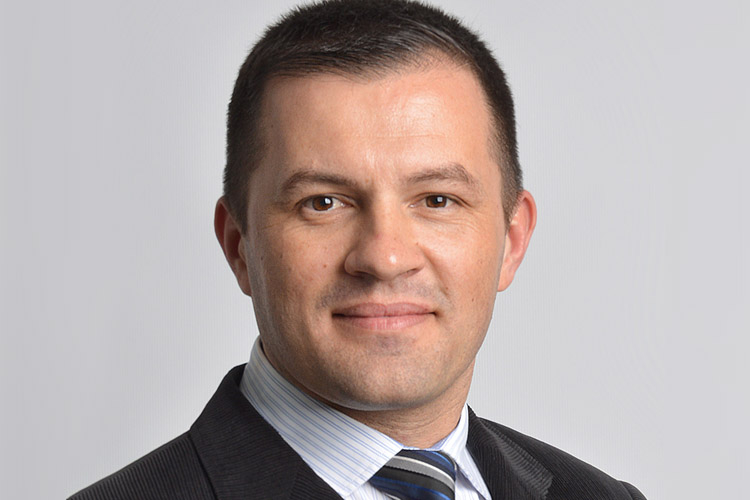
Pavel Moraru: Signing of Molotov-Ribbentrop Pact led to start of World War II

The signing of the Molotov-Ribbentrop Pact led to the start of World War II. The war turned global after Germany attacked Poland as two colonial empires, France and Great Britain, became directly involved in the war after Germany’s attack. Great Britain consisted then of the largest countries in history and played a huge role in the final victory, doctor habilitate of history Pavel Moraru stated in a public debate hosted by IPN.

The historian said the Molotov-Ribbentrop pact consisted of two parts – the nonaggression pact and the secret additional protocol. Germany, seeing that the Soviet Union initiated negotiations with Great Britain and France, proposed signing a non-aggression treaty with the Soviet Union, but the Soviets demanded that the nonaggression treaty should have an additional secret protocol. The nonaggression treaty can be considered illegal as the given protocol referred to third parties. A nonaggression treaty is signed between two, three or more sides, but does not refer to the fate of other countries.

The Molotov-Ribbentrop Pact was a diplomatic and territorial success for the Soviet Union. Under this, the Soviet Union managed to bring territories of the former Russian Empire inside its borders. It was an achieved objective. Also, the Molotov-Ribbentrop Pact hit the German-Japanese alliance. On August 23, 1939, when the Molotov-Ribbentrop Pact was signed in Moscow, Japan was suffering a defeat to the Soviet Union on the Khalkhin Gol lake in Mongolia. For Japan, the signing of the pact was a betrayal on the part of the German ally and immediately after its signing, Japan said that it would not become involved in the war in Europe.

According to Pavel Moraru, by signing the Molotov- Ribbentrop Pact, the Soviet Union didn’t aim to put off the start of the war. This is a Soviet myth formulated earlier as the Soviet Union didn’t have reasons to delay it. On the contrary, it wanted to start to take action as swiftly as possible, aiming to communize the whole Europe. Another myth is that the Soviet Union wasn’t ready for war and was taken by surprise by the German attack of June 22, 1941. In reality, the Soviet Union intensely prepared for an offensive war, not for a defensive war.

The doctor of history noted that after the dismemberment of the Soviet Union, the Soviet regime didn’t undergo purification, wasn’t condemned at international level. The current Russian Federation practically inherited what was there in the Soviet Union. The Russian Federation when the Soviet Union collapsed didn’t go through this de-communization, pacification process and there was a particular percentage of citizens in Russia who aspired to revenge. After the dismemberment of the Soviet Union, Russia became a revanchist state and, owing to propaganda, that percentage of 20-30% passed the level of 50%. The Russian propaganda currently speaks about the role of Russia, the Soviet Union in the fight against Nazism, trying to monopolize that victory of the allies against Nazi Germany,” concluded Pavel Moraru.

The public debate entitled “Truth and lie about beginning of World War II” was the 18th installment of IPN’s project “Impact of the Past on Confidence and Peace Building Processes” that is supported by the Hanns Seidel Foundation of Germany.

The European Union is providing Latvia with 617 million euros through 2032 via the Social Climate Fund. The funds will be used to improve the energy efficiency of homes, subsidize the purchase of electric vehicles, buy electric trains for regional transport, and establish bicycle rental services, according to IPN.

The support approved by the European Commission can amount to 15,000 euros for renovating an apartment, 20,000 euros for renovating a house, and 15,000 euros for purchasing an electric car. The specific eligibility requirements and the applicants’ contribution will be determined at a later date as part of the National Social Climate Plan.

The aid will primarily go to residents of energy-inefficient buildings who are having difficulty paying their bills. Beneficiaries also include those who already receive energy cost compensation. Latvian authorities will set up energy counseling centers to help households identify the right renovations, understand the forms of support available, and reduce their bills through measures tailored to their homes.

In addition to the incentive offered for the purchase of electric vehicles, the authorities in Riga will also invest in public transportation: electric trains will be purchased, and on-demand transportation services will be provided. Furthermore, free bicycle rental services will be introduced for 97 schools in areas without public transportation.

Latvia is the third European Union member state to have its National Climate and Social Plan approved, following Sweden and Lithuania. Five other countries have officially submitted their plans, and most of the remaining governments have submitted draft versions to the Commission.

0 FacebookTwitterPinterestEmail


Pavel Moraru: Signing of Molotov-Ribbentrop Pact led to start of World War II

The signing of the Molotov-Ribbentrop Pact led to the start of World War II. The war turned global after Germany attacked Poland as two colonial empires, France and Great Britain, became directly involved in the war after Germany’s attack. Great Britain consisted then of the largest countries in history and played a huge role in the final victory, doctor habilitate of history Pavel Moraru stated in a public debate hosted by IPN.

The historian said the Molotov-Ribbentrop pact consisted of two parts – the nonaggression pact and the secret additional protocol. Germany, seeing that the Soviet Union initiated negotiations with Great Britain and France, proposed signing a non-aggression treaty with the Soviet Union, but the Soviets demanded that the nonaggression treaty should have an additional secret protocol. The nonaggression treaty can be considered illegal as the given protocol referred to third parties. A nonaggression treaty is signed between two, three or more sides, but does not refer to the fate of other countries.

The Molotov-Ribbentrop Pact was a diplomatic and territorial success for the Soviet Union. Under this, the Soviet Union managed to bring territories of the former Russian Empire inside its borders. It was an achieved objective. Also, the Molotov-Ribbentrop Pact hit the German-Japanese alliance. On August 23, 1939, when the Molotov-Ribbentrop Pact was signed in Moscow, Japan was suffering a defeat to the Soviet Union on the Khalkhin Gol lake in Mongolia. For Japan, the signing of the pact was a betrayal on the part of the German ally and immediately after its signing, Japan said that it would not become involved in the war in Europe.

According to Pavel Moraru, by signing the Molotov- Ribbentrop Pact, the Soviet Union didn’t aim to put off the start of the war. This is a Soviet myth formulated earlier as the Soviet Union didn’t have reasons to delay it. On the contrary, it wanted to start to take action as swiftly as possible, aiming to communize the whole Europe. Another myth is that the Soviet Union wasn’t ready for war and was taken by surprise by the German attack of June 22, 1941. In reality, the Soviet Union intensely prepared for an offensive war, not for a defensive war.

The doctor of history noted that after the dismemberment of the Soviet Union, the Soviet regime didn’t undergo purification, wasn’t condemned at international level. The current Russian Federation practically inherited what was there in the Soviet Union. The Russian Federation when the Soviet Union collapsed didn’t go through this de-communization, pacification process and there was a particular percentage of citizens in Russia who aspired to revenge. After the dismemberment of the Soviet Union, Russia became a revanchist state and, owing to propaganda, that percentage of 20-30% passed the level of 50%. The Russian propaganda currently speaks about the role of Russia, the Soviet Union in the fight against Nazism, trying to monopolize that victory of the allies against Nazi Germany,” concluded Pavel Moraru.

The public debate entitled “Truth and lie about beginning of World War II” was the 18th installment of IPN’s project “Impact of the Past on Confidence and Peace Building Processes” that is supported by the Hanns Seidel Foundation of Germany.


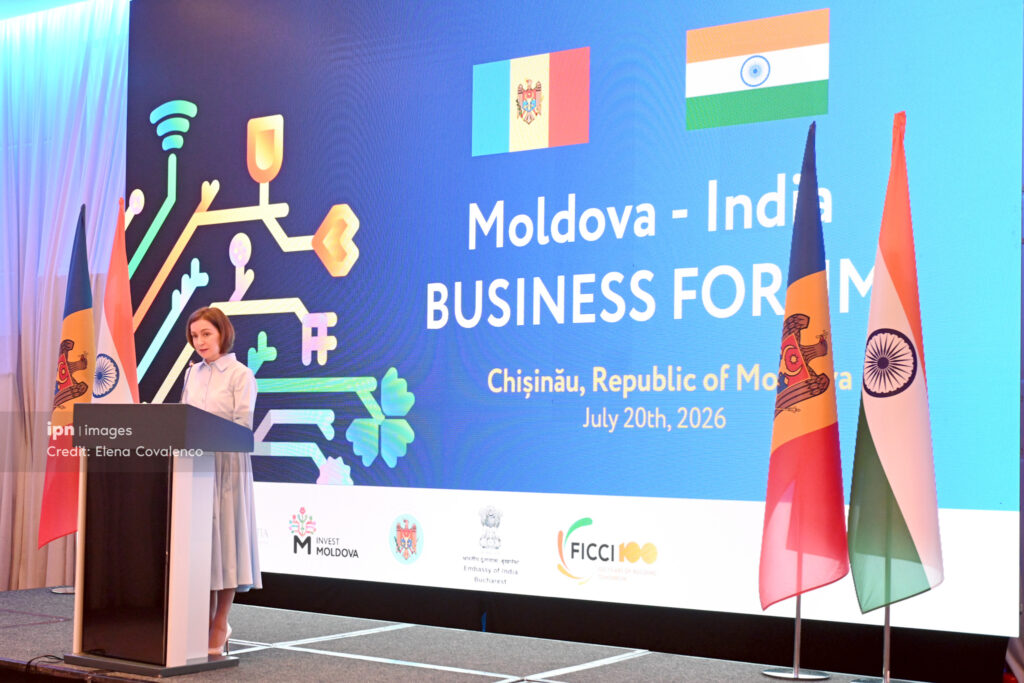
Access to a European market of over 870 million consumers, advanced IT infrastructure, and the digitalization of public services were the main advantages presented by the Republic of Moldova to Indian investors, during the first Moldova-India Business Forum, reports IPN.

At the forum, the Investment Agency presented the Republic of Moldova as a competitive business destination, highlighting its strategic geographical positioning, low operational costs, attractive tax system, multilingual workforce, and developed IT infrastructure. Moreover, representatives of the institution emphasized that over 79% of public services intended for the business environment are digitalized.

The Executive Director of the Investment Agency, Mihai Burunciuc, stated that the first Moldova-India Business Forum reflects the commitment of both states to strengthen economic relations and create new opportunities in the field of trade, investment, and sustainable development.

Present at the event, President Maia Sandru, highlighted India’s progress in the field of technology and innovation, noting that the Republic of Moldova aims to become the most business-friendly country in the region through the digitalization of public services. According to the head of state, during the meeting with her Indian counterpart, the two countries agreed to double trade exchanges in the next two years.

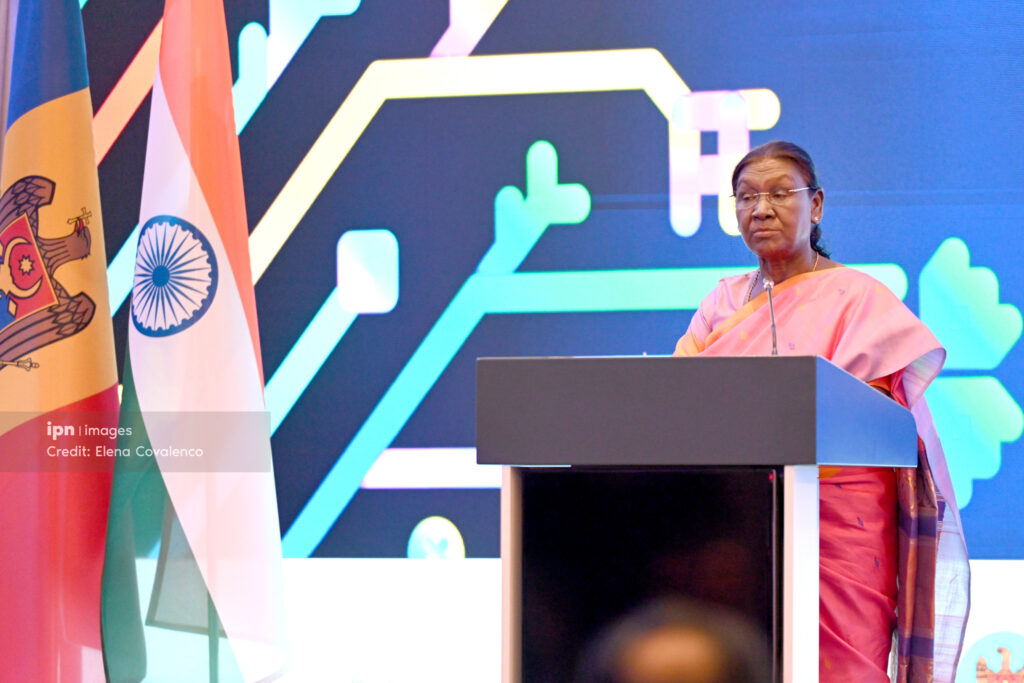
The President of India, Droupadi Murmu, stated that her visit to the Republic of Moldova aims to strengthen bilateral relations in the political, economic, and social fields. She said that India seeks a partnership based on trust and credibility and sees significant potential for cooperation in digital services, information technology, and cybersecurity.

In turn, the designated Prime Minister, Vasile Tofan, stated that the progress of the Republic of Moldova must be reflected not only in presentations, but also in concrete results for investors. According to him, reforms and modernization must be quickly felt by the business environment, and the Republic of Moldova can become a European development center for Indian companies in the fields of artificial intelligence, software, and cyber security.

During the presentation, the main economic data of the country were also highlighted. According to the Investment Agency, service exports reached 2.8 billion euros in 2025, foreign direct investments reached 5.1 billion euros, and 85% of these come from EU countries. Also, the IT sector contributes 7.5% to the gross domestic product, has over 50 thousand specialists, and exports 88% of its services. Among the promoted fields are information technology and business services, the automotive and electronics industry, the processing of agri-food products, the textile industry, the pharmaceutical sector, as well as infrastructure and renewable energy projects.

0 FacebookTwitterPinterestEmail


1 IANUARIE, 2025
1 IANUARIE, 2025