

Over 56% of citizens would vote for integration into the EU in a referendum

If a referendum on joining the European Union was held, over 56% of the respondents of a poll would vote in favor, while 25% would vote against. Others said they haven’t yet decided or wouldn’t take part. 35% in a referendum would vote for joining the Eurasian Union, while 47.5% would vote against. Between the EU and the Eurasian Union, 54% would choose the EU, while 25% would choose the Eurasian Union, according to an opinion poll commissioned by WatchDog.MD and conducted by CBS Research.

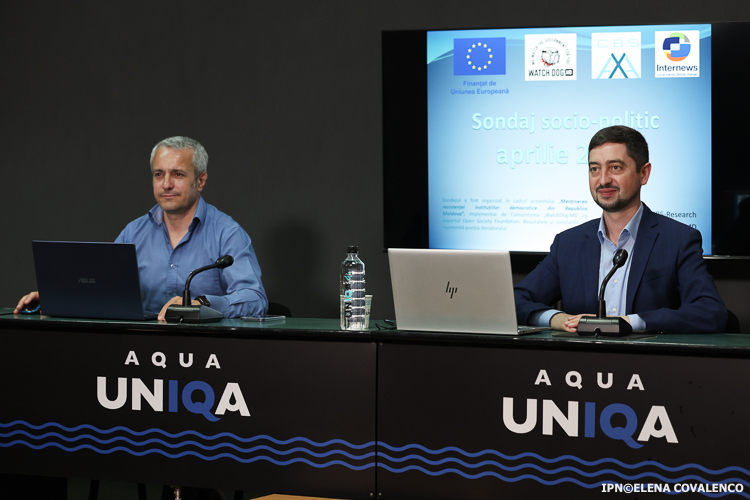
The highest figures of supporters of the European integration were registered during the rule of the Party of Communists. The period of 2010-2019 followed, when this indicator was low. In 2013-2017, it oscillated between 40% and 50% – the number of adherents. “A phase of revival followed and this has been more visible since 2020. During this period, the percentage of those who support the accession oscillated between 50% and 60%. This poll, in particular, puts the figure at 56.5%,” sociologist Vasile Cantarji of CBS Research stated in a press conference hosted by IPN.

WatchDog.MD head Valeriu Pașa said the respondents were asked if they heard about the initiative to hold a referendum on enshrining the accession to the European Union in the Constitution. Thus, 79.4% of those polled said they heard, 19.6% said they didn’t hear, while 0.9% said they didn’t know or they didn’t answer. “19.6% is, from my point of view, still a very high figure. When almost 20% of the population doesn’t know that a referendum is being prepared, it’s not good,” noted Valeriu Pașa.

The survey also shows that almost 23% of the respondents hold Romanian citizenship. The authors of the research consider this figure could be verified based on census data. Of these, slightly over half said they would vote in the three elections – in Romania, for the European Parliament, in the presidential and parliamentary elections. As for the presidential election, 44% of those questioned that they haven’t decided yet, while 23% said that they wouldn’t vote, when asked to choose from a list of candidates. Among those who chose an option, NATO Deputy Secretary Mircea Geoană has a commanding lead in the preferences of voters with Romanian citizenship with 52%. He is followed by Romanian Prime Minister Marcel Ciolacu – 17%, and Senator Diana Șoșoacă (15%).

The survey was carried out during April 6-13 and covered a sample of 1,008 people aged 18 and older. The margin of sampling error is ±3%.

The research was organized within the project “Maintaining the resilience of democratic institutions in the Republic of Moldova”, which is implemented by WatchDog.MD Community with the support of the Open Society Foundations.

Note: IPN Agency offers the right of reply to persons who consider themselves targeted in the news made from the statements of the organizers of this press conference, including by facilitating the organization of another press conference under similar conditions.


Official documents issued in the Republic of Moldova and Germany may now be used in each other’s countries with only an apostille, without the need for the legalization procedure. The measure enters into force following the Federal Republic of Germany’s withdrawal of the reservation it made in 2007 when the Republic of Moldova acceded to the Hague Apostille Convention, IPN reports.

The Ministry of Foreign Affairs states that the decision was made following steps taken by Deputy Prime Minister Mihai Popsoi, Minister of Foreign Affairs, during his May 18–19 meeting with his German counterpart, Johann David Wadephul.

The ministry emphasizes that the new system will eliminate the need to visit multiple institutions or diplomatic missions to have documents legalized, which will reduce both the time required and the costs incurred by citizens. The simplified procedure will apply to official documents such as birth, marriage, divorce, and death certificates, criminal records, academic diplomas, and diploma supplements.

The Hague Convention on the Apostille entered into force for the Republic of Moldova on March 16, 2007. With its implementation in relations with Germany, the Republic of Moldova will benefit from the same simplified procedure for the recognition of official documents as it does with all 130 states and entities that are parties to the convention.

0 FacebookTwitterPinterestEmail


Over 56% of citizens would vote for integration into the EU in a referendum

If a referendum on joining the European Union was held, over 56% of the respondents of a poll would vote in favor, while 25% would vote against. Others said they haven’t yet decided or wouldn’t take part. 35% in a referendum would vote for joining the Eurasian Union, while 47.5% would vote against. Between the EU and the Eurasian Union, 54% would choose the EU, while 25% would choose the Eurasian Union, according to an opinion poll commissioned by WatchDog.MD and conducted by CBS Research.

The highest figures of supporters of the European integration were registered during the rule of the Party of Communists. The period of 2010-2019 followed, when this indicator was low. In 2013-2017, it oscillated between 40% and 50% – the number of adherents. “A phase of revival followed and this has been more visible since 2020. During this period, the percentage of those who support the accession oscillated between 50% and 60%. This poll, in particular, puts the figure at 56.5%,” sociologist Vasile Cantarji of CBS Research stated in a press conference hosted by IPN.

WatchDog.MD head Valeriu Pașa said the respondents were asked if they heard about the initiative to hold a referendum on enshrining the accession to the European Union in the Constitution. Thus, 79.4% of those polled said they heard, 19.6% said they didn’t hear, while 0.9% said they didn’t know or they didn’t answer. “19.6% is, from my point of view, still a very high figure. When almost 20% of the population doesn’t know that a referendum is being prepared, it’s not good,” noted Valeriu Pașa.

The survey also shows that almost 23% of the respondents hold Romanian citizenship. The authors of the research consider this figure could be verified based on census data. Of these, slightly over half said they would vote in the three elections – in Romania, for the European Parliament, in the presidential and parliamentary elections. As for the presidential election, 44% of those questioned that they haven’t decided yet, while 23% said that they wouldn’t vote, when asked to choose from a list of candidates. Among those who chose an option, NATO Deputy Secretary Mircea Geoană has a commanding lead in the preferences of voters with Romanian citizenship with 52%. He is followed by Romanian Prime Minister Marcel Ciolacu – 17%, and Senator Diana Șoșoacă (15%).

The survey was carried out during April 6-13 and covered a sample of 1,008 people aged 18 and older. The margin of sampling error is ±3%.

The research was organized within the project “Maintaining the resilience of democratic institutions in the Republic of Moldova”, which is implemented by WatchDog.MD Community with the support of the Open Society Foundations.

Note: IPN Agency offers the right of reply to persons who consider themselves targeted in the news made from the statements of the organizers of this press conference, including by facilitating the organization of another press conference under similar conditions.


Maritime schools could be opened in Moldova following the full transposition of relevant European legislation. The statement was made by Deputy Prime Minister Vladimir Bolea, Minister of Infrastructure and Regional Development, who noted that there is growing interest in such programs, including from Ukrainian citizens affected by the war, according to IPN.

Vladimir Bolea stated that the new regulations will allow seaman’s books to be issued based on studies completed in the Republic of Moldova at authorized institutions.

The minister told the press that, at present, no ships are sailing under the flag of the Republic of Moldova, but the authorities are working to transpose European legislation and develop the legal framework necessary for the development of this sector.

According to him, the state and the Naval Agency could generate significant revenue both from ships sailing under the Moldovan flag and from institutions that train seafarers.

0 FacebookTwitterPinterestEmail


1 IANUARIE, 2025
1 IANUARIE, 2025